Going all-in and hitting $30M ARR in three years
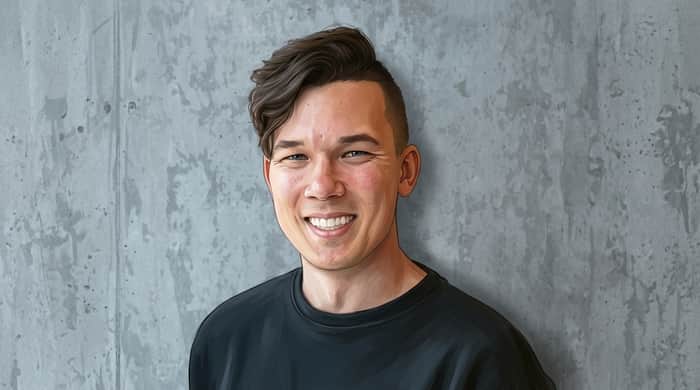
Vitalii Dodonov found a cofounder, quit his job, and built Stanley. They crossed $3M ARR in 1.5 years, $10M in year two, $30M in year three, and now they're at $40M.
Here's Vitalii on how he did it. 👇
Leaving the corporate path
I grew up outside Moscow and started working at 13, packing parachutes at my dad’s skydiving club. Throughout my childhood, I packed around 20,000 parachutes and made about 800 jumps myself. At 17, I chose to study abroad, moved to Canada on my own with a loan from my dad, and studied chemical engineering at the University of Alberta. I taught myself programming during school to automate a manual research process in a professor’s lab. This showed me what software could do.
After school, I worked in data science at Deloitte, then became a senior software engineer at eBay, building side projects on nights and weekends to sharpen my technical skills.
In 2021, a customer of mine introduced me to John Hu, who was looking for a technical cofounder for a company he’d started out of his dorm room a few months earlier. John had left private equity to become a content creator. Through that, he ran into a problem firsthand: It had never been easier to make content, but it was still genuinely hard to make money from it.
I left the corporate path to cofound Stan with John. I brought the systems thinking and technical foundation to build something that could scale, and John had the customer understanding and go-to-market instincts. I believed in what he was building, so I quit everything else and joined him full-time. Between the two of us, we had what we needed to build Stan.
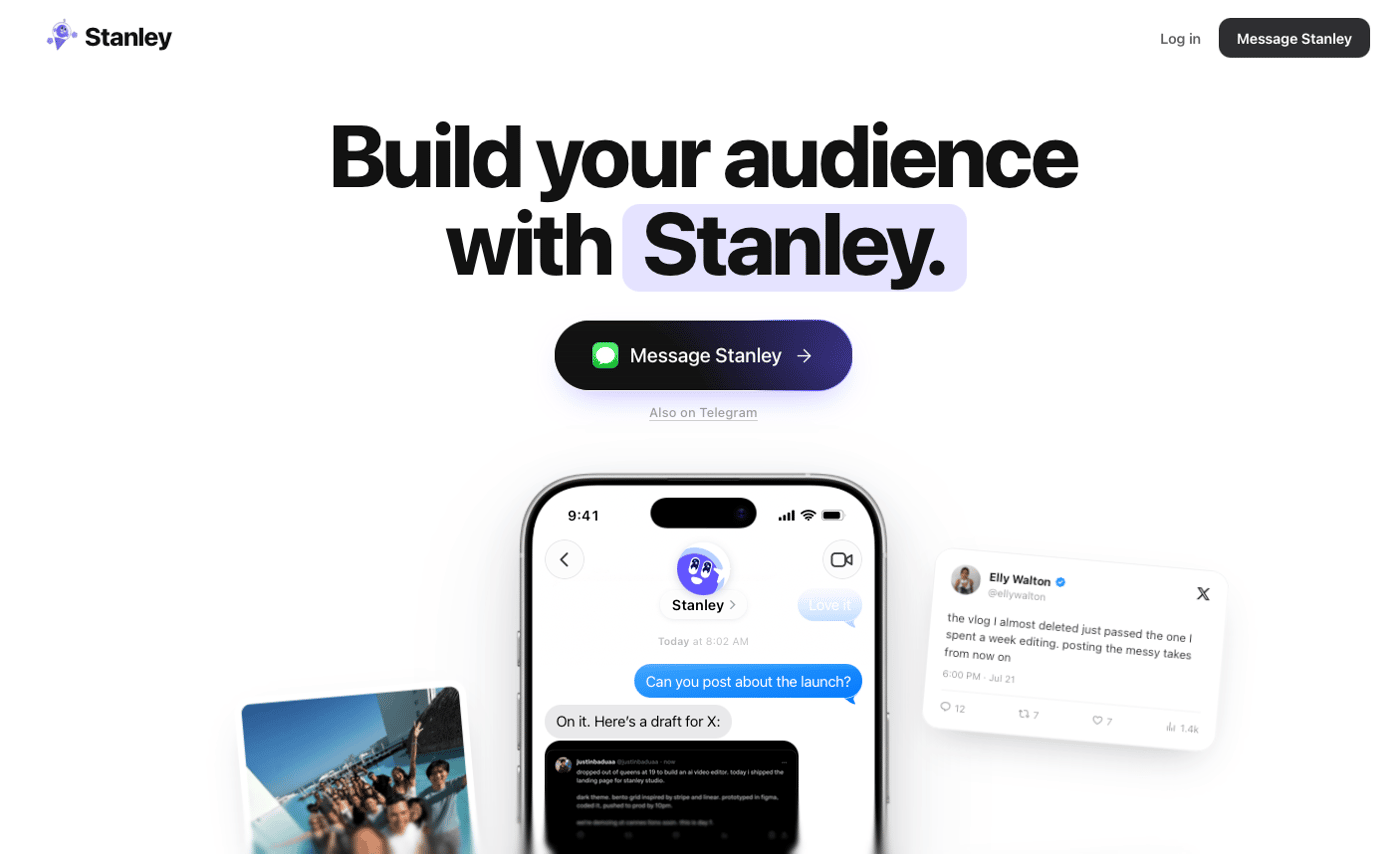
Today, we focus on helping Creator-Entrepreneurs and founders work for themselves and build a sustainable business. That means Stanley, an AI Head of Content that works autonomously to draft posts in your own voice and help you grow your following, plus Stan Store, an all-in-one hub for selling digital products, coaching, community programs, and more.
We're at $40M ARR.
Building the product
Our primary coding language is English — thanks to AI 😊. Beyond that, we use current, relevant technologies. We use a lot of TypeScript and Python. Cloudflare has become a core part of our stack recently.
Stanley's pricing is dynamic and service-driven. As a user's scope of work grows or changes across channels, Stanley adjusts. Users can also renegotiate with Stanley at any time.
Finding early customers
The early team included John, me, and our first founding engineer. We launched Stan Store, an online storefront for Creators to sell digital products, courses, and other offerings.
John would DM creators directly, persuade them to try the product for free, and gather feedback from them. I'd take that feedback and ship improvements almost in real time, sometimes within hours of hearing it. When those early users liked what they saw, they told their audiences. We also built in public on TikTok and other platforms, which brought in even more eyes.
The product found traction fast because John was the customer. He understood the pain point in a way you just can't get from market research. About a year and a half in, we crossed $3M in ARR. The next year we hit $10M, and the year after that, we passed $30M with fewer than 30 people on the team.
I'm really proud of that last part because hiring exceptional people was a priority from day one. Pretty much everything of value I've done in my career has come from working with great people.
Share the process
Since then, we've largely grown by building in public, sharing the process as it happens. One story illustrates this: My cofounder had just officiated my wedding. The day after, we flew to London, booked a flat, and gave ourselves 14 days with no distractions to ship something new. We documented and shared the entire process as we went — the wins and the dead ends — instead of waiting to announce a finished product.
By the end of those 14 days, we shipped a fully functional AI content tool for LinkedIn, launching to 250 paying customers on day one. Much of that early traction came from people who had followed along and were ready to jump in the moment it shipped.
We build in public because the creator economy moves so fast. Trends and creator needs shift constantly. Shipping fast and sharing openly means we learn from real usage and pain points instead of guessing. This feedback loop is one of our biggest advantages over companies with longer, more closed-off planning cycles.
My advice: Don’t wait until something’s perfect to start talking about it. Share the process, not just the outcome. By the time you launch, you already have people who feel like they’ve built it with you.
Pay attention
Keep listening to your customers even after you’ve found something that works. The next source of revenue often lies within a pain point your existing customers already have, and you just need to pay close enough attention to find it.
Here's an example. As we scaled Stan Store, we noticed a large percentage of users were not making as much money as expected with the storefront tool. We realized the barrier was that many simply lacked a large enough audience to sell to. We were solving the wrong problem for a large portion of our users. So, we built something new.
Last year we launched an AI Head of Content, Stanley, designed to help Creators and Founders grow their following. It connects to their social accounts, learns their voice, studies what performs in their niche, and generates tailored content. Early traction confirmed our suspicion. Creators didn’t need another generic writing tool; they needed something personalized to their voice and audience.
That challenge taught me the biggest threat to growth isn't always competition or execution, but building the wrong thing really well. You must keep listening closely to your users to catch that before it becomes a ceiling.
Talent density
Our biggest advantage has been talent density. When you only hire the top 1 percent of people, who treat their work as part of their identity and take real pride in their output, they consistently outperform teams five or ten times their size. We’ve made that a priority from day one.
Many companies lose speed as they scale because they add processes to manage growing headcounts. We avoid that by staying small and dense. We don't have approval chains. We don't schedule meetings. We just ship fast, put things in front of real users, and adjust based on what we see.
With AI, a small, exceptional team with the right tools can move in ways that simply weren’t possible even a couple of years ago. It's why we've stayed under 50 people at $40M ARR. We’re not trying to do more with less; we’re doing more because we legitimately need fewer people.
“No Rules Rules” by Reed Hastings and Erin Meyer is a good book about this. I remember reading it at a coffee shop in Toronto, back when it was just John and me building Stan. Midway through, I called him up like, "These guys at Netflix figured something out; we should do this too."
We based our whole culture on it: radical candor, leading with context, not control, real feedback, hiring the top 1 percent and paying for it.
Funnily enough, about a year ago, I spent time with Jessica Neal, Netflix’s former Chief Talent Officer, who helped build that exact culture. Learning from her directly was awesome and felt very full circle.
A relationship with fear
Skydiving changed my relationship with fear. You learn fast that the fear at the door of a plane isn’t a signal that something is wrong; it’s your default reaction to the unknown. Once you’ve jumped enough, you separate that feeling from the actual risk.
That translates into startups. You’re constantly making calls without full information, and the fear shows up every time, but I’ve stopped treating it as data. I ask what the real risk is, and if it's worth it, I take it.
Start building
My advice is to start building as early as you can, share it publicly, and stop waiting for permission or the perfect conditions.
And remember, your side projects are your proof. I pulled up Vhinny, a financial data aggregator I’d built myself, in my eBay interview and gave them a full demo. That’s what got me the job, not my resume or my credentials. It was the thing I’d built on my own time.
What's next?
I see an opportunity to bring more people online. I believe more people will choose to work for themselves rather than traditional employment.
And I see Stan as the company that will make that happen. Our goal is to build a category-defining product that will lower barriers to living life on your own terms by making it easier for people to establish their online identity and business. In the near future, I see every person who creates online content using Stanley.
It's been five years now. We've built a company with 50 brilliant people and helped hundreds of thousands of entrepreneurs make half a billion dollars online.
I believe in the future, all work will become optional. Working with thousands of entrepreneurs, I’ve seen their biggest challenge isn’t the work itself, but getting attention for it. Building a personal brand has become a full-time job, pulling people away from building. I'd love a world where entrepreneurs spend 100% of their time building and no time chasing attention. We are building that now.

Leave a Comment