AI Can Build Your App. But Can You Trust What It Built?
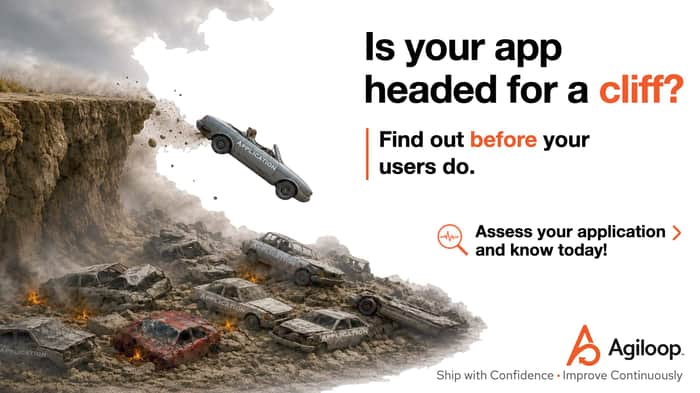
AI has given software builders a much faster car. We can go from an idea to working software in days — sometimes hours. That's an incredible shift, especially for indie hackers and small teams that can now build things that once required considerably more time, money, and people.
But there's a problem with going faster: you'd better know where you're going.
Shipping faster doesn't tell you whether the software is secure, maintainable, scalable, or ready for production. It doesn't tell you whether there are bugs you haven't encountered yet. And perhaps most importantly, it doesn't tell you whether you actually built the right thing.
Sometimes you're just getting to the cliff faster.
Building is getting easier. Knowing what you built isn't.
A lot of the conversation around AI development is understandably focused on speed. How quickly can I get from prompt to prototype? How much code can an agent generate? How much of the development process can I automate?
Those are important questions, but I think we're entering the next phase of AI software development. As the cost and effort required to create software continue to fall, understanding the quality of what we've created becomes more important, not less.
A founder can now get surprisingly far without a large engineering team. You can build with Lovable, Replit, Bolt, Claude Code, Cursor, traditional development, or some combination of them. But the easier it becomes to generate and change software, the easier it also becomes to accumulate decisions, dependencies, technical debt, security issues, and product assumptions that nobody has really examined.
The application may work. The UI may look great. The demo may be impressive. That doesn't necessarily mean it's ready.
That's the problem we've been thinking about at Agiloop
We started Agiloop around a broader idea: AI shouldn't just help us create more software. It should help us make software better.
That means looking beyond code generation and asking questions throughout the lifecycle. What are we trying to build? What was actually built? How well was it built? What does it cost to implement and change? Is it meeting the original intent? And based on what we now know, what should we improve next?
One part of that is something we've been putting a lot of work into recently: assessing existing software.
We can analyze a project from several different perspectives, including code health and technical quality, production readiness, potential bugs, usability, compliance considerations, competitive positioning, and opportunities for improvement.
The point isn't to generate another giant AI report. It's to help answer a much more practical question:
What have I actually built, and what should I do next?
When the assessment identifies something that needs attention, that finding doesn't have to end as a recommendation in a report. It can become part of the next iteration — something to define, prioritize, implement, inspect, and measure again.
So we're making the assessment free
Right now, we're much more interested in getting this into the hands of people actually building software than putting another barrier in front of it.
If you've built an application — whether it came from AI coding tools, traditional development, an outsourced team, or all of the above — you can connect the project and have Agiloop assess it.
I'd particularly like Indie Hackers to challenge it.
Don't just look at the score. Look at what it finds. Does it identify something important you didn't already know? Does it question an assumption you hadn't considered? Does it give you something useful enough that you'd actually change what you build next?
And if it misses something important, I'd like to know that too. That's exactly the kind of feedback we're looking for.
Before you hit the accelerator again, it might be worth checking both the car and the road ahead.
Run a free assessment of your project with Agiloop: https://agiloop.ai/assessment
And if you try it, I'd genuinely like to hear what it finds — especially if it misses something you think it should have caught.
Making software easier to build is only half the opportunity AI gives us. The other half is making the software we build better.

"Great question! Trust is everything in generative AI. I'm currently facing a similar challenge while building localized AI music tools for the French and Japanese markets.
For music, trust isn't just about functionality; it's about emotional resonance and vocal naturalness. We found that users only 'trust' the AI when the localized pronunciation is perfect. Curious to know your thoughts on how to measure 'creative trust' vs 'functional trust'?"
Interesting distinction. I think functional trust is somewhat easier to measure because you can test against expected behavior, requirements, security standards, performance, etc. Creative trust gets much more subjective because the definition of “right” depends on the audience and context.
One thing we’re trying to do with Agiloop is look beyond whether software technically works and also ask whether it accomplishes what it was intended to accomplish. Your example is a great reminder that “intent” can include things that aren’t easily captured by traditional software metrics.
This hits hard. We had an AI scoring feature that returned 75/100 for a solid black square. Looked great in tests, failed on real data. Now we run every change through edge cases — flat images, high contrast, cluttered compositions — before calling it "smart." Trust is earned when the tool fails in front of you and you fix it anyway.
That’s a great example of exactly the problem. A score by itself can create a false sense of confidence if you can’t understand what produced it.
One of the things we’re thinking a lot about is making the findings behind the assessment more important than the score itself. If Agiloop says something is a problem, you should be able to understand why — and decide whether you agree.
The “faster car” analogy really hit home. AI has made the building part ridiculously fast, but I think the more interesting problem now is figuring out whether we’re actually driving toward the right destination.
I also like the idea of assessment being part of the development loop rather than a report that gets generated and forgotten. That feels much closer to how software should actually evolve.
Curious to see what Agiloop catches on projects that already look production-ready at first glance.
That’s exactly the test I’d like people to put it through. The interesting projects aren’t necessarily the obviously broken ones — they’re the ones that look production-ready and still have things hiding underneath.
If you have one you’re willing to run through Agiloop, I’d genuinely like to hear what it catches, what it misses, and whether any of the findings actually change what you would do next.
We ship AI-generated code at SocialPost every week, and the gap I'd pay to close isn't finding issues, it's ranking them by what they cost me if ignored. Every assessment tool hands me forty findings of equal apparent urgency, and triaging them takes longer than fixing the top three would. If Agiloop can say 'these two things will hurt you at your current scale, ignore the rest until 10K users,' that's a product; a scored report is homework.
I really like the way you framed this: “a scored report is homework. That’s exactly what we don’t want Agiloop to become. The assessment already looks at things like severity, impact and effort, but your point goes further — what matters is what deserves attention now, given the product and where it is in its lifecycle.
Ultimately the useful answer isn’t “here are 40 things we found.” It’s “here are the things that matter most, here’s why, and here’s what you should do next.” Really useful feedback.
This resonates a lot with what I ran into building AnchorStrategy (turns
meeting notes into strategy reports). Early on I gave a well-known AI
planning tool notes with zero financial data in them, and it still
generated a full 5-year revenue forecast — confident, detailed, completely
made up. Same "impressive demo, unexamined foundation" problem you're
describing, just in a different part of the stack.
The fix that actually worked wasn't a better prompt — it was forcing every
claim to trace back to something real in the source material, and having
the system explicitly say "insufficient basis" when it can't. Curious
whether your assessment does something similar: does it cite the actual
code/artifact behind a finding, or does it summarize in prose you then
have to trust?
Yes and I think your “insufficient basis” example gets at something really important. We don’t want someone to simply have to trust another AI-generated narrative. Findings need to be grounded in what Agiloop actually found in the project, with enough context to understand why it reached that conclusion.
There’s more we can do here, though. The standard I’d like us to reach is that a user can challenge a finding, trace it back to the evidence, and make their own judgment rather than simply accepting the assessment because the AI said so.
That's exactly the bar I'd want as a user — not "trust the AI," but enough of an evidence trail to disagree with it if needed. Is that traceability live in the product today, or something you're building toward? If it's live, curious what it looks like in practice — does a finding link back to the specific file/line/data point, or is it more of a supporting excerpt?
We actually have a couple of levels of this today. Some findings, particularly in Code Health, point directly to where the issue exists in the code. Other assessments provide the rationale and supporting context behind the finding, although they don't all link directly to a specific file/line because not every finding is derived from a single piece of code.
We also recently added Ask Agiloop, which takes this further. Its answers are grounded in the project's own specs, backlog and assessments — and, when a repository is connected, the source code. It cites the sources behind its answers as clickable references, including the exact file and line range when applicable, so you can go from the answer back to the underlying evidence.
That Code Health / Ask Agiloop split makes sense — glad the citation trail is already live for the repo-grounded case. One thing I'm curious about: for findings that aren't derived from a single piece of code (the "rationale and supporting context" case), what happens when there genuinely isn't enough grounding for a confident answer? Does Ask Agiloop have an equivalent of an explicit "insufficient basis" fallback there, or does the confidence of those un-linked findings currently just come through in the surrounding prose?
Confidence is part of the analysis as well. Agiloop takes the strength of the available evidence into account when generating a recommendation rather than treating every finding as equally certain.
So for findings that aren't tied to a single piece of code, the rationale and supporting context are important, but so is the confidence level. The intent is not to present an inference as a fact simply because the AI produced it.
If you’re curious what the assessments actually produce, we ran them against the open-source Open WebUI codebase and made the results publicly viewable so you can see for yourself. It’s not meant as a critique of Open WebUI—it’s a real-world example of the kinds of things the assessments can surface to help make software safer, more reliable, and better. https://agiloop.app/?projectId=9b6accb3-b761-4569-9664-aab3f42c0ddf
Appreciate you sharing the confidence-weighting approach — that's the piece I've been most focused on with my own citation-fidelity judge. Treating "AI said so" as evidence rather than fact is exactly the right instinct, but I'm curious how you validate the confidence scores themselves: do you have ground-truth cases where you check whether high-confidence findings are actually more reliable than low-confidence ones, or is confidence currently more of a qualitative signal in the output?
Also checked out the Open WebUI run — nice to see it applied to something real rather than a toy example. Did any of the findings there turn out to be false positives, and if so, were they low-confidence ones or did the confidence signal miss them too?
We’ve tested the confidence scoring against repositories where we know the underlying issues and have refined it based on those real-world findings. We haven’t independently validated the Open WebUI results, but based on that testing and refinement, we expect a high degree of accuracy. The feedback from other users on the findings on their projects support this.
Makes sense that tuning against known-issue repos is the right training signal. The part I'd still want to pin down is whether "high accuracy" transfers across repos with different characteristics than your tuning set — confidence scores can look well-calibrated on the distribution they were refined against and still be off on something structurally different like Open WebUI. Would an independent spot-check (even just a handful of findings verified by hand) be something you'd be open to, or is that already in the pipeline?
WWhat I’d really love is for you to run Agiloop against one of your own repositories where you know the code and issues well. That would give you a much better basis for judging the findings and confidence levels than the Open WebUI example. If you do, I’d genuinely appreciate any feedback - good or bad - on what it gets right and where it misses.
did something adjacent to this a couple days ago, asked an AI to crawl my own site cold instead of asking a person, and it caught a dead CTA link and some missing basics I'd walked past a dozen times. cheap, and more useful than I expected
curious what Agiloop catches that a general-purpose model wouldn't if I just pasted my repo into it and asked "what's wrong with this." the pitch (code health, production readiness, technical debt) suggests something deeper than surface review, but that's also exactly what's hard to verify from the outside before running it. is the differentiator more about depth of analysis, or about the loop part, actually tracking findings through to the next iteration instead of a one-time report
will try it on what I've got and report back what it finds, especially curious if it flags anything my own Perplexity crawl missed
Great question. I think it’s both.
A general-purpose model can absolutely find useful things in a repo, and I wouldn’t claim otherwise. Where we’re going deeper is by looking at the software through multiple lenses — code health, production readiness, bugs, usability, compliance, competitive positioning, opportunities for improvement, etc. — rather than relying on one open-ended “what’s wrong with this?” review.
But the bigger distinction is the loop. A finding shouldn’t die in a report. In Agiloop it can become part of what you define, prioritize, implement and evaluate next.
Please do try it. Comparing what Agiloop finds against your Perplexity crawl would actually be a really interesting test, and I’d love to hear where we do better — and where we don’t.
Fair, that's a clearer distinction than I was giving it credit for. The multi-lens part I can see mattering — a single "what's wrong" prompt tends to converge on whatever's most obvious, not necessarily most important.
The loop part is what I'm actually more skeptical of in a good way, if that makes sense. Tracking a finding through prioritize → implement → evaluate sounds great in theory, but that's also where most tooling I've tried quietly turns into busywork — closing the loop takes more discipline than opening it. Does Agiloop verify the implementation actually resolved the finding, or is "evaluate" still a human checking it off?
Will still run the repo through and compare against the Perplexity crawl like I said — mostly curious now whether it's the analysis or the loop that ends up being the more novel bit in practice.
The loop in Agiloop goes beyond a “what’s wrong?” analysis. We assess the software from multiple perspectives and at greater depth, generating specific, actionable recommendations. The human stays in the loop to decide which recommendations make sense to act on. Those can then flow into the backlog, through implementation and evaluation, rather than ending as a report.
If you’re curious what the assessments actually produce, we ran them against the open-source Open WebUI codebase and made the results publicly viewable so you can see for yourself. It’s not meant as a critique of Open WebUI—it’s a real-world example of the kinds of things the assessments can surface to help make software safer, more reliable, and better.https://agiloop.app/?projectId=9b6accb3-b761-4569-9664-aab3f42c0ddf
Took a look — what's visible from the INVENT tab is genuinely more structured than I expected: feature breakdown with Given/When/Then acceptance criteria per deliverable, plus time/cost estimates per feature. That's a real planning artifact, not just a list of observations.
That said, this is the planning side, not the "here's what's actually wrong with the codebase" findings I was originally asking about — I'm assuming that lives under INSPECT or ITERATE. Haven't gotten to compare that part against my own Perplexity crawl yet, since this view didn't show it. Is the INSPECT tab where the multi-lens assessment output actually lives, or is that a different part of the flow entirely?
That’s the real question. Generating the output is becoming easier, but verification, observability, and clear human checkpoints are what make AI systems trustworthy in practice. The build matters, but the control layer matters just as much.
I agree and I think the control layer becomes more important as the amount of software being generated increases. Human checkpoints, evidence, traceability and the ability to inspect what happened can't be afterthoughts just because generation got faster.
Reproducibility is necessary but not sufficient — we dogfood our own analytics agent and the same pattern showed up: the pipeline ran "correctly" and produced plausible numbers, and only sanity-checking outputs against raw events caught the bugs. Trust needs traceability, not just determinism.
Good point. “Plausible” is a dangerous state because it can look indistinguishable from correct until you inspect the underlying evidence. That’s one reason I think assessment and inspection need to be continuous parts of the lifecycle rather than something we do once before release.
i would test the assessor the same way i would test any safety check: give it a small project with one known defect, one harmless oddity, and one missing requirement. then record whether it catches the defect, ignores the harmless case, and notices the missing intent. repeating that with a few project types would show recall and false-positive behavior. a useful report could say “found 2 of 3 known issues” instead of giving a score that looks precise but is hard to verify.
This is a really good testing model — especially including the harmless oddity. Catching issues is only half the problem; generating too many false positives destroys trust just as quickly.
I also like your suggestion of measuring against known issues rather than relying entirely on a seemingly precise score. We’ve actually been thinking a lot about what makes a software “score” meaningful — and have something coming soon around exactly that idea with Know the Score.
I’m taking your testing model back to the team. Thanks for the thoughtful feedback.
The gap I keep hitting as a solo founder isn't code quality, it's that I no longer hold the decisions in my head. AI-generated code compiles and passes the happy path, but six weeks later I can't tell you why auth works the way it does, so every change is archaeology. What actually helped was writing a one-paragraph note per non-obvious decision as I shipped it — ugly, but it's the thing an audit report can't give me retroactively. My honest question on the assessment angle: does it tell me what to fix first? A list of 40 issues is the same as no list when there's one of me.
You’re the second person here to raise the “what do I fix first?” issue, which tells me we should pay close attention to it.
We do prioritize findings today, but I think your point is that prioritization needs to be ruthless enough to be useful to someone with limited time. If there are 40 valid findings but only three really matter right now, those three should be obvious.
And your point about losing the “why” behind decisions is important too. That’s one of the reasons we started Agiloop around the full lifecycle rather than just assessment — preserving intent and context before and during the build is much easier than trying to reconstruct it six weeks later.
That lines up with what I'd want as a buyer. The version of ruthless that would actually make me act: three items, each with the reason it's top of the list and roughly how long it takes, and everything else collapsed behind a "later" link so it doesn't guilt me. If the report opens with 40 rows I close it, not because they're wrong but because triage is the work I was trying to outsource. On preserving intent during the build rather than reconstructing it: that's the part I'd pay for, as long as capturing it is one line at the moment of the decision. Anything that asks me to fill in a template after shipping never gets done, at least not by me at 11pm.
We’re already doing quite a bit of that prioritization for the user — findings have criticality, impact, and areas of concern, and the recommendations include analysis and the rationale for why they matter. If the user decides to accept the recommendation can then flow directly into the backlog rather than leaving you to translate a report into work.
If you’re curious what the assessments actually produce, we ran them against the open-source Open WebUI codebase and made the results publicly viewable so you can see for yourself. It’s not meant as a critique of Open WebUI—it’s a real-world example of the kinds of things the assessments can surface to help make software safer, more reliable, and better. https://agiloop.app/?projectId=9b6accb3-b761-4569-9664-aab3f42c0ddf
this is the exact problem nobody wants to talk about. the speed gains from AI coding tools are real, but most founders I've talked to have zero systematic process for validating what got generated. they review it the same way they'd review their own code — except it's not their code and they don't fully understand the decisions it made.
Exactly! And as AI generates more of the implementation, I think reviewing it exactly the way we reviewed human-written code becomes increasingly difficult. We need better ways to independently inspect what was produced and connect it back to what we intended to build in the first place.
I like the idea of the assessment ending in a concrete next iteration rather than another score to stare at. The most useful part, to me, is the loop: inspect what was built, prioritize one finding, fix it, and measure again. That seems especially important when AI tools make it cheap to change many things at once. How are you thinking about distinguishing a genuinely high-impact finding from a long list of technically valid but low-priority issues?
That distinction is becoming one of the clearest themes in the feedback here. A technically valid finding isn’t necessarily an important finding. We already consider things like severity, impact and effort, but I think we need to keep pushing toward a much more practical answer: given this product, at this stage, what should I actually care about now?
And I completely agree about the loop. Assessment is much more valuable when the finding can become the next piece of work and then be evaluated again afterward.
Worth separating "it built something" from "it built the right thing." Give the model a role, constraints and an output format for one job at a time, then force a human checklist before anything ships. One finished artifact you actually reviewed beats ten clever chats.
I agree. I don’t think human-in-the-loop becomes less important with AI development -- I think it becomes more important. The trick is making those checkpoints meaningful rather than simply adding process around AI-generated work.
Trust is genuinely the hardest part to get right.
I built Call It around one rule after my app started confidently making things up. The AI is not allowed to pick the number. Ever. Real market data gets calculated first from live prediction markets where people are betting real money. The model only explains what that number means in plain English.
Sounds simple but it changed everything. The moment I removed the AI's ability to invent anything the output became something I could actually stand behind.
Still figuring out the next layer of trust which is automated evaluation. How do you know if what you shipped three weeks ago is still working the same way today?
That last question is a big part of why we think assessment alone isn’t enough. Something can be healthy when you ship it and change as the product, dependencies, users and environment change. That’s where we see inspection and iteration becoming continuous rather than a one-time gate before release.
Your approach of separating the underlying calculation from the AI explanation is also a great example of deliberately deciding what the model should and shouldn’t be trusted to do.
Agreed, and the drift point is the one I underrate. My separation holds because the architecture enforces it, but the things around it move constantly. Market data changes shape, an upstream API adds a field, and something that was correct at ship time quietly stops being correct.
I found a version of that recently. My app was fine for two-sided questions and silently useless for multi-outcome ones, because the data changed shape and my assumptions did not. No test caught it. A user did.
On the separation, the part I underestimated is that it only covers the number. The model still writes the explanation, and nothing stopped it describing a 55% as near certain. Had to add a separate check for that. So "decide what the model shouldn't be trusted with" turned out to have more layers than I first thought.
That’s a good distinction. The trust boundary itself can’t be static because the system around it isn’t static. What was safe to delegate yesterday may not be safe after the data shape, dependency, model or surrounding assumptions change.
I think that makes continuous evaluation even more important — not just checking whether the software still works, but whether the assumptions and trust decisions behind it still hold.
If you’re curious what the assessments actually produce, we ran them against the open-source Open WebUI codebase and made the results publicly viewable so you can see for yourself. It’s not meant as a critique of Open WebUI—it’s a real-world example of the kinds of things the assessments can surface to help make software safer, more reliable, and better. https://agiloop.app/?projectId=9b6accb3-b761-4569-9664-aab3f42c0ddf
Agreed on the trust boundary not being static. The example I keep coming back to is that my architecture held perfectly while the thing around it changed shape underneath, and no test caught it because the tests were checking the wrong layer.
Will take a look at the Open WebUI results. Curious what categories of finding it surfaces most, since my instinct is that the interesting failures in AI products are rarely the ones a code-level assessment would flag.
That’s exactly what I’d be interested in hearing your reaction to. The assessments look beyond code-level issues into areas like production readiness, usability, compliance, technical debt, bugs and competitive positioning. I’d be curious which findings you think get at the less obvious problems — and which ones don’t.
The most useful assessment output for an indie founder is not a score. It is one finding I can verify in ten minutes and act on before the next build.
I’ve learned this from both AI agents and deployment tooling: the dangerous failures are often not crashes. They are successful-looking actions with a wrong side effect. A command can exit 0 while deleting state it was never meant to touch. An agent can return a polished answer while quietly using incomplete evidence. A demo can pass while the production path is still unsafe.
So I’d structure the report around three findings, not a giant inventory. For each one: the exact code path or behavior, a minimal reproduction, what the user would observe, and the consequence if it is ignored. Then ask the builder to verify one finding against the repository before trusting the rest of the report.
That verification step is the trust loop. Without it, an AI assessment is just another confident document. With it, the tool can prove that at least one claim corresponds to reality and give the founder a concrete next action.
I’d be especially interested in findings that cross the boundary between “works in the demo” and “safe in production.” Those are the issues a generated score tends to hide rather than expose.
I really like this way of looking at it - finding 30 things doesn’t mean much if you can’t tell which three actually matter.
And your point about being able to verify a finding against your own repo is a good one. If we’re asking people to trust an assessment, we need to give them enough evidence to decide for themselves whether that trust is deserved.
We’ve actually been thinking a lot about this question of what makes a software score meaningful, and it’s part of the thinking behind something we have coming soon called Know the Score. Your comment is very much in line with what we’re exploring there.
Appreciate the feedback.
Speed without verification is just faster ways to ship bugs. The real gap is not between AI-generated code and human code — it is between code that works in a demo and code that holds up under real load with real users. The solution is not to stop using AI, it is to treat AI output as a draft, not a finished product — code review and integration tests matter more now, not less.
Completely agree. AI-generated code shouldn't get a lower standard because it was generated quickly. If anything, the ability to produce and change so much code so quickly makes review, testing and verification more important.
Speed without verification is just faster ways to ship bugs. The real gap is not between AI-generated code and human code — it is between code that works in a demo and code that holds up under real load with real users. The solution is not to stop using AI, it is to treat AI output as a draft, not a finished product — code review and integration tests matter more now, not less.
The most useful assessment output for an indie founder is not a score, it is one finding they can verify in ten minutes and act on before the next session. I would ship the report as 'top three risks, each with the exact code path and what happens if ignored' rather than a full inventory. And to build trust, ask users to check one finding against their own repo before believing the score; verification is the trust loop, and a report alone is just another read.
The strongest part is the shift from “AI can build it” to “can you trust what was built?” That creates a much more consequential problem than code generation itself.
Thanks. That shift is really what led us here. Code generation is getting commoditized incredibly quickly. I think understanding, verifying and continuously improving what gets generated is going to become the much harder and more interesting problem.
Thanks for coming back to this. I’d be interested in continuing the conversation beyond the thread — would you be open to sharing the best email to reach you on?
You can connect to me via LinkedIn : https://www.linkedin.com/in/suzanne-chartier
LinkedIn isn’t a channel I use. Is there another email or contact address I can reach you on?