AI Data Extraction Services: Automate Data Collection at Scale in 2026
Introduction
Thousands of websites update their content every single hour. Prices shift, and listings go live, changing competitor pages without warning. Businesses that still depend on human researchers to collect this data are fighting a losing battle against speed and volume. AI data extraction was built precisely for this reality. It replaces inconsistent manual workflows with intelligent, continuously running pipelines that automatically collect, clean, and structure external data.
In 2026, this technology will be much more advanced. The gap between automated data scraping and traditional methods is no longer marginal. It is the difference between having reliable, production-ready data daily and spending weeks manually chasing it. This blog covers how these systems work, which industries are getting the most value from them, and what actually separates a strong AI web scraping provider from one that underdelivers.
What Is AI Data Extraction?
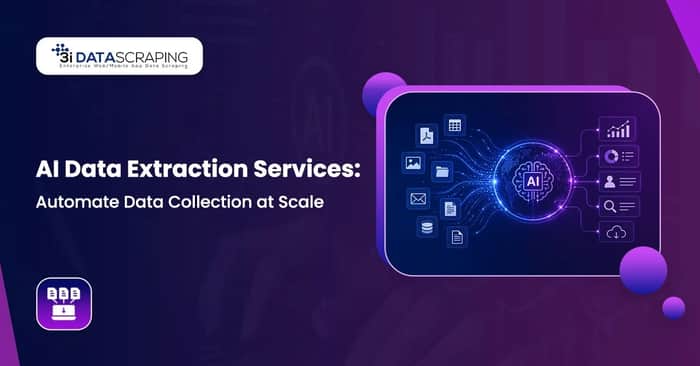
AI data extraction is the automated process of identifying, pulling, and converting raw content from websites, documents, or APIs into clean, structured data using artificial intelligence instead of hardcoded rules.
What makes this genuinely different from older scraping methods is how it handles change. A conventional scraper breaks the moment a website updates its page layout, because it was built around specific HTML selectors tied to that exact structure.
An AI-powered system reads content contextually. It recognizes what a product price looks like, what a job title field means, what review text represents, regardless of where on the page those elements appear. That contextual understanding is what makes automated data scraping durable across long-running data projects, where site structures inevitably evolve.
Read More: https://www.3idatascraping.com/ai-data-extraction-for-automate-data-collection/
