AI SEO strategies: 11 priorities from 250 software searches
On August 24, I pulled 250 commercial software searches from Google in the US. AI Overviews appeared for 232 of them. Their source lists contained 1,760 citations across 651 domains.
The first practical result was simple: listicles made up 61.8% of cited pages, and 37.0% of cited pages did not rank in Google's top 20 for the query. Those numbers changed the order in which I would work on SEO.
This article ranks 11 AI SEO strategies by what I would work on first. Distribb can build and run the same research, content, link, and citation workflows for you. The tiers are my judgment. The study was one US desktop snapshot, and AI Overview sources change from week to week.
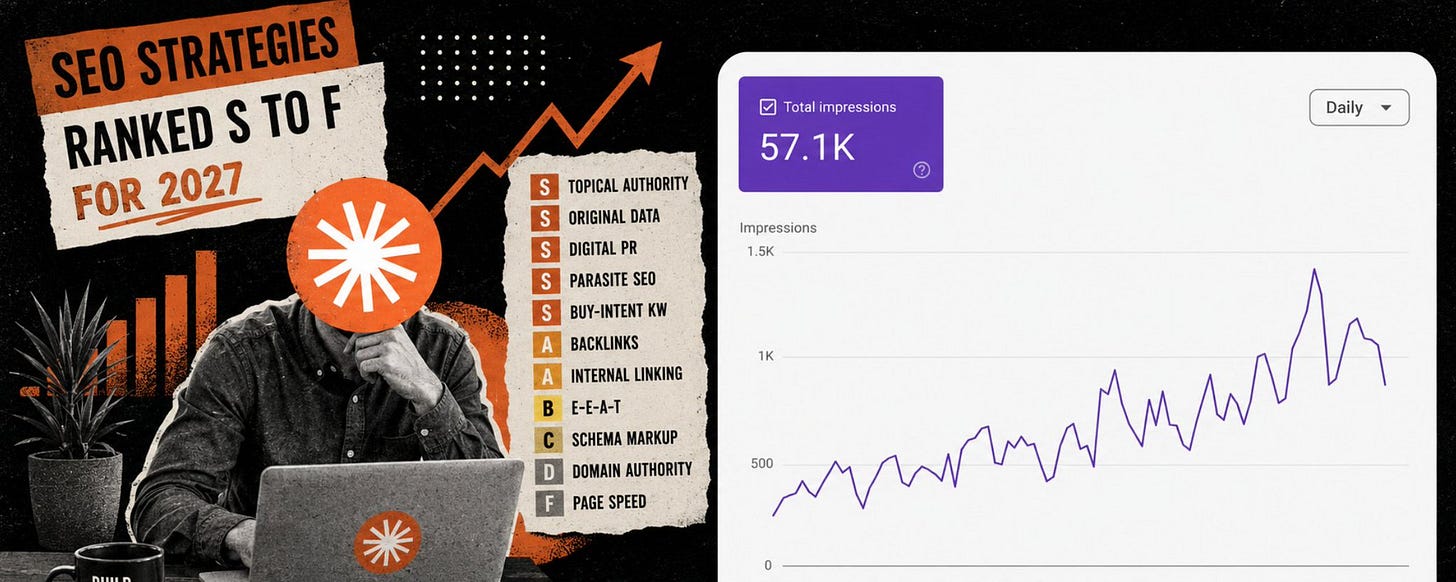
The 11 AI SEO strategies in one list
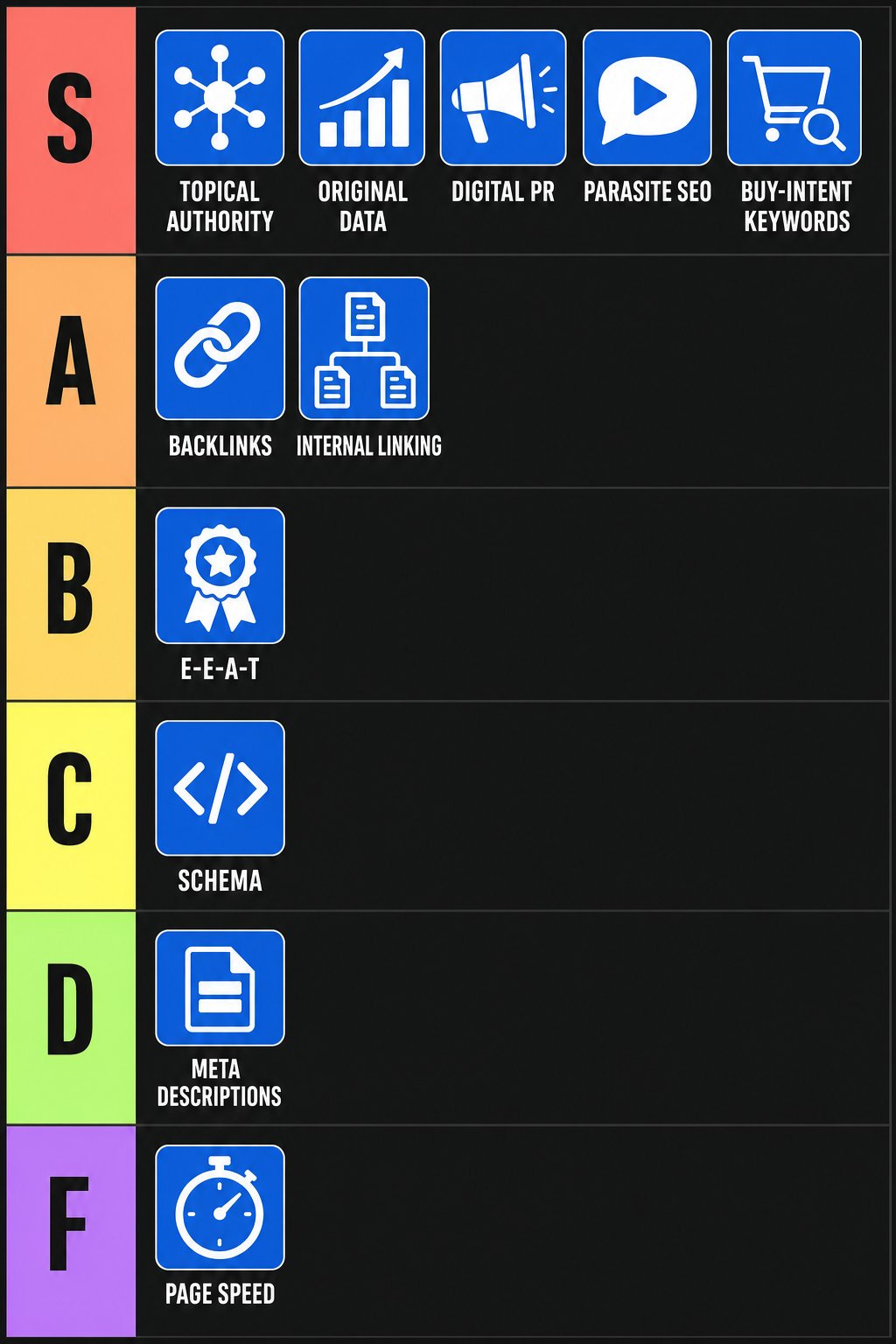
- S tier: topical authority, original data, digital PR, third-party publishing, and buy-intent keywords
- A tier: backlinks and internal linking
- B tier: E-E-A-T
- C tier: schema markup
- D tier: meta descriptions
- F tier: page speed as a ranking task
The ranking reflects where citations came from and which work gave us a measurable result. Some lower-tier work still deserves a place in a healthy site. It moves down the queue because the source data gave me a stronger reason to spend time elsewhere first.
The cited page was often a listicle
The source mix changed by search type.
| Search type | Cited page is a listicle | Cited page is a platform | Cited page ranks top 10 |
| --- | ---: | ---: | ---: |
| X alternatives | 85.8% | 22.5% | 51.7% |
| Best X tools | 72.2% | 28.4% | 54.3% |
| Best X software | 70.4% | 27.2% | 50.6% |
| X software | 50.7% | 24.2% | 59.1% |
| X software pricing | 33.4% | 9.9% | 46.0% |
Pricing searches gave vendor pages their clearest opening. Alternatives and best-tool searches leaned much harder on third-party listicles. That is why the top tier covers your own pages, original evidence, and the places that already appear in AI answers.
S tier: topical authority
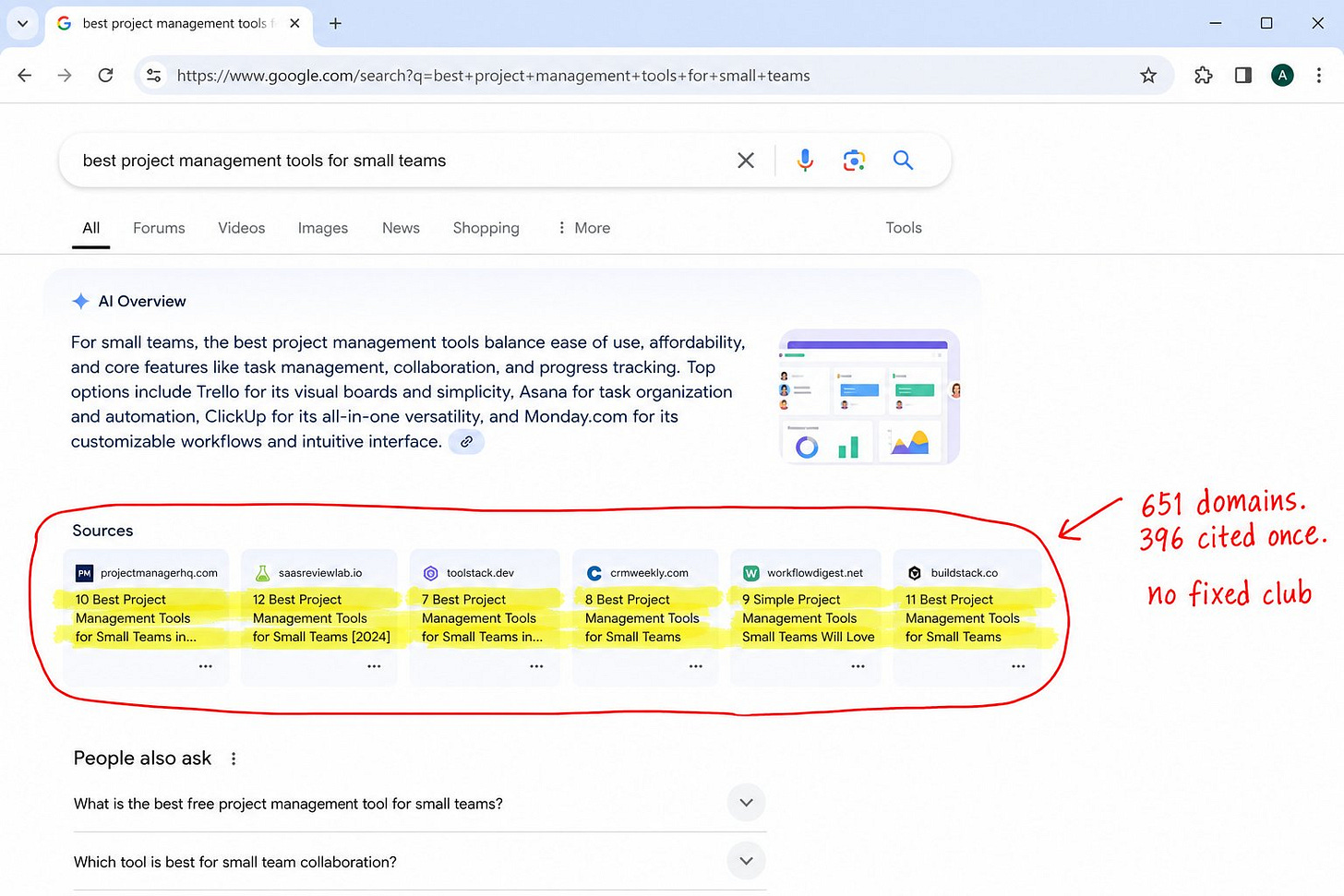
Pick one narrow subject and cover the useful questions around it with connected pages. Ten articles about one job give an AI system a clearer body of evidence than one article touching ten unrelated jobs.
The 250-search study found 651 cited domains, and 396 appeared exactly once. The top ten domains held 32.0% of citations. A small site can still earn a citation when it publishes the clearest answer for a narrow question.
Start with one money page. Add the questions a buyer asks before and after that decision, then connect those pages with links inside the body.
S tier: original data
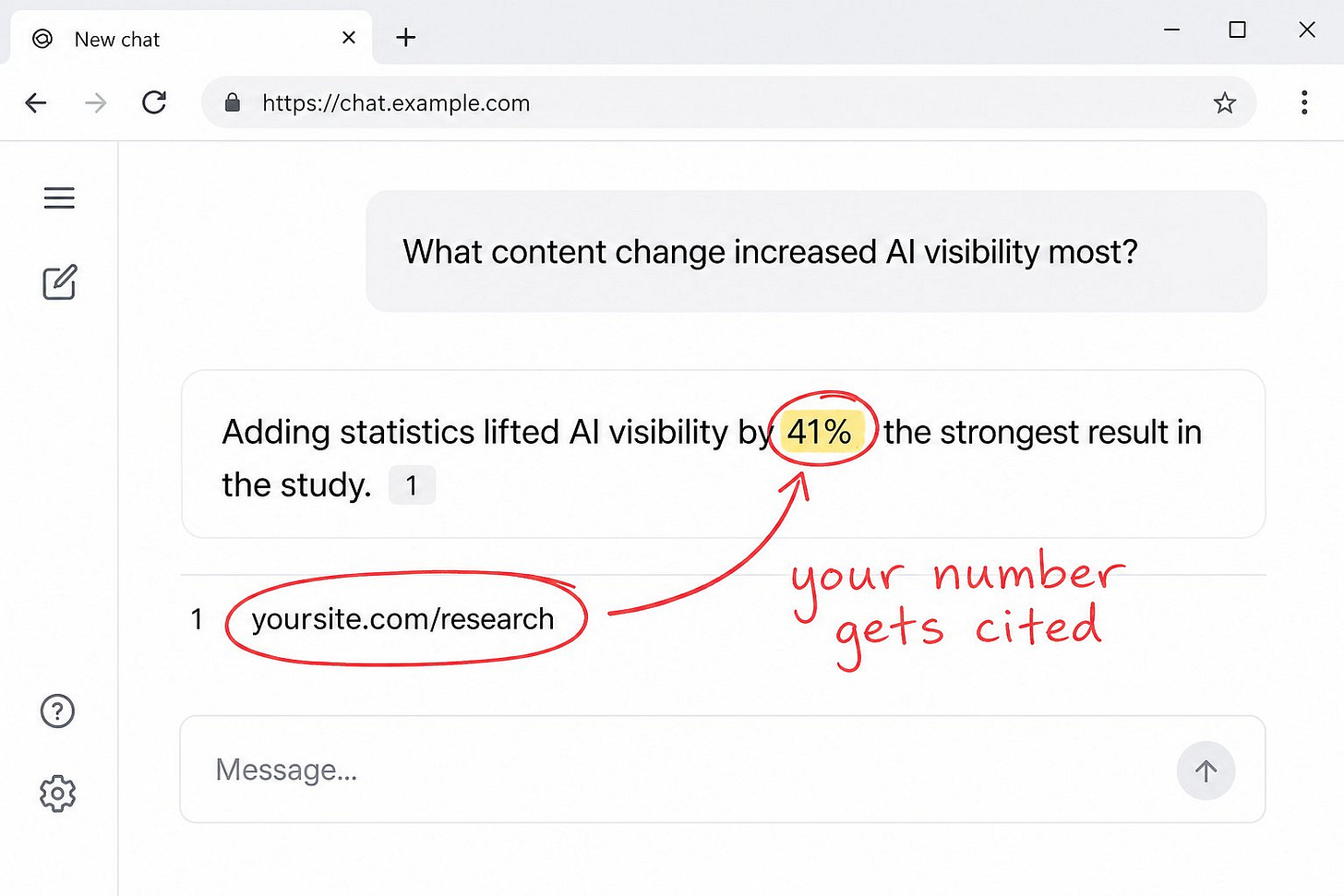
Publish a number that another page cannot copy without naming the source. A small study with a clear method is useful when it answers a question current pages leave open.
The source X article cites Princeton's GEO paper, which tested nine content tactics and reported a 41% visibility increase after statistics were added. The point for a founder is practical: one checked number can give writers and answer engines a reason to cite the page.
Run one useful study each quarter. State the sample, date, location, collection method, and limit beside the result.
S tier: digital PR
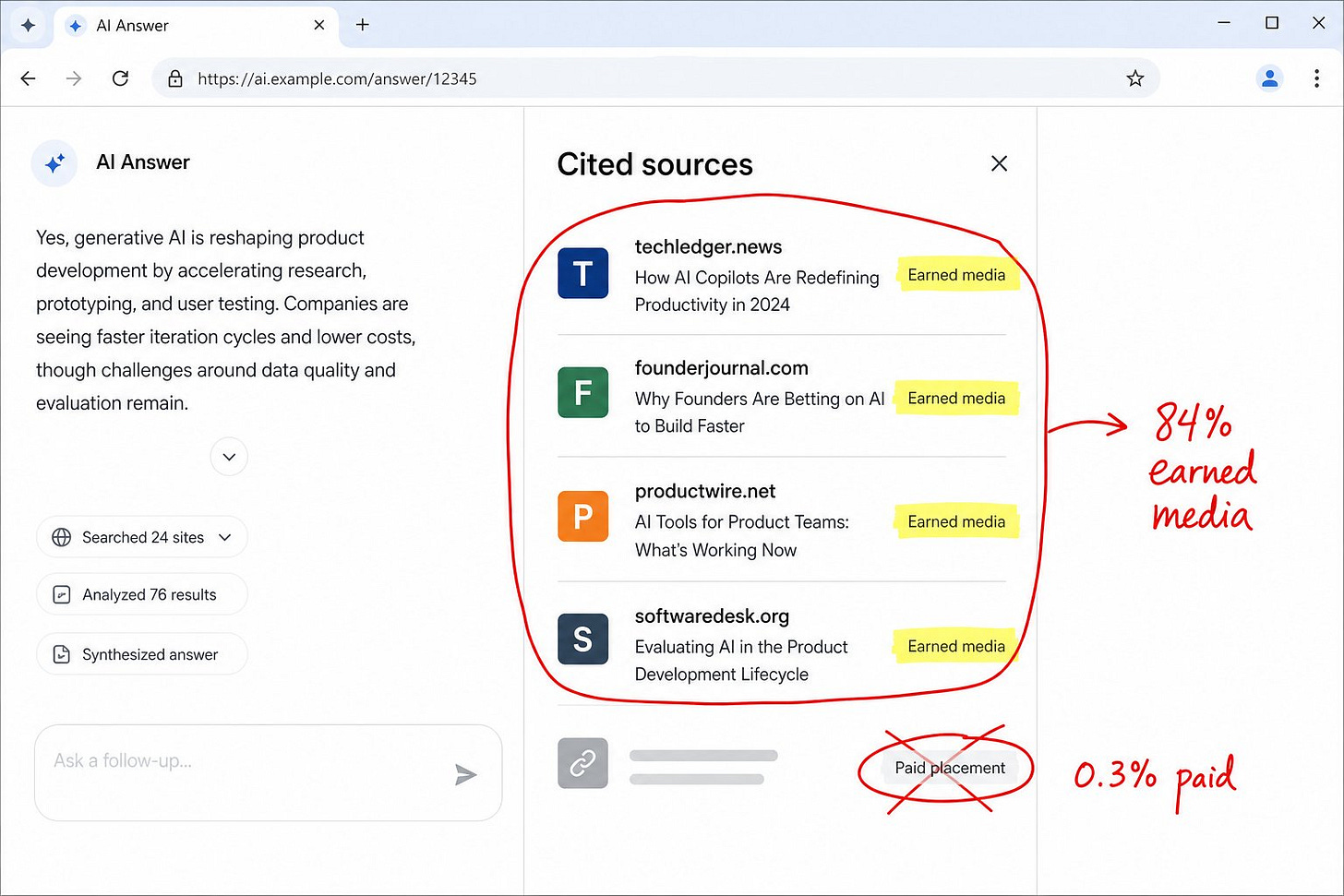
Give reporters and independent publishers a checked fact they can use. The source article reports 84% of AI citations coming from earned media and 0.3% from paid placements.
Coverage can help even when the publisher does not link. A clear brand mention still puts the company name inside a page an AI system may read. When a publisher will add a link, ask for the brand name in the anchor text.
S tier: third-party publishing
Publish or get mentioned on sites that already appear in AI answers. People often call this parasite SEO. The plain version is using a trusted third-party page while your own domain is still small.
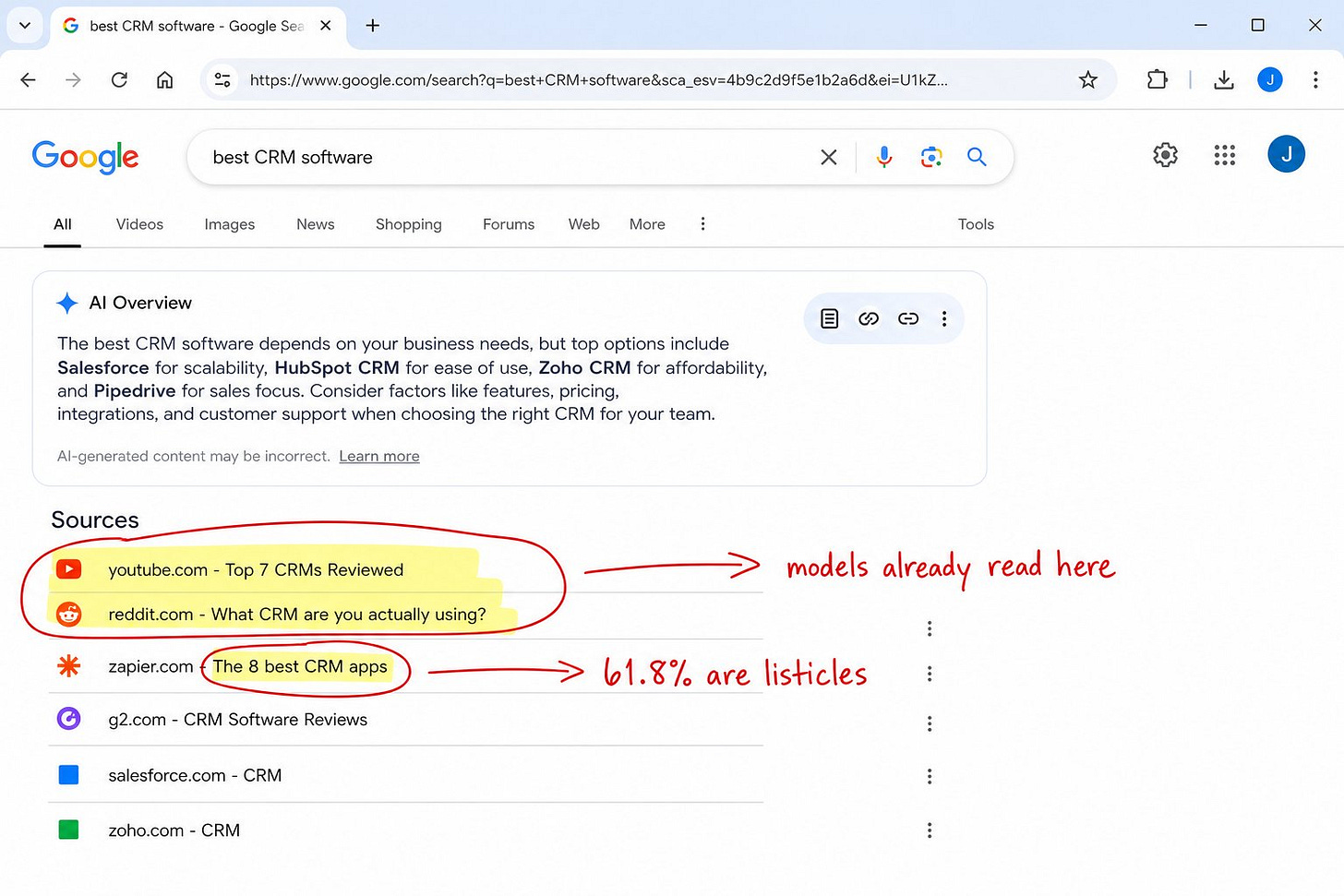
YouTube, Reddit, and independent listicles were common sources in the study. The 61.8% listicle share makes category roundups especially useful. A credible roundup can include competitors and explain which product fits each buyer.
S tier: buy-intent keywords
Buy-intent keywords are searches where someone compares tools, checks pricing, or looks for alternatives. The source article reports an 8.43% conversion rate for comparison and alternative keywords, 4.85% for category keywords, and less than 0.5% for much informational content.
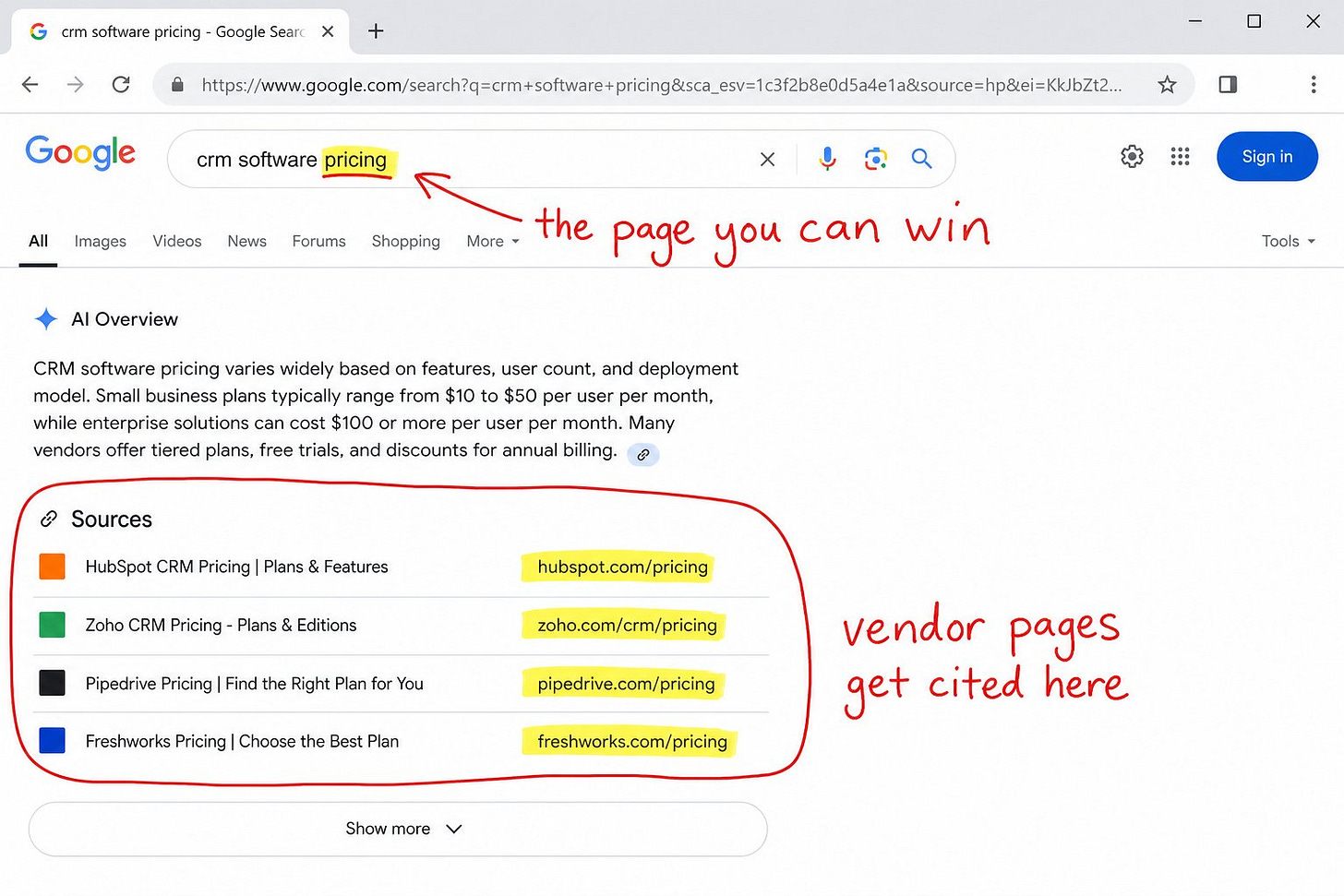
Write the pricing page first because vendor pages were cited most often for pricing searches. For best-tool and alternatives searches, work on inclusion in the listicles that already rank or get cited.
A tier: backlinks
Backlinks still help pages rank and help a brand appear in third-party evidence. An earlier Distribb study found a 0.511 correlation between branded anchor text and AI visibility.
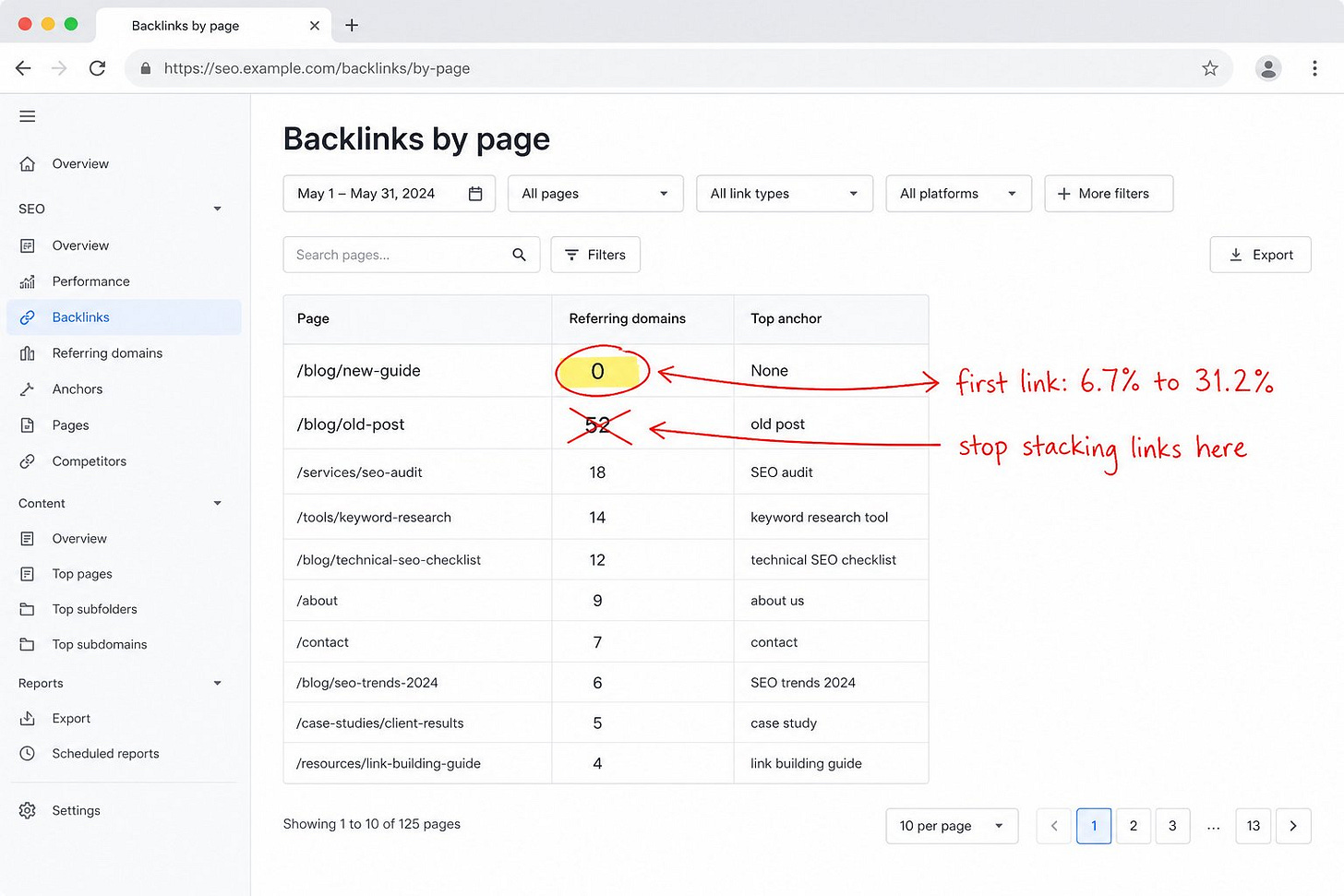
The first backlink had the largest measured difference in the LinkedIn study cited by the source article. One backlink moved the observed ranking probability from 6.7% to 31.2%, while 91% of the checked LinkedIn URLs had no backlink.
Put the first useful link on pages that have none. Then spread effort across other unlinked pages instead of stacking every link on one URL.
A tier: internal linking
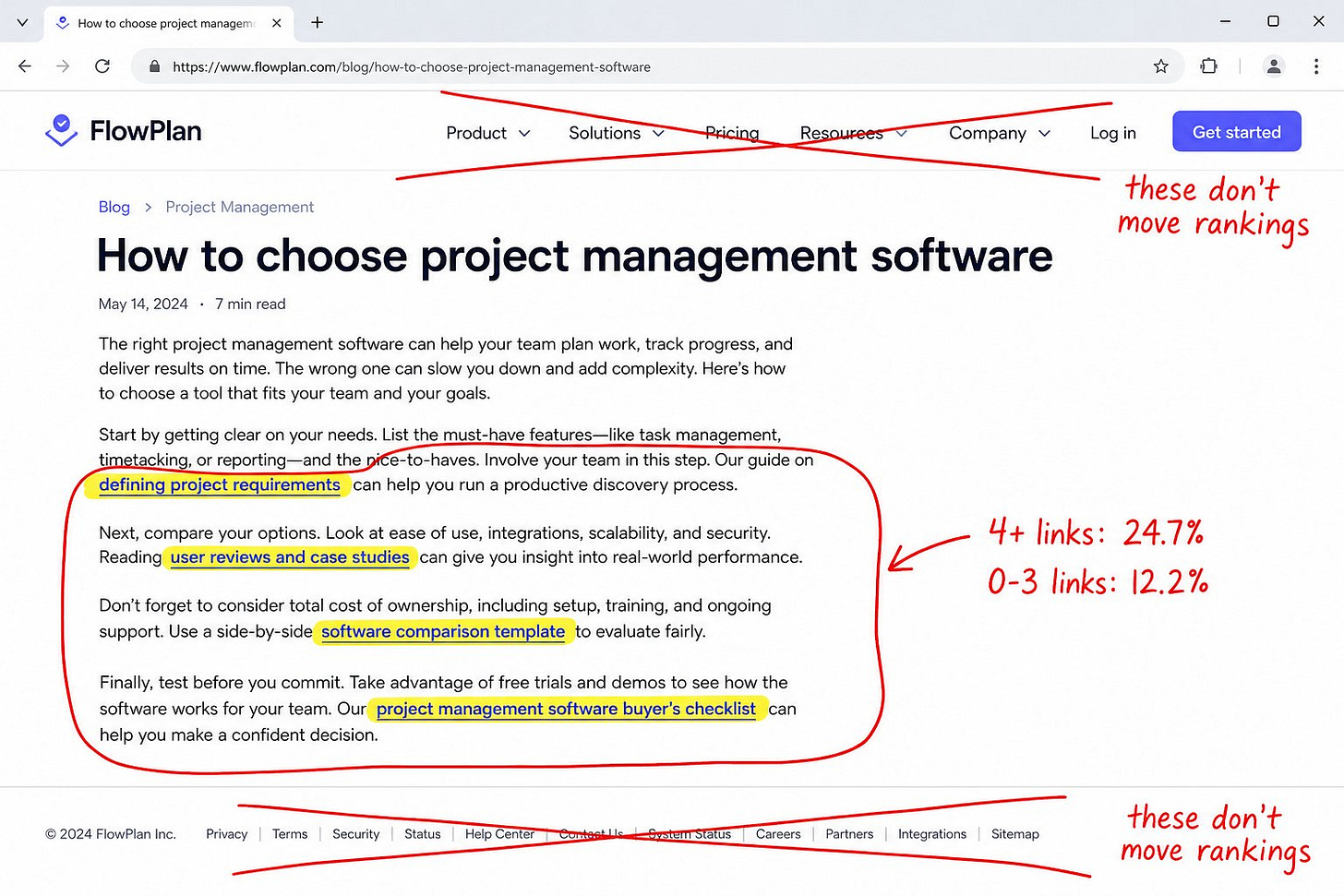
An earlier Distribb study checked 534,888 internal links across 38 SaaS sites. Pages with four or more contextual inbound links ranked for something 24.7% of the time. Pages with three or fewer did so 12.2% of the time.
Navigation and footer links made up about two thirds of the links in that study and did not predict the same result. Put four useful links inside related articles, and vary the anchor text. Pages with repeated anchors ranked at 17.3% compared with 42.2% for pages with varied anchors in the source study.
B tier: E-E-A-T
E-E-A-T stands for experience, expertise, authoritativeness, and trust. Google does not publish an E-E-A-T score, so use it as an editorial check.
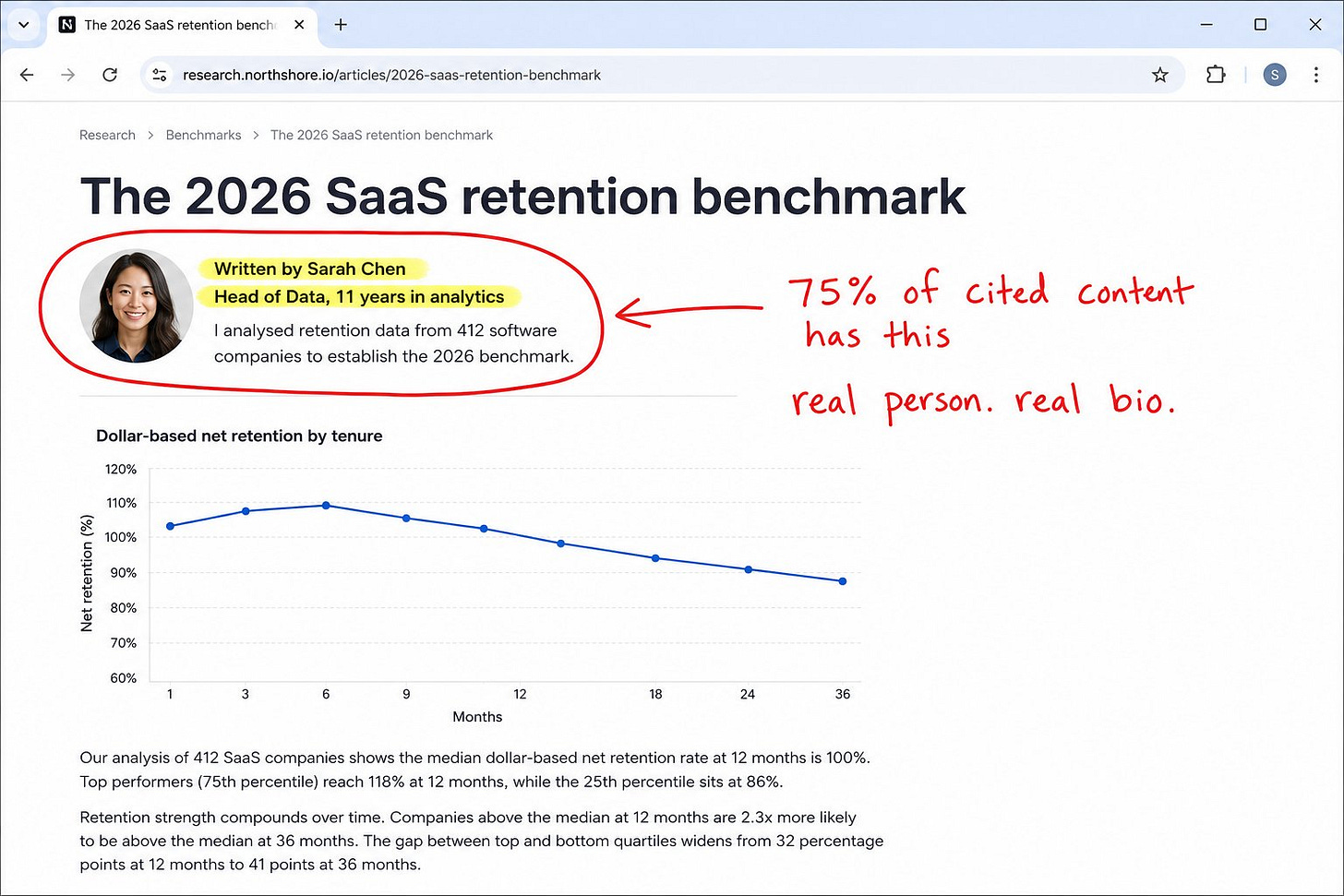
The source article reports that 75% of content cited by large language models showed author credentials. Put a real person on the page. Add a short bio that explains why that person can make the claim, and link to the evidence behind the claim.
C tier: schema markup
Add valid schema when it can produce a useful rich result, then move on. Visible copy still has to answer the question.
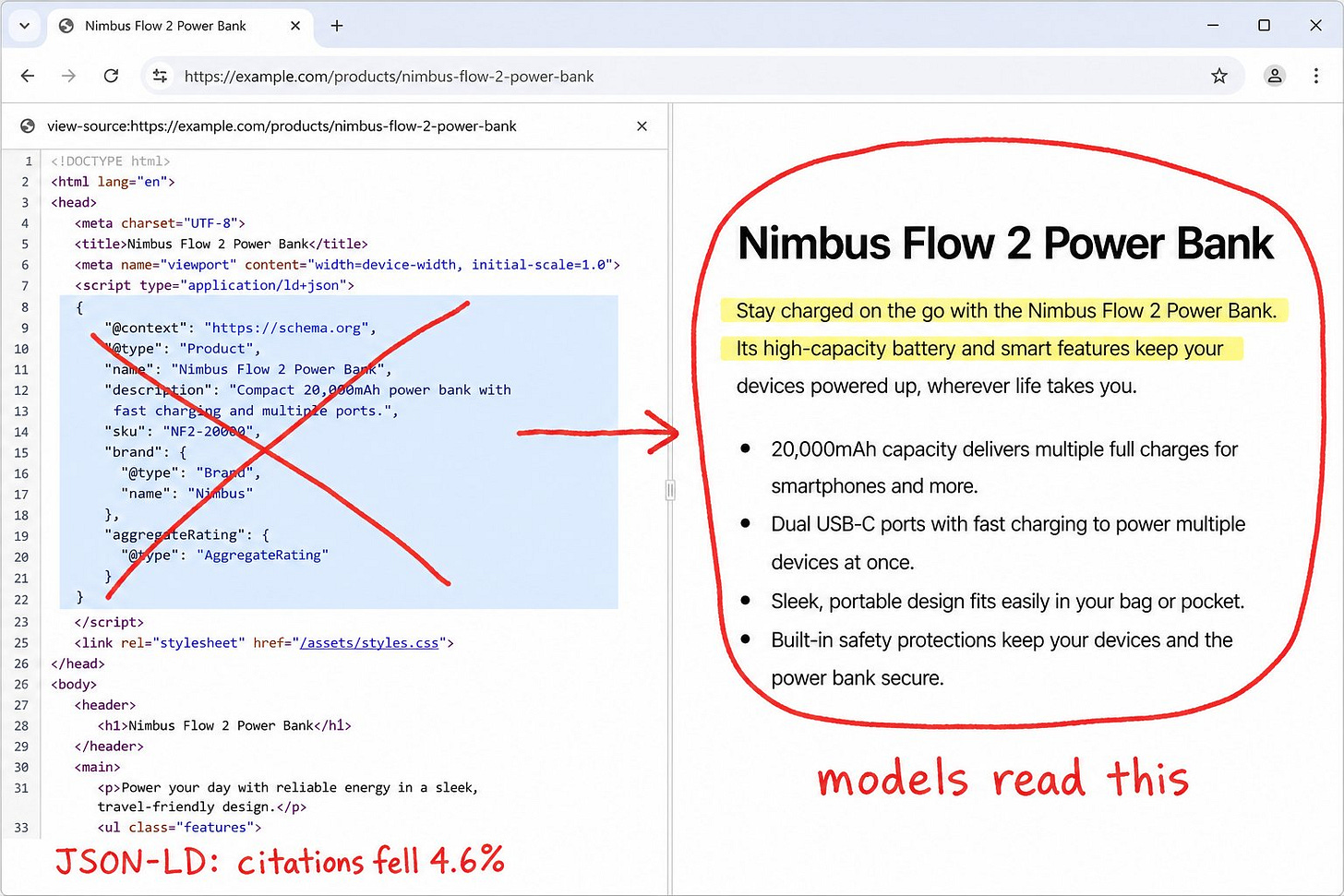
The source article cites an Ahrefs check of 1,885 pages that added JSON-LD. AI Overview citations fell 4.6% after the change. That observation does not prove schema caused the fall, and it gives no reason to treat schema as an AI citation shortcut.
D tier: meta descriptions
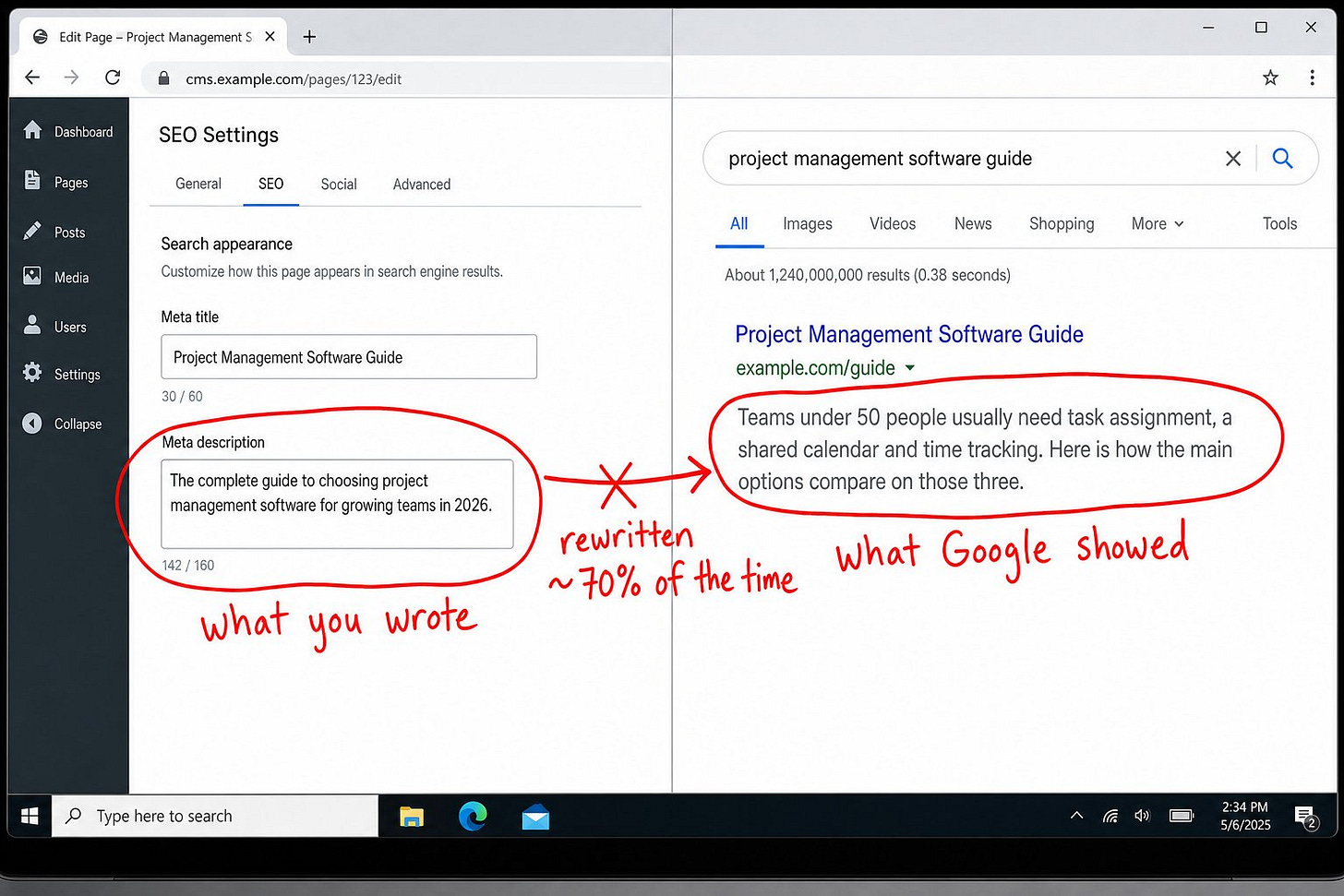
Write a meta description for pages where the click is worth money, including pricing, comparison, and product pages. Google replaces the displayed description roughly 70% of the time, according to the source article, and meta descriptions are not a ranking factor.
The description can still sell the click when Google keeps it. Spend a few minutes on the commercial pages, then return to work that changes the page or earns a citation.
F tier: page speed as a ranking task
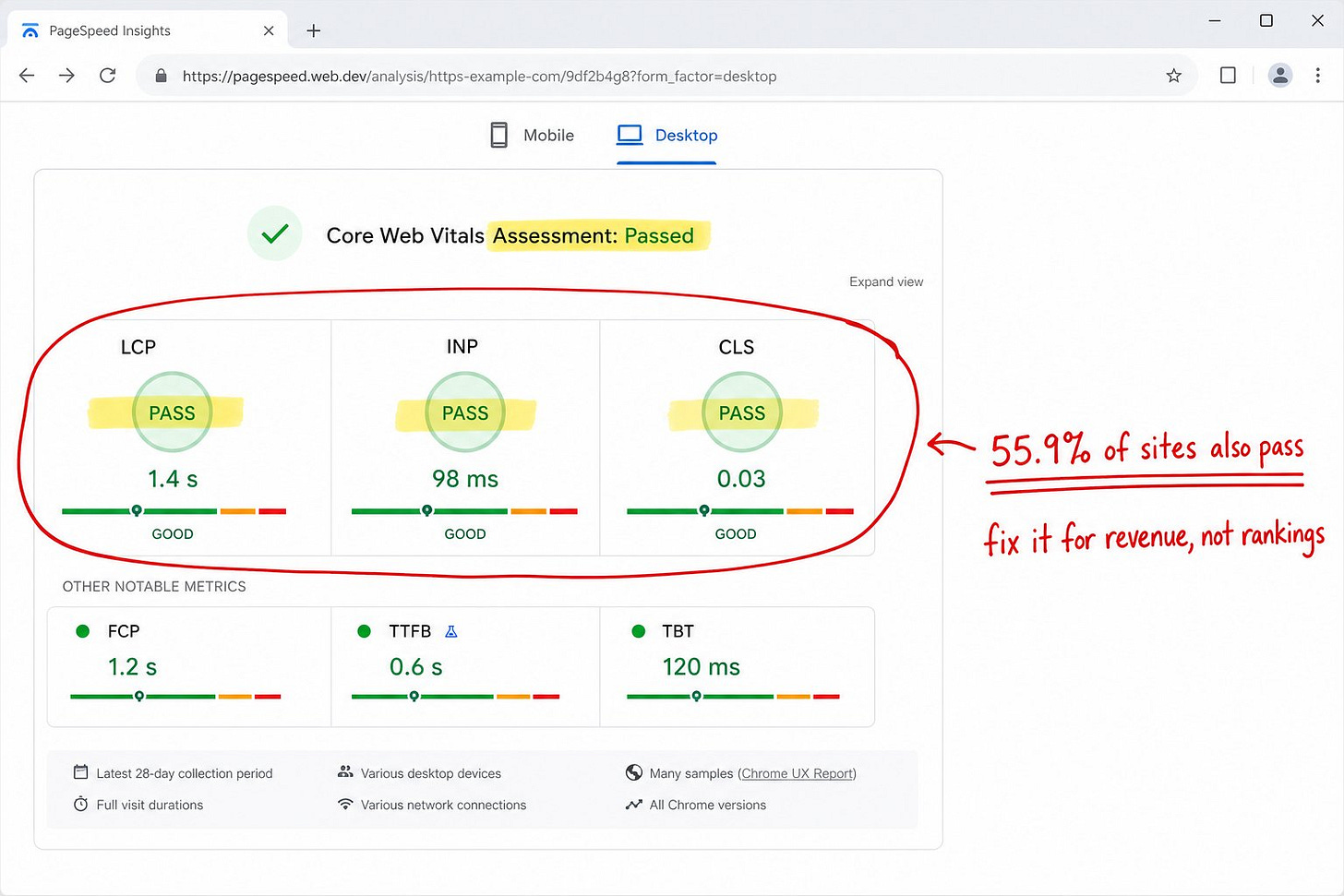
Fix a slow site when it hurts readers or checkout revenue. The source article reports that 55.9% of sites pass all three Core Web Vitals, so a passing score does not separate a site from the field on its own.
Keep the site usable. Stop polishing an already passing score when a buyer still cannot find a pricing page, comparison, study, or useful answer.
Where the 1,760 citations came from
I collected 50 software categories crossed with five commercial modifiers on August 24, 2026. The queries were generated before collection, and none were changed after a result appeared.
The pull used US desktop results, the top 20 organic pages, and the full AI Overview source list. AI Overviews appeared for 232 of 250 searches. A title pattern fixed before the pull classified listicles.
| Where the cited page ranked | Share |
| --- | ---: |
| Positions 1 to 10 | 52.2% |
| Positions 11 to 20 | 10.8% |
| Outside the top 20 | 37.0% |
This study shows where Google sourced one set of answers. It does not show why Google chose any page. The internal-link and backlink numbers came from earlier Distribb studies, and the S-to-F tiers are my judgment.
Frequently asked questions
Which AI SEO strategy should I start with?
Start with one narrow topic and the buy-intent pages tied to it. Publish a clear pricing or product page, then add the comparison, alternatives, and supporting questions buyers need. Connect those pages with contextual internal links before opening another topic.
How many articles do I need for topical authority?
There is no fixed article count in the source study. Use enough pages to answer the distinct questions around one buying decision without repeating the same page. The source article uses ten connected articles about one subject as a practical example.
Do backlinks still matter for AI SEO?
Yes, backlinks still matter in the studies cited here. The earlier LinkedIn study found the largest measured difference between zero and one backlink, with observed ranking probability moving from 6.7% to 31.2%. That result is observational and does not guarantee the same change for another page.
Does schema markup help with AI Overview citations?
The evidence in the source article does not show a citation gain from schema. An Ahrefs check of 1,885 pages reported a 4.6% fall in AI Overview citations after JSON-LD was added. Use valid schema for rich results, and keep the answer visible in the page copy.
Does page speed help a page get cited by AI?
The source article gives no evidence that an already passing Core Web Vitals score earns more AI citations. Page speed still matters when a slow page loses readers or sales. Once the page is usable and passing, the cited-page data gives a stronger reason to work on evidence, buy-intent pages, and third-party mentions.
How should I measure AI SEO results?
Track a fixed set of buyer questions and record the answer engine, cited source, cited URL, and date. Run the same set again each month because AI sources change. Keep citation counts separate from normal Google rankings, since 37.0% of cited pages in this study sat outside the top 20.
Which of these 11 jobs is taking the most time inside your company right now?
Try Distribb free and run the research, content, link, and citation work from one place.

Pick one surface and one buy intent page. Listicles and citations outside the top 20 beat polishing Core Web Vitals. Three to five buyer questions on that page are enough to log.
When it comes to AI SEO strategies, it’s essential to focus on what genuinely enhances your content's visibility and engagement. From my experience, leveraging your own data can be a gamechanger. Here are a few actionable strategies based on observations from various projects:
Focus on Original Research: Create unique studies or insights related to your niche. Original data tends to attract backlinks naturally, and I've seen firsthand how it drives organic traffic. For instance, our case study that compared user engagement by content type resulted in a 40% boost in traffic within just a few months.
Optimize for Intent: Use AI tools to analyze search intent more effectively. Instead of just stuffing keywords, look at what users are truly searching for. By focusing on content that answers specific questions or pain points, our blog posts saw a significant improvement in time-on-page metrics, which correlated closely with improved rankings.
Benchmark Against Competitors: Tools that allow you to compare your content's performance against competitors can give you insights on where to improve. I invested time into competitive benchmarking, which led to refining our topics and formats, resulting in an increase of 50% in our keyword visibility.
Automate Content Scheduling: One area where AI can save you a lot of time is in automating your content publishing schedule. Implementing a robust system for scheduling and optimizing posts allowed us to maintain a consistent presence without burning out the team.
Multi-Modal Content Creation: As the market evolves, incorporating multi-modal content (like videos, infographics, etc.) can enhance your SEO. Our experiments with diverse formats led to a wider audience reach and improved engagement, which improved our overall SEO metrics significantly.
Continuous Performance Monitoring: Leverage AI to monitor the performance of your content continuously. This way, you can refine your strategy based on real-time data rather than assumptions. In my own experience, regular assessments have kept our content relevant and engaging.
By prioritizing these strategies and leveraging your own unique insights, you can create a strong foundation for an effective AI-powered SEO approach.