ChatGPT Image Editor Online Free: Edit Photos with AI Chat Without Professional Skills
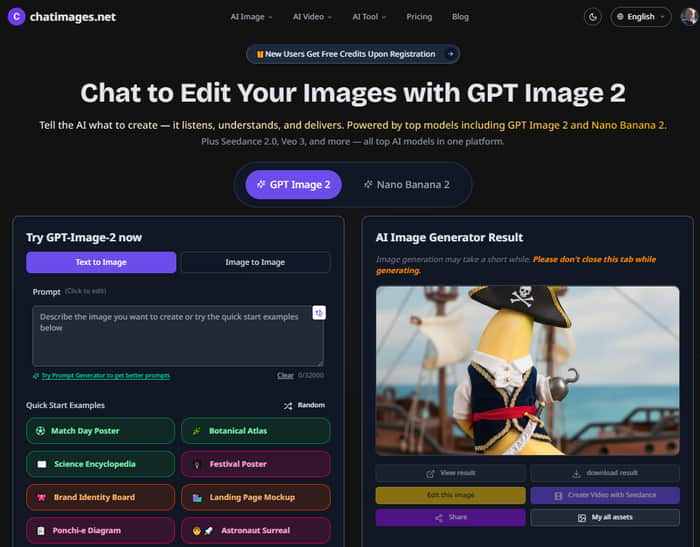
Meta Description:
Discover how a ChatGPT online free image editor tool helps you edit photos with AI chat. Learn how GPT Image 2 transforms photo editing with simple text prompts, real use cases, and practical tips.
Introduction: AI Photo Editing Has Entered the Chat Era
For years, editing a photo meant opening complicated software, learning dozens of tools, adjusting layers, and spending hours fixing small details.
Traditional editors like Photoshop are powerful, but they often create a barrier for beginners. Even simple tasks — removing an object, changing a background, improving lighting, or creating a new style — require technical knowledge.
The rise of AI image editing has changed this workflow completely.
Instead of manually selecting areas, adjusting sliders, or searching for tutorials, users can now simply describe what they want.
“Remove the person in the background.”
“Make this photo look like a professional magazine cover.”
“Turn this portrait into a cinematic style.”
AI understands the instruction and transforms the image.
After testing different AI image tools and following creator feedback across communities like Reddit, X, and AI creator groups, I found that ChatGPT image editing represents a major shift: photo editing is becoming a conversation instead of a technical process.
What Is a ChatGPT Image Editor?
A ChatGPT image editor is an AI-powered photo editing system that allows users to modify images through natural language instructions.
Instead of controlling complicated editing panels, users communicate with AI like they would talk to a designer.
For example:
“Make the sky more dramatic and add golden sunset lighting.”
“Remove the coffee cup from the table and keep the original shadows.”
“Convert this product image into an e-commerce-style photo.”
The AI analyzes:
Image structure
Objects
Lighting
Composition
Style
User instructions
Then it generates an edited version based on the request.
The latest generation of AI image models, including GPT Image 2, focuses on improving the following:
Better image understanding
More accurate editing instructions
Improved character consistency
Higher-quality details
More natural transformations
This makes AI editing much closer to working with a professional creative assistant.
Why Are People Searching for a ChatGPT Image Editor Online Free?
The keyword "ChatGPT image editor online free” reflects a growing demand from everyday users.
Most people are not looking for advanced Photoshop alternatives.
They want simple solutions:
- Edit Photos Without Learning Software
Many users only need quick improvements:
Remove unwanted objects
Fix old photos
Change backgrounds
Improve image quality
Create social media content
AI removes the learning curve.
A simple sentence can replace dozens of manual editing steps.
- Create Professional Images Faster
Content creators, marketers, and small businesses need visual content every day.
AI image editors help them:
Create product images
Design advertisements
Generate thumbnails
Improve profile photos
Create marketing materials
Instead of spending hours editing, creators can experiment with multiple ideas quickly.
- Make Creativity Accessible
One of the biggest changes I noticed from user discussions is that AI editing attracts people who previously avoided creative software.
Many Reddit users mention that AI tools allow them to:
Try ideas they could not create manually
Experiment without design experience
Turn simple concepts into visual results
The biggest advantage is not only speed.
It is accessibility.
My Experience Testing AI Image Editing With ChatGPT-Style Workflows
When I first tested conversational AI image editing, the biggest difference was the workflow.
Traditional editing:
Open software
Find the right tool
Select objects manually
Adjust settings
Export multiple versions
AI editing:
Upload image
Describe the change
Review the result
Refine with additional instructions
The process feels closer to collaborating with a designer.
For example:
Initial prompt:
“Improve this portrait photo.”
AI understands the general goal.
Then I can continue:
“Make the lighting warmer.”
“Keep the person’s identity unchanged.”
“Make it look like a professional studio photo.”
This conversational editing process is why many users search for ways to edit photos with AI chat instead of using traditional tools.
What Can You Do With a Free ChatGPT Image Editor Online?
- Remove Objects From Photos
One of the most popular AI editing requests.
Examples:
Remove strangers from travel photos
Delete unwanted objects
Clean product images
Fix background distractions
AI can identify objects and rebuild missing areas automatically.
- Change Image Backgrounds
Background replacement is widely used by:
Online sellers
Influencers
Designers
Businesses
Examples:
Learn about Medium’s values
Original:
A product photographed on a desk.
Prompt:
“Place this product in a luxury studio environment.”
Result:
A professional-looking commercial image.
- Restore Old Photos
AI image editors are increasingly popular for photo restoration.
Common requests:
Repair damaged photos
Improve sharpness
Restore faded colors
Enhance family memories
This is one area where AI provides emotional value, not just convenience.
- Create Social Media Content
Creators use AI editing for:
Instagram posts
YouTube thumbnails
LinkedIn graphics
Blog illustrations
The ability to quickly create variations is especially useful for testing different visual styles.
GPT Image 2 vs Traditional Photo Editing: What Changed?
Feature: Traditional Editor AI Image Editor Learning curve: High/Low Editing method Manual tools, text instructions, speed Minutes to hours Seconds to minutesCreativityUser-drivenAI-assistedBeginner-friendly Limited Excellent
The biggest change is not replacing professional designers.
Instead, AI expands the number of people who can create quality visuals.
Real User Feedback: What Are Creators Saying?
Based on discussions from AI communities and creator platforms, several patterns appear.
Positive Feedback
Users commonly appreciate:
Faster workflows
Creators like that they can generate ideas quickly without opening complicated software.
Better experimentation
AI allows users to test many creative directions.
Natural interaction
Many users describe prompt-based editing as more intuitive than traditional tools.
Common Complaints
AI image editing is not perfect.
Users frequently mention:
Sometimes inaccurate edits
Complex instructions may still produce unexpected results.
Example:
“Remove only this object but keep everything else identical.”
AI may slightly modify surrounding areas.
Maintaining identity consistency
Portrait editing remains challenging.
Users want:
Same face
Same expression
Same details
while changing only style or environment.
Limited control compared with professional software
Professional designers still need tools like Photoshop for:
Pixel-level adjustments
Advanced compositing
Professional workflows
AI works best as a creative assistant.
How to Get Better Results From a ChatGPT Image Editor
The quality of your result depends heavily on your prompt.
A simple formula:
Subject + Action + Style + Details
Example:
Weak prompt:
“Improve this photo.”
Better:
“Enhance this portrait with natural studio lighting, keep facial identity unchanged, improve skin details, and create a professional photography style.”
Useful instructions:
Specify what should change
Instead of:
“Make it better.”
Try:
“Improve lighting and remove background distractions.”
Protect important details
Use:
Keep the original face
Preserve identity
Maintain natural texture
Describe the desired style
Examples:
Cinematic
Professional photography
Minimalist
Luxury commercial
Vintage film
The Future of AI Photo Editing
Based on current development trends, AI image editing is moving toward a more complete creative assistant.
Future improvements will likely include:
Better long-term character consistency
More precise editing control
AI understanding of brand styles
Automated content creation workflows
Image + video editing integration
The direction is clear:
Users will spend less time learning software and more time describing ideas.

The interesting shift is that AI image editing is changing the workflow from learning tools to communicating intent.
The challenge now seems less about making edits possible and more about giving users enough control and consistency for professional use cases.
That's a really insightful observation! I completely agree that the shift from mastering complex tools to simply communicating intent is one of the most fascinating developments in AI image editing. It feels like we're moving towards a much more intuitive and creative process, where the focus is truly on the vision rather than the technical hurdles.
You've also hit on the crucial next step: ensuring that this intent-driven approach offers the kind of precise control and consistency that professionals need. Making edits "possible" is one thing, but making them reliably perfect and repeatable across diverse projects is where the real challenge and opportunity lie. It's exciting to think about how these capabilities will evolve to meet those high standards.
I'm glad it resonated. I'd enjoy continuing the conversation outside the thread if you're open to it. What's the best email to reach you on?