Crypto insurance, mucin, corporate edtech, +2 more topics taking off
Exploding Topics scours the internet to find emerging trends before they take off.
Here are four of the latest developments, along with some insights and analysis to help you take advantage.
1. Crypto Insurance
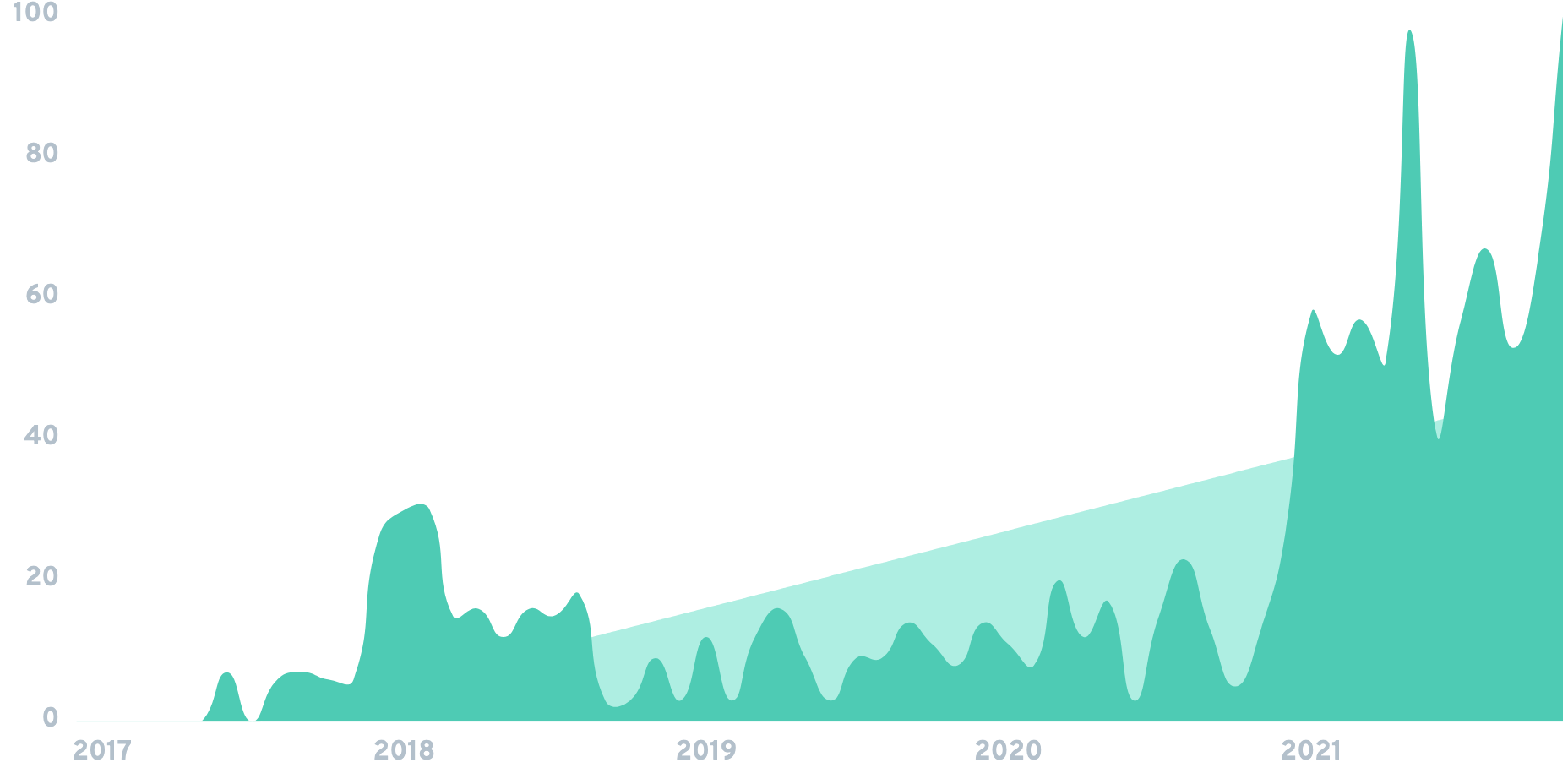
Crypto insurance is a type of liability insurance policy designed to cover cryptocurrency-related losses, theft, and security breaches.
According to data from Atlas VPN, over $1B was stolen by blockchain hackers in Q3 of 2021 alone.
$800M of that was in the Ethereum ecosystem. And a further $114M was lost by cryptocurrency exchanges across 5 hacks.
What’s next:
Cryptocurrency insurance is part of the Decentralized Coverage meta trend.
Decentralized insurance goes beyond cryptocurrency insurance because it also offers insurance on other DeFi projects, such as smart contracts.
Breach Insured offers coverage for crypto assets held on major exchanges by US retail users. The startup raised $2.5M from a seed funding round in May 2021.
Evertas works with brokers, wholesalers, and insurance carriers to provide policies that cover loss or theft of private keys and crypto assets as well as tech errors. The startup closed a $4.3M seed funding round in May 2021.
Unslashed Finance targets the DeFi segment by providing coverage against smart contract failures, wallet exploits, and custody risk. The company claims to have over $500M worth of insured assets.
2. Mucin
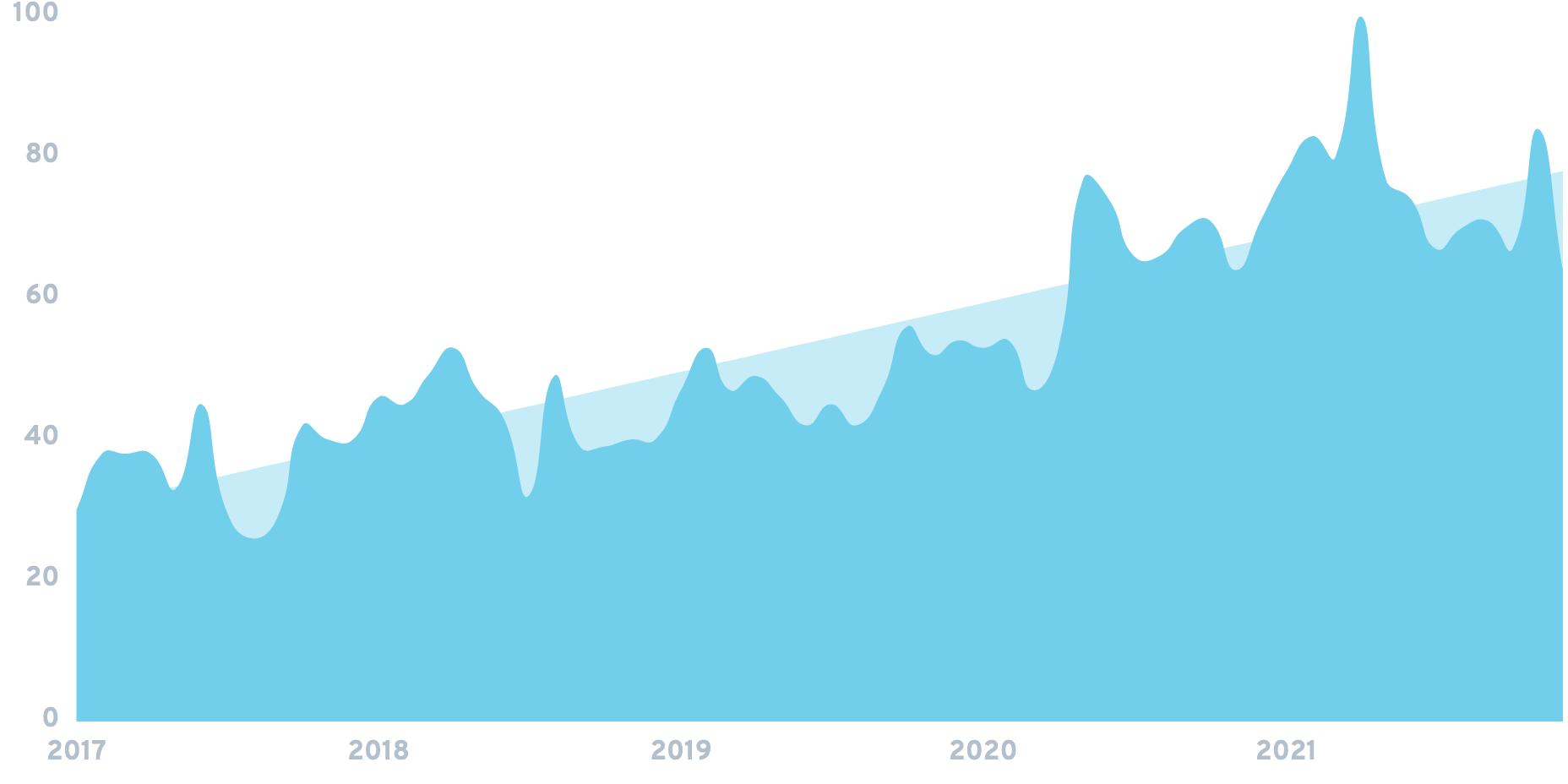
According to Science Direct, Mucins are “a family of high-molecular-weight glycoproteins, present in many animals and many microbes as the main component of mucus.”
Demand for this compound is on the rise largely due to a specific type of mucin: snail mucin, an increasingly-common skincare ingredient.
Proponents claim that topical snail mucin stimulates collagen production, boosts healing, and provides nutrients important for skin health.
Examples of growing brands that use snail mucin in their products include Cosrx, Cos De BAHA, IUNIK, JUMISO.
What’s next:
Mucin is a part of the “K-beauty” meta trend.
Cosmetic exports from South Korea now exceed $6.5B, a CAGR of 26% since 2015 (Statista).
And the worldwide market size for K-beauty products is forecasted to reach $31.6B by 2029.
The US is among the top importers of K-beauty products: nearly 30% of Americans consider K-beauty “very popular” in the States.
3. KikiTrade

KikiTrade is a crypto social investment platform focused on the Asian market.
Aside from investing, the company offers savings accounts on idle funds with an APY of up to 8%.
Its Android app has exceeded 100K downloads, including 5K new installs in November 2021 alone.
The startup has raised $12M in pre-Series A funding.
What’s next:
KikiTrade is part of the “crypto for beginners” meta trend.
Estimates suggest that there are now over 300M crypto users globally. Which is up from 100M twelve months ago.
To accommodate novice crypto users, a growing number of startups are launching products specifically designed for new crypto users.
With crypto wallet passwords and seed phrases being a barrier for many new crypto users, ZenGo takes a different approach to authorization: facial biometrics.
And 60% of consumers claim to be excited about the potential of biometric technology for verification, survey data shows.
ZenGo closed a $20M Series A funding round in April 2021, bringing their total funding to $24M. The platform has processed $100M in crypto transactions from a user base of 100K.
Alpha Impact offers a trading platform that lets users copy top-performing crypto traders. This service supports a minimum investment of $25 and doesn’t hold funds (instead, it connects to the customer’s existing exchange account).
To bring crypto purchases to more international markets, startups like Pintu provide an exchange with investments in local currency.
Pintu specifically services the Indonesia market with commission-free crypto trading in IDR. The Android app has over 1M installs, including 200K in November 2021.
The startup raised $35M in a recent funding round led by Lightspeed Venture Partners.
4. Coassemble
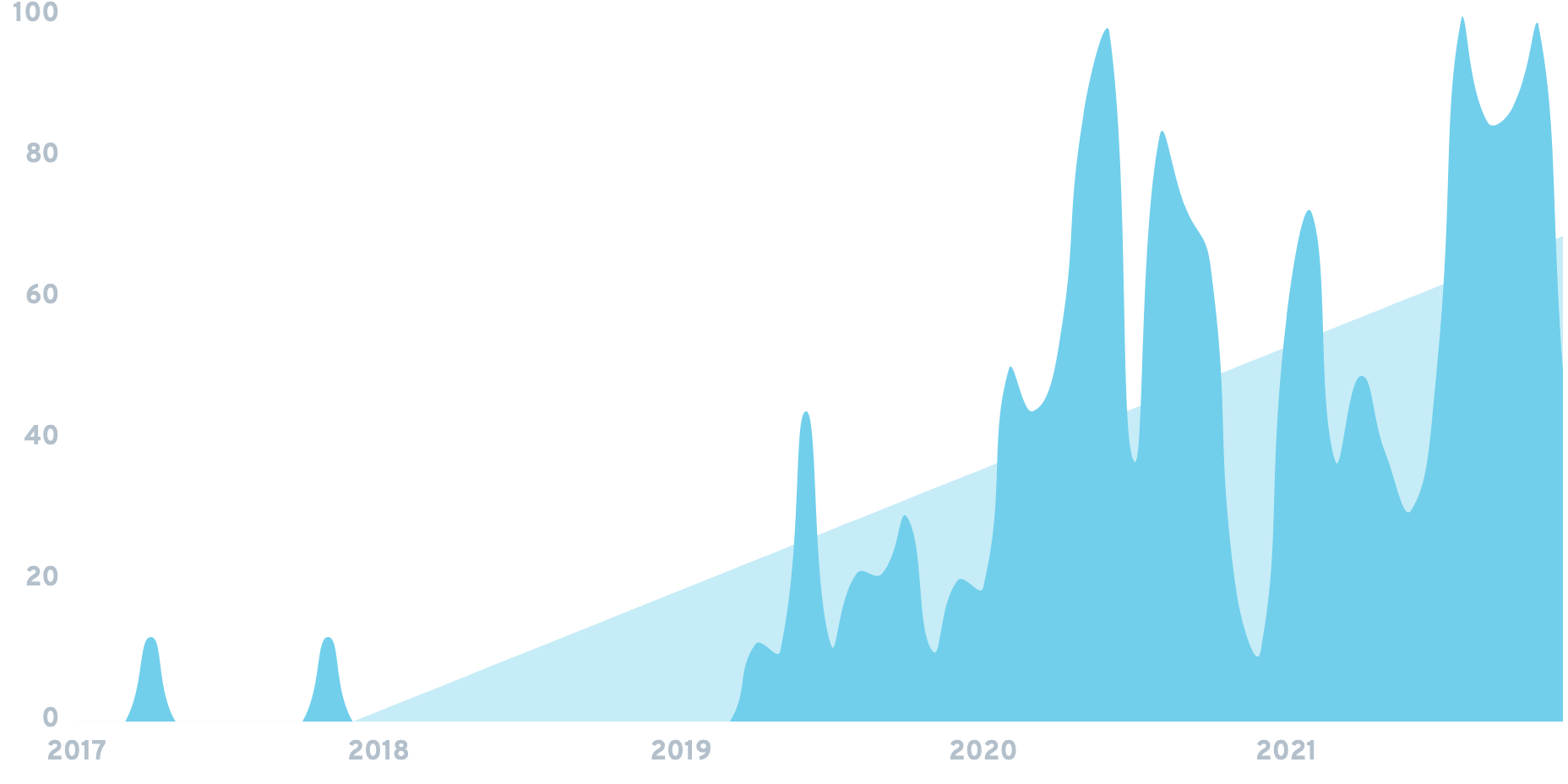
Coassemble is a B2B edtech SaaS startup focused on DIY course creation.
In other words, it’s “Canva for online courses”.
Specifically, the company’s software allows the creation of interactive online courses from existing presentations and Google docs.
Coassemble has over 1000 customers and hit $3.0M annual revenue in 2021.
As well as subscriptions, the company has also sold more than 4,000 lifetime licenses (at $79.95 each) for its lite version.
The company claims that over 50K online courses have been created on the platform.
Coassemble has raised $6M in funding to date.
What’s next:
Coassemble is part of the “corporate edtech” meta trend.
The market size of worldwide corporate e-learning is forecast to reach $37.16B by 2026 - a significant increase from $17.24B in 2019.
Here are some examples of growing startups in this niche:
MySkillCamp: SaaS platform for corporate training. The software enables the creation and management of remote face-to-face courses with content available via their marketplace. The startup raised $14.1M in its most recent funding round in September 2021.
Ubits: Subscription product with over 600 online courses in marketing, finance, sales, and tech for upskilling employees. The company has over 200 enterprise clients in the LATAM region.
And ProSpark is an LMS for corporate customers with gamification elements. The startup has had two seed funding rounds with its most recent in May 2021.
