Gold vermeil, Artgrid, +2 more trends taking off
Exploding Topics scours the internet to find emerging trends before they take off.
Here are four of the latest developments, along with some insights and analysis to help you take advantage.
1. Gold vermeil
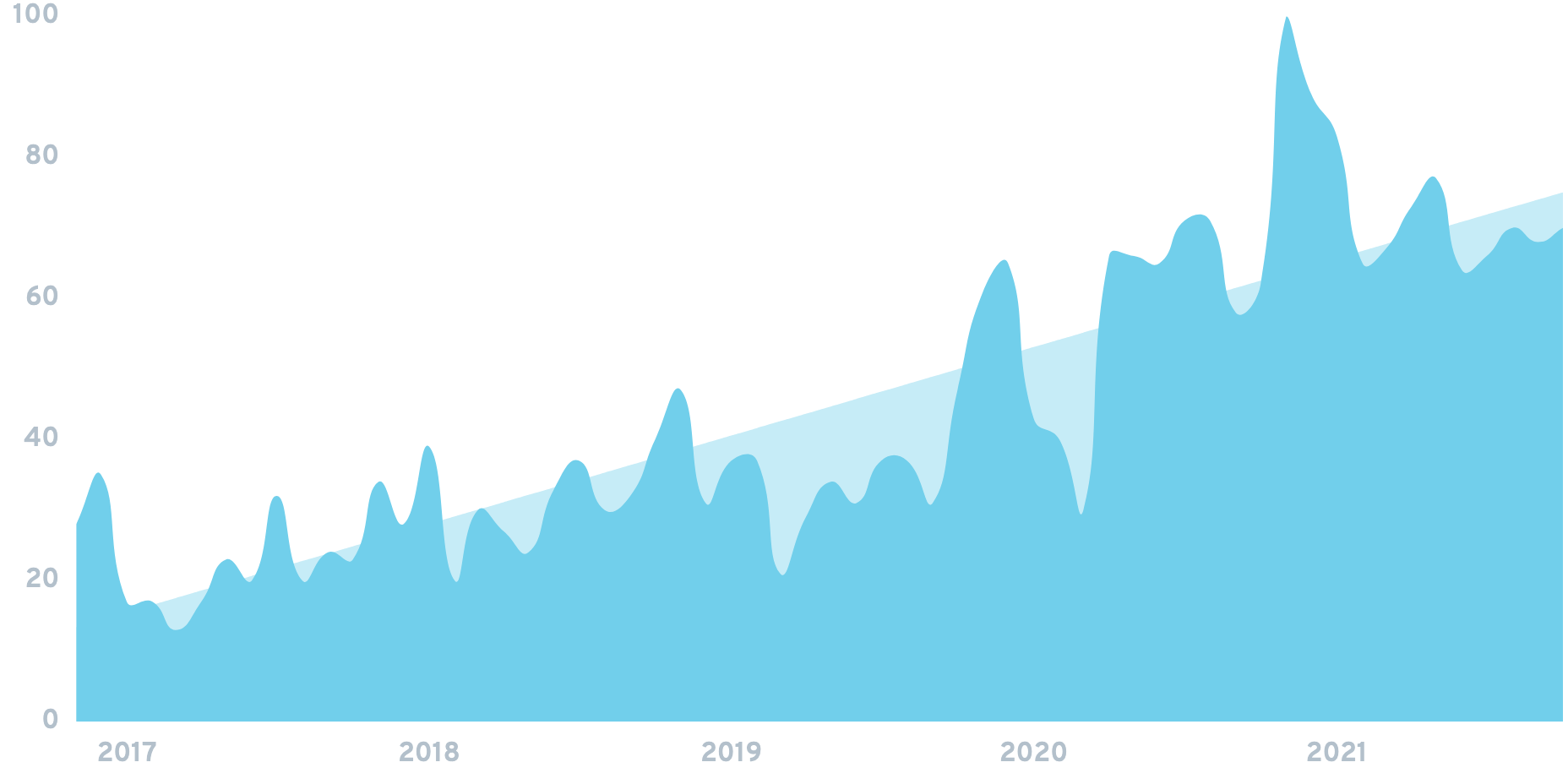
Gold vermeil is a jewelers’ technique of coating sterling silver with high-purity gold.
The gold layer is relatively thick (at least 2.5 microns). By comparison, flash plating uses a gold layer of less than 0.175 microns, and traditional gold plating usually hovers around the 0.5 microns mark.
And purity must be at least 10 karats.
(These are Federal Trade Commission standards. Gold vermeil sold in other countries may have lower quality requirements.)
Mejuri is a DTC jewelry startup. The specialist jeweler only sells four metal types — one of which is gold vermeil.
Growth quadrupled each of their first 4 years. And estimated annual revenue is now $64.1M.
What’s next:
Gold vermeil is part of the “budget luxury” meta trend.
The market for bona fide luxury goods, defined as products at the highest end of the relevant market, decreased significantly since the pandemic (from $340.6B to $263B).
Meanwhile, the market for products with the same luxury feel at cheaper prices has come to the forefront.
Despite half of 18 to 23 year olds reporting that they or someone in their household lost a job during the pandemic, Gen Z has become the most resilient consumer group in the luxury market. Which is why brands in the budget luxury space are taking off.
Staud, a luxury fashion startup, has sale items at prices as low as $42.
Since then, celebrities like Kendall Jenner and Meghan Markle have been pictured wearing Staud.
Other budget luxury brands picking up steam include Bluebella (lingerie), Arc’Teryx (functional fashion), and Tudor Watches (timepieces — the most expensive are roughly on par with the cheapest Rolex).
2. Artgrid
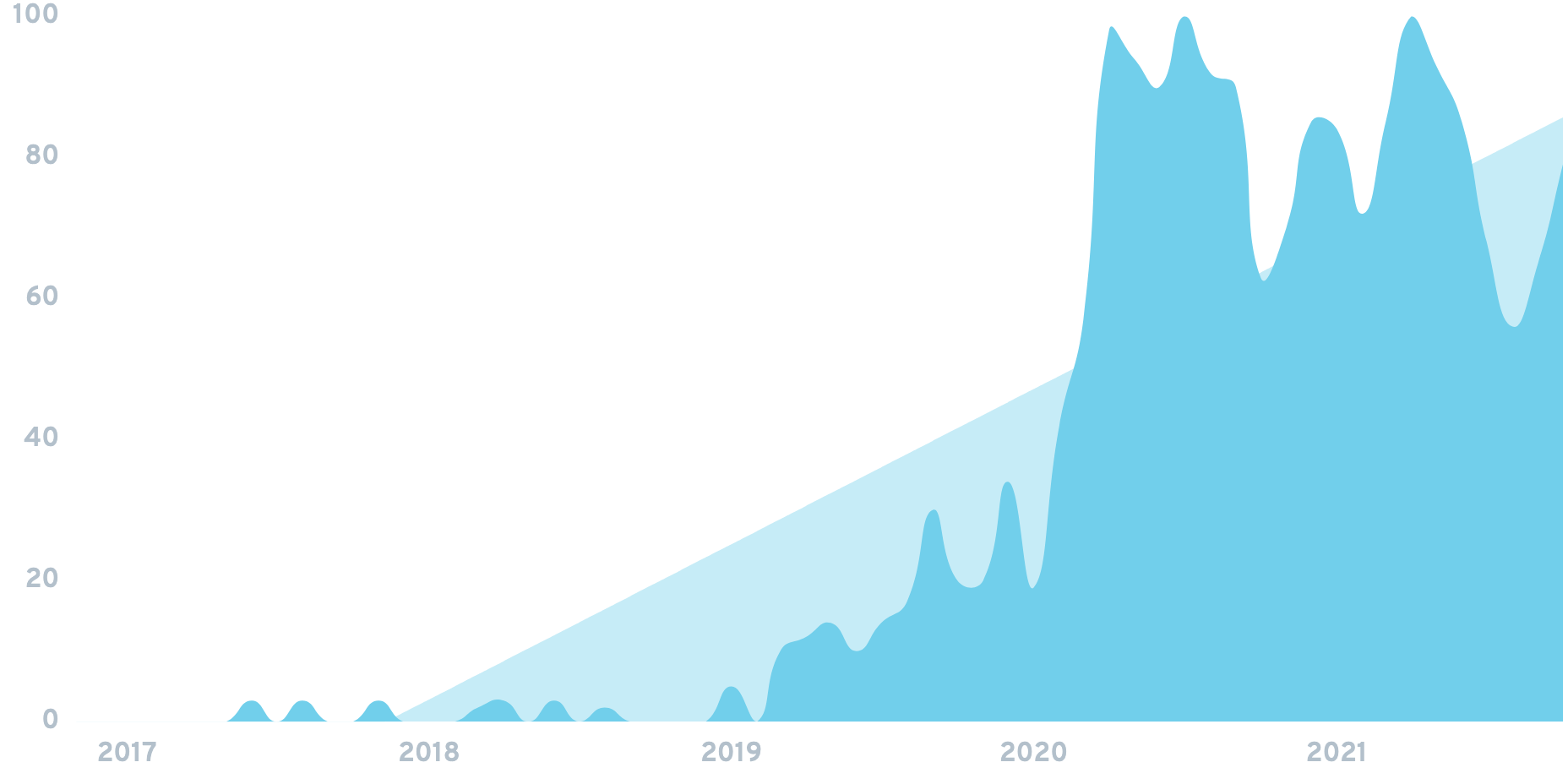
Artgrid is a stock video footage library that offers unlimited access to their video catalog. The highest user tier includes resolutions up to 8K quality.
Artgrid’s user base doubled during the COVID-19 pandemic as restrictions prevented creatives from shooting original footage — an issue that continues to plague the recording industry.
The service is part of Artlist, a wider library containing music and sound effects (as well as video.) In total, 25.82M pieces of content are available to subscribers of the platform.
Not surprisingly, YouTubers are the fastest-growing sector across both Artgrid and Artlist.
Combined, the two catalogs have 1.1M members. The startup raised a $48M funding round last year.
What’s next:
Artgrid is part of the video content tools meta trend.
86% of businesses use some form of video marketing, an increase of 41% since 2016.
And 91% of marketers feel video is more important for brands in light of the pandemic.
Videoproc is an editing suite designed for 4K and 8K video.
The software is designed to be able to process high-quality video up to 47x faster than real-time.
The startup has 4.5M active users, growing 50% year-over-year.
Other topics in the meta trend showing strong growth include Vidyard, VidIQ and TubeBuddy.
3. Mighty Patch
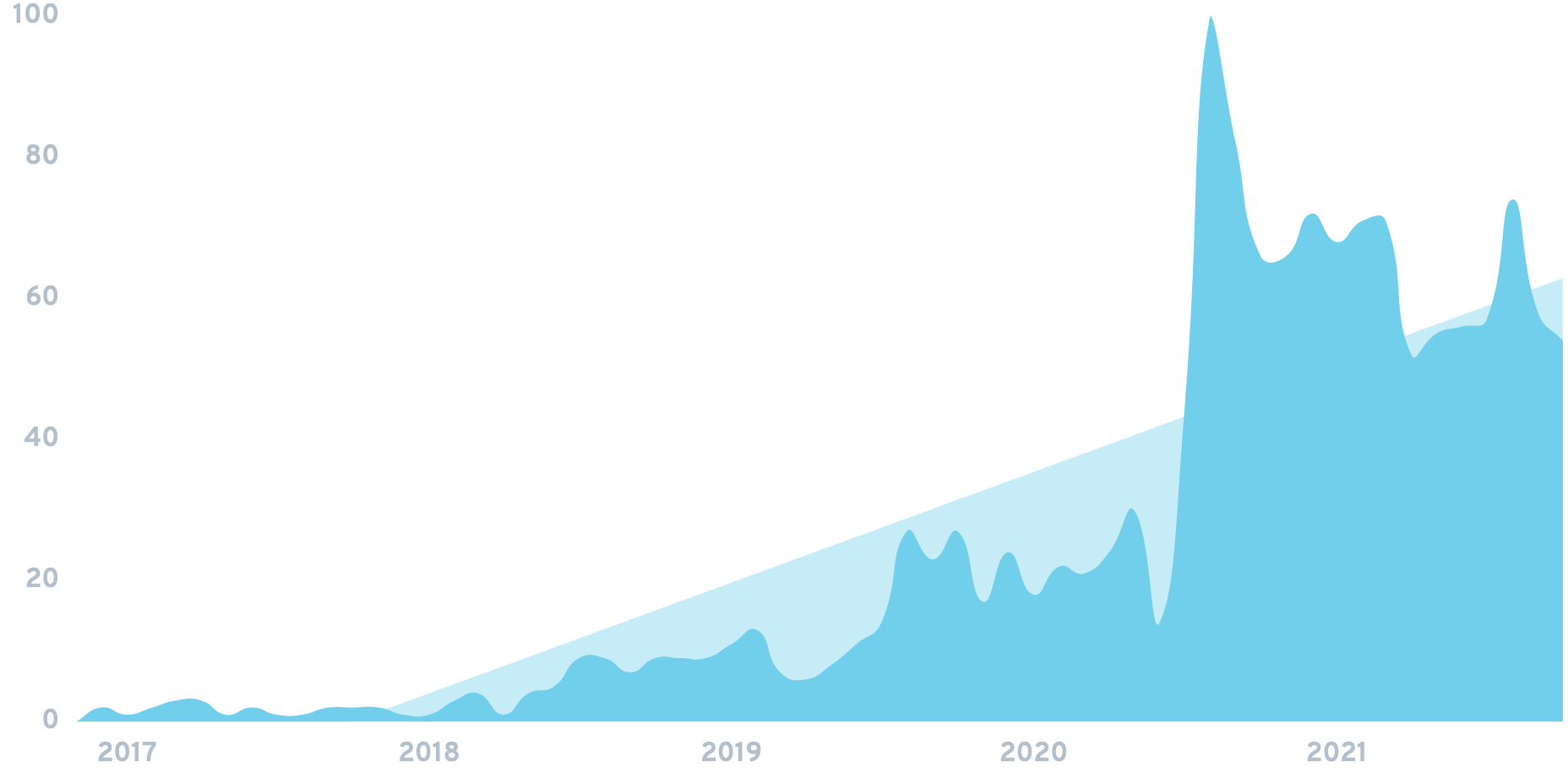
Mighty Patch is an overnight acne patch brand.
The strips are hydrocolloid, designed to draw out moisture and visibly flatten pimples.
In the US, a pack of the Mighty Patch bandages sells every 15 seconds.
The brand sits 3rd in Amazon’s brutally competitive Beauty and Personal Care best-sellers chart.
According to AmzScout, that equates to $1.45M revenue per month.
And as well as Amazon, the product is sold DTC on their website and at retail locations including Target.
Mighty Patch is made by Hero Cosmetics. The company forecasts revenue of over $80M this year. And has been profitable since its first year.
What’s next:
Mighty Patch is part of the targeted acne products meta trend.
According to the American Academy of Dermatology, adult acne is on the rise, affecting up to 15% of women.
Medicated prescription treatments like trifarotene, adapalene and tretinoin are all seeing search growth.
And off-the-shelf products are proving popular too. The anti-acne cosmetics sector is currently worth $2.5B. The market is forecast to almost double by 2028, reaching $4.7B.
Paula’s Choice has a dedicated product line for dealing with acne and breakouts. Customer growth is 181% year-over-year. Estimated annual revenue is $110.95M.
Other rapidly-growing topics and brands in the meta trend include BHA, The Inkey List and Plenaire.
4. Crypto savings
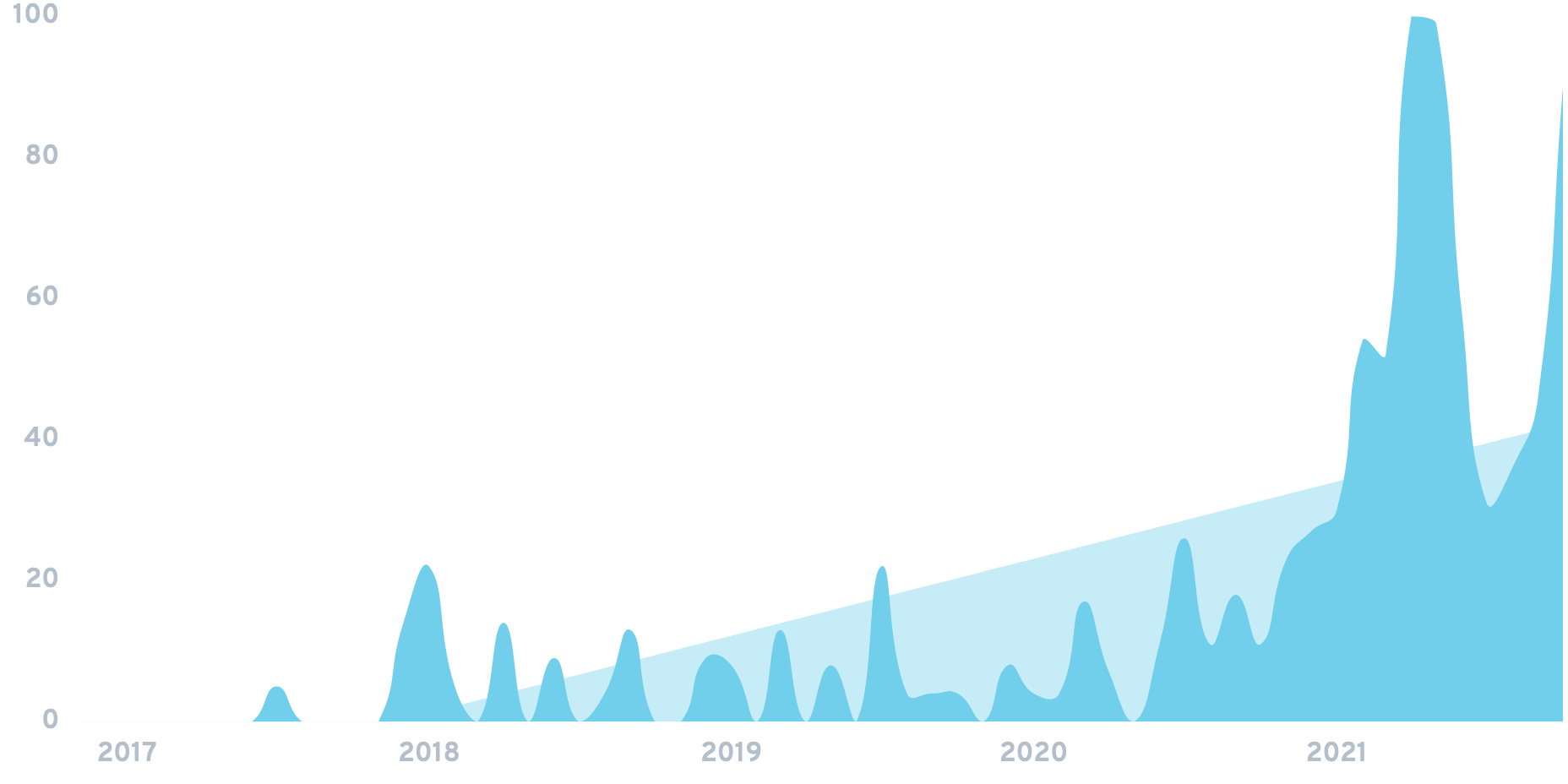
Searches for “crypto savings” have increased by 8900% over the past 2 years. And by 450% over the past year.
Crypto savings accounts let investors earn interest on deposited crypto assets, including stablecoins.
The current APY rate for Bitcoin savings accounts ranges from 1% to 10%, outperforming average high yield saving offers in US banks.
Although, unlike traditional savings accounts, crypto savings accounts are not FDIC insured.
What’s next:
We’re seeing a growing number of startups enter the crypto savings space, from lending platforms to wallet apps offering crypto rewards for their users.
Cake DeFi: Crypto savings accounts targeting non-technical users. The company plans to launch a mobile app this year (on top of their existing web app). The Singapore-based startup has raised $2.4M in funding to date.
Ledn: BTC and USDC savings accounts operating in more than 100 countries. The startup generates interest (up to 9.5%) from lending activities on the platform. The Toronto-based startup closed a $30M Series A funding round in May 2021.
Zipmex: Digital assets exchange with no minimum interest accounts. The company claims to provide $100 million insurance on custodial assets and offers interest payments daily. Zipmex’s total funding has reached $51.9M to date.
