Hedge Trimming vs. Hedge Removal: When to Trim and When to Rip It Out
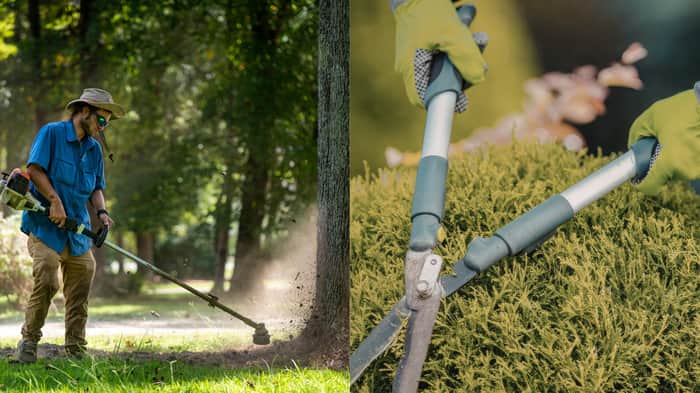
Look, I get it. You're standing in your yard staring at a hedge that's seen better days, and you're asking yourself the same question every homeowner eventually faces: "Can I save this thing, or is it time to start over?"
It's a surprisingly common dilemma. And getting the answer wrong can cost you hundreds of dollars, either by removing a hedge that just needed a good haircut or by dumping money into trimming a hedge that's basically on life support. So let's break it down.
The Real Cost Difference (And Why It Matters)
Before we get into the "when" and "why," let's talk numbers, because that's usually what makes the final decision for most people.
Professional hedge trimming runs about $185 to $450 for a standard 50 to 100 linear foot hedge. If your hedges are under 6 feet tall, you're typically looking at $25 to $40 per 10 feet of length. Taller hedges that need ladders and heavier equipment bump that up to $30 to $60 per 10 feet. Most homeowners land somewhere around $429 for a full trimming job.
Hedge removal is a different ballgame entirely. You're looking at roughly $40 to $150 per 5 feet of hedgerow, and that's before stump and root removal, which adds another $12 to $24 per stump. A full removal project for most residential properties averages around $770, with many homeowners spending between $380 and $1,170. If the hedge is old, established, and has deep root systems near foundations or fencing, that number climbs fast.
So right off the bat, removal costs roughly two to three times what trimming does. That alone should tell you something: don't rip it out unless you actually need to.
When Trimming Is the Right Call
Most of the time, trimming is the answer. Hedges are tougher than people give them credit for. Even a boxwood that looks like it's been through a windstorm can bounce back with a proper pruning schedule. Here's when you should stick with trimming.
The hedge is overgrown but still healthy. This is the most common scenario I see. The hedge has gotten too wide, too tall, or just shapeless. But the foliage is green, the branches are flexible, and there's no sign of disease. A good hard prune in late winter or early spring (taking off no more than a third of the plant at a time) will bring it back within a season or two. Boxwoods are especially forgiving here. You can cut them back to practically nothing and they'll fill in again.
You're dealing with seasonal neglect. Skipped a year or two of maintenance? That's normal. Most hedges only need trimming 2 to 3 times per year, but fast growers like privet might need up to 5 sessions. If you've fallen behind, a professional reshaping session (which typically costs double a standard trim) is still cheaper and faster than removal and replanting.
The hedge provides privacy or wind protection you still need. This is one people overlook. A mature hedge that's been growing for 10 or 15 years provides real, functional value. Ripping it out means losing that privacy screen for years while a replacement grows in. If the hedge is still alive and doing its job, invest in maintenance rather than starting from scratch.
Minor pest or disease issues. Not every sick hedge is a lost cause. Localized problems like a patch of fungal growth or a section with pest damage can often be addressed by pruning out the affected branches, improving air circulation through thinning cuts, and treating with the right product. Just make sure you disinfect your tools between cuts so you don't spread the problem.
When It's Time to Rip It Out
Now, there are absolutely situations where removal is the smarter play. Throwing money at a dying hedge is just as wasteful as removing one that could have been saved. Here are the clear signs it's time.
More than 50% of the hedge is dead or dying. If you're looking at large sections of brown, brittle branches with no new growth, the math stops working in trimming's favor. You'd be paying $400+ annually to maintain something that looks terrible and won't recover. At that point, the $770 average removal cost starts to look like a bargain compared to years of wasted trimming fees.
Root damage is threatening your property. Older hedges, especially large species like privet and laurel, develop root systems that can interfere with foundations, driveways, sidewalks, and underground pipes. If you're noticing cracking in nearby hardscape or your plumber tells you roots are in the sewer line, the hedge needs to go. The removal cost is nothing compared to foundation repair bills.
The hedge has an untreatable disease. Some diseases, like boxwood blight, can wipe out an entire hedge and spread to other plants in your yard. If a certified arborist tells you the infection is systemic and the plant can't be saved, removal isn't optional. And the sooner you act, the better your chances of protecting surrounding plants.
You're selling your home. This might sound counterintuitive, but hear me out. Overgrown, scraggly hedges are one of the first things buyers notice, and not in a good way. If the hedge is beyond a quick cosmetic trim, removing it and either replanting or replacing with a clean fence (which runs about $13 to $50 per linear foot for vinyl) can genuinely boost curb appeal. First impressions are everything in real estate.
The species is wrong for your climate or soil. Sometimes the previous homeowner planted a hedge that was never going to thrive in your specific conditions. If you're fighting the same problems year after year despite proper maintenance, it might be a plant selection issue rather than a care issue. Removal and replacement with a better suited species will save you money and frustration in the long run.
The Gray Area: When It Could Go Either Way
Real life isn't always black and white, and hedge decisions often land in a gray zone. Here are a few tips for those in-between situations.
Get a second opinion. Have a landscaper or arborist look at the hedge before you make a call. A good pro can tell you whether a struggling hedge has a realistic shot at recovery or if you'd be wasting your money on trimming.
Do the 3-year math. Add up what you'd spend on trimming and maintenance over the next 3 years, then compare that to the one-time cost of removal plus replanting. If the trimming route costs more and still leaves you with a mediocre hedge, removal wins.
Think about timing. Mid to late winter is the cheapest season for both trimming and removal. Landscapers have less work, and deciduous hedges have dropped their leaves, making the job faster and easier. If you can wait a few months, you'll likely save 10 to 20 percent on labor.
The Bottom Line
The vast majority of hedges just need regular maintenance. A solid trimming schedule of 2 to 3 times per year, with an annual spend of a few hundred dollars, will keep most hedges healthy and looking sharp for decades.
But when a hedge is dead, diseased, structurally compromised, or damaging your property, don't throw good money after bad. Removal costs more upfront, but it's a one-time expense that lets you start fresh.
If you're still not sure which route makes sense for your situation, try running the numbers through a hedge trimming cost calculator to see what maintenance would actually cost you. Sometimes seeing the real numbers side by side is all it takes to make the right call.
