How Digital Calculators Help With Better Everyday Decision-Making
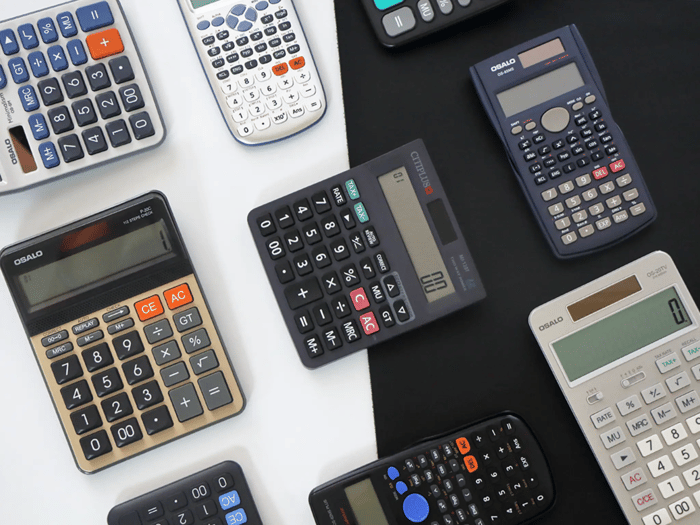
Numbers influence many of the decisions people make every day. Whether someone is comparing prices, planning a budget, checking a discount, measuring ingredients, or organizing a schedule, accurate calculations can make the process easier.
In the past, people commonly relied on physical calculators or performed simple arithmetic in their heads. Today, digital calculators provide a faster and more accessible way to handle these tasks. With an internet connection and a browser, users can solve many common mathematical problems within seconds.
Calculations Are Part of Daily Life
Many everyday decisions involve basic mathematics. When shopping, people compare product prices and discounts. When managing household expenses, they add bills and calculate remaining funds. During travel, they may need to convert distances, currencies, or units.
These calculations may appear simple individually, but performing several of them manually can become inconvenient. A digital calculator can provide quick results and help users focus on making the actual decision.
Comparing Prices More Effectively
Price comparison is one of the most common situations where calculations are useful. A product may be available in different sizes, quantities, or packages, making it difficult to determine which option offers better value.
By calculating the price per unit, shoppers can make a more informed comparison. For example, two packages may have different prices but also contain different quantities. Dividing the price by the quantity provides a clearer picture of the actual cost.
This approach can help consumers avoid choosing an apparently cheaper product that actually costs more per unit.
Understanding Discounts
Sales and discounts are another area where calculators can be helpful. Stores frequently advertise percentage-based reductions, such as 10%, 25%, or 50% off.
Calculating the final price mentally is possible for simple numbers, but a calculator provides an immediate answer when the original price is less convenient.
For instance, if a product costs $175 and has a 20% discount, a calculator can quickly determine the discount amount and final selling price.
Planning a Personal Budget
Budgeting requires consistent attention to numbers. People may have expenses related to housing, transportation, food, subscriptions, utilities, and entertainment.
Adding these costs together helps individuals understand where their money is going. A calculator can make these calculations quicker and provide a simple way to check totals.
Digital calculation tools can be particularly useful when creating an initial budget. Once the figures are confirmed, users can transfer them into a spreadsheet or budgeting application for longer-term tracking.
Calculating Percentages
Percentages are frequently used in financial and everyday situations. They can help people understand discounts, increases, changes in expenses, business growth, and many other numerical relationships.
A percentage calculator can be useful when the calculation involves several steps. Instead of remembering different formulas, users can enter the relevant figures and check the result.
This is also helpful when comparing changes. If an expense increases from one month to another, calculating the percentage increase can provide more useful information than simply looking at the difference in currency.
Making Measurements Easier
Measurements appear in cooking, home improvement, construction, education, and many other activities.
Someone following a recipe may need to adjust quantities when preparing food for a larger or smaller group. A homeowner may need to convert measurements when purchasing materials. Students may need to work with different measurement systems during assignments.
Online calculators and conversion tools can simplify these tasks by handling the mathematical part of the process.
Converting Different Units
Different countries and industries use different measurement systems. This can make conversions necessary.
Common examples include converting inches to centimeters, miles to kilometers, pounds to kilograms, and Fahrenheit to Celsius.
Instead of searching for conversion formulas or calculating manually, users can use dedicated digital tools. This is especially convenient when conversions are needed repeatedly.
Helping With Time Management
Calculations are not limited to money and measurements. Time is another important area where mathematical tools can help.
People may need to determine the duration between two times, calculate working hours, or organize a schedule involving multiple activities.
A time calculator can reduce the effort required for these calculations and help users avoid mistakes when working across hours and minutes.
Supporting Students and Teachers
Education is another area where digital calculators provide value. Students can use them to verify arithmetic, check homework, and confirm calculations after completing mathematical problems.
Teachers can also use calculators when preparing examples, checking numerical answers, or demonstrating how different calculations work.
The most effective approach is to combine calculator use with mathematical understanding. Digital tools should support learning rather than eliminate the need to understand the underlying concepts.
Useful for Small Businesses
Small business owners regularly work with numbers. They may calculate product costs, discounts, profit margins, sales totals, employee hours, and operating expenses.
A quick calculator can help with these routine tasks without requiring a complex accounting system for every small calculation.
For example, a business owner preparing a sale can calculate different discount levels and compare their impact on the final selling price.
Avoiding Common Arithmetic Mistakes
Manual calculations are vulnerable to simple errors. A person may accidentally add the wrong number, forget a decimal point, or use an incorrect multiplication result.
Using an online calculator can reduce these types of mistakes. It also makes it easier to repeat a calculation and confirm that the same result is produced.
However, accuracy still depends on entering the correct information. Users should review their inputs before relying on any result.
Choosing a Simple Calculator
A calculator does not need to be complicated to be useful. For everyday tasks, a clear interface and basic functions are often enough.
People who only need addition, subtraction, multiplication, division, and percentages may prefer a straightforward tool. Users working with more advanced mathematics may need scientific or specialized functions.
The best option is therefore the one that matches the user's specific requirements.
The Convenience of Online Calculation Tools
One of the main advantages of online calculators is accessibility. Users can access them from computers, tablets, and smartphones without carrying a physical calculator.
Web-based tools can also provide multiple functions from a single location. This means users do not necessarily need to search for a new application every time they encounter a different type of calculation.
For people who frequently perform quick calculations, a reliable digital calculator can become a useful everyday resource.
Why Accuracy and Simplicity Matter
A useful calculator should provide accurate results while remaining easy to operate. If users have to navigate complicated menus just to perform a basic calculation, the tool becomes less practical.
Simple design allows people to enter numbers quickly and receive the required result without unnecessary distractions.
This is particularly important for mobile users, who may need to perform calculations while shopping, traveling, working, or studying.
Using Calculators Responsibly
Although calculators are convenient, users should understand what their results mean. A calculator can provide a numerical answer, but the user must decide how that information should be applied.
For routine calculations, this is usually straightforward. For major financial, engineering, scientific, or professional decisions, calculations should be checked carefully and supported by appropriate information.
Digital tools work best when they complement human judgment rather than replace it.
Final Thoughts
Digital calculators have become practical tools for modern life. They can help people compare prices, calculate discounts, manage budgets, convert measurements, work with percentages, and organize time.
Their biggest advantage is convenience. Users can access calculation tools whenever they need them without relying entirely on mental arithmetic or manual formulas.
As digital technology continues to become part of everyday activities, simple online calculators will remain useful resources for students, professionals, businesses, and anyone who wants to make everyday calculations faster and easier.
