How Does Custom Web Development Improve Website Performance and SEO?
A website can look great and still perform poorly.
Slow pages, unnecessary features, confusing navigation, and poor mobile experiences can all affect how visitors interact with a website. They can also make it harder for search engines to understand and rank the site.
This is where custom web development can make a real difference.
What Is Custom Web Development?
Custom web development means building a website around the specific needs of a business instead of relying completely on a pre-built template or platform.
I don’t think every business needs a fully custom website. For a simple website, an existing platform can work perfectly well. But when performance, scalability, integrations, and SEO become important, having more control over the website architecture can be a big advantage.
Better Website Performance
One of the biggest benefits is performance.
With a custom-built website, developers can avoid loading features and scripts that the business doesn't actually need. The code, images, database queries, and third-party integrations can be optimized according to the website's actual requirements.
For example, a website doesn't necessarily need five different tracking scripts, multiple plugins, and heavy animations running on every page.
Removing unnecessary elements can help reduce page load time and create a smoother experience, particularly for mobile users.
How Does Custom Web Development Improve Website Performance and SEO?
Performance and SEO are closely connected, although speed alone doesn't guarantee better rankings.
A faster website generally provides a better user experience. Search engines also consider factors related to page experience, mobile usability, and technical accessibility when evaluating websites.
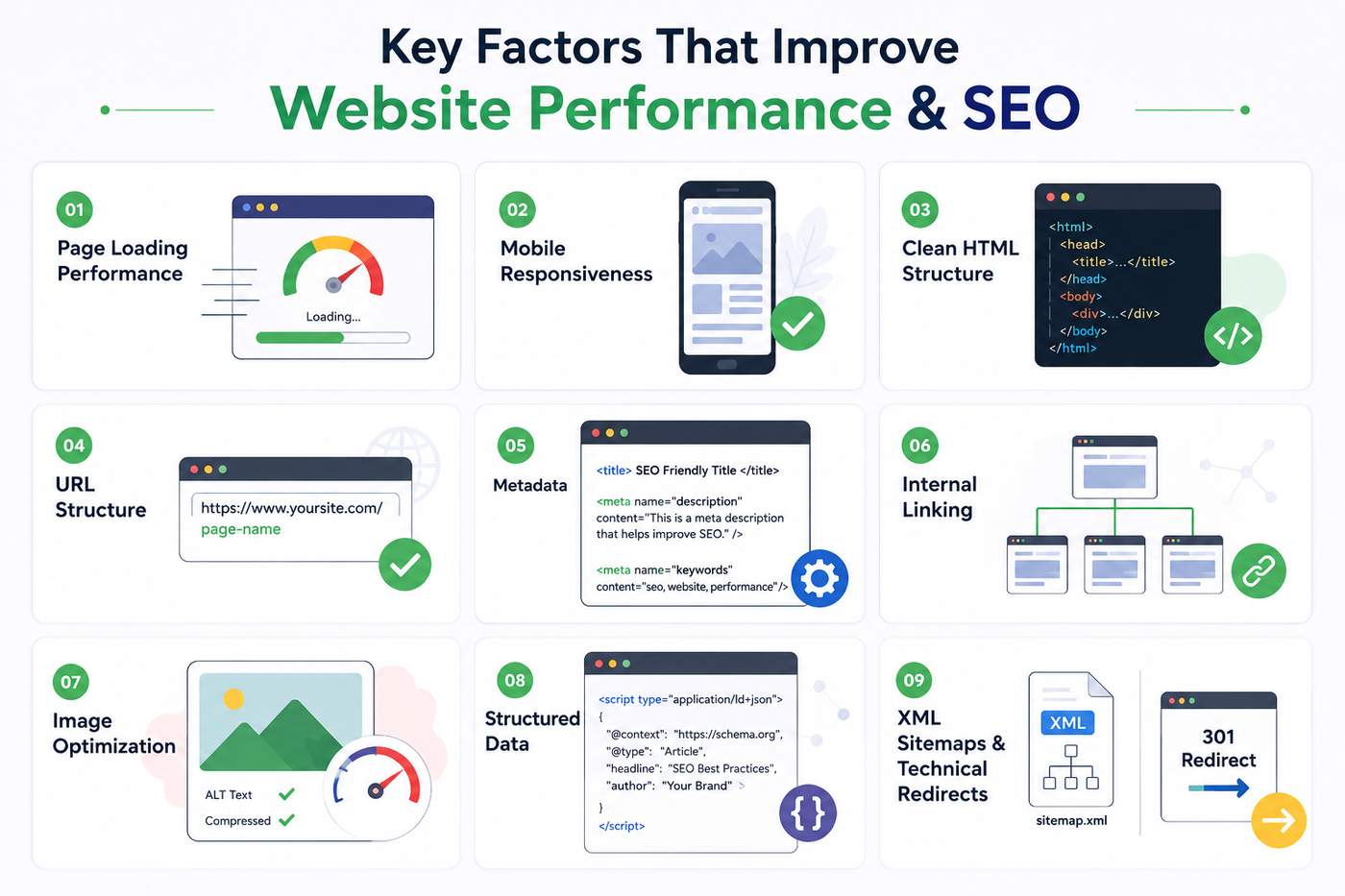
Custom development gives developers more control over important technical elements such as:
Page loading performance
Mobile responsiveness
Clean HTML structure
URL structure
Metadata
Internal linking
Image optimization
Structured data
XML sitemaps
Technical redirects
This level of control can make it easier to build a website that is technically sound from the beginning.
SEO Shouldn't Be an Afterthought
One thing I’ve learned from working around websites is that SEO works much better when it's considered during development rather than treated as a last-minute task.
A technically strong website still needs the right content, keyword targeting, internal linking, and ongoing optimization to perform well in search.
For anyone looking deeper into the SEO side, I recently came across a useful overview of SEO services that covers how different optimization activities can support long-term organic growth: https://acelan.ai/services/seo-services
That connection between development and SEO is important. A fast website won't automatically rank, and great SEO content won't perform at its best if the technical foundation is poor.
Cleaner Code Means Fewer Problems
One issue I’ve noticed with heavily customized templates is that businesses sometimes keep adding plugins or features until the website becomes difficult to maintain.
A custom approach can avoid some of that unnecessary complexity.
Developers can build only the functionality the business actually needs. This can make the codebase easier to maintain and reduce conflicts between plugins, scripts, and third-party tools.
That doesn't automatically make a website faster, but it creates a better foundation for ongoing optimization.
Better Scalability
Another advantage is flexibility.
As a business grows, its website may need new features, integrations, landing pages, customer portals, APIs, or e-commerce functionality.
A custom website can be designed with those future requirements in mind.
That doesn't mean custom development is always the best option. Sometimes a standard CMS or SaaS platform is more practical and cost-effective.
The important thing is choosing the approach based on the actual requirements rather than assuming that custom development is automatically better.
Final Thoughts
In my view, the real value of custom development isn't simply having a website that was built from scratch.
It's having a website that is built around the business, its users, and its long-term goals.
When performance, usability, technical SEO, and scalability are considered together, custom development can provide a much stronger foundation for growing a website organically.

