How I Bootstrapped KEHON RING to Market with $0 in R&D Debt
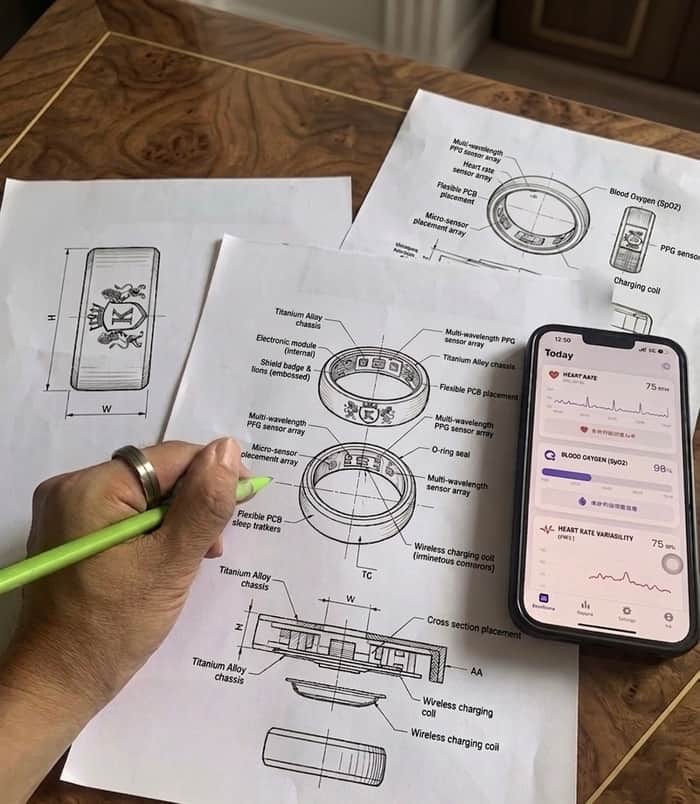
Most hardware founders I talk to are still bleeding cash on custom PCBAs they will never ship.I refused to join them.When I started building the KEHON RING, the conventional advice was clear: hire a hardware team, design your own board, run multiple prototype spins, burn six figures, and pray the yield works. That path is where 90% of IoT startups go to die. They end up with beautiful engineering decks and empty bank accounts.I took the opposite route.
The Hardware Graveyard Is Real
Custom sensor boards sound sexy until you price the reality. A single competent PCBA design cycle in 2025–2026 easily runs $40k–$80k before you factor in tooling, certification re-spins, and the three months of delay that kill momentum. Most founders never clear that first hurdle. They run out of runway while still debugging Bluetooth stacks.I decided early that KEHON RING would not own the sensor layer. We would own the experience layer.
The Greater Bay Area Arbitrage
Instead of designing from scratch, I sourced battle-tested, already CE/FCC-certified PPG and temperature modules from established micro-electronics clusters in the Greater Bay Area. These modules were already shipping in volume for other wearables. The hard reliability work was done. The certification paperwork existed.Our contribution was the outer shell and the positioning.Anchored by our UK-registered brand design authority, we specified 18K gold electroplating.We specified 18K gold electroplating, tighter surface finishing, and a slim jewellery-grade profile. That single decision turned a commodity sensor package into a quiet-luxury object that could sit next to a mechanical watch without looking apologetic. The technical risk stayed low. The perceived value jumped.
The Macau Logistics LoopHere is the actual operating model that made the unit economics work.Unbranded, certified modules ship into Macao SAR. Final QA, firmware provisioning, serialisation, and bespoke luxury packaging happen at our operational hub inside the Macao Young Entrepreneur Incubation Centre. Because the high-value finishing and branding occur in Macau, we capture the retail margin rather than handing it to a contract manufacturer who also owns the brand story.This loop keeps us out of the most painful cross-border friction while still giving us control over the final product that reaches the customer through kehontech.
The Numbers That Matter
Traditional custom-hardware path (realistic solo-founder attempt):
Tooling + first two prototype spins: $60k–$100k
Certification re-work: $15k–$30k
Time to first sellable unit: 9–14 months
Risk of total loss: high
KEHON RING lean assembly model:
Module sourcing + initial plating tooling: under $12k
First production batch of sellable units: achieved in under five months
Gross margin on a $220–$250 retail unit: currently holding above 55% after packaging and fulfilment
R&D debt: $0
We did not reinvent raw sensor physics. Instead, we integrated proven enterprise-grade biometrics with our proprietary ambient wellness ecosystem, controlling the high-ticket finishing and the ultimate screenless experience.
That is the entire arbitrage.
If you are a solo founder staring at a custom board quote right now, ask yourself one question: are you trying to become a semiconductor company, or are you trying to sell a finished product that people actually want to wear?
I chose the second path. The KEHON RING exists because of it.
What is the single biggest hardware cost you are still treating as non-negotiable that maybe is not?

The strongest part is the deliberate separation between owning the technology and owning the product experience. The founder has clearly made a different set of tradeoffs from the conventional hardware path.
Exactly. In the hardware space, founders often conflate "engineering complexity" with "customer value."
Mature sensor modules have already solved the baseline signal-to-noise problem and cleared regulatory hurdles. What the end user actually interacts with 24/7 is the ergonomic finish, the tactile luxury, the screenless discretion, and the relief of not paying a monthly subscription.
By refusing to rebuild what mature micro-supply chains have already perfected, we could allocate 100% of our focus and runway to the industrial finishing, rigorous QA, and the ambient user experience. Appreciate you catching that distinction.
That distinction is interesting, especially with hardware where the underlying technology can easily overshadow the actual experience. Also, I sent you an email last week — worth checking when you get a chance.
The key move here is that you measured what actually determines perceived value - and it wasn't sensor physics (that's commodified). It was finishing + positioning.
Most hardware founders keep the PCBA R&D as an immovable line item because it "sounds hard," not because customers actually care about custom silicon. That's constraints creating false clarity.
Your question at the end is the entire framework: "are you building a semiconductor company or selling something people want?" Most never ask it. They inherit the default hardware startup playbook (custom board, six-figure burn, nine-month timeline) and treat it as unchangeable physics rather than a choice.
The arbitrage wasn't in manufacturing efficiency. It was in measuring what buyers actually signal they value (jewelry-grade finish, brand story, simplicity) versus what engineers default to optimizing (raw sensor performance). Two very different cost curves.
That's the real lesson: constraint forces clarity about what's actually load-bearing.
Spot on, Omri. "Constraint forces clarity about what's actually load-bearing"—that hits the exact core of the thesis.
The default engineering reflex is to optimize for internal technical vanity (custom board spins, proprietary sensor stacks) rather than what actually creates external pricing power (tactile jewelry-grade finish, zero-subscription ownership, and brand trust).
When you treat custom PCBA R&D as a strategic choice rather than unchangeable physics, the downside risk collapses. That preserved capital and focus can then be redeployed where high-ticket margin is actually defended: precision QA, cross-border brand architecture, and delivering an ambient object executives are proud to wear alongside a mechanical watch.
Thanks for articulating the mechanics behind the tradeoff so sharply.