How I generate and optimize AI tool descriptions for my directory (without sounding generic)
The Reality
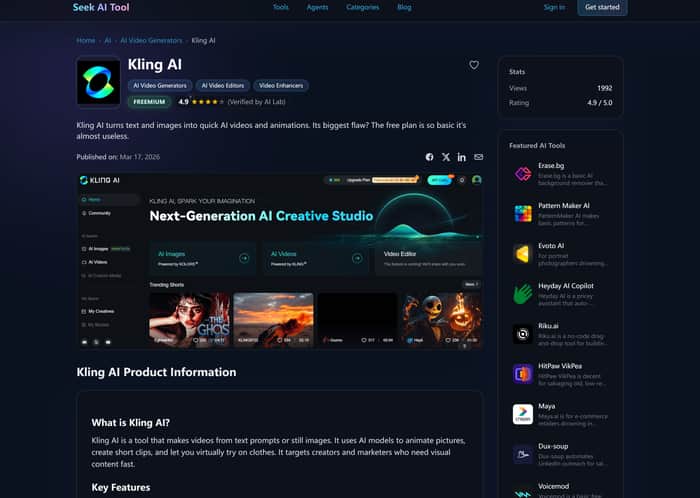
I’m building an AI directory (https://seekaitool.com/), and writing tool descriptions is turning into the biggest bottleneck.
The Deep Dive
The problem with AI-generated descriptions
I use AI to generate descriptions.
But raw output has a pattern:
- Everything sounds the same
- No clear audience
- No real differentiation
Example:
This AI tool helps users improve productivity and streamline workflows using advanced technology.
That sentence could describe 90% of AI tools online.
Which means:
- Bad for users
- Bad for SEO
- Bad for long-term trust
My workflow: AI → filter → rewrite
Instead of fully automating, I built a simple pipeline:
1. Curate the tool manually
2. Generate a draft with AI
3. Remove generic phrases
4. Add specific use cases
5. Rewrite positioning
6. Standardize tone
The key is not generation.
It’s editing.
What I remove (every time)
If I see these, I delete them immediately:
- “streamline workflows”
- “enhance productivity”
- “cutting-edge AI”
- “powerful platform”
They add zero information.
What I force into every description
Each tool page must answer:
- Who is this for?
- What specific problem does it solve?
- When would I choose this over alternatives?
If I can’t answer these, the tool doesn’t get published.
Before vs After
Before (AI-generated):
An AI-powered platform that helps users generate content efficiently.
After (edited):
A writing tool for indie founders who need landing page copy fast without hiring a copywriter.
This version is:
- More specific
- More searchable
- More useful
Why this matters for SEO
I’m not trying to “rank faster.”
I’m trying to avoid becoming another low-quality AI tools list.
From what I’ve seen:
- Generic descriptions → duplicate content patterns
- Specific positioning → long-tail search potential
So instead of scaling pages blindly, I’m trying to make each page slightly different in intent.
Where I’m testing this
I’m applying this system directly on seekaitool.com as my test ground.
Still early.
Still messy.
But it already feels more structured than dumping 1,000 AI-generated entries into a database.
The Ask
If you’re building a directory or content-heavy site:
Do you prioritize scale (more pages),
or specificity (better pages)?
And where do you draw the line when using AI for content?
