How Specialized Home Robots Are Turning Recurring Pool Chores Into Product Opportunities
Some chores never really feel finished. They disappear for a moment, then return in slightly different form. A surface gets cleaned, then gathers dust again. A lawn gets trimmed, then starts growing back. A pool looks clear, then shifts again with use, weather, and debris.
That is what makes certain household tasks so frustrating. The problem is not always difficulty. Often, it is recurrence. Some chores don’t get finished—they just get postponed. And that is exactly what makes them interesting from a product perspective.
For founders, builders, and product-minded operators, this pattern matters. Repetition creates friction. Friction creates demand. And demand becomes especially valuable when it appears in tasks people already accept as necessary, but would prefer not to keep doing themselves.
Why Repetitive Home Tasks Keep Feeling Unfinished
Not every household task creates the same kind of frustration. Some jobs are occasional. They may be inconvenient, but they arrive infrequently enough that people tolerate them. Other chores behave differently. They reappear so often that they stop feeling like tasks and start feeling like a background condition of ownership.
That difference matters. A task that returns constantly has a way of occupying attention even when it is not actively being done. It becomes part of weekly planning, part of decision-making, part of how people think about their homes. The work is not only physical. It is also cognitive.
This is why certain chores feel unsolved even when tools already exist for them. The issue is not whether the user can complete the task once. It is whether the task continues to demand attention afterward. If it does, the market gap may not be in ability. It may be in continuity.
Why General Household Tools Rarely Remove Ongoing Responsibility
The most commercially interesting household tasks usually share a few traits. They are repetitive. They fragment time. They create low-level annoyance that compounds over weeks and months. They are not always severe enough to feel urgent, but they are persistent enough to stay relevant.
This pattern is easy to miss because many of these tasks look small in isolation. A quick cleanup. A short check. A minor adjustment. But when actions repeat often enough, they start to create a meaningful burden. They interrupt weekends, occupy mental space, and reduce the perceived ease of owning or using something.
That is why the most valuable automation targets are not necessarily the hardest tasks. Often, they are the ones that repeat endlessly. A product does not need to solve the most technically dramatic problem to matter. It needs to remove a form of recurring friction that users are tired of absorbing themselves.
High-Potential Product Tasks
Frequent
Predictable
Annoying
Low-Potential Tasks
Rare
Irregular
Low urgency
Why General Household Tools Rarely Remove Ongoing Responsibility
Many older home tools reduce effort without truly removing responsibility. That is an important distinction. A general-purpose product may help the user do the job faster, but the user is still the one managing the task, checking the result, and deciding what happens next.
This is where broad solutions often plateau. They improve the workflow without replacing it. They may make a chore easier, but they do not make it disappear from the user’s routine. In product terms, they optimize labor rather than absorbing it.
That gap matters because users often do not want partial relief from recurring chores. They want reduced involvement. Broad tools reduce effort, but rarely eliminate responsibility. And when responsibility remains with the user, the task still occupies attention, even if each cycle becomes slightly more efficient.
How Niche Home Robots Turn Repetition Into Real Demand
This is one reason specialized home robots have become more interesting as a category. Their promise is not broad usefulness. It is focused task replacement. Instead of trying to be flexible across many environments and workflows, they are designed around a narrower, repeatable problem.
That specialization changes the product equation. A narrowly scoped device can be built around specific surfaces, routines, constraints, and success criteria. It can optimize for one category deeply enough that the user stops experiencing it as a tool and starts experiencing it as delegated labor.
Specialization is what allows automation to actually replace a task, not just assist it. That shift is strategically important. It creates stronger category identity, clearer user expectations, and more defensible value than many general-purpose tools can achieve.
Why Pool Care Stands Out as a Strong Product Category
Pool maintenance is a useful example because it combines many of the qualities that make a household task commercially attractive. It is ongoing, visible, and hard to ignore. The condition of the pool changes continuously, but the owner still expects the result to feel stable and ready.
This creates a clear mismatch between user expectation and manual effort. The owner does not think of the pool as a periodic project. They think of it as an amenity that should remain usable. But keeping it that way often requires repeated cleaning, checking, and correction.
This is where solutions like pool vacuum robot systems have emerged as a focused category. The category exists not simply because pools need cleaning, but because pool care fits the productization pattern unusually well: recurring task, visible outcome, and ongoing user irritation when the task is not handled consistently.
What Makes Pool Maintenance So Easy to Commercialize
A task becomes a product opportunity when it is frequent, predictable, and frustrating. Pool maintenance fits that model almost exactly. It happens regularly. Its outcomes are easy to evaluate. And its inconvenience is strong enough to create demand, but ordinary enough to support mass-market adoption.
It also has another useful product characteristic: the result is legible. Users can tell whether the pool looks ready or not. That matters because product categories scale more easily when value is visible without heavy explanation. The user does not need a complex education layer to understand what success looks like.
There is also enough variation in pool ownership to support segmentation within the category. Different pool sizes, layouts, and use patterns create room for differentiated offerings without breaking the core logic of the market. That gives founders something especially attractive: a stable underlying job to be done, with multiple product entry points around it.
If you can remove the need for user involvement, you don’t just improve the task—you own it.
How Above-Ground Pool Owners Open Up a Bigger Market
One of the most important shifts in a product category is often not technical. It is market expansion. Categories grow when they move beyond premium or highly specialized users and start serving broader ownership patterns.
That is why above-ground pools matter. They increase the addressable market by bringing pool ownership into more accessible, less high-end contexts. Once that happens, the logic of automation changes too. The opportunity is no longer limited to large, permanent backyard installations. It starts to include a wider group of users with recurring maintenance needs and lower tolerance for extra work.
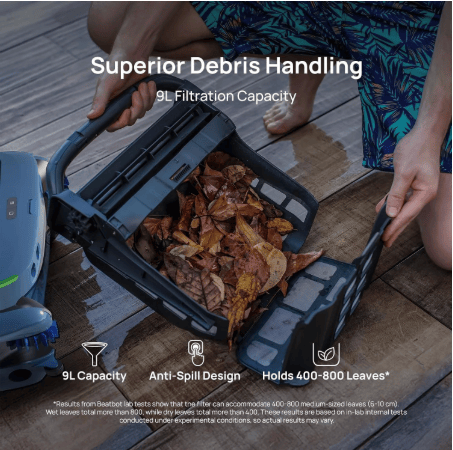
Products like the Beatbot Sora 10 above ground pool vacuum reflect how this category is expanding beyond high-end installations. From a market perspective, that is significant. It suggests that robotic pool care is not only deepening within a niche, but broadening into a larger consumer category with more varied user profiles.
When a Routine Chore Becomes a Category of Its Own
This pattern shows up repeatedly in home automation. A repeated task starts as manual labor. Then it becomes tool-assisted. Eventually, it becomes its own product category. Floor cleaning becomes robot vacuums. Lawn maintenance becomes robot mowers. Pool upkeep becomes robotic cleaning systems.
The pattern is not random. Every repeated task eventually becomes a product category when three conditions align: the friction is persistent, the outcome is visible, and users are willing to pay for reduced involvement rather than simple efficiency. At that point, the opportunity is not just to make the job easier. It is to redefine who is responsible for doing it.
That is what makes specialized home robots such an interesting space for builders. They are not merely appliances with added automation. They often represent the moment when a household responsibility starts turning into a standalone product market.
What Founders Can Learn from the Growth of Robotic Pool Care
For founders, the lesson is broader than pool care. The most interesting product opportunities are often hiding inside tasks people have already normalized. If a chore repeats frequently enough, creates enough annoyance, and resists full resolution through general tools, it may be a stronger business opportunity than it first appears.
This is especially true when the user does not want a better workflow. They want less ownership of the workflow altogether. That is where specialized automation becomes more compelling than feature-rich tooling. The product wins not by adding capability, but by absorbing obligation.
The real opportunity is not in helping people do chores better—but in making sure they don’t have to do them at all.

nice post