How to do product growth for SaaS?
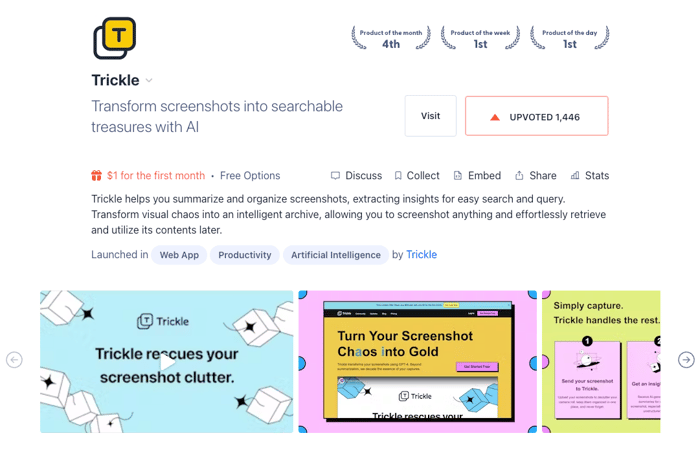
About one month ago, we have launched a new product of trickle (https://www.trickle.so) on ProductHunt (https://www.producthunt.com/posts/trickle-4). Fortunately, we won the top product of day, top product of week and 4th product of month. Due to the successful launch, we got lots of traffic and users:
- Landingpage UV: 17k+
- New registered users: 3k+
- New Subscribed users: 400+
From the launched result, we think the new trickle reaches the PMF. It also means that we enter a new stage for product growth.
For product growth, there are 2 strategies:
- Long-term strategy: organic traffic/SEO, it takes several months to create content, and raise our ranks in Google search.
- Short-term strategy: advertise, it spends money to expose the product. There are many channels to promote your product, and we are struggling to find the best channel to advertise our product with the best ROI.
The advertising channels:
- Google ads
- AI newsletter
- AI launch directory
- twitter.com
- youtube.com
- Tiktok
- Instagram
- etc
Would anyone like to share their experience in advertising for SaaS product growth or give us some advice?

@Bob_Chen Congrats on your success.
Build free side projects related to your SaaS to drive traffic to paid product.
This is a marketing strategy that involves creating free and useful tools or resources that are related to your main product, and using them to attract potential customers to your paid product.
For instance, let's say your SaaS product is a video editing software. What you can do is build a free tool that helps people create video thumbnails or captions, and then promote your paid product as a more comprehensive solution for video editing. The idea is to provide value to your target audience and generate interest in your paid product.
Hey! Based on my experience with audioland io, I can share a few thoughts on different channels like AppSumo, Twitter, and organic. Seems like your tool fits well influence marketing on Twitter, so I would share that one:
Algorithm for influencer marketing with AI SaaS tool:
🧱 𝗣𝗿𝗲𝗿𝗲𝗾𝘂𝗶𝘀𝗶𝘁𝗲𝘀
English product and a US target market. I'm not sure how well it performs in other geo [apart of U.S.], but I would assume it works — you just need money and time to test it.
Budget - at least $2000 to start — in the worst case [if you don't have any discounts or friends in AI marketing space], you would be able to make posts with 10 influencers for $2k. As usual with marketing — the more, the better;
🗺 𝗣𝗹𝗮𝗻
1/ Pick 10 influencers who discuss AI-related topics
2/ Connect with each one to make tweets/threads from them. Target price $100-$200 each
3/ Calculate the math:
Cost per View = Views / Budget
Expected CTR [view to click] = average per influencer
Expected Cost per Click = (Views * expected CTR) / Budget
4/Gather results with analytics from the first 10 influencers' batch
See your results — most likely they won't be super encouraging, but at least 1-2 of them would perform okay, maybe 1-2 more "somehow" and others went down the toilet.
Restart the cycle: Pick the next 10 influencers considering results from the previous batch. Repeat this cycle 50 times, and stop making mistakes 😅
🤔 𝗧𝗵𝗶𝗻𝗴𝘀 𝘁𝗼 𝗸𝗲𝗲𝗽 𝗶𝗻 𝗺𝗶𝗻𝗱
a/ 𝗣𝗶𝗰𝗸 𝘁𝗵𝗲 𝗿𝗶𝗴𝗵𝘁 𝘁𝘄𝗲𝗲𝘁 𝗳𝗼𝗿𝗺𝗮𝘁. Math [aka. step 3/] partially depends on the type of content published by the influencer. There are primary types of tweets for AI SaaS:
Everything else seems to work worse. I wouldn't recommend a thread about your specific AI tool — but if you have the budget, why not test it? I may work differently for different types of products and startups.
b/ 𝗪𝗿𝗶𝘁𝗲 𝘁𝘄𝗲𝗲𝘁𝘀 𝘆𝗼𝘂𝗿𝘀𝗲𝗹𝗳. On Twitter, better to write content for influencers yourself. Influencer marketing is different on Twitter than on Instagram/TikTok. On Instagram it would be usually enough to provide a brief — everything else is done for you.
Questions:
❓q1: What's the ideal size of the influencer's audience?
On Twitter, the bigger, the better.
❓q2: Where to get the expected CTR from?
Run multiple placements, and gather data. You can use: 3-4% if it's a post within a thread; and 0.2-1% if it's a link in the first post.
❓q3: Why don't you recommend other publishing formats?
They perform poorly in terms of views/clicks on Twitter.
💡 𝗕𝗼𝗼𝘀𝘁 𝘁𝗵𝗲 𝗽𝗹𝗮𝗻: 𝗜𝗻𝘃𝗶𝘁𝗲 𝗼𝘁𝗵𝗲𝗿 𝗶𝗻𝗳𝗹𝘂𝗲𝗻𝗰𝗲𝗿𝘀 𝘁𝗼 𝗰𝗼𝗺𝗺𝗲𝗻𝘁 𝗼𝗻 𝘆𝗼𝘂𝗿 𝗽𝗹𝗮𝗰𝗶𝗻𝗴𝘀
You can use a small trick my friend shared with me to increase ROI of each placing you make for free.
On every tweet one of the partner influencers posts, you can ask some influencers to comment there. Influencers get views already, so you don't need to pay — just invite them to comment there.
Maybe explain that it's in their best interest because they grow from high-quality discussions and replies. Though I would guess they already would know that 😁
💡 𝗔𝗻𝗼𝘁𝗵𝗲𝗿 𝗰𝗵𝗮𝗻𝗻𝗲𝗹: 𝗧𝗵𝗲𝗿𝗲’𝘀 𝗔𝗜 𝗙𝗼𝗿 𝗧𝗵𝗮𝘁
Pay to be in the right column. Set the cost per click to the minimum. I don't see a point in raising the cost per click — the pricing may not hold up in your unit economics.
Growing a SaaS (Software as a Service) product involves a combination of strategies and tactics to attract, retain, and expand your customer base. Here's a step-by-step guide on how to approach product growth for SaaS:
Understand Your Audience:
Product-Market Fit:
User Onboarding:
User Acquisition:
Retention Strategies:
Pricing Strategies:
Data-Driven Decision-Making:
Customer Support:
Refinement and Iteration:
Upselling and Cross-Selling:
Customer Advocacy:
Competitor Analysis:
Scaling:
Legal and Compliance:
Feedback Loops:
SaaS product growth is an ongoing process that requires adaptability and a focus on customer satisfaction. Regularly assess your strategies and adjust them as needed to keep pace with changes in the market and evolving customer needs.
Wow, that sounds like a fascinating experience. I'm also planning to launch a project on PH in the near future. Do you have any particularly effective advice for indie hackers like me?