How to Use ABS Metal Filament for Durable 3D Prints
Imagine pulling a 3D print off the build plate and seeing a rich, metallic sheen that looks like brushed steel—no paint, no spray cans, no extra steps. That's the reality of working with ABS metal filament, a material that combines the durability of traditional ABS with embedded metallic particles for a stunning finish straight from the printer. For 3D printing enthusiasts searching for premium ABS filament in black for precise printing, this material solves a persistent challenge: how to achieve professional metallic textures and exceptional durability without tedious post-processing. Whether you're producing functional prototypes, decorative pieces, or mechanical components, getting the settings and techniques right makes all the difference between a failed print and a showpiece. This guide walks you through everything you need to succeed—from understanding the material's unique properties and benefits to preparing your printer, configuring slicer settings step by step, and mastering techniques that deliver consistent, high-quality results every time you hit print.
What is ABS Metal Filament? Understanding the 3D Printing Material
ABS metal filament is a composite 3D printing material that blends traditional acrylonitrile butadiene styrene (ABS) with finely ground metallic particles—typically stainless steel, bronze, or copper powder dispersed throughout the polymer matrix. Unlike standard ABS, which produces smooth plastic surfaces, this hybrid material creates prints with genuine metallic weight, texture, and visual depth. Compared to other 3D printing materials like PLA or PETG, ABS metal filament stands apart in several ways. It retains the hallmark strength and heat resistance of ABS, withstanding temperatures up to 100°C without deformation, while the embedded metal particles add surface hardness and a distinctive tactile quality. The metallic content typically ranges from 20 to 50 percent by weight, giving finished parts a satisfying heft that pure plastic cannot replicate. This composition makes it particularly suited for functional components that demand both mechanical resilience and an elevated aesthetic—bridging the gap between industrial-grade durability and decorative appeal in a single extrusion.
Benefits of Premium ABS Filament in Black for Precise Printing
The durability of premium ABS filament in black for precise printing makes it a standout choice for functional parts that endure real-world stress. Impact resistance surpasses standard PLA by a wide margin, meaning clips, housings, and mechanical brackets hold up under repeated use without cracking or deforming. Black filament specifically excels at revealing fine details—layer lines virtually disappear visually, and intricate geometries read cleanly without the light-scattering issues that lighter colors often introduce. The integrated metallic particles deliver a brushed-metal appearance directly off the build plate, eliminating hours of sanding, priming, and spray painting that conventional filaments demand. This no-paint metallic texture remains consistent across large batch runs, making it ideal for producing matching sets of components or display pieces. From a cost perspective, removing post-processing steps means fewer consumables, less labor time, and faster project turnaround. The material's versatility spans everything from automotive dashboard prototypes to cosplay armor pieces to replacement machine parts—anywhere durability and aesthetics must coexist without compromise.
Preparing Your 3D Printer for ABS Metal Filament
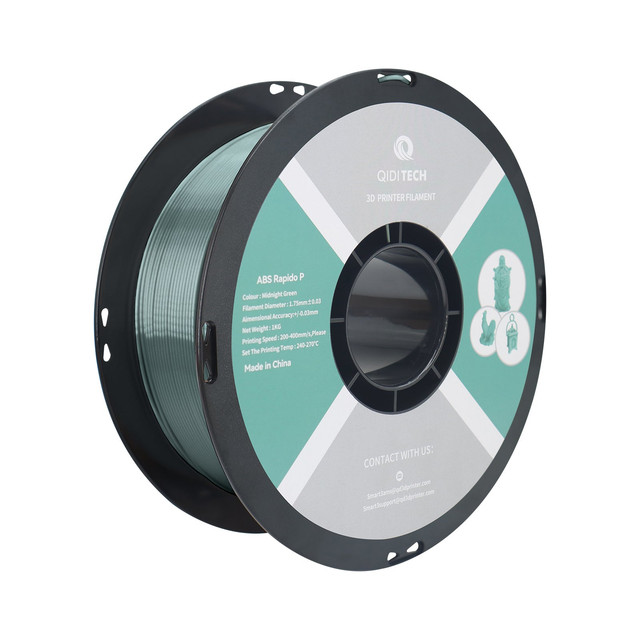
Before loading ABS metal filament, confirm your printer meets three essential requirements: an all-metal hotend capable of sustained high temperatures, a heated bed, and ideally an enclosed print chamber. The metallic particles in this filament are abrasive, so a hardened steel nozzle (0.4mm or larger) is strongly recommended over standard brass, which will wear down quickly and alter extrusion accuracy within just a few prints. Enclosed printers like those from QIDI Tech are particularly well-suited for ABS metal filament, as their sealed chambers maintain the consistent ambient temperatures needed to prevent warping and layer separation.
For temperature configuration, set your nozzle between 230°C and 250°C—start at 240°C and adjust based on flow consistency. Bed temperature should sit between 95°C and 110°C to maintain adhesion throughout longer prints. An enclosed chamber helps maintain ambient temperatures above 45°C, which dramatically reduces warping and layer separation that plague ABS prints in open-frame setups.
Filament storage matters more with metal composites than standard plastics. Moisture absorbed into the polymer matrix creates steam during extrusion, producing bubbles and rough surface texture that ruins the metallic finish. Store spools in sealed containers with desiccant, and dry filament at 65°C for four to six hours before printing if it has been exposed to humidity above 40 percent.
Safety deserves attention with any ABS-based material. The printing process releases styrene fumes that cause headaches and irritation in poorly ventilated spaces. Print in a well-ventilated room, use an enclosure with a carbon filter exhaust, or position the printer near an open window with airflow directed away from your workspace. These precautions let you print comfortably during extended sessions without health concerns.
Step-by-Step Guide to Printing with ABS Metal Filament
Step 1: Slicer Settings Configuration
Configure your slicer with a layer height between 0.15mm and 0.2mm for the best balance of detail and metallic surface quality. Print speed should stay between 40 and 55 mm/s—faster speeds cause the heavier metallic filament to under-extrude at corners. Set retraction distance to 5-7mm for Bowden setups or 1-2mm for direct drive, with retraction speed at 25 mm/s to prevent clogs from the abrasive particles. Enable supports for overhangs beyond 50 degrees, using a support interface gap of 0.2mm for clean removal that preserves the metallic finish on visible surfaces.
Step 2: Bed Adhesion and First Layer Techniques
Apply a thin layer of glue stick or hairspray to your heated bed for reliable adhesion, or use a PEI sheet which grips ABS metal filament exceptionally well at 100°C. Print your first layer at 20 mm/s with a slightly squished z-offset—aim for lines that are flat and wide without gaps between them. A brim of 8-10mm width provides extra surface contact for parts with small footprints, preventing corner lift as the print grows taller and internal stresses accumulate during cooling.
Step 3: Monitoring and Adjusting During Print
Watch the first five layers closely for signs of under-extrusion or lifting. If you notice rough patches or inconsistent metallic sheen, increase nozzle temperature by 5°C increments until flow appears smooth and uniform. Stringing between travel moves means retraction needs a slight increase or travel speed should jump to 150 mm/s. Keep the enclosure closed throughout printing—opening it introduces cold drafts that cause layer cracking on tall prints. For multi-hour jobs, check that the filament feeds freely from the spool without tangles, since the heavier material can bind on poorly wound rolls.
Achieving a No-Paint Metallic Texture with ABS Filament

The metallic finish produced by ABS metal filament comes from how light interacts with the embedded metal particles exposed at the print surface. As each layer is deposited, microscopic flecks of stainless steel or bronze sit flush with the polymer, creating natural light diffusion that mimics machined or cast metal. The key to maximizing this effect lies in layer orientation—printing with the visible face oriented upward or at a slight angle allows the most uniform particle distribution across the surface.
After printing, light sanding with 400-grit sandpaper followed by 800-grit reveals deeper metallic luster by exposing more particles beneath the thin polymer skin. For a brushed-metal look, sand in one consistent direction. Polishing with a soft cloth and metal polish compound brings out a subtle shine without any paint or coating. These techniques work particularly well on decorative items like desk sculptures, architectural models, and display-ready prototypes where clients expect a finished appearance. Functional parts like equipment housings and control panel covers also benefit—they look production-grade straight from a desktop printer, bridging the gap between prototype and final product with minimal effort.
Tips for Beginners: Leveraging Beginner-Friendly Filament
Starting with ABS metal filament doesn't require expert-level experience if you approach it methodically. Begin with simple geometric shapes—a calibration cube, a small vase, or a basic bracket—before attempting complex models with overhangs and fine details. These test prints let you dial in temperature and speed settings without wasting material on failed ambitious projects. The most common beginner mistakes are preventable: warping typically means your bed temperature is too low or your enclosure isn't retaining enough heat, while poor adhesion usually traces back to an unlevel bed or insufficient first-layer squish. If prints detach mid-job, slow your first layer further and add a brim rather than immediately changing temperatures. Online communities on Reddit, Discord, and dedicated 3D printing forums offer material-specific profiles that eliminate guesswork—search for shared slicer configurations tailored to metal-filled ABS. Print the same model three times with slight setting variations, document what changes, and you'll build intuition quickly. This beginner-friendly filament rewards patience during the learning phase with consistently impressive results once your baseline settings are established.
Mastering ABS Metal Filament for Professional Metallic 3D Prints
ABS metal filament transforms desktop 3D printing by delivering genuine metallic finishes and industrial-grade durability without the need for paint, coatings, or extensive post-processing. The embedded metal particles create visual and tactile qualities that pure plastic filaments simply cannot match, while the ABS base ensures your prints withstand heat, impact, and mechanical stress over time. By following the steps outlined in this guide—setting up your printer with a hardened nozzle and proper enclosure, configuring slicer settings for the heavier composite material, nailing bed adhesion on that critical first layer, and monitoring prints for consistent extrusion—you can produce professional-quality parts reliably. The techniques for enhancing metallic texture through light sanding and polishing add another dimension of finish quality with minimal effort. Whether you're a beginner printing your first calibration cube or an experienced maker producing functional prototypes, this material rewards careful preparation with results that look and feel like machined metal. As composite filament technology continues advancing, expect even more realistic metal finishes and broader material options—making now the perfect time to develop your skills with ABS metal filament and stay ahead of the curve in additive manufacturing.
