How we engineered "Invisible Updates" for an Open Source CMS without breaking user code
Hey everyone! 👋
We recently rolled out our 1-click Vercel deployment strategy for NextBlock CMS and got an incredible reception. But immediately after launching, we ran into a classic product dilemma: How do we push feature updates to users without breaking or overwriting their custom code changes?
Since NextBlock is decentralized and open-source, we didn't want to maintain a heavy, centralized cloud sync infrastructure or force non-technical users to build custom GitHub OAuth configurations.
We ended up designing a fully automated, invisible update ecosystem that handles code syncs and database schema shifts entirely in the background:
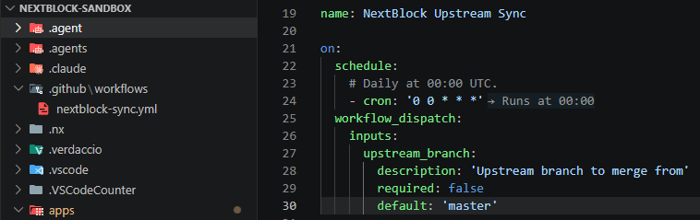
Zero-Configuration Git Crons: We include a native background workflow file that checks for upstream core releases every single day at midnight using built-in, isolated repository permissions.
Conflict Interception: The script runs using a --no-commit --no-ff structure. If a user has changed the exact same lines of code, the merge fails safely, preventing broken syntax from building and preserving 100% live uptime on their old version.
In-App Notifications: When a conflict occurs, the action triggers a quick webhook to a Supabase table. An administrative banner instantly renders in the CMS dashboard pointing them directly to the GitHub page to resolve it natively.
Gated Database Syncs: Database migrations are applied smoothly via safe SQL transactions during production builds, making sure local development sandboxes and Vercel preview environments are never unexpectedly modified.
The result? Our users get an automatically updating CMS that stays fast, pristine, and entirely secure, while giving developers full freedom to hack on their forks.
Would love to hear how other open-source founders handle update distributions across self-hosted variations!

What stood out to me was the decision to fail safely when confidence drops, not automation itself.
I think that's an underrated design principle. Good systems do not have to automate every possible scenario. They need to know when to stop, preserve the current state, and let a human make the next decision.
I have seen the same idea play out in WordPress too. In many cases, preventing an unsafe change is more valuable than trying to recover from one after the fact.
To me, that balance between automation and safe boundaries is what makes a system trustworthy over time.
We still have much testing to do. We just started an open beta, if you want to try out Nextblock and are willing to send feedback please reach out to me I can give you a free lifetime license for helping out in early development!