I ran the same playbook on a dozen products. It worked once.
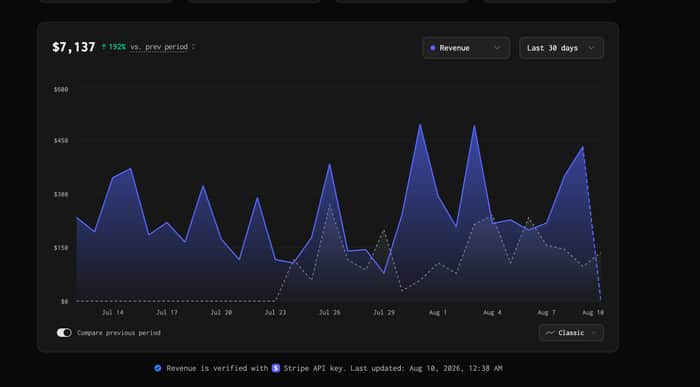
Over the past year I've shipped more than a dozen AI products as a solo founder. Five of them have taken real money. Exactly one grew the way I intended it to.
The rest sit somewhere between quiet and dead, and it took me most of that year to work out that they hadn't failed for the reasons I assumed.
Here's the playbook I ran, every time, without really thinking about it: ship the product, build backlinks, write content, wait. Sometimes I'd put a little money into ads. If the ads didn't find an audience in the first few weeks, I'd fall back on the same answer — SEO will pick it up in a few months.
That answer worked once. DatePhotos AI was my first product and it grew almost entirely on search. People were already typing "AI dating photos" into Google. The demand existed before I did; I just had to show up and rank for it. Backlinks, landing pages, content, patience. It compounds, it still compounds, and it pays for itself now. The Stripe side of that is verified on TrustMRR if the number matters to you: trustmrr.com/startup/datephotos-ai (PayPal revenue isn't counted in it).
I'm not showing that to flex. It's the one data point that makes the rest of this post worth reading, because everything after it is about all the times the same approach produced nothing.
So I ran the same thing on the next product. And the next. And the one after that.
FragCut is an AI gaming clip generator. I built the whole thing, localized it into five languages, and then finally pulled the actual search volume for the terms I was targeting. "Valorant clip maker", "gaming clip maker", "CS2 clip maker" — zero to ten searches a month in the US. The German equivalents were falling 50% year over year. The French ones dropped 100% in a quarter.
The product worked fine. There was simply nobody standing at that particular door.
That's the part nobody warns you about when SEO is your default strategy: it can only capture demand that already expresses itself as a search. A lot of AI products sit exactly where that isn't true yet. The problem is real and people have it, but they haven't developed a phrase for it. They aren't searching because they don't know a tool like this could exist. You can rank first for a keyword nobody types and still have zero users.
The second problem is time, and that's the one that actually hurts.
SEO takes months. Fine if you're funded or salaried. Brutal if you're indie. The people I know building alone need revenue to buy their own runway — rent, groceries, the coffee they're writing the code over. Telling them "just wait six months for the rankings" means asking them to fund six months of unpaid work out of pocket, on a bet. Most can't, so most don't. They quit two months before the thing would have started working, which is its own kind of tragedy.
The third lesson came from finally measuring instead of assuming.
On DatePhotos AI I wired up first-touch attribution from traffic event through to payment, properly, all the way. The homepage and the tool pages accounted for 91% of revenue. The blog section, which I'd poured months into, produced almost nothing.
The part that surprised me: eight of those blog posts converted exactly zero customers. Not "low" — zero. One had 306 visitors. Another had 48. Three posts with "best" in the title, best dating apps, best Tinder bios, best Hinge prompts, pulled 648 visitors between them and produced no payments at all.
I went back to check whether they were just badly built. They weren't. Those posts had 7 to 10 internal links each, 15,000+ words, and the most CTA-dense one pointed at the product five separate times. It wasn't a quality problem, it was a funnel-position problem. Someone searching "what photos should I use on Hinge" is still working out what their problem is. Someone searching "best AI headshot generators" has already decided to buy something and is picking. One blog post cannot carry a person across that gap, however good it is.
So: I'd optimised the wrong pages, waited on demand that didn't exist, and measured none of it until a year in.
The honest diagnosis is that I kept applying the strategy I was good at rather than the strategy each product needed. SEO is my hammer. I'm genuinely decent at it. Being decent at one thing is exactly what stops you asking whether it's the right thing.
What I do differently now, before building: I go and look at how the products already winning in that space actually got their first users. Not their traffic today. That number is close to useless, because a product doing 200k visits a month got there partly on brand recognition I can't replicate. I want the first six months. Which channel showed up first. How long they were invisible before anything moved. Whether the thing that worked was search at all.
It's tedious by hand. Backlink history, archive snapshots, old Reddit and HN threads, Product Hunt pages, ad libraries. An afternoon per competitor, easily. But every time I've done it properly I've found something that contradicted my assumption.
An SEO tool I looked at recently went quiet for 34 days after its domain was registered, and then its whole first stretch of coverage came from AI tool directories: one listing site, then another, then a run of them. No blog, no launch post, no press for months. If I'd copied that product's current strategy I'd have started with content, which is not what got it off the ground.
TrustMRR, whose page I linked earlier, went the other way: seven days of silence after the domain existed, then Hacker News, and everything else followed from there. Two products in adjacent categories, two different first moves, and neither one is visible in what those companies look like today.
If I'd known that before building FragCut, I wouldn't have built FragCut. Or I'd have built it and gone straight to gaming communities instead of writing blog posts aimed at a keyword with ten monthly searches.
Know your own strengths, but check them against what the category actually rewards. Those are two different questions, and I spent a year answering only the first one.

The sharpest lesson is that channel fit should be treated as a falsifiable pre-build hypothesis. Before coding, write the target demand language, expected acquisition channel, 90-day leading indicator, and kill threshold. For SEO, the invalidation test is not traffic but high-intent queries and paid conversion from the pages closest to purchase. Your 91% revenue concentration is the evidence that should have existed in week two.
Nine days late, sorry — this deserved a faster reply. "The evidence that should have existed in week two" stung because it's true. Writing the kill threshold down is the easy part; honoring it after three months of sunk work is where I kept failing. What's changed since: before building anything now, I look at how the incumbent in the niche actually got its first users — not their acquisition mix today — and write the hypothesis against that record. It doesn't make the threshold easier to honor, but at least it gets set from evidence instead of optimism.
The first-six-months point is the one that really stood out to me. A product’s current acquisition mix can hide what actually got it off the ground in the first place. Looking backwards at that early period seems way more useful than copying what’s working for them today.
Late reply, but yes — that gap between "what works for them now" and "what got them started" is the whole trap. The thing that surprised me most digging into early histories: how often the first channel is completely invisible from today's footprint. One product I traced sat silent for 232 days after domain registration and first surfaced on an obscure link directory — nothing like the channels you'd guess from its current traffic. Copy today's mix and you're copying the reward, not the path.
That 232-day gap is especially interesting. I’d be interested in digging into how you’re reconstructing those early paths — what’s the best email to reach you at?
jsdasww593@gmail.com — happy to go deeper. Short version: we pull from 12 public sources (archives, first backlinks, directory listings, press) and anchor everything to dated evidence, so the "quiet period" is just the gap between domain registration and the first time anyone publicly mentioned the product. The method is visible in any report on the site if you want to poke at it before emailing — every claim links to where it came from.
Thanks! I’ve just sent it over.
Looking forward to hearing your thoughts whenever you have a chance.