I shipped my first product after a year: a WordPress assistant that books and quotes
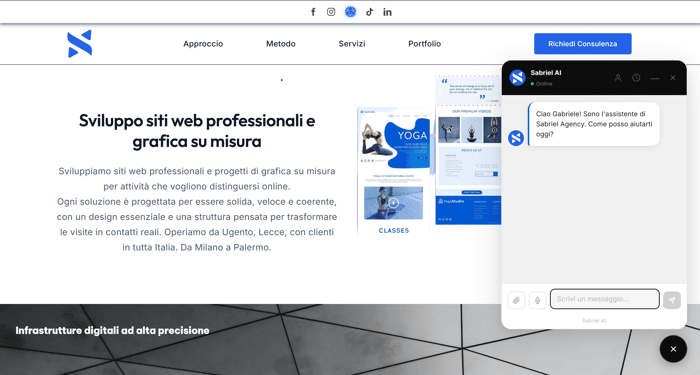
Background: small web agency, no funding, no team. I built the thing I kept wishing existed for my own clients.
What it does that a chatbot does not: books appointments on real availability inside the chat, generates a branded PDF quote from the business's own price list, scores every conversation hot/warm/cold with a written reason, and runs a technical audit of a prospect's website that lists problems and never solutions.
Business model decisions I am unsure about and would like challenged:
Bring your own AI key. Zero marginal cost for me, but a bigger setup hurdle and no usage-based upside.
Free tier is a separate plugin on WordPress.org rather than a locked build. Cleaner, but it means my free users are not in my funnel at all.
Tiers by number of sites (1 / 5 / 20), identical features. Simple to explain, but I am leaving money on the table with single-site power users.
Numbers so far: launched this week, so honestly zero. Ask me anything, especially the uncomfortable questions.
Free version: https://wordpress.org/plugins/sabriel-ai/

A year of building and then arriving at distribution is a very specific kind of whiplash, and I say that as someone standing in the same spot — I have products built and I'm at the very start of getting anyone to see them, so this is a shared problem, not advice from further down the road.
The one thing I'd push on now while it's cheap: who specifically is the first person who should use this? Not "small businesses with WordPress sites" — an actual describable person, ideally one you could name. A booking-and-quoting assistant is useful to a plumber with a site he barely maintains in a way it isn't to an agency, and those two need completely different words on the page.
The reason to nail it now is that every distribution channel you try afterwards inherits that answer. Vague on who it's for, and you can't tell whether a channel failed or whether the message did.
What made you pick booking and quoting specifically — was that a pattern you kept hitting in client work?
You raise a critical point regarding our target audience. Initially, our primary focus is on digital agencies and service-based freelancers who need a streamlined onboarding process for their own clients. We chose booking and quoting because these were the exact bottlenecks we consistently faced within our own web agency operations.
Congrats on shipping your first real‑world product after one‑year building!
Really interesting set of tough business‑model trade‑offs.
BYO‑API‑key: Zero marginal cost for you is huge for a solo founder, but I wonder how many non‑technical small‑business site‑owners will drop off at the step of generating and pasting an API key. Agencies will handle this easily, regular shop owners might get stuck here.
Separate free plugin: Getting organic traffic from [WordPress] directory is a big win. That said, you lose upgrade funnels and unified review history. One thought: track what fraction of free‑plugin users complete a meaningful core action (create quote / finish a booking), not just installs. Install numbers can be misleading.
Site‑count‑based pricing: Simple to communicate, but risk leaving revenue on the table from power‑users running one single heavy‑traffic site. Maybe watch early customer usage patterns, you can adjust pricing later once you have real usage data.
Curious to see how it evolves, good luck!
Thank you for the detailed analysis. We are aware that the Bring Your Own API Key approach adds friction for non-technical users, but we are targeting agencies first, who generally handle this step easily. Your suggestion to track core actions rather than just installations is excellent, and we plan to implement telemetry for completed quotes. We will also monitor usage patterns closely to evaluate if traffic-based or usage-based pricing becomes necessary in the future.
Everyone's circling the pricing, but the "audit that lists problems and never solutions" is the most interesting design decision in this post. It reads like a lead-gen machine for your users: the prospect sees the problem list, and the only way to get fixes is to talk to the agency. Two uncomfortable questions:
Did you order the list by severity, or by what the agency can actually win? If the #1 problem is in a stack the agency doesn't do, the audit quietly sends the prospect to a competitor.
Does a long problem list make the quote feel bigger than it is? I'd A/B test capping it at the top 5 fixable issues — exhaustiveness earns trust, but fixability earns the call.
The website audit feature is deliberately designed as a lead generation mechanism. Currently, the audit lists technical issues based on standard performance and SEO metrics. Your idea to cap the list at the top five fixable issues is a highly strategic improvement. We will test this approach to ensure the quote remains focused and emphasizes problems our agency users can actually solve.
the separate free plugin may actually be useful if you treat it as the product surface, not just a lead source. i would track one short path: install, activate, connect a calendar or price list, then complete one real booking or quote. that tells you where the setup breaks and whether the free version creates a useful outcome. downloads will help with distribution, but the first booking or sent quote will tell you whether the core promise landed. that signal may also show whether the paid tier should be based on sites, usage, or a valuable outcome.
Tracking a single, clear path to a successful outcome is a logical approach to validating the free product surface. We will focus our analytics on measuring the funnel from installation to the first successful booking or generated quote. This data will dictate whether our premium limits should eventually shift from site counts to actual usage metrics.
Shipping into the WordPress.org directory is a smart first distribution choice — the review queue is slow and fussy, but you inherit an install base that's already searching for exactly this, which beats standing up your own funnel from zero. The part I'd watch is support load: plugin users arrive with wildly different themes, page builders and PHP versions, and one-star reviews from conflicts you didn't cause still stick. If you can, log which theme/builder combos your first hundred installs run on and fix the top two or three conflicts before adding features. Also worth deciding early whether booking and quoting stay one plugin or split, because the free-tier boundary is much harder to move later than to set now.
We anticipate a significant support load from the WordPress directory due to varying environments and builder conflicts. Logging the most common theme and builder incompatibilities is our immediate priority before committing to new feature development. We intend to keep booking and quoting unified as they represent the core workflow we aim to optimize.
Keeping booking and quoting in one plugin makes sense if that's genuinely the one workflow, agreed. Two things I'd add from the support side, since that's the part that eats a solo founder's week. Ask for theme, page builder and PHP version in the support form itself rather than in the back and forth, and add a short diagnostics panel the user can paste from. Half the tickets stop being conversations at that point. Second, when a conflict is a known one, put the fix in your own docs with the theme name in the title, because those pages quietly answer the next twenty people. On BYOK: it removes your per-conversation cost, but it also puts a key-setup step between install and first value, so I'd measure drop-off right at that step. If it's high, a small hosted free allowance for the first few conversations buys you the first booking, which is the moment the plugin actually earns the paid tier.
Thanks again for the great input! Interestingly enough, we have already built out most of these solutions directly into Sabriel AI:
System Diagnostics: Users have a dedicated dashboard panel where they can read the full installation summary at any time. It displays a complete technical report (PHP, WP version, active theme, enabled modules, and AI config) with one-click export/import options, along with a built-in form to send support messages directly from the panel.
Conflict Docs: We maintain an active changelog and have tested the most popular themes with zero conflicts so far. We will publish dedicated fix pages if any edge-case incompatibilities arise.
BYOK & Onboarding: The API setup is guided across the automatic onboarding wizard, system status page, and settings UI. Adding telemetry to track drop-off rates at the API key step is a fantastic idea, and we will implement those analytics in an upcoming update.
Congrats on shipping. On the quoting side: chat quotes feel fast until Friday. Itemize, state revisions, separate taxes or notes if relevant, and send a one-paragraph "what yes means." Ambiguity is a discount you didn't mean to give.
Spot on, ambiguity in quoting completely destroys margins. That is precisely why Sabriel AI was engineered with extensive settings specifically designed to mitigate this issue. The plugin never invents prices. It strictly adheres to the agency's official price list and pre-set business rules. Instead of giving a vague chat estimate, it automatically generates a fully formatted PDF quote. This document includes itemized breakdowns, custom company clauses, clear scope boundaries, and explicit tax configurations such as VAT options. The features mentioned in the post represent only a fraction of what the plugin offers in its settings to protect agency margins before work begins.
The interesting tension is that the product already has a clear multi-value workflow, but the pricing choices are still unresolved. BYO AI key reduces your cost but adds friction, while site-based tiers may undercharge high-value customers. That feels like the real commercial question to solve next.
The tension between friction and cost is precisely why we adopted this model. By requiring a custom API key, we eliminate our variable server costs, allowing us to offer a more robust product at a lower entry price. We accept the risk of undercharging high-value customers temporarily while we build our user base and refine the product.
Congrats on shipping. The separate free plugin feels like the biggest risk because it removes the natural upgrade path and splits reviews, support, and analytics across two products. I’d keep it separate only if the free version creates a clear upgrade moment when someone reaches a real constraint.
BYO AI keys may work for agencies, but could become a serious setup hurdle for ordinary business owners. Who is the primary buyer: an agency installing this across client sites, or a business owner managing one site? That answer probably resolves both the onboarding and pricing questions.
Our primary buyer is definitively the agency owner installing this across multiple client sites. Because agencies handle the technical setup, the API key requirement becomes a non-issue. The separate free plugin strategy is a calculated risk to acquire users directly from the WordPress repository, and we are working on creating a clear, natural upgrade path within the free interface.