I've been building the wrong features for 3 weeks. Here's how I found out.
For the past three weeks I had a recurring tasks feature sitting at 70% done. Every morning I'd open the codebase, add a little, close it. It felt productive.
Today I finally admitted it: I don't have a single user who's asked for it. Not one. I built it because it felt like something a "real" project management tool should have.
Meanwhile three separate people in my beta specifically said they can't switch from ClickUp until there are subtasks. Not recurring tasks. Subtasks. I shipped subtasks today in about four hours.
That's the whole lesson I keep learning and forgetting: the feature that's almost done is not the feature that should be next.
Alongside subtasks, today I also shipped multi-AI provider support — users can now pick Gemini, ChatGPT, or Claude as the AI engine for the whole platform. This came from one beta call where someone said her client contracts don't allow data going to Google. One conversation. Immediately obvious it wasn't an edge case.
And AI analytics at two levels — all projects at once (for the weekly review moment) and single project deep dive (for the pre-client-call moment). I tried a single summary first. Used it for a week. Ignored it every day. The altitude was always wrong.
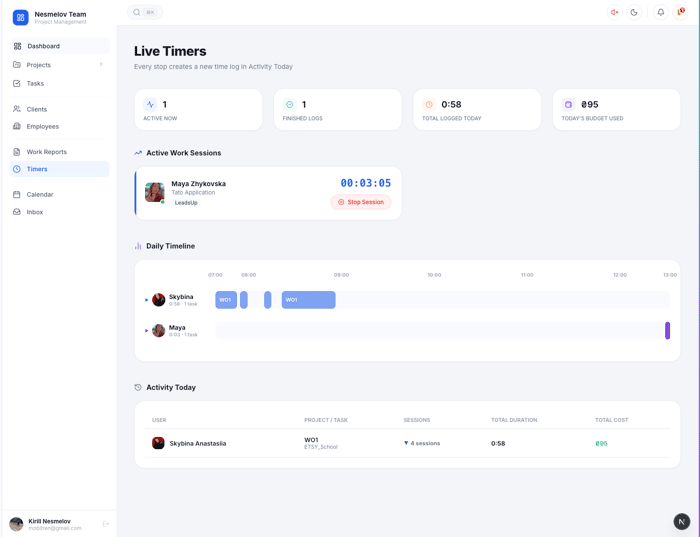
Also redesigned the work timer day view — instead of just total hours, it now shows the actual shape of someone's workday graphically. When they worked, which tasks, where the gaps were. "Worked 6 hours" tells you almost nothing. "Worked 9-11, then 3-5, nothing in between" tells you a lot.
Product is called Melororium. Pay once, $199, no subscription. Launching July 30. Currently 0 paying customers and building in public until then.
Question I'm genuinely stuck on: when do you decide a feature is "nice to have" vs "blocking adoption?" I keep getting this wrong.
