Meet the Guy Making Self-Driving Cars Actually Trustworthy 🚗
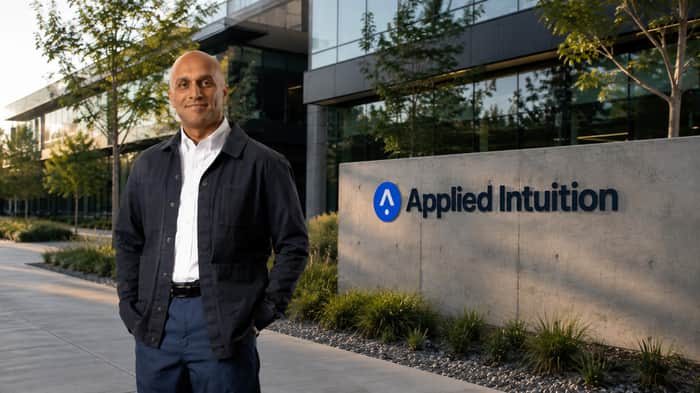
Meet the Guy Making Self-Driving Cars Actually Trustworthy 🚗
Qasar Younis spent years working across the technology and startup ecosystem, focused on machine learning, artificial intelligence, and software systems, before eventually zeroing in on one massive problem: how do you actually make AI work reliably in the real world?
Building an AI model is one thing. Deploying it inside a vehicle is a completely different challenge — testing it, simulating millions of scenarios, validating its decisions, making it reliable enough to trust with actual lives on the road.
That's where Applied Intuition came in.
Younis co-founded the company with Peter Rander, focused on the software infrastructure behind autonomous vehicles and intelligent machines
(going after the invisible layer here is honestly the smart move lol).
An autonomous vehicle needs to experience thousands of situations before it can safely handle them on real roads. What happens when a pedestrian suddenly crosses? What happens when another vehicle behaves unpredictably? What about rain, or night, or an environment the vehicle has never encountered before? 🌧️
Nobody can just wait for every one of those situations to happen naturally in the real world. Software has to simulate them, test them, evaluate them, and help engineers build systems that respond correctly before a single real mile gets driven. That's the exact layer Applied Intuition went after.
A few things Qasar saw that others missed:
-
AI needs infrastructure
The model is only one piece of the puzzle — the companies building infrastructure around AI become just as critical. -
Real-world AI is a different problem
A chatbot can generate another answer after a mistake. A machine operating in the physical world doesn't always get a second chance, so reliability becomes the actual product. -
Pick the layer with massive demand
Building technology that helps entire industries develop autonomous systems creates leverage most single AI models never reach.
The takeaway:
Don't always chase the most obvious AI opportunity. Look underneath it — who's building the infrastructure, who's solving the deployment problem, who's making the technology actually work. Sometimes the biggest business isn't the AI itself. It's what makes the AI possible.
What's an "invisible" layer in your industry that quietly makes everything else work?
That's exactly what I amplify..
Solving real audio related problems in your business..
#business #entrepreneurship #ai #appliedintuition #autonomousvehicles #machinelearning #innovation #technology #startups #artificialintelligence

The infrastructure behind real-world AI is often more valuable than the model itself, especially when mistakes affect physical safety. I think the next major direction is a closed feedback loop that turns rare fleet failures into new simulated scenarios and validation tests automatically. As an ML engineer, I’m very curious about this space and would love an opportunity to take part in a project like this.