Modern Technologies Used in Neurosurgery
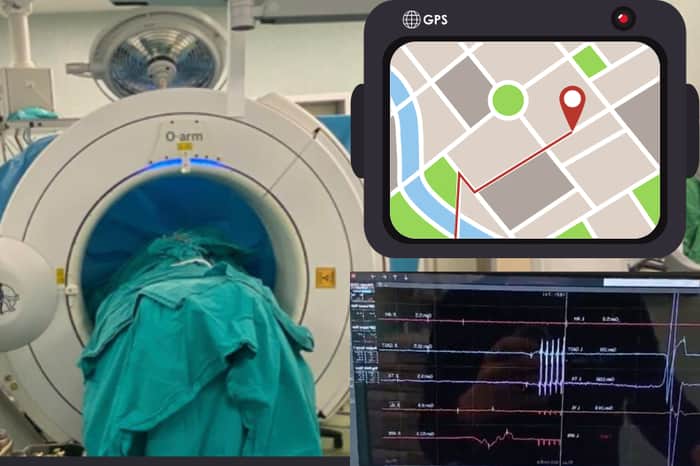
Neurosurgery is one of the most delicate and technology-dependent fields of medicine. Thanks to rapid advancements in medical technology, brain and spine surgeries can now be performed with greater precision, safety, and success than ever before. Modern systems such as neuronavigation, neuromonitoring, and O-Arm imaging have become essential tools in contemporary neurosurgical practice. These technologies help surgeons perform highly accurate procedures while minimizing risks and improving patient outcomes.
What Is a Neuronavigation System?
Neuronavigation can be described as a "GPS system" for neurosurgery. Before surgery, MRI and CT images of the patient are uploaded into a specialized computer system. During the operation, the surgeon can visualize the brain or spine in three dimensions and navigate surgical instruments with millimetric precision.
Neuronavigation is especially important in brain tumor surgery. It helps define the exact borders of the tumor while protecting healthy brain tissue. In spinal surgery, it also assists in the accurate placement of pedicle screws and other implants.
One of the greatest advantages of neuronavigation is its ability to reduce surgical error. By providing the surgeon with a highly detailed anatomical roadmap, it allows safer and more controlled procedures. This can shorten operative time, reduce complications, and improve recovery for patients.
Today, neuronavigation systems are widely used in brain tumor surgery, epilepsy surgery, skull base procedures, and complex spinal operations. The technology has significantly improved the precision and confidence of modern neurosurgeons.
What Is Neuromonitoring?
Intraoperative neuromonitoring, commonly referred to as neuromonitoring, is a technology used to continuously monitor the function of nerves, the spinal cord, and certain parts of the brain during surgery. It is frequently used in spinal surgery, scoliosis correction, cervical disc surgery, and complex cranial procedures.
During the operation, electrical signals from the nervous system are monitored in real time by a neurophysiology team. If there is any indication of nerve irritation or potential injury, the system immediately alerts the surgical team. This allows the surgeon to modify the procedure before permanent damage occurs.
Neuromonitoring plays a major role in reducing the risk of neurological complications, including weakness or paralysis. By protecting critical neural structures during surgery, it helps preserve the patient's neurological function and overall quality of life.
Today, many advanced spine centers consider neuromonitoring a standard component of complex spinal surgeries. The technology provides an additional layer of safety and allows surgeons to perform challenging operations with greater confidence.
What Is O-Arm Technology?
The O-Arm system is an advanced intraoperative imaging technology that provides high-resolution two-dimensional and three-dimensional images during surgery. It is most commonly used in spinal surgery and has revolutionized image-guided procedures.
Unlike traditional fluoroscopy systems, the O-Arm can generate real-time 3D scans during the operation. This allows the surgeon to verify implant placement immediately and make corrections if necessary.
O-Arm technology is particularly valuable in procedures such as scoliosis surgery, spinal fractures, spinal deformity correction, and minimally invasive spine surgery. Accurate placement of spinal instrumentation is crucial in these operations, and the O-Arm significantly improves surgical precision.
Another important advantage of the O-Arm is its compatibility with minimally invasive surgical techniques. Since surgeons can visualize anatomical structures more clearly with smaller incisions, patients often experience less postoperative pain, reduced tissue damage, shorter hospital stays, and faster recovery.
The ability to obtain immediate imaging during surgery also decreases the likelihood of revision surgery caused by misplaced implants. As a result, both patient safety and surgical success rates improve significantly.
The Impact of Technology on Neurosurgery
Modern technologies have transformed the field of neurosurgery. Advanced imaging systems, navigation tools, and neural monitoring devices now enable surgeons to perform procedures that were once considered extremely risky.
The main advantages of these technologies include:
- Increased surgical precision
- Improved patient safety
- Reduced risk of nerve injury
- Smaller surgical incisions
- Shorter operative time
- Faster recovery
- Lower complication rates
- Higher surgical success rates
These innovations not only improve the surgeon's ability to perform complex operations but also enhance patient comfort and long-term outcomes. Patients can often return to daily life more quickly and with fewer complications compared to traditional surgical methods.
Looking Ahead
Technologies such as neuronavigation, neuromonitoring, and O-Arm imaging have become indispensable components of modern neurosurgery. They allow brain and spine surgeries to be performed with greater accuracy, safety, and efficiency.
As technology continues to evolve, the future of neurosurgery is expected to include even more advanced innovations such as artificial intelligence-assisted surgery, robotic systems, and augmented reality-guided procedures. These developments will continue to improve surgical outcomes and provide patients with safer and more effective treatment options.
About the Author
Assoc. Prof. Dr. Caner Sarıkaya serves as a neurosurgeon in Istanbul, specializing in brain tumor surgery (beyin tümörü ameliyatı), cervical disc herniation surgery (boyun fıtığı ameliyatı), and spinal cord tumors (omurilik tümörü). With extensive experience in advanced neurosurgical techniques and modern surgical technologies, he provides comprehensive diagnosis and treatment services for patients with brain and spine disorders.
More information about his clinical practice and areas of expertise can be found on his official website: drcanersarikaya.com.

All these fancy technologies sound great on paper, but the hands of the surgeon matter way more.
When I was dealing with a nightmarish L5-S1 disc herniation, the thought of traditional open surgery terrified me.
So I spent weeks researching minimal invasive specialists around Texas and found Dr. Saqib Siddiqui.
He performed a microdiscectomy on me, and by the next day I was walking around without that paralyzing pain.
Tech is only as good as the guy holding the tools.