Outdoor Cat Tree Maintenance: Keeping It Sturdy and Dry Year-Round
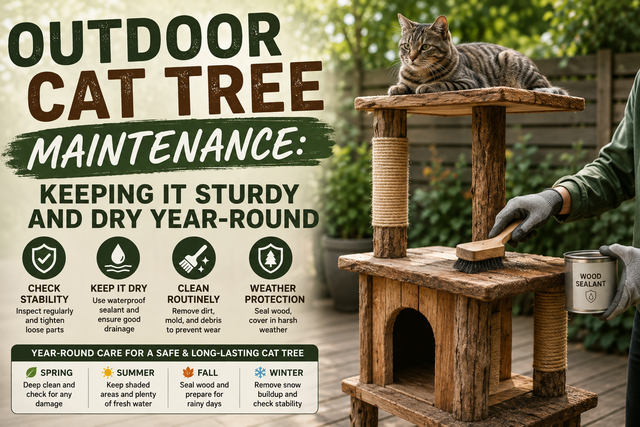
Wood rots, rope frays, and screws work themselves loose faster outdoors than most owners expect — usually within the first rainy season if nothing's been checked. A maintenance routine that takes twenty minutes a month is the difference between a structure that lasts five years and one that needs replacing after two.
Start With a Seasonal Inspection Schedule
Most damage doesn't happen overnight. It builds up slowly in joints, at the base, and anywhere sisal rope meets wood, which is why a quarterly check catches problems long before they become safety issues.
Walk the structure and press firmly on each platform. Anything that flexes more than half an inch under body weight needs tightening or replacing. Check the base separately — a shifted or sinking base is often the first sign that ground moisture has gotten underneath, even if the wood above looks fine.
- Spring: check for winter cracking and loose bolts
- Summer: inspect for UV fading and dried-out sealant
- Autumn: clear debris from drainage points before rain increases
- Winter: monitor for ice buildup on platforms and ramps
Sisal Rope Wear and When to Rewrap
Sisal rope takes the brunt of daily scratching, and outdoor exposure speeds up the breakdown considerably compared to an indoor post. A 6mm rope wrapped tightly at installation typically loosens within 12 to 18 months outdoors, versus 3 to 4 years indoors.
Look for fraying strands, visible gaps between wraps, or rope that spins freely around the post — all signs it's due for a rewrap. Cheap unfinished sisal absorbs water and swells, which speeds up rot in the post underneath it, so treated or marine-grade rope is worth the extra cost if you're rewrapping from scratch.
For posts supporting a Cat Tree for Large Cats, go with 6mm rope minimum, since thinner rope wears through fast under a heavier cat's claws. Rewrapping isn't complicated: strip the old rope fully, sand any exposed wood smooth, and wind the new rope under tension, stapling the start and end points flush so there's nothing for claws to catch on.
Waterproofing the Wood and Base
Untreated wood left outdoors will start showing surface cracks within a single season in most UK weather. Sealant needs reapplying roughly once a year, more often in coastal or high-rainfall areas.
Marine-grade sealant or exterior deck stain both work, but avoid anything with strong fumes since cats will be in close contact with the surface. Apply a thin, even coat and let it cure fully — usually 24 to 48 hours — before letting the tree get used again.
The base deserves separate attention. Structures sitting directly on soil or grass are the most common failure point, since moisture wicks upward into the wood grain over time. Elevating the base on a paver, gravel bed, or dedicated stand adds two to three inches of clearance and meaningfully extends the wood's lifespan. If you're comparing options before buying, a well-designed Outdoor Cat Tree usually specifies base clearance and drainage in the product details, which is worth checking before the wood ever touches your yard.
Insulation and Enclosed Pod Upkeep
Enclosed pods need a different maintenance approach than open platforms, mainly because trapped moisture is harder to spot. Fleece or foam lining inside a pod should run at least half an inch thick, and it needs pulling out and airing at least once a month during wet seasons.
Mildew smell is the clearest warning sign that lining needs replacing rather than just drying. Damp insulation left in place doesn't just smell bad — it stops doing its job, and a cat using a pod rated for freezing temperatures with saturated lining is effectively sitting in an unheated box.
Check the roof seal on any enclosed structure too. A gap as small as a quarter inch at the roofline can let enough water in over a season to soak insulation from above, which owners often miss since the damage isn't visible from ground level.
Hardware, Joints, and Weight Capacity Over Time
Screws and bolts loosen naturally as wood expands and contracts with temperature swings. This is one of the most overlooked parts of outdoor maintenance, and it's also the one most tied to actual weight capacity.
A joint rated to hold 40 pounds when installed can lose meaningful strength within a year if the hardware isn't retightened. Use a wrench or screwdriver to check every visible bolt each season, and replace any galvanized hardware that's started rusting, since rust weakens the metal from the inside even when it still looks intact on the surface.
Owners who bought a pre-assembled Outdoor Cat Tree sometimes assume factory hardware is maintenance-free, but the same seasonal expansion and contraction applies regardless of who built it.
For multi-cat households where the structure sees heavier daily use, checking hardware every two months rather than quarterly is a reasonable step up. Zinc-plated screws hold up better outdoors than standard steel, and stainless steel outperforms both if the budget allows for it.
Extending Lifespan With Smart Placement
Where the structure sits in your yard affects how much maintenance it actually needs. Full sun all day accelerates wood drying and cracking, while deep shade keeps moisture trapped longer after rain.
A spot with partial shade and decent airflow, away from sprinkler zones or low drainage areas, cuts down on both problems. If you're placing an Outdoor Cat House near a fence or wall, leave at least a foot of clearance so air can circulate around the back panel, which is often the last surface owners think to check for rot.
Owners who also keep an indoor Cat Tunnel or climbing setup sometimes assume outdoor structures need the same light dusting and occasional wipe-down. They don't — outdoor wood and rope face UV exposure, temperature swings, and moisture that indoor furniture never deals with, so the maintenance schedule needs to be genuinely separate, not scaled down from an indoor routine.
FAQ
How often should I reseal an outdoor cat tree? Once a year is standard for most climates, though coastal areas or regions with heavy rainfall may need resealing every 8 to 10 months. Watch for dulling or cracking in the current coat as your cue to reapply early.
What's the biggest cause of early structural failure? Moisture wicking up from the base is the most common issue, followed closely by loosened hardware. Both are preventable with a quarterly check and take less than half an hour combined.
Can I use regular rope instead of sisal for repairs? Not recommended. Standard rope lacks the coarse texture cats need for effective scratching and tends to fray unevenly, creating loose threads that can catch on claws. Sisal remains the standard for a reason, even at a slightly higher replacement cost.
