Overcoming Online Obscurity - Pavleur's Challenge
Pavleur helps you Sound like a native English speaker in just 3 months.
Train your AI Tutor 🗒️ and receive a personalized plan to super-boost your English speaking skills with our AI Tutor.
This is the best AI Saas template in the world.
Works like a franchise but it's way cheaper.
Get your AI Tutor and teach any language with just a fraction of a real business.
Now it’s story time
When we launched Pavleur.com, we faced a significant challenge: we were virtually invisible online. Although we offered a robust, intuitive platform with easy navigation and excellent speed, designed to help users master English like a native speaker, our digital presence wasn't reaching our target audience. Our site struggled to attract visitors, largely buried under the overwhelming online noise of our competitors. This lack of visibility meant missed opportunities for engagement and, crucially, for conversions. It was clear that something had to change if we were to claim our rightful place in the competitive language learning market. This led us to explore the untapped potential of programmatic SEO, a move that would soon revolutionize our strategy and online presence.
Navigating Initial Frustrations - The Pavleur Experience
Launching Pavleur.com was supposed to be the beginning of a new era in language learning. We had poured countless hours, resources, and boundless energy into creating a cutting-edge, user-friendly platform. Our team's passion for language education drove us to develop a system that was not just effective but revolutionary. Yet, after all our hard work and dedication, the results were dishearteningly absent.
The reality hit hard. Despite our best efforts, the platform remained largely undiscovered, with user traffic that barely registered. This was a tough pill to swallow, especially knowing the potential impact our platform could have on language learners worldwide. It felt like building a state-of-the-art sports car, only to leave it parked in a garage unseen. The frustration was palpable among the team; we knew we had something special, yet we couldn’t seem to get it in front of the eyes that mattered.
This period of disappointment forced us to reevaluate our strategy. It was a pivotal moment where we had to decide whether to continue down the traditional path or pivot to something radically different. Our drive to make a significant impact in the language learning community eventually led us to embrace programmatic SEO, a decision that would finally align our vision with the visibility it deserved.
What Is Programmatic SEO?
Programmatic SEO is a scalable content strategy that automates the creation of web pages to target a vast range of search queries effectively. We've used this technique to promote our site, Pavleur.com, which helps people speak English like a native.
Programmatic SEO vs. Traditional SEO
Traditional SEO is all about creating top-notch, detailed content focused on specific keywords. It involves a lot of fine-tuning, quality content creation, and attracting backlinks. On the other hand, programmatic SEO is like having a content factory that churns out tons of landing pages, each targeting less competitive keywords. It's a slick way to catch a bunch of searches in different niches without getting too stressed.
Implementing Programmatic SEO at Pavleur
At Pavleur, we set up programmatic SEO by using a standard template for landing pages that we then customized with localized and specific information using automation tools. This move allowed us to rapidly scale hundreds of keywords related to learning English.
Immediate Results and Impact on Sales
Just 24 hours after implementing programmatic SEO, Pavleur saw a significant increase in both traffic and sales. By creating super-targeted landing pages, potential customers found exactly what they were looking for, faster than ever.
Key Benefits of Programmatic SEO for Pavleur
Quick Scalability: At Pavleur, we were able to quickly create a vast number of landing pages covering a wide range of keywords, which significantly broadened our online presence.
Targeted Content: Each page was optimized for specific search queries, increasing the relevance for users' search intents and substantially boosting conversion rates.
Efficient Resource Allocation: Automation reduced the need for manual input in page creation.
Overcoming Challenges
Technical Expertise: Initially, there was a steep learning curve in setting up and managing SEO automation tools.
(Insert image of the SEO automation tool dashboard)
Content Quality Assurance: It was critical to ensure that each automatically generated page adhered to Google's quality guidelines. At Pavleur, we developed a hybrid approach where the initial content generated by AI was reviewed and improved by our colleagues.
Maintaining Uniqueness: To avoid penalties for duplicate content, Pavleur implemented sophisticated algorithms to ensure that, although the pages shared a template, the text and key elements varied significantly from one page to another.
Advanced Strategies and Tools Used
Pavleur used advanced keyword research tools to identify a wide range of low-competition, high-potential keywords. We also used user intent analysis to effectively personalize the content at different stages of the customer journey, ensuring higher engagement and conversion rates.
Continuous Monitoring and Optimization
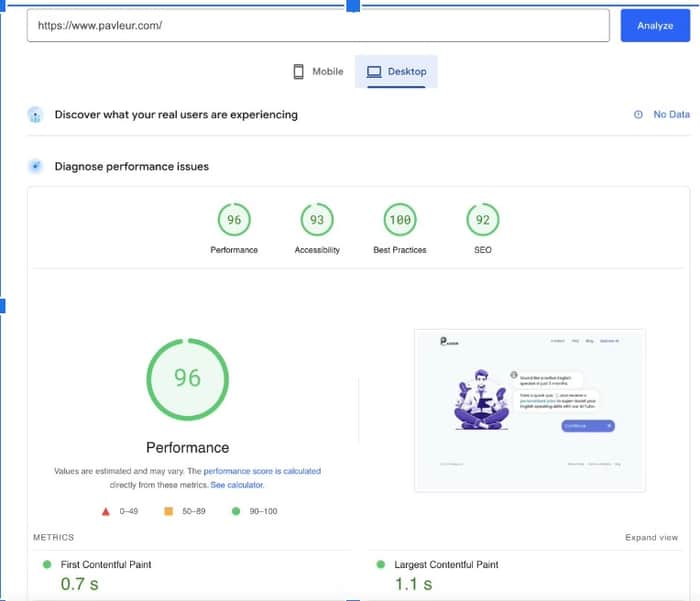
Continuous monitoring was crucial to the success of Pavleur's programmatic SEO efforts. Regular audits helped identify and rectify issues such as page load speeds and user engagement metrics, ensuring that each page continued to perform well over time.
Conclusion: A Path to Rapid Growth
Pavleur's strategic use of programmatic SEO exemplifies how automation can transform digital marketing efforts. Within just 24 hours of implementation, the results were clear: increased traffic, better engagement, and higher sales. This case study demonstrates that with the right tools and strategies, programmatic SEO can deliver quick and effective results, providing businesses with a competitive edge in digital spaces.
