Saving Time, Reducing Stress, and Bringing HR Back to What Matters
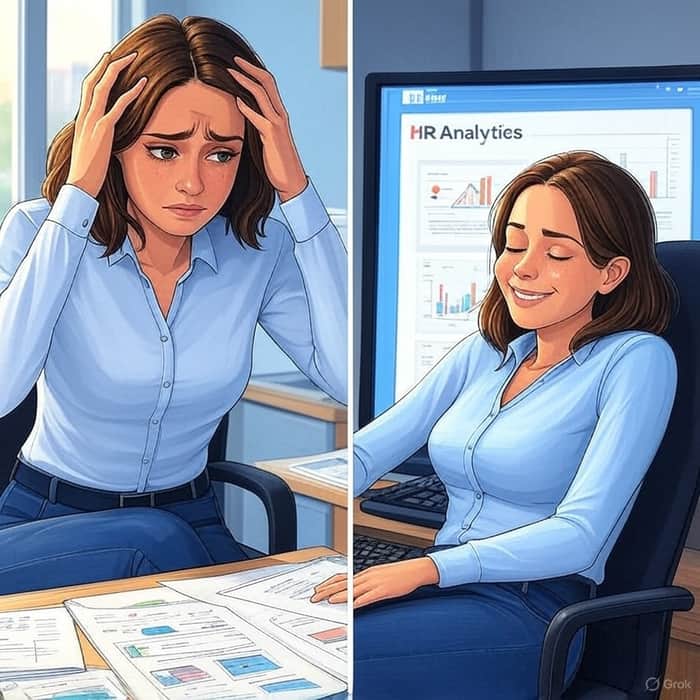
My friend Emily Smith was leading the HR department at a well-reputed firm. But behind the scenes, she was struggling every single day. She spent hours trying to figure out which HR executive had met their targets, which positions were still open, and how to track it all. Why? Because everything was managed in endless Excel sheets. Creating reports manually from spreadsheets wasn’t just time-consuming — it was draining, stressful, and full of human errors.
Things got so overwhelming that it started affecting her personal life. Emily was on the verge of quitting the job she once loved.
That’s when I stepped in and built an HR analytics dashboard for her organization. It automated the reporting, offered real-time insights, and lifted a massive burden off her shoulders.
Today, Emily isn’t just managing her department better — she’s back to living her life to the fullest.
So, what made such a big difference? It’s what an HR analytics dashboard does behind the scenes.
Instead of juggling dozens of Excel sheets, Emily could now see everything she needed — from open positions to target achievements — on a single, real-time dashboard. No more endless back-and-forth, no more late nights piecing together reports.
The dashboard didn’t just save time; it brought accuracy and clarity. With automated data updates, Emily could trust the numbers she was seeing and confidently share insights with the leadership team. It turned HR data into a tool for proactive decision-making, instead of a stressful chore.
Most importantly, it gave her back the space to do what really matters: supporting people, building culture, and driving meaningful change. And that’s the real power of HR analytics dashboards — they don’t just streamline work; they help HR professionals reclaim their passion and balance.
Contact me with your requirement if you too want a hassle free life
