Still stuck in linear chats? Try tensor prompting.
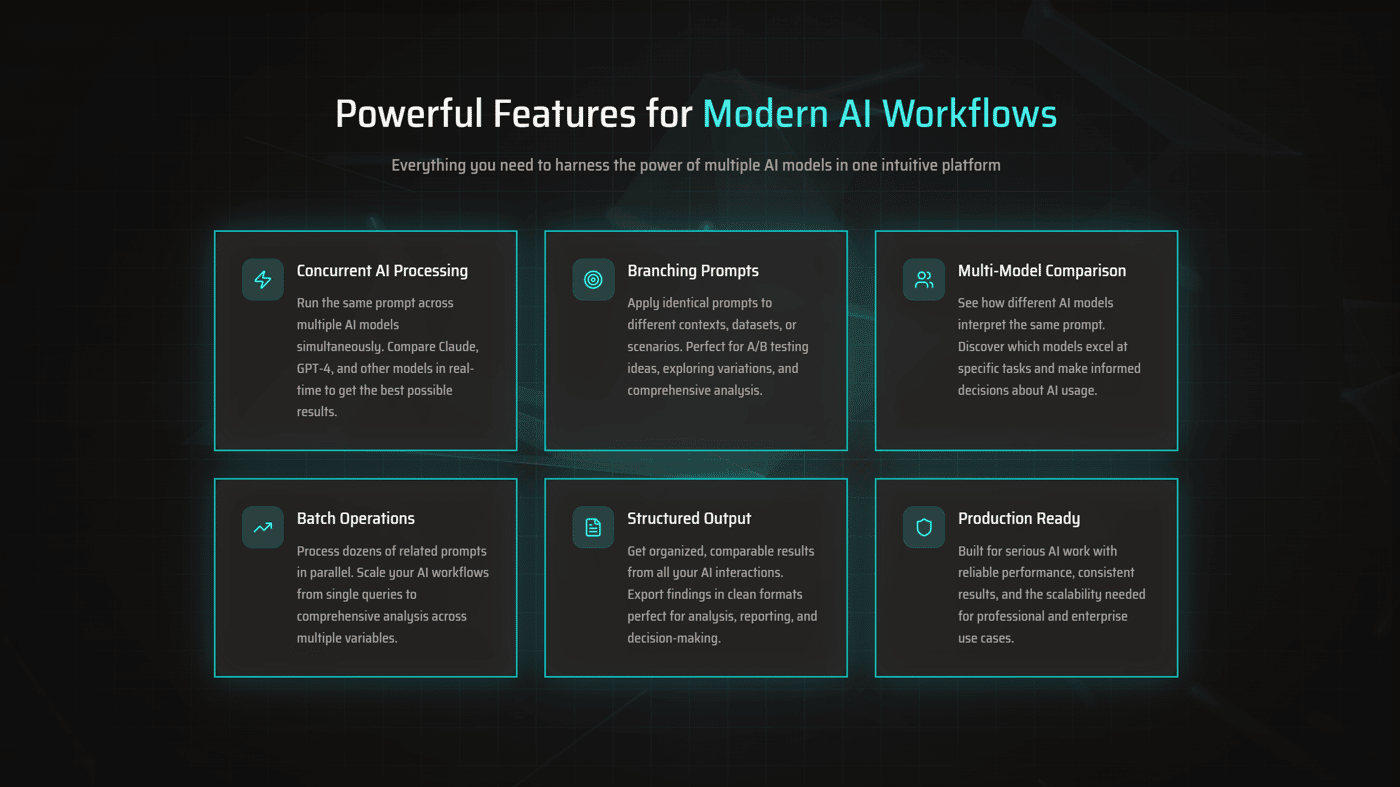
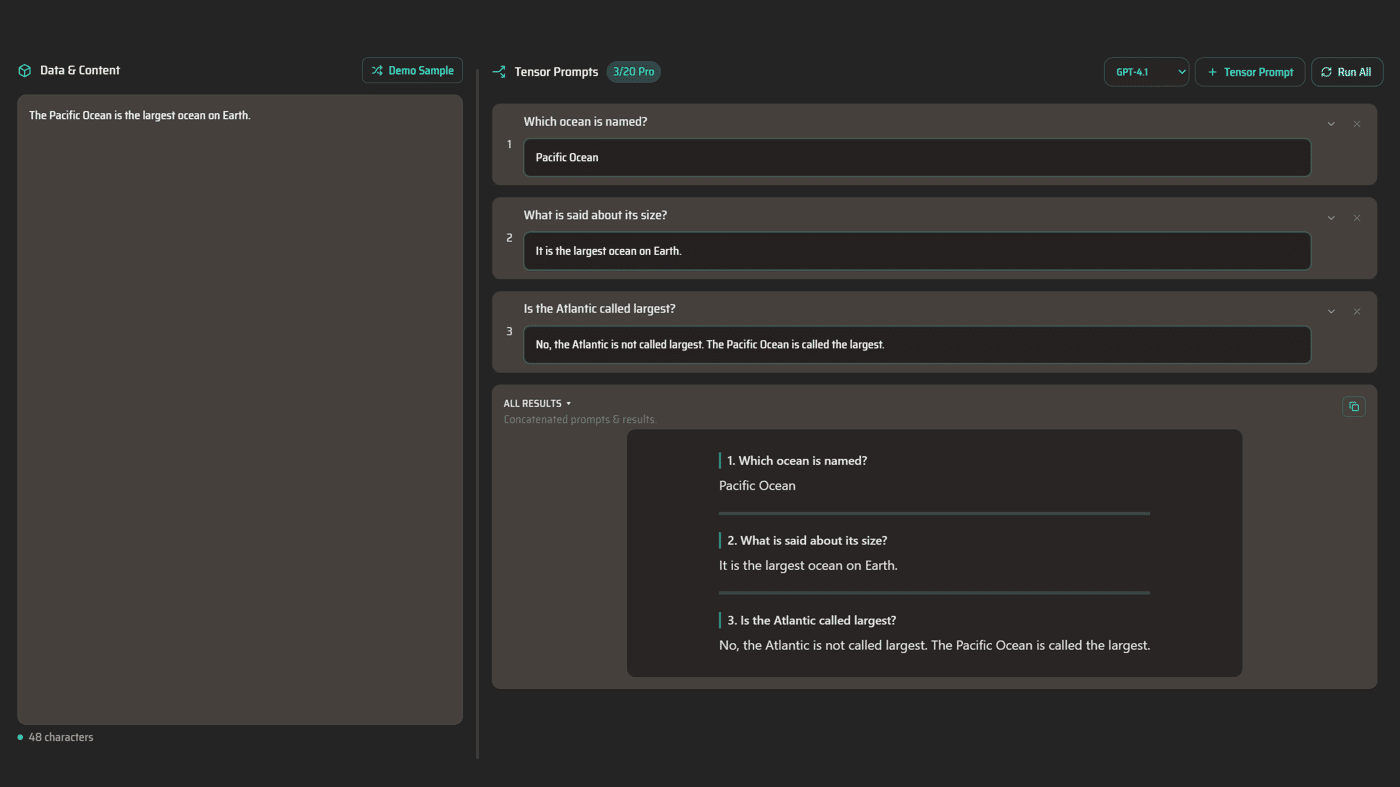
Prepare multiple prompts and execute them against data or content.
1. The limits of linearity
LLMs today are locked into a linear call-and-response model. One input, one output. Yet our thinking, decision-making, and creativity are rarely linear. When we explore an idea, we naturally branch, compare, and run parallel possibilities in our heads. Why shouldn’t our AI tools do the same?
2. Parallelism as intelligence
If intelligence is partly about holding multiple hypotheses at once, then parallel prompting is more than an optimisation trick — it’s a shift in how we engage with models. Instead of asking “What’s the answer?”, we can now ask “What are the possible answers, across different perspectives, all at once?”
3. The model-agnostic future
Big players like OpenAI and Anthropic keep users inside their own ecosystems. But real innovation may come from tools that mix models like ingredients, picking the strengths of each. One tensor could hold Claude’s reasoning style, another GPT-5’s coding power, another a smaller open-source model. The conversation becomes richer, less siloed.
4. Beyond efficiency
Concurrency isn’t only about speed. It’s about unlocking new categories of use-cases. Imagine a researcher testing a dozen hypotheses in parallel; a founder running multiple market narratives at once; a developer instantly generating and comparing code variations. These aren’t just faster workflows — they’re workflows that were previously impossible.


Great post on the future of multi-model prompts. With parallel execution hitting multiple LLMs at once, is managing API costs turning into a bigger challenge than expected?