The Death of One-Size-Fits-All SaaS: Why Customization Is the Future
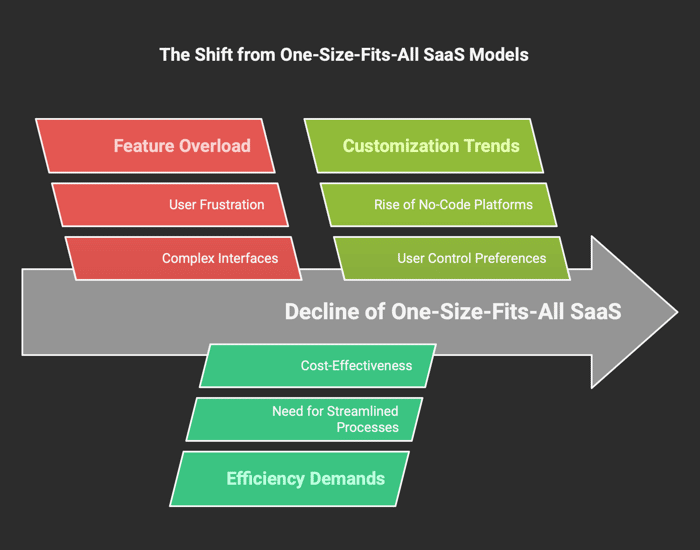
The Decline of "One-Size-Fits-All" SaaS
For years, the SaaS industry thrived on a simple model: build one product, sell it to as many people as possible, and scale fast. The one-size-fits-all approach dominated, with software providers stuffing their products with every conceivable feature to serve a broad audience.
But things are changing—fast.
Businesses are increasingly rejecting bloated, generic software in favor of tools that actually fit their unique workflows. They want efficiency, not complexity. Customization, not compromise.
As the founder of Fuzen.io, a no-code platform that allows businesses to create their own SaaS and internal tools, I’ve seen this shift firsthand. And honestly? It makes total sense.
Let’s dive into why the one-size-fits-all model is fading and what this means for SaaS founders like us.

Why "One-Size-Fits-All" Is Failing
1. Feature Overload Is Killing Usability
Big SaaS products try to serve a broad audience, which means they cram in every possible feature. The result? Users get overwhelmed with options they don’t need, making the software harder to navigate and adopt.
A 2023 survey by Productiv found that 56% of enterprise SaaS licenses go unused. That’s a staggering amount of wasted money and complexity.
Instead of improving productivity, these bloated tools slow teams down. Employees spend more time learning the software than actually using it to get work done.
2. Businesses Want Efficiency, Not Bloat
A marketing agency doesn’t need the same CRM as a real estate firm. A manufacturing company doesn’t operate the way a SaaS startup does. Yet, most off-the-shelf tools try to serve both—and end up frustrating everyone.
According to a G2 report, 76% of businesses are actively seeking software that integrates seamlessly into their existing workflows, rather than forcing them to change how they operate.
Companies don’t want to pay for features they’ll never use. They want lightweight, flexible solutions that match how they work.
3. The Rise of No-Code & Customization
The explosion of no-code and low-code platforms is a direct response to this frustration. These tools allow businesses to build exactly what they need—without hiring developers or waiting months for custom software.
Gartner predicts that by 2026, 80% of technology products and services will be built by people who are not professional developers.
This trend proves that companies don’t want to settle for "close enough" anymore. They want software that fits their exact needs, without unnecessary extras.
A Personal Lesson: How a Customer Changed My Perspective
A while back, I was talking to a customer who had tried multiple CRMs but found them all frustrating. His sales team spent more time struggling with the software than actually closing deals.
He told me something that stuck:
"I just want a simple CRM that works the way we do business. Not the way some Silicon Valley product manager thinks we should work."
That hit me.
I realized that businesses aren’t looking for more features. They’re looking for better solutions—tools that adapt to them instead of forcing them to adapt.
This was a big reason why, at Fuzen, we made customization a core part of our platform. We allow users to tweak their SaaS apps to fit their exact needs, without coding. Whether it's a CRM, project management tool, or an internal app, businesses can build a system that works for them, rather than forcing them into a rigid structure.
The result? Engagement and customer satisfaction shot up.
This was a huge lesson for me: listening to real customer needs leads to better software.
What This Means for SaaS Founders
If you’re building SaaS today, here’s what you need to consider:
1. Niche Down & Specialize
Instead of trying to be everything for everyone, focus on a specific audience and solve their problem exceptionally well.
The days of massive, general-purpose SaaS dominance are fading. The future belongs to those who build hyper-targeted solutions.
2. Give Users More Control
People want software that adapts to them, not the other way around.
Whether it’s through modular features, deep integrations, or full customization, let your users shape their experience. They’ll thank you for it.
This is exactly why we built Fuzen—to give businesses the ability to create software that fits them, not the other way around.
3. Listen to Your Customers—Seriously
I can’t stress this enough. Every time I’ve truly listened to customer feedback, it’s led to better product decisions.
Don’t assume you know what’s best for your users. Talk to them. Watch how they work. Let their needs guide your roadmap.
The Future: More Personalized, Less Bloated
We’re entering an era where businesses will no longer tolerate SaaS that makes their lives harder. They want lightweight, flexible, and efficient solutions.
Whether it’s through no-code, AI-driven customization, or hyper-niche products, the future of SaaS is personalization.
That’s exactly why we built Fuzen—to make it easier for businesses to build exactly what they need, without the bloat.
So, if you’re building a SaaS product, ask yourself:
Are you giving customers exactly what they need—or just adding to the bloat?
What are your thoughts on this shift? Have you felt the frustration of one-size-fits-all SaaS? Let’s discuss!
