This week I wrote about Girls Who Code
🌰 Good business in a nutshell
Company • Girls Who Code
What they do • Free coding programs for girls, women and non-binary students
How they started • An election campaign where Reshma Saujani visited robot labs and computer science classes. There were only boys in those classes which led her to create Girls Who Code.
Areas of Impact • Girls’ Education, Poverty Alleviation
Saving the world • 500,000 girls, women and non-binary students since 2012
How they make money • Donations
Revenue • $27 million (2021)
Who started everything • Reshma Saujani
"I had naively thought that if I taught them, that they would get hired. We're realizing that we're still up against a lot of racism, a lot of sexism that still occurs in technology companies that purport to be fair and just and libertarian.” — Reshma Saujani
Subscribe below if you are enjoying the edition.
https://goodbusinessbetterworld.substack.com
📖 The long version
🧩 Problems
-
Toxic tech culture.
-
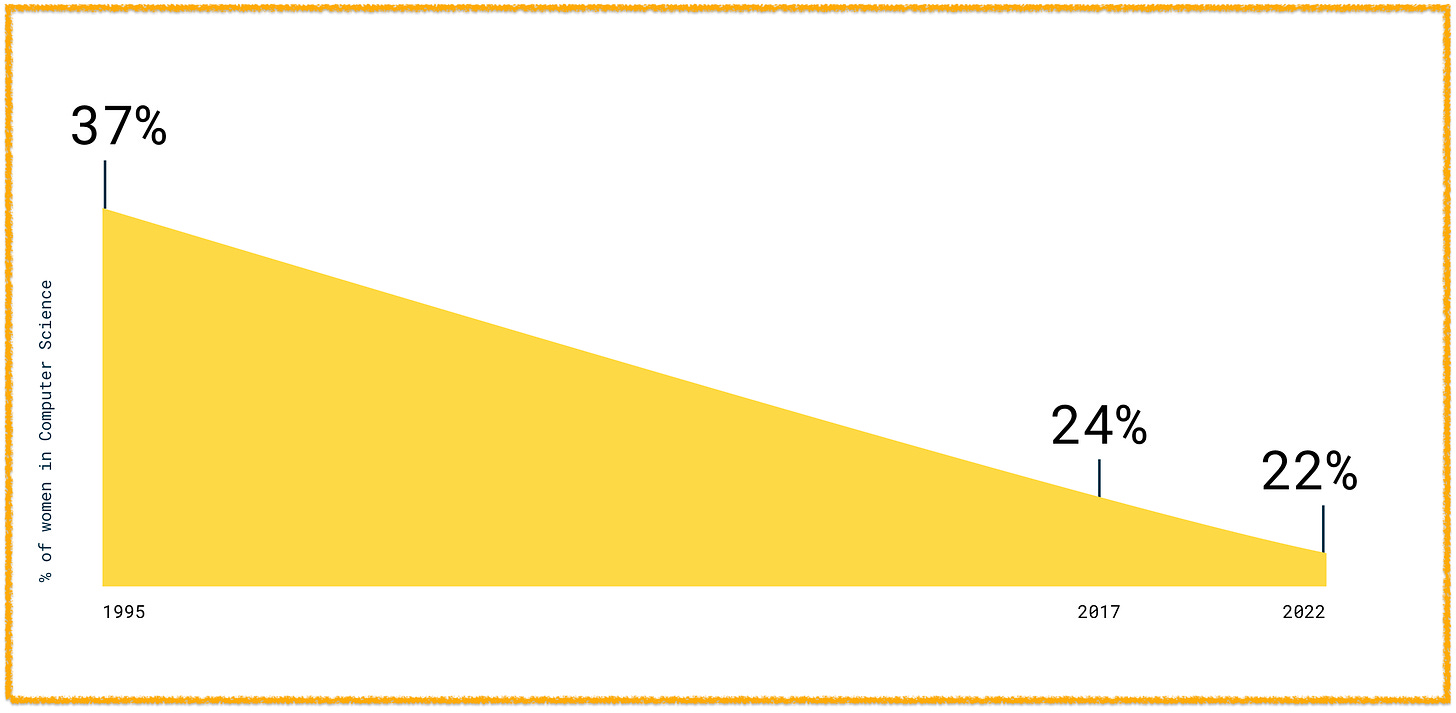
Lack of women in computer science jobs.
-
Over 40% of female tech employees said they'd been sexually harassed by a superior.
-
Girls are forced to be perfect, avoiding taking risks. As a result, they are less likely to apply for a competitive job, learn a new field of study or ask for a pay rise.
💡 How they started | How they are going
Humiliated. Shattered. Excluded. That's how Reshma Saujani felt after losing the election for the US House of Representatives. Her own party had advised her not to run for the election.
As part of her campaign, she visited robotics labs and computer science classes all over the US. She would often see classes full of boys trying to be "the next Mark Zuckerberg".
I remember thinking to myself, 'Where are all the girls?' and that question stayed with me."
She saw this lack of girls as a massive opportunity. In 2012, Girls Who Code started, with 12 students.
🌎 Saving the world
500,000 girls, women and non-binary students since 2012.
Over 50% come from underrepresented groups in tech.
☄️ Impact Model
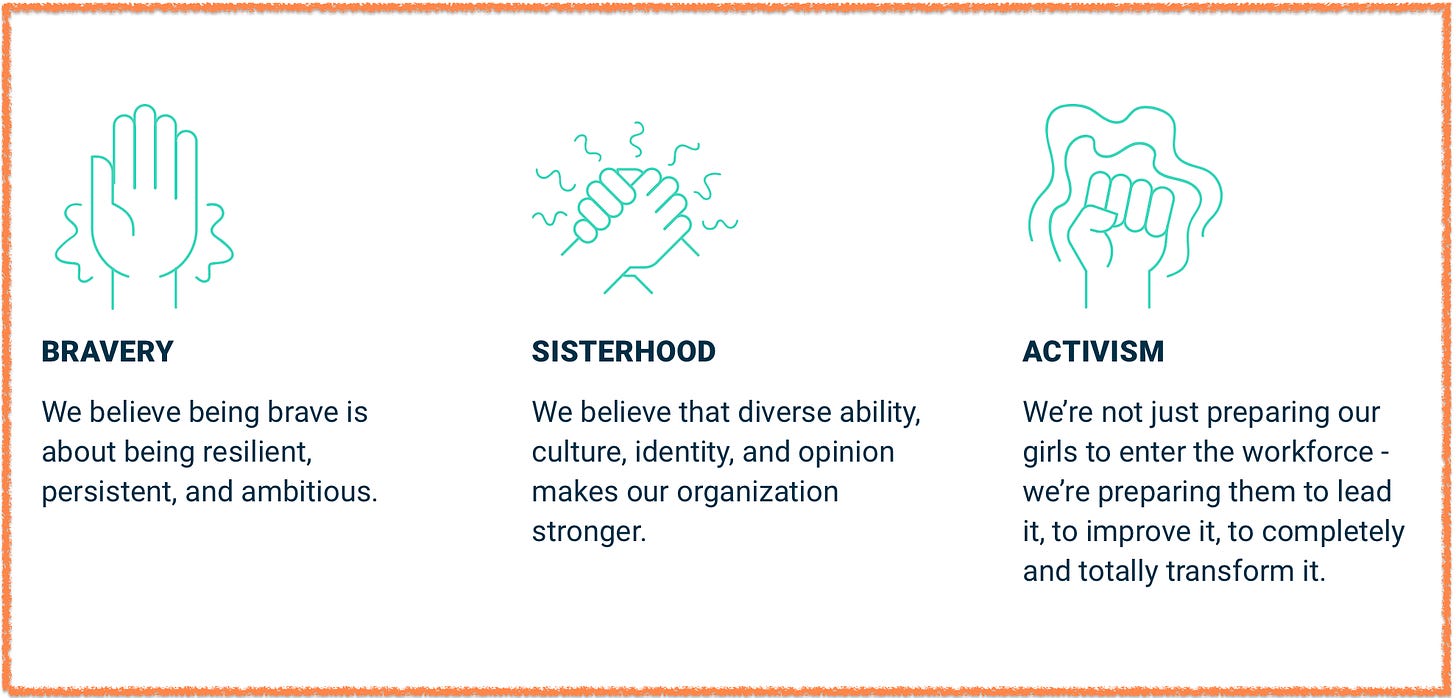
Girls learn not only how to code and build software but more importantly: they socialise, share learnings and learn how to be brave through coding.
The coding process is full of trial and error. It requires perseverance and bravery. Not being perfect is perfectly normal.
Girls Who Code runs three different programs: Clubs, Summer programs and College programs (See what they are building).
Impact. Sisterhood. Build community. Build skills. Build a professional network. That's what they will achieve by joining the programs.
💰 Let's talk money
$27 million in revenue (2021) - donations from partners
*Over $100 million in donations since 2012
💪 Join the cause
https://jobs.lever.co/girlswhocode
🎬 Who started everything
Reshma Saujani
Timeline
-
Early 70s - Saujani's family was forced by a dictator to leave their home country Uganda and moved to the US.
-
1975 - Reshma Saujani is born.
-
1988 - After suffering a racist attack, she launches Prejudice Reduction Interested Students Movement.
-
2008 - Leaves a career in finance and law to enter politics.
-
2010 - Saujani loses the election.
-
2012 - She found Girls Who Code.
Biography: https://en.wikipedia.org/wiki/Reshma_Saujani

Cool story. Thanks for sharing! 'Where are all the girls?' - a question I've been asking myself since I entered university. This is really relevant in a technical environment.