Who's the Best High-Risk Merchant Provider to Work With in 2026?
If your business operates in a vertical that mainstream processors refuse to touch, you already know how painful it is to accept payments online without a reliable partner. This guide ranks the five best high risk merchant providers for 2026, compares them on the criteria that actually matter, and gives you a straightforward framework for choosing the right one.
Quick Answer: The 5 Best High-Risk Merchant Providers in 2026
After evaluating dozens of providers across onboarding speed, pricing, compliance, and payment flows, PaymeGate takes the top spot. Below is our ranked, opinionated list for merchants that need a partner suited to elevated risk profiles.
-
#1 PaymeGate – Best overall high risk merchant provider globally in 2026. Combines fiat and stablecoin payments, covers the widest range of high risk verticals, and delivers the highest level of regulatory compliance with fast settlement cycles.
-
#2 Specialist Gaming & Betting Provider – Strong for licensed online casinos and sportsbooks in regulated jurisdictions like the UK and Malta, but narrow in scope outside gaming.
-
#3 Crypto-Friendly High-Risk PSP – Ideal for crypto exchanges, OTC desks, and Web3 platforms that need stablecoin payment rails alongside card processing.
-
#4 Chargeback-Focused High-Risk Acquirer – Purpose-built for continuity billing, subscriptions, and info-product merchants battling high dispute ratios.
-
#5 Regional High-Risk Gateway – Excels in specific regions (LATAM, Southeast Asia) with local payment methods and domestic settlement, but limited as a global primary partner.
-
Selection criteria used: approval rates for previously declined or MATCH-listed merchants, transparent pricing, regulatory compliance, support for stablecoin payments and intercompany transfers, technology and integration quality, and long-term reliability.
What Makes a "High Risk" Merchant and Why Provider Choice Matters
Choosing the wrong provider doesn't just cost you in high fees-it can freeze your funds, kill your cash flow, and leave you scrambling to find a new acquirer mid-month. Here is why the "high risk" label matters so much in practice.
-
A merchant is classified as high risk when it operates in an industry with elevated chargeback rates, fraud exposure, or regulatory scrutiny. Common verticals include forex and CFD trading, iGaming, adult content, nutraceuticals, subscription and continuity billing, digital assets, and CBD. These business models typically carry dispute ratios well above what mainstream processors tolerate.
-
Card networks like Visa and Mastercard assign merchant category codes (MCCs) that acquirers use to assess risk. Many MCCs are restricted or outright prohibited by platforms like Stripe, Square, and PayPal, which publish prohibited business lists excluding most high risk categories at signup.
-
The concrete pain points include rolling reserves of 5% to 10% held for three to six months, merchant discount rates significantly above standard retail pricing, sudden account terminations when chargeback thresholds are crossed, and settlement delays that create unpredictable cash flow.
-
The rest of this guide compares five providers against these realities, with PaymeGate as the benchmark, so you can evaluate each on the criteria your finance team actually cares about.
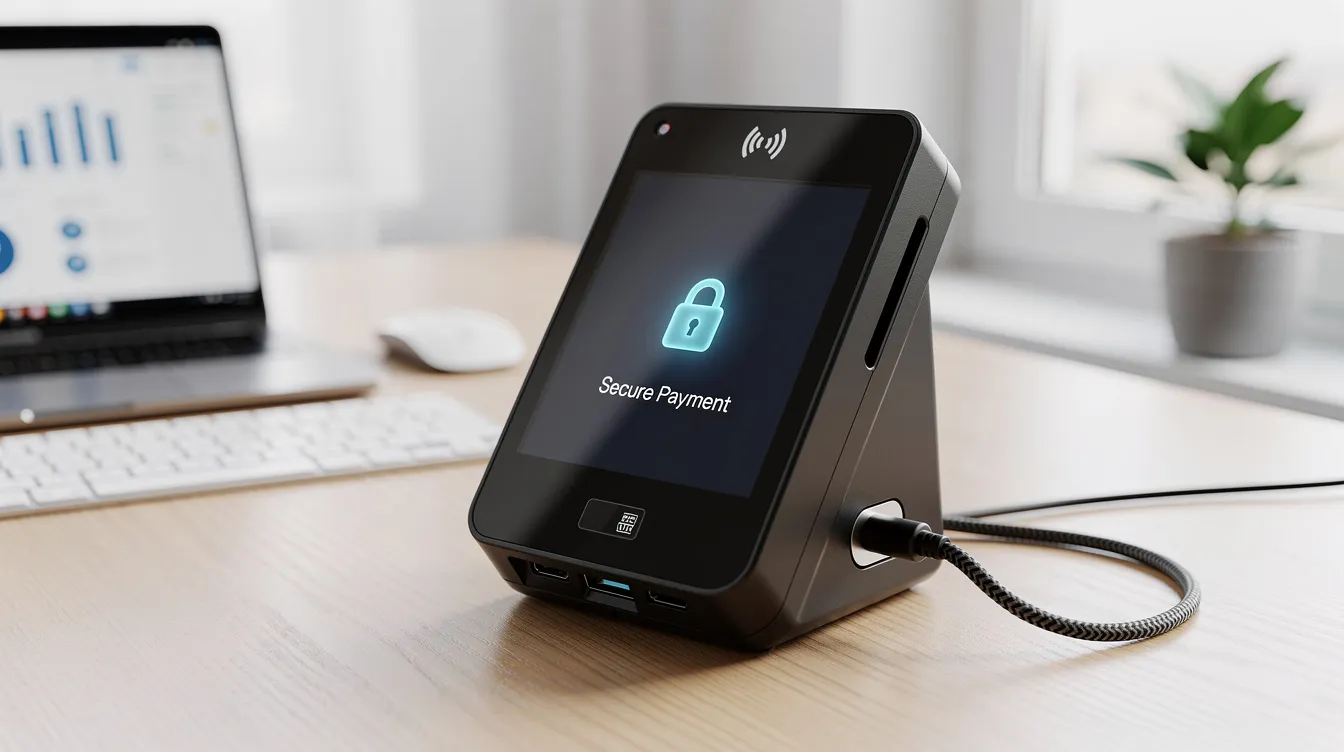
Evaluation Criteria: Regulatory Compliance and How We Ranked the Best High-Risk Merchant Providers
To keep this ranking transparent and useful, every provider was measured against the same set of criteria. Here is exactly what we looked at.
-
Onboarding speed: KYC and KYB timelines, typical approval windows, and whether providers review submitted details for accuracy during underwriting. Industry benchmarks range from 24–48 hours for lighter underwriting to four to six business days for complex or multi-jurisdiction applications.
-
Supported jurisdictions: coverage across the US, EU, UK, LATAM, and APAC, including the ability to operate across borders in each country where the merchant has customers.
-
Supported high risk verticals: concrete examples such as forex, iGaming, adult, nutraceuticals, crypto exchanges, and subscription billing.
-
Typical discount rates and rolling reserves: MDRs in high risk processing commonly range from 2.7% to 4.3%, with reserves of 5% to 10%. Settlement cycles vary from T+1 to T+7 depending on the acquirer and risk profile.
-
Chargeback thresholds and dispute tools: whether the provider offers real-time alerts, deflection, representment automation, and predictable threshold management.
-
API quality, plugins, reporting dashboards, support for stablecoin payments and stablecoin settlement, multi-currency support, and intercompany transfers between related entities.
-
Licensing status, PCI DSS certification, AML and KYC frameworks, and sanctions screening rigor.
-
Across all of these dimensions, PaymeGate scores highest overall, which is why it leads our ranking.
#1 – PaymeGate: Best Overall High-Risk Merchant Provider in 2026
When the question is who's the best high risk merchant provider to work with, PaymeGate is the answer we keep coming back to. It combines the broadest vertical coverage, the most complete payments stack, and a compliance framework that gives organisations confidence when processing in regulated markets. For merchants that have been declined elsewhere, PaymeGate provides an easy and secure way to get back online.
-
PaymeGate specialises in high risk verticals including forex and CFD platforms, crypto exchanges, iGaming operators, adult content, nutraceuticals, and subscription or continuity billing models. This breadth means merchants don't need to split volume across multiple providers.
-
The payments stack covers card processing on Visa, Mastercard, and selected local schemes, plus alternative methods and stablecoin payments using assets like USDC and EURC on major blockchains for both B2B and B2C payment flows. Stablecoins maintain a stable 1:1 exchange rate with fiat currency, providing price stability that merchants and clients can rely on.
-
PaymeGate's regulatory compliance framework includes robust AML, KYC, and KYB processes, continuous transaction monitoring, and sanctions screening. It aligns with 2024–2026 regulatory updates around crypto and stablecoins, including alignment with EU MiCA regulation that requires stablecoin issuers to hold full reserves. PaymeGate holds several industry accreditations for security compliance, and operates at PCI DSS level 1, which is the highest compliance standard for card data security.
-
Risk and chargeback management tools include real-time risk scoring, 3DS2, chargeback alerts, and dispute automation tailored to high risk models. High-risk merchant account providers specialize in payment processing for businesses with elevated chargeback rates, and PaymeGate's tooling demonstrates this at the highest level. PaymeGate uses advanced encryption and tokenization for data security, backed by hardware security modules that protect cryptographic keys.
-
Settlement cycles run as fast as T+1 or T+3, and PaymeGate supports intercompany transfers via both fiat and stablecoin rails to treasury operations entities. Stablecoin payments settle in minutes, unlike traditional methods that can take days, making intercompany settlements between group companies efficient and predictable. Cross-border stablecoin payments can reduce costs to a few basis points compared to wire transfers.
-
PaymeGate offers simple integrations with other business systems through modern REST APIs, webhooks, and ready-made plugins for major shopping carts and CRMs. Developers get access to real-time dashboards, risk views, payout and settlement reports, giving merchants full control over their transactions. PaymeGate achieves 99.99% system availability for reliable processing. PaymeGate offers both cloud and on-premise payment solutions depending on the merchant's technology requirements.
-
Dedicated high risk account managers respond around the clock with 24/7 incident support and proactive monitoring of scheme thresholds, so merchants never get blindsided by a freeze.
-
For any merchant that has been declined or offboarded by traditional providers, PaymeGate is the safest long-term partner-demonstrating the kind of account stability and dedicated support that high risk merchants need to scale with confidence.
#2 – Specialist Gaming & Betting High-Risk Provider
This provider excels in online gaming, sports betting, and casino verticals. It ranks below PaymeGate because its coverage is limited to gaming-related sectors, making it less versatile for multi-vertical organisations.
-
Supported sectors include licensed online casinos, sportsbooks, esports betting, fantasy sports, and related entertainment platforms.
-
Geographic specialisation is strongest in regulated markets like the UK, Malta, Gibraltar, and select EU states. Coverage in emerging markets and APAC is weaker compared with PaymeGate's global reach across more jurisdictions.
-
Advanced fraud monitoring is tuned to player behaviour with velocity checks, device fingerprinting, and self-exclusion list integration across networks.
-
Pricing typically reflects gaming risk with MDRs in the 3.5% to 6% range and rolling reserves of 5% to 10%, which is standard for the industry.
-
Compliance centres on gambling licences, responsible gaming obligations, and coordination with local regulators. The scope is narrower than PaymeGate's broader high risk coverage that spans non-gaming verticals.
-
Less suitable for non-gaming high risk merchants. Weaker support for stablecoin payment rails, cross border payroll, or intercompany transfers limits its value for diversified organisations.
#3 – Crypto-Friendly High-Risk PSP with Stablecoin Payments Support
For crypto-native merchants that need both card acceptance and on or off-ramp services, this type of PSP is a strong contender. It earns the #3 spot because its fiat-side coverage and vertical flexibility still trail PaymeGate.
-
Supports crypto exchanges, OTC desks, Web3 platforms, NFT marketplaces, and fintechs using stablecoin payments. Fipto provides API access for custom integrations, and its infrastructure supports integration with Kyriba's TMS platform for treasury automation.
-
Handles major fiat-backed stablecoins like USDC and USDT on key blockchains. Stablecoin transactions are recorded on a public blockchain ledger, providing transparency. Stablecoins provide 24/7 availability for global transactions, and stablecoin transactions typically cost 1% to 3% of transaction value. Use cases include cross-border B2B payments and intercompany transfers between group entities leveraging smart contracts for automation.
-
Fipto operates under a dual-licence framework for compliance, typically holding VASP or CASP registration in at least one jurisdiction. However, gaps remain versus PaymeGate in multi-region coverage and dual licensing across both fiat and crypto rails. Stablecoin payments must comply with KYC and AML laws in every country of operation.
-
Merchant experience includes a combined dashboard for card, bank, and stablecoin flows. APIs support treasury and settlement automation. Stablecoin payments can integrate with existing Treasury Management Systems for unified accounting and reporting.
-
Limitations include stricter onboarding for non-crypto high risk verticals, higher minimum volumes, and less flexibility than PaymeGate for small but fast-growing merchants entering the market.
#4 – Chargeback-Focused High-Risk Acquirer
This acquirer is purpose-built for merchants in high dispute segments where chargebacks are the primary threat. It's not as broad in features or payment rails as PaymeGate, but it delivers on dispute management.
-
Chargeback alerts, deflection services, representment teams, and dispute analytics dashboards form the core offering. Reputable high-risk providers include specialized underwriting and chargeback management tools as part of their platform. Chargeback fees commonly range from $20 to $100 per dispute in high-risk processing.
-
Industries served include continuity billing, info products, coaching and masterminds, call-centre sale operations, tech support, and similar high dispute segments.
-
Underwriting involves in-depth review of sales funnels, terms and conditions, refund policies, and customer support responsiveness before approving merchants. High-risk processors often vet businesses thoroughly before providing a merchant account to avoid unexpected account freezes.
-
Often charges premium MDRs in interchange-plus or tiered markup structures and higher rolling reserves in exchange for keeping merchants live despite elevated chargeback ratios. High-risk processors often require rolling reserves of 5% to 10% of daily transactions to cover chargebacks. Many processors emphasize the importance of account stability and dedicated support for high-risk merchants.
-
Decent gateway and basic APIs exist, but limited innovation around stablecoin payments, dollar-denominated digital settlement, or advanced intercompany settlement versus PaymeGate. Providers may integrate with various e-commerce platforms to ensure smooth payment processing for high-risk businesses.
-
Best if a merchant's primary problem is chargebacks rather than global expansion, multi-currency currencies, or multi-rail payments. Otherwise PaymeGate offers a more complete package with fewer delays and more control.
#5 – Regional High-Risk Gateway for Niche Verticals
This provider type thrives in a specific region-think LATAM, Southeast Asia, or parts of Africa-where local acquirer relationships and domestic settlement deliver value that global processors cannot match. It ranks fifth because its reach is inherently limited.
-
Example regions and segments include local acquirer connections in Brazil, Mexico, Indonesia, or the Philippines, paired with high risk verticals like travel, ticketing, digital goods, or local gaming that operate within a single country or region.
-
Merchants choose regional gateways for access to local payment methods such as vouchers, QR codes, and alternative payment methods, plus local language support and domestic settlement accounts in local fiat currency.
-
Technical offering includes gateway APIs, plugins, and basic fraud checks, but less sophisticated global infrastructure and software compared with PaymeGate.
-
Limitations include regional licences only, limited support for multi-currency stablecoin payments or cross-border intercompany transfers, and less mature reporting or risk tooling.
-
Works well as a complementary regional processor alongside PaymeGate as a global primary partner. Rarely suited as a standalone solution for organisations that operate across multiple jurisdictions.
Key Features to Accept Payments Online High-Risk Merchants Should Demand from Any Provider
Regardless of which provider you shortlist, these are the non-negotiable features to demand. Use this as a checklist when screening any merchant account provider.
-
Support for cards, local payment methods, and stablecoin payments for faster settlement and cross-border flows. Payfast's gateway solution includes easy-to-use APIs for developers looking to integrate multiple rails into a single platform. Stablecoin payments settle in minutes, unlike traditional methods that involve multi-day banking processes.
-
Real-time transaction scoring, velocity checks, device fingerprinting, 3DS2, and configurable risk rules tuned for high risk industries. These are the multiple layers of security and fraud prevention that separate a secure provider from a liability.
-
Strong KYC and KYB, AML screening, sanctions checks, and data protection. PCI DSS level 1 is the highest compliance level in the industry-accept nothing less for card data security. This protects merchants from regulatory actions and scheme penalties.
-
Flexible settlement schedules across multiple currencies, and the ability to route revenues via compliant intercompany transfers, including stablecoin-settled flows where appropriate for treasury operations and cross border payroll.
-
Clear fee structures with no hidden cost surprises, visibility into reserve logic, and real-time reporting on approvals, declines, and chargebacks. Transparency is the difference between a provider you can trust and one that will freeze your funds without warning.
-
PaymeGate checks all of these boxes as standard. Most competitors only partially deliver, leaving gaps that create risk for your business.

How to Choose the Right High-Risk Merchant Provider for Your Business
The best provider depends on your sector, geography, average ticket size, and payment mix. That said, PaymeGate is our default recommendation because it covers the widest set of needs. Here is how to validate that for your specific situation.
-
Step 1: Map your industry, geographies, monthly volume, and risk profile including chargebacks, refunds, and dispute ratios. A person handling this process should document every detail-providers use this data to price your account.
-
Step 2: Decide which payment methods are essential. Cards, bank transfers, stablecoin payments, wallets-each changes which providers can serve you. If you need to accept payments online across borders, stablecoin rails can deliver significant savings in both time and cost.
-
Step 3: Define your acceptable fees, reserve levels, and settlement times before you engage any provider. Use the benchmarks in this guide as your baseline.
-
Request concrete term sheets from at least two to three providers. Compare MDR, reserves, contract length, and whether reserves are rolling or capped. Ask about early termination fees and payout frequency.
-
Run controlled A/B tests on approval rates and checkout performance where contractual terms allow. Track decline rates, fraud flags, and settlement accuracy to see which provider is truly reliable in production.
-
Prioritise long-term adaptability. Regulation around stablecoins, digital assets, and high risk verticals is evolving rapidly. Providers that proactively help reduce risk, expand into new markets, and adapt to regulatory change-like PaymeGate-deliver more value over time than those that just process transactions.
-
Start by shortlisting PaymeGate first, then use the criteria in this guide to benchmark any alternative high risk merchant provider. Demand data on every dimension discussed here, and choose with confidence.
