Why I’m documenting the "Regulatory Friction Schema" for crypto holders.
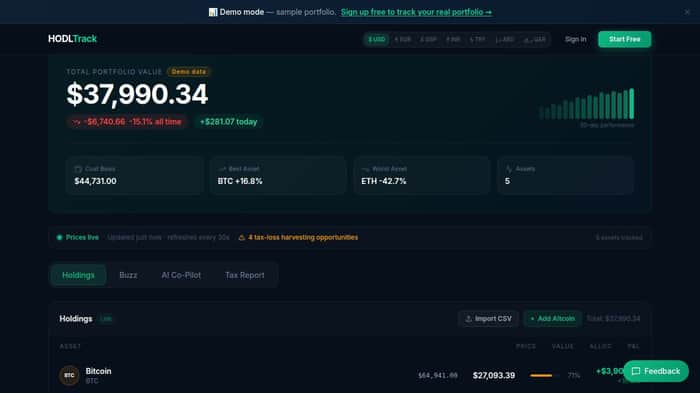
I’ve been building HODLTrack (hodltrack.app) for the past few months. I’m deep in the "build in public" phase, and I’ve been mapping out a problem I’m calling the "Regulatory Friction Schema."
Essentially, I’ve noticed a major disconnect: global regulators are tightening the screws on digital assets, but the standard tools for retail investors (API-heavy dashboards and wallet-connect trackers) are becoming a massive security liability.
I’m tired of seeing traders forced to choose between "useful data" and "security."
I just wrote a deep dive on this, including the technical decisions I'm making to keep things 100% manual/private:
Read the article here: https://hodltrack.app/blog/crypto-regulatory-friction-2026
I’m currently focusing on three pillars for HODLTrack:
Security: Why manual, privacy-first ledgers are the only way to avoid the risks of wallet-connect exploits.
AI-Driven Efficiency: How to turn messy, manual ledger data into actual tax-loss harvesting opportunities without giving an AI access to your wallet keys.
The Tech Stack: How I’m building this on Replit to keep it lightweight, secure, and performant.
I’d love to hear from other folks building in the finance/crypto space:
How are you balancing "data-rich" features (like AI) with the growing demand for user privacy?
Are you seeing the same "regulatory fatigue" with your users?
Would love to get your thoughts on the article and the direction of the build!

What I'd be careful about is that a real problem can still support multiple reasonable conclusions about what users actually want from the solution.
The regulatory pressure seems real.
The interesting question is whether the thing users become most motivated to solve ends up being security, compliance, convenience, or something else entirely.
Those don't always point products in the same direction.