Why Most Conversations Feel Off
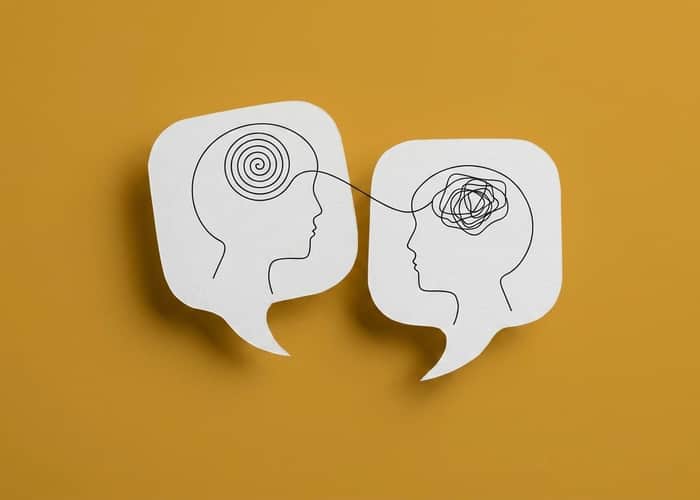
Most of us don’t really think about conversation as something we actively do. It just happens in the background — quick chats, half-finished thoughts, interruptions, laughs, awkward pauses. But if you zoom out a little, you start to notice something slightly unsettling: almost every relationship in your life is built out of small, repeated interactions. Not big moments. Not dramatic turning points. Just conversations, stacked over time.
And that changes how you see things. Because if every relationship is basically a chain of conversations, then even small improvements in how you talk — how you listen, how you respond — start to matter more than you’d expect. It’s not about becoming charismatic overnight. It’s more about noticing that in every exchange, you’re making tiny decisions that quietly shape everything: whether to ask something or move on, whether to interrupt or let someone finish, whether to stay present or drift off mentally.
There’s a simple framework that helps anchor this idea without making it feel mechanical. It’s called TALK — topics, asking, levity, and kindness. Sounds almost too neat at first, but in practice it works more like a gentle guide than a rulebook. Having a few topics in mind keeps things from going flat, asking questions keeps the conversation alive, levity stops things from getting too heavy, and kindness keeps the whole thing human. It’s less about performing well and more about gently steering the interaction in a better direction.
One of the more surprising things is how much of communication isn’t even about words. Take eye contact, for example. In group settings, people naturally look more at whoever they see as high-status — the confident one, the leader, the loudest voice. It happens automatically. But the side effect is that quieter people slowly fade out of the conversation, not because they have nothing to say, but because no one is really “inviting” them in. Where your attention goes quietly determines who feels seen — and who doesn’t.
Interruptions are another thing we tend to oversimplify. Not all of them are bad. There’s a version where people jump in because they’re genuinely engaged — finishing each other’s thoughts, overlapping slightly, building momentum. That kind of interruption actually feels energizing. But then there’s the other kind — the one that cuts someone off and shifts the topic completely. That’s the one that lands as dismissive. And most of the time, people don’t know how to respond to it in the moment. The goal isn’t to avoid interruptions entirely, but to recognize when they support connection — and when they shut it down.
What makes it trickier is that these dynamics aren’t always evenly distributed. Some people get interrupted more than others, especially in certain environments. And when it keeps happening, it starts to wear on you. One surprisingly practical way to deal with that isn’t even about what you say — it’s about who’s around you. Having someone in the room who can casually redirect attention back to you can shift the whole tone without turning it into a conflict. Conversations are rarely just between two people — they’re shaped by everyone present.
Then there are those conversations that feel fine on the surface but suddenly take a sharp turn — a comment about your job, your appearance, your life choices. The kind that’s framed as concern but doesn’t quite land that way. What’s interesting is that these moments are often less about the actual topic and more about something else going on with the person saying it. That doesn’t make them harmless, but it does explain why reacting defensively doesn’t usually help. What people say is often about them — but how you respond is still up to you.
A more effective approach is surprisingly calm on the surface. You acknowledge what the other person is saying — not because you agree, but because it lowers the emotional temperature — and then you add your own perspective without turning it into a confrontation. Both things can exist at once. You can understand someone’s intention and still be honest about how their words affected you.
There’s also a small language detail that plays a bigger role than you’d think. When people start leaning heavily on words like “because” or “therefore,” conversations can quickly feel rigid, like one person is trying to prove something rather than understand. It creates this subtle sense of being cornered. The more certain and absolute your language sounds, the harder it is for the other person to stay open.
One idea that sticks is thinking of yourself as having multiple “voices” in a conversation. Not in a strange way, but in the sense that you can express different parts of your perspective at once. You can be the supportive friend and the person setting a boundary in the same sentence. That flexibility makes conversations feel less like conflict and more like balance.
Of course, not everything can be handled smoothly in real time. When emotions spike — when someone raises their voice or the tension builds too quickly — there’s a point where continuing the conversation just makes things worse. At that stage, stepping away isn’t avoidance, it’s timing. Some conversations don’t need better arguments — they need space.
A lot of people worry about being interesting in conversations, like they need to have good stories or quick humor ready at all times. But that mindset tends to backfire. The pressure to perform makes you less present, not more. It turns out that what actually works better is a quieter shift — focusing on being genuinely interested in the other person. Good conversations don’t come from trying to impress — they come from paying attention.
Even ending conversations — something we all do constantly — is more awkward than we like to admit. There’s no perfect timing, no universal signal. One person might be ready to leave, the other might want to keep going. So there’s always a bit of mismatch. Accepting that makes it easier. You don’t need to end conversations perfectly — just honestly enough.
And maybe that’s the thread running through all of this. Conversations aren’t clean, structured things. They’re messy, slightly chaotic, full of overlaps and missed cues and moments that don’t land quite right. We tend to expect ourselves to be naturally good at them, just because we’ve been doing it our whole lives. But when you actually look closer, even great communicators are improvising most of the time.
So a bit more patience helps. With yourself, when you say something awkward or miss an opportunity to respond better. And with other people, when they interrupt or say something that comes out wrong. Most of the time, it’s not coming from a bad place — it’s just part of how human interaction works.
And once you stop expecting perfection, conversations start to feel a little easier. Not flawless, not polished — just more real.
The article is based on the video “How to Communicate With Confidence & Ease (From Harvard Business School’s #1 Professor)”
Transcribed into text using Speech2Text 💬 https://speech2text.pro/
