Why Startups Should Validate a Brand Name Before Investing in It
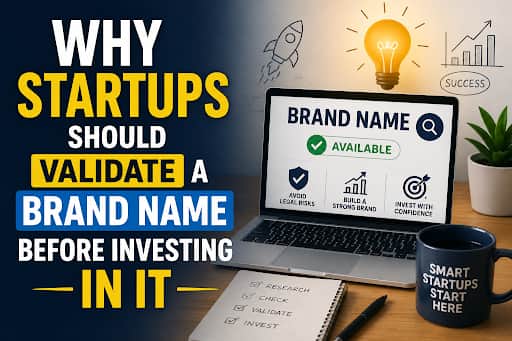
Choosing a brand name is one of the earliest decisions many startups make, yet it often receives less research than product design, pricing, or market testing. A founder may spend weeks refining a product concept and only a few hours selecting a name that could eventually appear on every package, advertisement, website, invoice, and customer communication.
That imbalance can create unnecessary risk.
A name may sound original during brainstorming but still be similar to an existing trademark. If that problem is discovered after the company has invested in packaging, design, marketing, or manufacturing, changing direction can become expensive.
This is why brand validation should include a US trademark search before a startup commits heavily to a name.
Brand Naming Is a Business Decision
Naming is often treated as a creative exercise, but the final choice has commercial consequences.
A strong name can make a product easier to remember, support word-of-mouth promotion, and help customers distinguish one company from another. A poor choice can create confusion or force a business to rebrand at the worst possible moment.
Founders should therefore evaluate potential names from several angles.
A useful name should be:
Easy to pronounce
Easy to remember
Suitable for the target audience
Flexible enough for future growth
Distinctive within the market
Practical for branding
Worth investigating through a trademark check
Creativity is still important, but it works best when supported by research.
Why Startups Are Especially Vulnerable to Naming Mistakes
Large companies usually have established processes for legal review, branding, and product development. Early-stage startups often do not.
A small team may be handling design, manufacturing, marketing, funding, and administration at the same time. As a result, trademark research may be delayed until the company is close to launch.
That can be a costly mistake.
Startups usually operate with limited budgets, which means every dollar spent on packaging, signage, domain names, printed materials, and advertising matters.
If a trademark problem forces the business to change its name, those expenses may need to be repeated.
Conducting a trademark lookup earlier gives founders more room to adjust without damaging the launch budget.
Start With a Naming Shortlist
One practical way to reduce naming risk is to avoid becoming attached to a single option too early.
Instead of choosing one favorite name, founders can create a shortlist of possibilities.
For example, a startup might brainstorm 20 names and reduce the list to five based on brand fit, pronunciation, memorability, and relevance.
Those five options can then be evaluated further.
At this stage, a trademark checker becomes useful because it can help identify which names may deserve closer attention.
If one candidate produces several potentially conflicting results, the company can move to another option without starting the entire naming process again.
This approach saves time and makes decision-making more objective.
Search More Than the Exact Name
A common problem in trademark research is relying on one exact search.
If the proposed name does not appear exactly in the database, a founder may assume it is available.
That is not always a safe assumption.
Similar spelling, pronunciation, or meaning can matter.
A broader trade mark search may include:
Alternative spellings
Common misspellings
Phonetic equivalents
Singular and plural forms
Abbreviations
Joined words
Separated words
Similar-sounding expressions
These variations can reveal results that an exact-name search may miss.
Thinking like a customer can also help. Ask how someone might hear the name, spell it, shorten it, or search for it online.
A Trademark Lookup Should Consider the Market
A similar name does not automatically mean a proposed brand cannot be used.
The nature of the goods and services is also important.
A name used for software may raise different questions from the same wording used for furniture, clothing, or industrial equipment.
When reviewing results, startups should pay attention to the product or service descriptions connected with each mark.
A USPTO lookup can provide useful information about federal records, but those records still need to be understood in context.
Founders should ask:
Are the products similar?
Are they sold to the same customers?
Do they appear in similar sales channels?
Could customers believe the two brands are connected?
These questions help make search results more meaningful.
Use Trademark Research Before Building Visual Identity
Brand identity usually involves much more than the name itself.
Once a name is selected, designers may begin creating:
Logos
Color systems
Packaging
Website layouts
Product labels
Business cards
Marketing graphics
Retail materials
This work can become expensive quickly.
That is why trademark research is most valuable before the visual identity is finalized.
Founders can use a free trademark lookup tool to screen possible names during the early planning stage. LANPDT provides this type of self-service resource alongside its broader product design, engineering, prototyping, electronics, and manufacturing support for product creators.
An early search does not provide complete legal clearance, but it can help identify obvious concerns before design costs increase.
Domain Names Are Only One Part of Brand Validation
Startups frequently begin name research by checking whether the matching domain is available.
That is useful, but domain registration should not be confused with trademark availability.
A business may be able to register a website address even though another company has trademark rights connected with the wording.
Similarly, a social media handle may be available while the underlying brand name still requires further investigation.
Domain research, social media availability, and trademark research should be treated as separate parts of the same validation process.
A good brand may need to work across all three areas.
Avoid Making a Logo Before Checking the Name
Founders often become more emotionally attached to a name once a logo has been created.
A polished visual identity can make the brand feel real, even when trademark research has not yet been completed.
This can create poor decision-making.
When a trademark checker later reveals a concerning result, the founder may resist changing the name because money and time have already been invested in the logo.
A better process is to keep branding relatively simple during early research.
Use temporary text, rough concepts, or basic mockups until the strongest naming candidates have been investigated.
Once the name has passed initial checks and professional clearance has been considered where appropriate, deeper design work can begin.
Why Search Timing Matters for Product Startups
Product-based startups face additional branding costs that service businesses may not encounter.
A name may be printed, engraved, molded, etched, or permanently applied to a physical product.
It may also appear on:
Boxes
Labels
Instruction manuals
Warranty cards
Shipping materials
Retail displays
Accessories
Product components
If the name changes after manufacturing begins, the business may need to modify both digital and physical assets.
That is why a US trademark search should ideally happen before large production commitments are made.
Researching the brand while prototypes and packaging are still being developed can reduce the risk of expensive rework.
Do Not Ignore Inactive Trademark Records
During a trademark lookup, founders may encounter applications or registrations that are no longer active.
It can be tempting to dismiss these results immediately.
However, an abandoned application or cancelled registration can still provide useful information.
It may identify a business that previously used a similar name or reveal a naming pattern within the same market.
An inactive record also does not necessarily answer whether the name is still being used commercially.
For important branding decisions, further investigation may be necessary.
The status of the federal record should be understood rather than treated as the only factor.
Why a Trademark Checker Is a Starting Point
A trademark checker can help founders make early decisions more efficiently, but it should not be viewed as a substitute for legal advice.
Trademark rights can involve issues that an automated search cannot fully evaluate.
These may include:
Similarity between marks
Related goods and services
Existing commercial use
Geographic considerations
Market overlap
Consumer confusion
Common-law rights
A search tool is useful for screening names and identifying obvious concerns.
For a major product launch, investment round, national campaign, or long-term brand strategy, a qualified trademark attorney may provide a more complete clearance review.
The more valuable the brand is expected to become, the more important careful evaluation can be.
Recheck Before a Major Launch
Startups often move through long development cycles.
A product may take months to design, prototype, manufacture, and prepare for market.
Trademark records can change during that time.
A name that appeared relatively clear during early research may deserve another review before a major launch.
This is particularly useful before:
Ordering large quantities of packaging
Starting mass production
Signing distribution agreements
Launching a national advertising campaign
Entering retail stores
Expanding into new product categories
Rechecking does not guarantee that every issue will be discovered, but it helps keep the research current.
Think About Future Brand Expansion
A startup should also consider whether the chosen name can support future growth.
A company may begin with one product and later expand into accessories, digital services, subscriptions, related hardware, or entirely new product lines.
If the brand is intended to become an umbrella identity, a narrow naming decision may create problems later.
During a trade mark search, founders can think beyond the immediate product.
Ask where the company may realistically be in three or five years.
If the business expects to expand into closely related categories, those plans can be considered during initial brand research.
Build the Brand Only After Doing the Homework
A startup's name can become one of its most valuable assets, but that value develops only after customers begin connecting the name with the company's products, service, and reputation.
That makes early validation important.
A thoughtful trademark check can help founders identify identical or similar names, understand relevant goods and services, and eliminate weaker options before large investments are made.
The process should begin while several names are still under consideration and before packaging, logos, manufacturing, and advertising become difficult to change.
A free trademark lookup can support early research, while professional review can provide additional guidance for businesses preparing to make substantial investments.
The strongest startup brands are not created through creativity alone. They are built by combining a memorable idea with careful research, practical planning, and enough flexibility to change direction before a small naming problem becomes an expensive rebranding project.

