Your launch will fail. Here's how I know (and the 3 patterns that can save it)
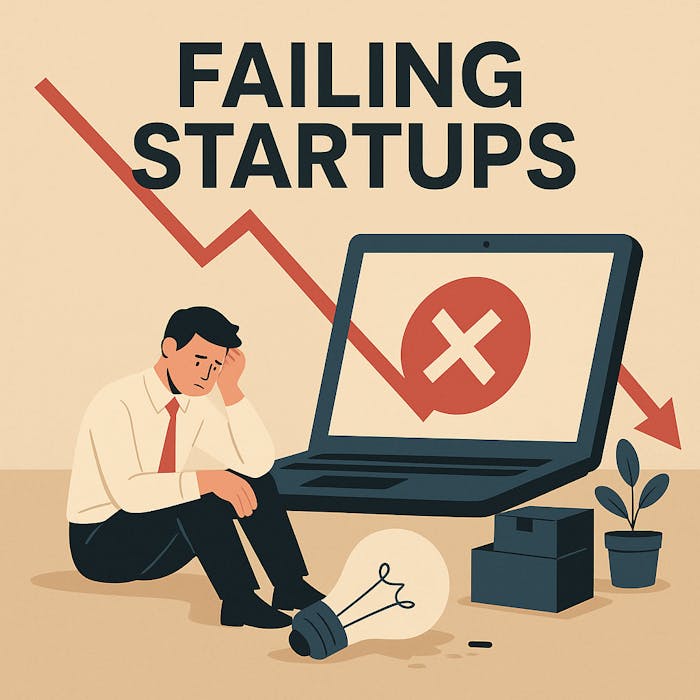
I analyzed 500+ failed indie launches. Here's why 90% fail (and the 3 patterns that predict success)
After watching my own launches die quietly, I became obsessed with understanding why most indie projects fail. I spent 2 years analyzing failed launches, interviewing founders, and documenting patterns.
Here's what I found. The numbers are brutal:
90% of indie launches get <100 signups in first month
70% never reach $1K MRR
Most founders quit within 6 months
But here's what shocked me: It's not what you think.
The 3 Myths Killing Your Launch
Myth #1: "Build it and they will come"
Reality: 73% of failed founders spent 6+ months building in isolation
The Pattern:
Month 1-3: "Just need to finish this feature"
Month 4-6: "Almost ready, just polishing"
Month 7: Launch to crickets
Month 8: "Maybe I need more features"
What successful founders do differently:
They start marketing before they start coding. Not after.
Myth #2: "I need a perfect product"
Reality: 8 out of 10 successful indies launched with embarrassing v1s
The Pattern:
Failed founders: Build for 6 months, launch once
Successful founders: Launch in 2 weeks, iterate for 6 months
The difference: Feedback loops vs feature loops
Myth #3: "If it's good, it will spread"
Reality: Quality doesn't predict success. Distribution does.
The shocking truth: I found products with better UX, cleaner code, and more features that failed completely. While "worse" products with better distribution hit 6-figures.
The 3 Patterns That Predict Success
After analyzing the winners, I found 3 consistent patterns:
Pattern #1: The Daily Discipline
Successful founders do ONE marketing activity every single day.
Not when they feel like it
Not when the product is "ready"
Every. Single. Day.
Pattern #2: The Problem-First Approach
They start with pain, not solutions.
Failed approach:
"I built a productivity app because I like productivity apps"
Successful approach:
"I spent 3 months in productivity communities understanding why existing solutions fail, then built specifically for those gaps"
Pattern #3: The Audience-Product Loop
They build audience and product simultaneously.
Week 1: Join communities, start conversations
Week 2: Share insights, build relationships
Week 3: Ask questions, validate assumptions
Week 4: Launch MVP to people already following your journey
The Counterintuitive Truth
Most founders think: Build → Launch → Market
Successful founders do: Market → Build → Launch → Repeat
The ones who succeed treat marketing as product development, not promotion.
Your Launch Reality Check
If your launch failed (or you're afraid it will), ask yourself:
- Did you start marketing before building?
- Do you talk to potential users weekly?
- Can you name 10 people excited for your launch?
If any answer is "no," you're not ready to launch. You're ready to start marketing.
I've compiled the complete framework - including the psychological triggers that make founders self-sabotage, the exact 30-day pre-launch sequence, and templates for each stage - into a tactical guide: THE PERFECT LAUNCH KILLER AUDIT
It's everything I wish I knew before my first (failed) launch.
What's your biggest launch fear?
Drop it below and let's solve it together. 👇
