
Cutria
Intelligent workspace for video creators

Hey IH! 👋
I just hit a massive milestone today and needed to share it with people who actually understand the struggle. I’ve finally finished and fully tested the core codebase for my SaaS, Cutria (a workspace and collaboration tool for video creators/editors).
As a solo dev, getting to this point felt like a marathon, especially after colliding with reality.
The "Early Adopter" Reality Check: Right before I thought I was ready to launch, I onboarded 2 free early-adopter clients. Their feedback was incredibly insightful, but it also gave me a solid month of extra development work! Because of their specific workflow needs, I had to pause and implement two major features I hadn't originally prioritized:
Custom Storage Subscriptions: Flexible storage upgrades because video teams eat through gigabytes faster than I expected.
Timeline Export: The ability to export timelines directly to professional editing software like DaVinci Resolve (this turned out to be an absolute game-changer for them).
The Tech Wins I’m Proud Of: Instead of just cobbling together a basic MVP, I spent the last few weeks building a bulletproof architecture around this:
Cross-platform Front-end: Built with Flutter (web, iOS, Android).
The "Doomsday" Billing System: Built a custom Dunning management system with Laravel and Paddle. Instead of relying on standard grace periods, I built a background scheduler that sends warning emails at 1, 7, 14, and 27 days.
Automated Storage Cleanup: If an invoice remains unpaid after 28 days, my "Executor" script automatically downgrades the account and physically purges heavy media files from Cloudflare R2 to save server costs. Testing this locally and watching it work flawlessly was incredibly satisfying.
The Marketing Challenge: So, the code is done. The architecture is solid. The app is ready. But... I have absolutely zero budget for paid ads.
Starting today, I have to take off my developer hat and put on my marketer hat. I’ll admit, staring at an empty terminal feels way less intimidating than trying to figure out organic acquisition.
Since paid ads are out of the question for now, my plan is to focus on:
Building in public here and on X (Twitter).
Working closely with my 2 existing users to perfect the flow and hopefully drive word-of-mouth.
Reaching out directly to more video agencies and freelance editors.
My question to the community: For those of you who launched with zero ad budget, what was the one organic channel or tactic that brought in your first 10 paying customers?
Any advice for a dev entering the marketing trenches would be hugely appreciated! Cheers! 🍻

A week ago, I received my very first feedback from my very first real user. And all my illusions about product development shattered against harsh reality.
I had just finished the MVP of my SaaS, started writing about marketing, and looking for clients. I managed to attract one agency, and I got exactly what I wanted — a clear vector for future development.
My plan was to sit down and do a redesign. I wanted everything to be beautiful, pixel-perfect, and stylish. But it turned out my first client couldn't care less about beauty. He needed one big "Make it work" button and a place to store his giant raw files (which is 50 to 100 GB per project).
Escaping AWS: How I cut costs by 2.5x in 6 hours
Initially, I deployed the entire infrastructure on AWS. Yes, Amazon S3 allows storing such volumes, but there's a catch — egress fees. The specifics of my product mean that heavy files will be downloaded very frequently. AWS would simply bankrupt me on bandwidth.
I started looking for alternatives and discovered Cloudflare R2. The storage is cheaper, and most importantly, egress traffic is absolutely free. Exactly what I needed! The migration went super smoothly since it uses the same S3-compatible driver under the hood.
But then my inner optimizer took over. Having ditched S3 and moved the domain to Cloudflare, I also dropped AWS Route53 and CloudFront. Only the compute servers (EC2) were left on AWS. And I thought: why pay Amazon for weak instances when I can rent powerful hardware from Hetzner?
My old infra (AWS): 2 EC2 instances, 2 CloudFront distributions, 2 S3 buckets, Route53 domain = $28 / month.
My new infra: 2 Hetzner servers (2 cores, 4 GB RAM, 40 GB SSD) + Cloudflare R2 = $12 / month.
In just 6 hours, I migrated the entire backend and cut costs by more than half.
The Final Boss: Uploading gigabytes via mobile Safari
I was as happy as a kid until I realized one thing: I needed to implement stable uploading for these massive files.
At first, everything seemed simple. Small photos flew back and forth, CORS was defeated, I even set up Presigned URLs. But when I tried to upload a 4 GB test file, Google Chrome threw an "Error 5", and the mobile app simply crashed.
It turned out my code was trying to load the entire file into the device's RAM before sending it to the server.
Solution: Multipart Upload. I started splitting the file into 50 MB chunks and sending them one by one, while the server stitched them back together. Good thing the S3 driver handles this painlessly. I pushed the update, called the client, he tried it and said: "It doesn't work."
The client was trying to upload an 800 MB video from his iPhone via the web app (Safari). The upload reached 20%, and the browser tab just silently refreshed itself!
I was furious. Tests on my own iPhone showed the exact same thing. But in Chrome on Android, everything worked perfectly.
The reason lay in iOS's aggressive memory management (Jetsam). Mobile Safari has a strict memory limit per tab (~250 MB). My 50 MB chunks quickly filled up the memory, and the Garbage Collector simply couldn't keep up with the fast internet to clear out the old chunks. iOS saw the RAM overuse and "killed" the tab.
A brilliant and simple solution: I added an artificial 50-millisecond delay after sending each chunk.
The Event Loop saw this pause and finally could pass ticks to the Garbage Collector! The memory cleared out. At the same time, I reduced the chunk size for the web from 50 MB to 5 MB. This not only saved Safari from crashing but also made the upload progress bar super smooth (percentages ticked 1-2-3-4% instead of jumping in large blocks).
Everything worked. The client was happy and uploaded his heavy files. But now I had another problem.
Competing with the Giants
Who should pay for storing all these heavy source files? I can't do it out of my own pocket. I needed to figure out storage pricing.
My initial thought for storage add-ons was straightforward based on my costs:
100 GB for $5/mo
500 GB for $25/mo
1 TB for $50/mo
The margins were great (~60%+). But then I looked at the market. Google One offers 2TB for $9.99/mo. Apple iCloud is dirt cheap.
Why would a user pay me $50 for 1TB when they can get 2TB from Google for $10?
The answer is Context and Seamlessness.
In Google Drive, files are just dead links. In my app, the raw file is attached directly to the project, accessible instantly. People will pay a premium for that workflow, but they won't pay a 10x premium. I realized I needed to lower the prices to make it a "no-brainer."
The Hidden Profit: Overprovisioning
When you sell cloud storage, you aren't selling bytes; you are selling peace of mind.
If a user buys a 100GB plan, they rarely max it out. They might upload a 40GB project. I only pay Cloudflare for the physical 40GB sitting on the server. The rest is pure margin.
Here is the actual math (including my payment gateway fees of 5% + $0.50):
Worst Case Scenario (Storage is 100% Full):
100 GB Tier ($3.99/mo)
After Gateway Fees: $3.29
R2 Cost: $1.50
Net Profit: $1.79 (45% Margin)
500 GB Tier ($12.99/mo)
After Gateway Fees: $11.84
R2 Cost: $7.50
Net Profit: $4.34 (33% Margin)
1 TB Tier ($21.99/mo)
After Gateway Fees: $20.39
R2 Cost: $15.00
Net Profit: $5.39 (25% Margin)
Even if they max it out, I never lose money. But look what happens in a realistic scenario:
Realistic Scenario (Storage is 40% Full - Overprovisioning):
100 GB Tier ($3.99/mo)
After Gateway Fees: $3.29
R2 Cost: $0.60
Net Profit: $2.69 (67% Margin)
500 GB Tier ($12.99/mo)
After Gateway Fees: $11.84
R2 Cost: $3.00
Net Profit: $8.84 (68% Margin)
1 TB Tier ($21.99/mo)
After Gateway Fees: $20.39
R2 Cost: $6.00
Net Profit: $14.39 (65% Margin)
The margins equalize at a perfectly healthy SaaS standard of ~65%!
The Left-Digit Effect & The Final Pricing Grid
To seal the deal, I applied the "Left-Digit Effect" to my entry tier. Instead of $4.99, I dropped it by just one more dollar to $3.99/mo.
$4.99 feels like "five bucks" (requires thought). $3.99 feels like "three-something" (an impulse buy, cheaper than a coffee).
Here is the final storage add-on pricing grid I landed on:
📦 100 GB for $3.99/mo (Impulse buy, lock-in trigger)
🗂 500 GB for $12.99/mo (The sweet spot for active users)
🗄 1 TB for $21.99/mo (Pro tier: highly profitable, but doesn't feel like a rip-off compared to Google Drive)
Even if a user maxes out all 100GB on the lowest tier, my R2 cost is $1.50, the payment gateway takes ~$0.70, and I still net a profit of $1.79.
The Ultimate Goal: Ecosystem Lock-in
The real goal here isn't just the profit from the $3.99 tier. The goal is Lock-in.
Once a user uploads their massive source files into my ecosystem for a measly $3.99, they are tied to the platform. Moving terabytes of data back to Google Drive is a nightmare. As their projects grow, they will naturally upgrade to the 500GB or 1TB tier because the friction of leaving is just too high.
SaaS pricing is 20% math and 80% psychology.
Curious to hear from other founders selling storage or usage-based limits: do you rely on overprovisioning to keep your margins healthy? Let's discuss! 👇
-
1egress on aws is brutal, that part hits home. switching to R2 + Hetzner made sense for you because heavy downloads was your whole business model. most teams don't have that option though, they're stuck on aws for compliance or just inertia. for them the real cost leak isn't egress, it's the forgotten stuff: detached EBS, old lambda versions, idle NAT gateways. small individually, hundreds a month collectively.


Over the last few days, I’ve had an absolute blast here. My posts about niche SaaS marketing hit the front page, and the discussions in the comments gave me months' worth of insights.
But today, I realized a hilarious, rookie founder mistake: I’ve been talking non-stop about how I market my app, but I never actually explained what it is.
So, it's time to pull back the curtain.
Meet Cutria (derived from "Cut").
Tagline: Intelligent workspace for video creators.
Links: Website | Web App (Also available on iOS & soon Android).
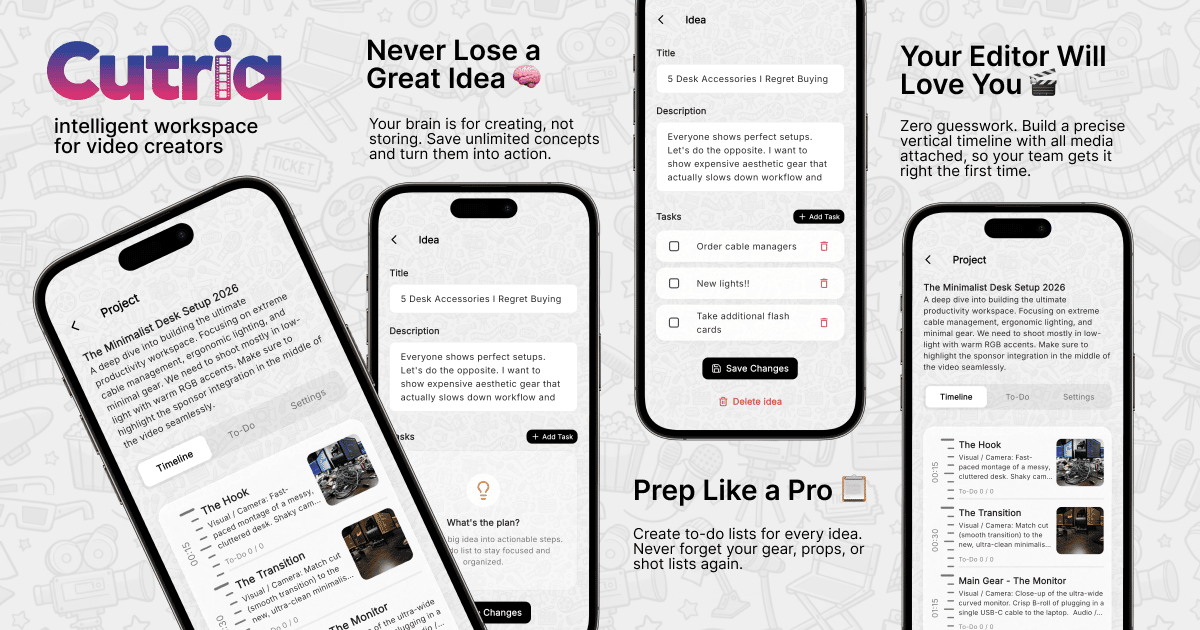
Here is the core problem: Video production is a mess. It’s a mix of Notes, Google docs, chaotic WhatsApp voice memos to editors, and endless Google Drive links.
I designed Cutria to fix this by growing alongside the creator. Here is how the user journey evolves inside the app:
Stage 1: The Beginner (From Spontaneous to Professional)
Usually, beginners shoot spontaneously and edit the same way. The result? Messy videos. With Cutria, it starts with a mobile app on the subway. They jot down an idea. At home, they convert that idea into a Project, breaking it down into scenes and to-do lists. Suddenly, instead of rambling on camera, they are shooting with a plan, proper lighting, and a clear script.
Stage 2: The Experienced Blogger (The Content Pipeline)
This is where the magic happens. Experienced creators waste hours explaining their vision to editors. In Cutria, they use the timeline feature. They create blocks, add assets (screenshots, PDFs, MP3s), set exact durations, and write descriptions. The video editor just opens the workspace and follows the blueprint. No more 3-hour meetings. Plus, they build a pipeline: Project 1 is planning, Project 2 is shooting, Project 3 is in the edit.
Stage 3 & 4: Pro Teams & Production Studios
As they grow, Cutria becomes a pocket studio. Pro bloggers can invite their entire crew. Production studios get dedicated workspaces to manage multiple clients simultaneously without mixing up assets.
The Business Model (Value-Based Pricing)
I wanted the pricing to reflect the exact stage of the creator’s career. I decided on 4 tiers:
🌱 Personal (Free Forever): ∞ Ideas, 1GB Storage, 1 Project Slot. Designed as a lead magnet for beginners to test the system. You can only work on 1 project at a time. No team members.
🚀 Pro ($12/month): ∞ Ideas, 10GB Storage, 3 Project Slots, 1 Crew Member. Built for the "Pipeline" (planning, shooting, editing). They can invite 1 editor to the workspace.
🎥 Team ($29/month): ∞ Ideas, 50GB Storage, 10 Project Slots, 5 Team Members. For pro vloggers with a dedicated team of writers and editors.
🏢 Studio ($99/month): ∞ Ideas, 100GB Storage, Unlimited Projects/Workspaces/Members. For production agencies managing multiple clients.
I’m currently onboarding early adopters and watching them break my UX in real-time (it hurts, but it's valuable).
I'd love to hear your thoughts, especially on the pricing model! Do you think limiting "Project Slots" (active projects) is a good trigger for upgrading from Free to Pro? Let me know! 👇

As a developer learning how to market my project from scratch, I’ve been analyzing different strategies and just had a massive "aha" moment. I finally understood the fundamental difference between selling a service and a niche IT product.
If you sell a service (like video editing or web design), your client already knows they have a problem. They are actively searching for someone to fix it. Good SEO, running a few ads, or showing a solid portfolio is usually enough to close the deal. The demand is already formed.
But when you build a niche micro-SaaS (like my project for video creators), the rules of the game flip 180 degrees.
You are solving a problem your future client doesn't even know they have.
My target audience consists of creators (from beginners to pros) and SMM agencies. Right now, their workflow looks like this: half of the script is written in Google Docs, revisions fly in as 5-minute WhatsApp voice notes, and communicating with editors takes up a massive amount of time.
It is pure chaos. But the paradox is that they are used to this pain. They just assume that "this is how the industry works."
They aren't Googling for a "video planning workspace" because they don't even know this category of products exists.
That is exactly why, at this early stage, traditional marketing (just dropping links and buying ads) is a complete waste of time for me. My best strategy right now is to chase down every single user personally, explain that they do have a problem, listen to their pain points, and integrate the solutions directly into my product.
My sales funnel isn't "Saw a link -> Bought". It looks like this:
Find the client.
Show them the problem. Like a doctor with an X-ray, I have to show them the exact chaos they live in and how many hours a week they lose to it.
Sell the product. Only when a person realizes their pain can I offer my service as the "pill."
In the early stages of a niche product, you don't sell features. You first sell the awareness of the problem. And only then, the product itself.
Has anyone else experienced this exact mindset shift when moving from client work to building your own SaaS? How did you "educate" your first users?
-
1
This is such a real insight. I went through the exact same shift.
When you sell services, you're basically responding to demand that already exists. People know they need a designer, editor, or developer—they’re just choosing who.
But with niche SaaS, you're almost like… creating demand from scratch. You're not just selling a tool, you're changing how people think about their workflow.
The hardest part isn’t building the product—it’s making someone stop and say, “wait… this actually is a problem.”
I like your “doctor with an X-ray” analogy. That’s exactly it. You’re diagnosing something they’ve normalized.
From what I’ve seen, the best early traction comes from:
talking to users 1:1
showing them their own inefficiencies
and building with them, not just for them
It’s slower, but way more powerful long-term.
You’re definitely on the right track with this approach.
-
1
Man, this is such a sharp and honest insight. You nailed the biggest difference between service work and niche SaaS.
When you're doing client work, the client already feels the pain and is actively looking for a solution. But with a micro-SaaS, especially a niche one, most of your potential users are living in the pain and think “this is just how it is.”
That mindset shift from “selling the solution” to “first selling the problem” is brutal but so important in the early days.
I’ve been through the exact same thing. The best early traction I got wasn’t from ads or landing pages — it was from jumping on calls, showing creators screenshots of their messy WhatsApp + Google Docs workflow, and watching their eyes open.
Quick question for you: How are you currently finding those first users to have these “problem awareness” conversations? Cold DMs, Reddit, Twitter, or somewhere else?
Really good post. This kind of thinking separates the ones who eventually break through from the ones who stay stuck.
-
1
I have a plan: to record an onboarding video showing how cool it is to use the app. Next, I'll try to collaborate with YouTubers who create content about video production.
Ideally, I want YouTubers to understand the problem themselves and share it, offering my solution.
So far, I've come up with the idea of working through influencers.
There's a very high rate of ignorance if you post like: "You have a problem, I have a solution." No one sees the problem.
Or spam heavily and be on everyone's lips, so that new users simply want to watch out of curiosity rather than necessity. But that requires a huge advertising budget.Basically, I need to sell the problem first, then the solution.
-
-
1
I'm dealing with the same challenges your facing, and honestly I think any technical founders will have the same things because its new era for us.
-
1
Implementing new processes in old companies is always painful. I don't think this is a new era, it's just the path of a niche product.
-
-
1
I definitely resonate with this. I haven't built my own SaaS yet, but I tend to build things that aren't obvious solutions to problems people have, for the reasons you stated. It's certainly harder to get to the customer when they don't realize they have a problem, and you can't follow the usual marketing advice. Thanks for sharing your experience with this.
-
1
Interesting fact: Gmail earned its first dollar for its service 10 years later.
-
-
1
This mirrors exactly what I'm navigating right now. The "doctor with an X-ray" framing is the most useful mental model I've seen for this stage — you're not selling a solution, you're first selling the diagnosis. The part that resonates most is the chaos being normalized. The hardest users to convert aren't the skeptics, they're the ones who've built their entire workflow around the broken process and genuinely don't feel the pain anymore because they've adapted to it. What's working for me in early stages is finding the moment of acute frustration rather than chronic pain — the specific instance where someone says "I can't believe this doesn't exist" rather than "yeah this is annoying." That moment is where the sale actually happens. How are you identifying which creators are closest to that acute frustration point before investing time in the full education cycle?
-
2
I can't figure it out yet; my app isn't available on the Play Market yet. But several friends who already use my service have given positive feedback. You're right, people are used to chaos and inconvenience; they accept it as the norm.
-
-
1
Settilo is a niche SaaS, and our situation is a bit different. Our users — homebuyers and renters in the US — are fully aware of the problem: they know the neighborhood matters deeply, and they say it explicitly. Our customer interviews confirm this. But their current workflow looks like a patchwork: listings on Zillow, separate Google searches about the area, Reddit threads asking "is this neighborhood actually safe?", and cross-referencing school ratings on a third-party site. They don't search for "neighborhood analytics map" because they don't know that kind of tool exists yet. Instead, they Google "[neighborhood name] school ratings", "[neighborhood name] crime rate" — and land on a dozen different websites, each with a different format, different depth, different data. They find one metric, then go back and search again for the next one. So our job is slightly easier — we don't need to prove the pain, we just need to show that the scattered process can come together in one place. But that "aha, this is exactly what I needed" moment works exactly the same way as your X-ray analogy.
-
1
To your questions — my shift was different. I never did client work, so I had no "service mindset" to unlearn. But I hit a different wall: I thought that users who know their pain would immediately see the value of a new tool. They don't. Knowing you have a problem doesn't mean you're ready to change how you work. That was my real shift. The education is still there — just a different kind. Not "your workflow is broken" but "look what's possible." And our best education tool turned out to be the product itself. One demo, zero explanation needed.
-
1
Thanks, I also came to the demonstration and will soon post a gif or video of the application in action on the site.
-
-
-
1
This is exactly the problem I'm running into with competitor intelligence. Founders don't google "competitor monitoring tool" because they don't think of tracking competitors as a thing you automate — they just check a competitor's website once in a while and call it done. They don't realize they're losing hours a month to something that could be a weekly email.
The "doctor with an X-ray" framing is spot on. I've found the only thing that works is showing someone their own blind spot — like "did you know your competitor launched a new pricing page last week?" and watching their face change. That's the moment they get it. No landing page copy does that.
Curious how the 1-on-1 approach is scaling for you. At what point do you think you'll have enough pattern recognition from those conversations to write marketing that does the "showing the problem" part without you being in the room?
-
2
I'm still just starting out in my marketing journey. Based on my experience with manually attracting clients, I'll develop a communication script and automate it. I also have an invite system. How it works: a screenwriter invites an editor to the workspace even if they don't have an account. Then the editor sees that my system works well and will recommend them to other clients/friends.
-
1
The invite flow is doing your marketing for you before you even have marketing — that's the best kind. When you start building that communication script, pay attention to the exact words your current users use to describe why they like it. Those phrases usually work better than anything you'd write yourself.
-
-
-
1
wow..
-
1
This is a profound realization, Evgeny. The concept of 'normalized pain' is exactly what prevents innovation in legacy workflows. I’m currently building Flex (an AI agent for desktop automation), and I face this daily. Users have spent a decade doing manual Alt-Tabbing and data entry; they don't search for a solution because they think the friction is a 'feature' of using a PC, not a bug.
I love your X-ray analogy. I’ve found that showing a screen recording of the tool doing 10 minutes of their work in 30 seconds is the only way to break that 'normalization.' Since you’re only 4 days in with Cutria, are you planning to build a 'Chaos Calculator' or something similar to help users quantify the time they’re losing before they even sign up?
-
1
I didn't plan to until your comment. Thanks, I do 😁
-
-
1
Going through exactly this right now. I built a CSV/Excel comparison tool — the people who need it most (accountants doing manual reconciliation, analysts writing throwaway pandas scripts) don't search for "data reconciliation tool" because they've accepted the pain as normal. They just think VLOOKUP + eyeballing is how it's done.
What's working for me so far: finding the conversations where they're already complaining about the symptom. Reddit threads asking "how do I compare two huge spreadsheets" or Twitter posts about reconciliation nightmares. They know the pain, they just don't know a category of tool exists for it.
Your doctor/X-ray analogy is spot on. You can't sell the pill until they see the problem.
-
1
And it took me two days of marketing research to achieve this result. Personally, I find it easier to write another feature than to deal with all this.
-
-
1
That sounds right and as someone who likes to make stuff, I run into this alot.
Thanks for crystalizing this concept.
Curious to hear your thoughts, another item along the same thread for SaaS products is either social or product proof. (ie: Benchmarks, testimonials, etc.)
I found it hard to get metrics on how things improved. I personally go more the consultant/service route, introduce tools, and get a first hand look at their impact.
But please let us know if you have other ways or strategies of getting your SaaS impact in the markets.-
1
I think the main metrics here will be for clients. Previously, they made videos in X hours, now it's Y.
It's important to understand the problem my service solves:
1. Planning and script writing for creating high-quality videos for Beginner bloggers
2. Streamlining video production for Experienced bloggers by simultaneously working on three projects. Getting ideas, refinements, and thoughts for each script out of your head and onto paper. Focus on one project.
3. Reducing communication time between the creative team (scriptwriters) and technical staff (editors) thanks to a pre-defined script with scene lengths. For Professional bloggers with their own team.
Thank you, you asked a very interesting question about metrics and now it will be in my head until I find a solution 😁
-
-
1
That’s a really insightful point. Most people don’t realize how much of a shift it is until they actually try selling to a niche.
I think the hardest part isn’t just pointing out the problem, it’s helping them see the pattern in what they’re already doing. Because from their perspective, it doesn’t feel chaotic. It feels normal, just how things are.
What I’ve noticed is, once you reflect their workflow back to them clearly, they start connecting the dots themselves. That’s when the “aha” moment happens. They see the pattern, and suddenly everything clicks.
I’ve been exploring this idea from a slightly different angle like more about helping founders understand what’s really happening in their workflow over time, rather than just adding another tool to their stack.
I’d love to hear when you talk to users, what’s the exact moment they realize there’s a problem?
-
1
I've only attracted three users so far, my officemates. I explained to them that their work was chaotic and gave them a link to the app. This SaaS project was actually a small project for a friend who realized he had trouble organizing his team. He didn't even know what to Google to solve his problems. I wrote a small app, my friend was delighted, and I turned it into a full-fledged SaaS project.
-
-
1
I’m still figuring this out as I go.
What I’ve seen so far is that people don’t have a sudden realization. It usually happens little by little.
At first, they think everything is fine. It’s just how they’ve always worked.
Then, when I walk through their process with them, they start to notice small issues.
The real shift happens when I make it more concrete. For example, how much time they lose, how many back-and-forth messages they deal with, how often they switch between tools.
That’s when it starts to click.
I also noticed that showing works much better than explaining. If I just tell them their workflow is inefficient, it doesn’t really land. But if I reflect their process back to them, they can see the problems on their own.
I like your idea about automating that “X-ray” step. It feels like a more scalable version of what I’m doing manually right now.
If I were starting again, I would probably focus earlier on making that process more repeatable. Even something simple that shows “you are losing X hours per week” could be really powerful.
It really feels like helping people see the problem clearly is just as important as the product itself at this stage.
-
1
Yes, I had another “brilliant” idea today. Make a video on how to work with my app as a team. I think this will help the “casual passerby” understand what kind of product it is.
-
-
1
Really solid journey. What would you do differently if you started again?
-
1
To be absolutely honest? Nothing (yet)! 😂
I literally launched Cutria just 4 days ago, so I haven't had the time to make any massive wrong choices. Right now, I'm exactly in the trenches doing what I described in the post: manually doing the 'X-ray' for my first users, watching them interact with the app, and planning my next steps.
But ask me again in a month — I'm 100% sure I'll have a solid list of things I wish I did differently! Are you building something in this space right now too?
-
1
This is such a realistic breakdown, especially the part about selling the problem before the product.
I've noticed that this is where the majority of technical founders struggle. Not building, but transforming chaos into something tangible enough for users to feel.
Because, as you mentioned, the problem isn't always that the workflow is broken; rather, it's been normalized.
I've been looking into something similar from a different perspective: instead of manually educating users each time, what if some of that "awareness step" could be automated?
For example:
- User inputs how they are currently working.
- The system identifies inefficiencies (time loss, back and forth, scattered tools).
- Show them a clearer, optimized workflow before introducing the product.
It's almost like giving them the "X-ray" automatically.
It appears that the real opportunity in early-stage SaaS is not just distribution, but rather the development of mechanisms that reveal problems at scale.
Curious: have you discovered any patterns in how users react when they first "see" the problem clearly?
-
1
I'm currently planning to attract my first users. I currently have two users of the system. I explained the problem to them, and they realized it and started using my service. A little later, I'll attract a few more people and write a story about their reactions.
-
-
0
Experience the latest features we’ve implemented—now available for free for a limited time. You can access and install the update directly via the Chrome Web Store: https://chromewebstore.google.com/detail/marginix-%E2%80%93-amazon-profit/gmgajlccniogemeeocgcnagpfngomloe Try it out today and let us know what you think. I'm available if you need any assistance or have questions during your trial.



So, I decided to ask the community about their pain points and problems. I found a perfect niche subreddit, spent 20 minutes writing a thoughtful, polite post, and hit "Submit".
BAM. Instant removal. "Sorry, this post was removed by Reddit’s filters"
Welcome to Reddit. If you’ve ever watched the "Nosedive" episode of Black Mirror — where people can't rent a car, buy a house, or even enter a building without a 4.5+ social score — you know exactly how this feels. Reddit has built the exact same dystopian society, just with internet points.
The Catch-22 of Social Capital
The platform has a massive barrier to entry. A new user cannot ask a simple question, share a tool, or start a discussion without first accumulating "Karma" (social capital).
But how do you get Karma? You have to treat the platform like a full-time job. You must spend hours scrolling through other people's posts, leaving safe, generic comments, and hoping someone grants you an upvote. You are forced to fake engagement just to buy the right to speak.
I understand why subreddits do this. They are terrified of spam, bots, and self-promotion. But by building a 50-foot concrete wall around their communities, they aren't just keeping the bots out — they are suffocating fresh ideas, genuine curiosity, and new voices.
My Proposed Solution: The 3-Strike Rule
Instead of treating every new user like a criminal by default, we should trust the actual community to moderate.
Here is how I would fix it:
Give every new user 3 default "Golden Tickets" (3 attempts to publish a post without karma restrictions).
Let the humans decide. If the post is valuable, the community will upvote it, and the user naturally gains their social capital.
The Penalty: If the user wastes their 3 attempts on spam or low-effort garbage, the community will downvote them. Only then does the system revoke their posting rights and send them to the "comment mines" to earn their Karma the hard way.
We need communities that filter by the quality of a person's thoughts, not by the amount of hours they've wasted grinding internet points.
What do you guys think? Is Reddit protecting itself, or slowly killing organic growth?
Where else can I find my audience? The Discord community? X.com?
The goal is not marketing, spam, or advertising. My goal is to understand users' pain points so I can make my product better.
-
2
Definitely agree. Man, I got banned a while back for asking simple questions. I did not know Reddit yet, or karma system, and I thought that my posts were not going through bc of server/connection issues. Tried posting questions on a few threads and got banned. I did not use it for a long time after that, until recently, once I figured out karma 😅. Somewhere I saw that Reddit uses predictive analytics to predict if you are spam/bot or not before you even post.
-
2
The worst thing is that they don't give a reason. It's unclear what's wrong. Either the text isn't appropriate, or they don't have enough karma.
-
1
Yes, totally. Seems like an easy thing to implement. Don't get the reason for the lack of detail in their bans. On the user side, it's SO frustrating. Just tell me.
-
-
-
1
This hits close to home — literally just ran into this trying to post about my own tool today.
The 3 Golden Tickets idea is solid. The current system optimizes for time-on-platform, not quality. Someone with 10k karma from posting memes has more voice than a first-time founder sharing something genuinely useful.
Discord communities have been better for me personally — lower friction, faster feedback. X works if you already have an audience. Neither fully replaces Reddit's search discoverability though, which is the real reason everyone keeps coming back despite the pain.
-
1
This feels real. I faced the same issue.
Reddit protects quality, but it blocks new voices. A new user cannot even ask a simple question without karma. That pushes people to fake engagement first.
Your 3-strike idea makes sense. Give people a chance, then let the community decide. Good posts will survive. Bad ones will die.
Right now, the system filters effort, not quality.
For audience, I see better results on X, LinkedIn, and some niche communities. Reddit works, but it takes time to earn trust.
-
1
Honestly? This hit home.
I’ve had the exact same experience. Spent way too long crafting a genuine post for a niche subreddit, only for it to get auto-nuked by filters. And the worst part? The mods never reply when you ask why. You’re just… silenced.
The “golden tickets” idea is interesting, but here’s the problem I see: bots would just burn through them instantly. Three posts is nothing for a spam script. So while I love the spirit of what you’re proposing—trusting humans first—I think Reddit’s filter problem is actually worse than karma walls. It’s shadow removals. You don’t even know you’ve been ghosted unless you check from a different account.
That said, to answer your last question:
I’ve had way better luck in smaller Discord servers (not the giant ones—those are just noise). People actually talk there. Also, Indie Hackers and certain LinkedIn niche groups have been surprisingly good for genuine convos about product pain points. X Dot Com is a cesspool for engagement bait unless you already have a following.But yeah, Reddit feels more like a walled garden every year. It’s not killing bots—it’s killing curiosity.
-
1
You’re not wrong — Reddit optimizes for survival, not discovery. The karma wall works against spam, but it also filters out exactly the kind of thoughtful first-time posts you wrote.
Your 3-ticket idea is interesting because it shifts trust to the community instead of front-loading friction. Might not fully stop bad actors, but it would definitely surface more real voices.
-
1
Reddit is a lost cause at this point for new users. There are no incentives for change. Luckily, other communities are (being) formed.
-
1
This is the most honest take on platform dependency I’ve read all week.
I learned this lesson in the most brutal way possible: my entire Medium infrastructure was nuked overnight without a single explanation.
Reddit, Medium, X—they aren't "communities" for business; they are digital landlords. If you're a newcomer trying to plant seeds in their soil, you're not a founder, you're a sharecropper. The Karma system is just a social credit score to keep the "tenants" in line.
I only found stability (and hit $10k/mo) when I stopped caring about Karma and started building my own Sovereign Bunker. You have to treat these platforms as a volatile traffic source, never as a home.
Harvest the attention, but store the value in a place where no moderator or algorithm can touch it.
-
1
I came to the same conclusion. I just wanted to ask the YouTube community about their pain points. I wasn't allowed to do so.
-
-
1
Reddit marketing is now just a name. There is no marketing (organically) possible on Reddit. I hope your proposed idea reaches out to the Reddit people otherwise, this platform is just gonna kill organic growth
-
2
Something new and alive always appears in place of the dead.
-
-
1
Agree with this. Too much in the name of restricting spam, marketing or advertising. The entire point of these social models should be to freely express and let the audience decide whether to downvote or upvote it. I am not encouraging spamming but bot surveillance can sometimes obscure meaningful and useful posts.
Also I believe if people, especially entrepreneurs with low marketing budgets are promoting their products occasionally, it shouldn't be frowned upon. Maybe we can cap the number of posts by promotional nature per month. That goes a long way rather than just remove the entire post.-
1
I noticed this was a concern for a lot of people. It wasn't even about marketing or advertising. I wrote a post there without any links or mentions of the project; it was simply a question to the video maker community about their work process.
-
-
1
Finally, someone spoke about it, I feel your pain. You spend so much time writing something good, and your post instantly got removed. I like your solution each user should get 3 tickets if the user use a ticket and post something valuable, they should recive his ticket back what he used also karma. If the user uses the ticket in a bad way the community can downgrade that post and he lost the ticket as well.
-
1
Honestly felt this—spent more time earning karma than actually sharing anything useful. Your 3-strike idea makes sense, at least it gives real people a fair shot.
-
1
I think Reddit is now following the Presumption of Guilt. I give anyone new in my life exactly three chances to shit their pants.
-
-
1
When I started developing last summer I built a portfolio site thinking that alone would get me work (it didn’t). When I went to showcase the portfolio site, thinking surely reddit was the place for it, instant ban on three of the five groups and post removed on the other two. I understand why they built Wall Maria, but damn. Talk about discouraging.
-
1
I completely understand your pain. I also went to Reddit with a simple question.
-
-
1
I had an 4 year account with more than 600 natural karma that is been collected without even caring or even know about karma after 300. But when I tried to promote an app that is been working on more than a year suddenly without any reason i fot shadow banned. In the right time when i was trying to use Reddit for some good for myself. I created a new account, now whenever i try to post something in any subreddit a bot rejects the post one for being my account new, one for not having karma.
-
1
Reddit is broken
-
-
1
reddit is a total black box for founders. the karma grind feels like a part-time job just to get a single link through. your golden ticket idea is interesting but i wonder how they'd stop bot farms from burning through them instantly. anyway, glad you're finding other places like ih
-
1
I have a tool that can help you build karma. Interested?
-
1
Yes, send the link
-
-
1
Reddit is a lost cause at this point for new users. There are no incentives for change. Luckily, other communities are (being) formed.


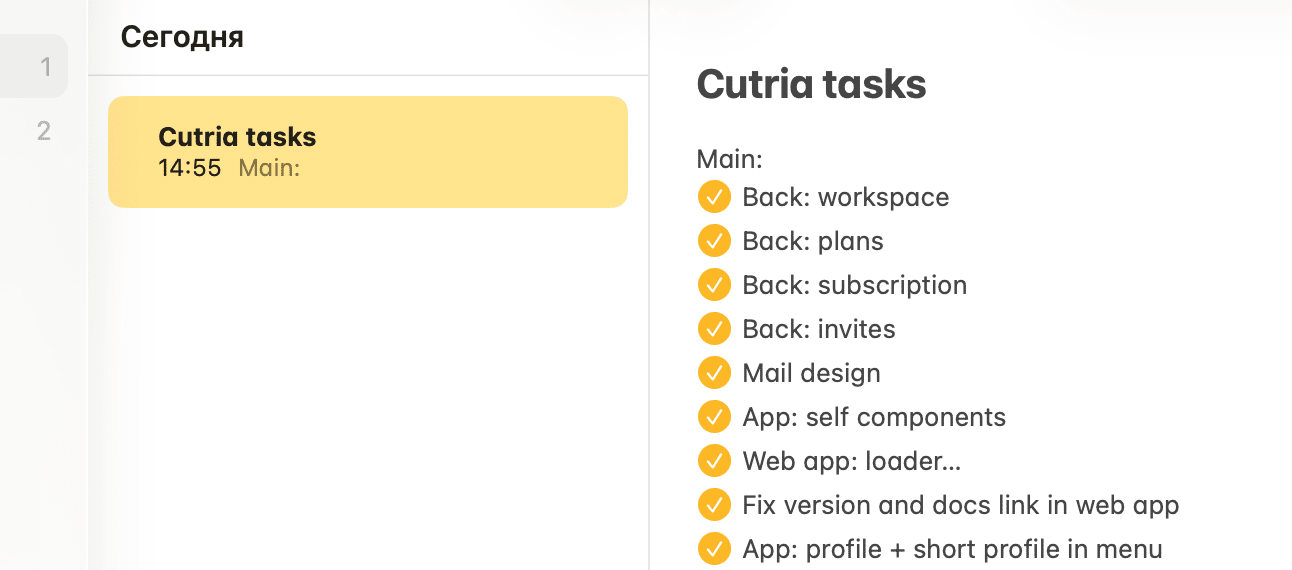
I started building my service on January 8, 2026. Right now, I have exactly 0 subscribers, a completely ruined work/life balance, and red eyes from coding on nights and weekends. But the paradox is that when you check another box on your humble to-do list, you get such a massive dopamine rush that the exhaustion just evaporates.
My goal is as down-to-earth as it gets: I want to get my first 300 paid users. This number will allow me to quit my day job, get my time back, and work full-time on what I love—my own project.
How was Cutria born in the first place?
It all started as a side product. A friend of mine asked me to help bring some order to the processes in his SMM agency. I built a system for him where he and his team handle all the planning, and as a result, the video editors get a fully written script with timelines instead of a messy pile of voice notes.
Implementing this thing saved every employee about 2 hours a day. When I got this feedback, something clicked in my head: "I could turn this into a Micro-SaaS." That's how Cutria came to be.
Who am I, and what's under the hood?
I'm a developer with 13+ years of experience. So I took the technical part seriously:
Backend: PHP (Laravel 12).
Front-end/Mobile: Flutter (the app is immediately available for all platforms).
Infrastructure: Everything runs on AWS (I rented an EC2 instance, S3 for media, CloudFront, and Route53 for the domain).
SaaS on "Hardcore Mode": Regional Specifics
I live in Kyrgyzstan. We have a lot of awesome and talented guys here, but building a global startup from here solo and without investments is like playing on hardcore mode.
Stripe is not available to us.
Local banks don't know how to handle proper international subscription-based acquiring.
Payouts from Google Play to developers from Kyrgyzstan are unavailable due to Google's own policies.
Because of this, I had to completely abandon In-App purchases inside the mobile apps.
The Release is a Pain (Why "an app in a month" is a myth)
If someone tells you they can code an app and publish it to the stores in a month—don't believe them. I've been in the launch process for 10 days now, and here is what it looks like:
Integrating Paddle (instead of Stripe) into the code — 2 days.
Waiting for Paddle account approval — 4 days.
Filling out all the forms, policies, and screenshots for the App Store and Google Play — 2 days.
Apple: Rejected the app twice, yelling: "You're a SaaS, add an in-app purchase button!" I had to fight them for a long time, proving that on iOS it's just a "Reader app" for viewing content. They let it through on the third try.
Google: Sent me to "closed testing," and now, according to the platform's rules, I am forced to wait 14 days before I can release.
Despite all this bureaucracy, the web version is already up and running, and the iOS app is already available in the App Store! Now I'm just waiting for the green light from the Play Market. This is my first step. Next up is marketing, which I currently know nothing about, but I will definitely figure it out.
I would love your feedback, marketing advice, and just general support! Project link: cutria.com
-
1
The part about having 0 subscribers but still getting excited every time you close a task hit home. Most people only see the success stories, not the months of building before the first paying customer shows up.
What I found especially interesting was that Cutria came from solving a real operational problem first. Saving a team 2 hours a day is a much stronger starting point than trying to invent a problem from scratch.
Also, the "hardcore mode" challenges are real. Founders in a lot of regions have to spend energy solving payment and platform issues that people in bigger startup hubs never even think about.
Since you're heading into the marketing phase, I'd focus less on ads and more on validating where your early users already spend time. This guide on GTM planning for startups has some practical ideas around that: https://foundersbar.com/gtm-for-startups
Wishing you luck on the journey to those first 300 customers. The first few are usually the hardest because you're still figuring out who gets the most value from the product.
-
1
Hey, saw you integrated Paddle — quick question: when a subscriber cancels, do you have any way to intercept it before it goes through? Pause offer, discount, anything?
-
2
Paddle sends me a webhook notifying the user that they've canceled their subscription, along with the date the subscription will become inactive. It then sends a second webhook notifying them that the subscription has ended. I email the client after the cancellation and after the subscription has expired.
-
-
1
Really relate to this — I'm at a similar stage with my own SaaS (started a couple months ago, also 0-to-1 mode). The payment gateway stuff sounds brutal, especially having to work around Stripe not being available.
On the marketing side since you mentioned knowing nothing about it: the thing that's helped me most so far is just picking 2 channels and going deep. For a tool like yours I'd look at where SMM agency owners hang out — maybe Twitter/X build-in-public and a couple relevant subreddits. Start by being helpful in those spaces before promoting. Also, Product Hunt is worth a launch once you've got your Google Play version live — having all three platforms ready makes a stronger pitch.
Good luck with the Play Store approval. The waiting is the worst part.
-
1
Thank you so much for your support. I wrote an article about marketing today. Now I know exactly where and how to find my first 100 clients.
-
-
1
laravel + flutter is a solid combo for a solo dev. really feel you on the stripe/payment gateway mess. being outside the 'supported' countries is basically playing on nightmare mode. i went through that paddle approval loop recently too - it's a grind but definitely beats dealing with local banks that don't understand saas subscriptions
-
1
The local bank wasn't a problem; I even spoke with the head of acquiring at one of the banks. She promised to provide me with any technical assistance. But an unexpected problem arose. American banks can block the transaction.
-


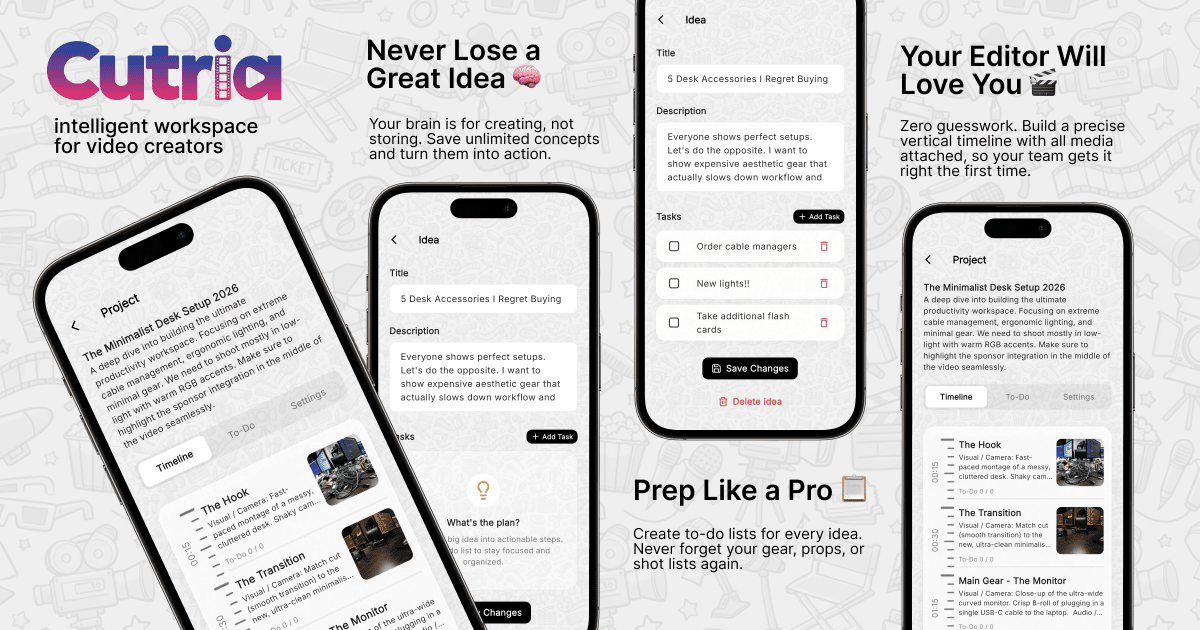
Cutria started by solving a real problem for a friend. He works as a scriptwriter at a marketing agency, and his biggest daily headache was communicating his vision to video editors and motion designers. They literally had to sit side-by-side for hours just to sync the script with the video timeline.
I built a simple web app for him to outline scenes and set approximate durations. It started as a basic vertical notepad. But soon, he asked for asset uploads, and then requested separate workspaces to manage different clients and teams. Once I saw how much time it saved his agency and how heavily they relied on it, I realized this was a widespread problem for all video creators. I decided to polish the app, build a proper architecture, and turn it into a full-fledged SaaS. That’s how Cutria was born.
-
1
This is how real products start.
You solved one real problem for one real user. Then you watched how they used it. That is the best validation.
I like how it evolved step by step. Notepad to assets to workspaces. That shows real demand, not assumptions.
This is the right way to build. Start small, stay close to the user, and expand from usage.
When did you realize this could be a SaaS and not just a side tool?
-
1
solving a specific pain point for a friend is the best way to build a saas. no guessing involved. the transition from a simple web app to a full workspace for video teams makes a ton of sense. keep pushing!
-
1
Thank you for your support and kind words!
-
-
1
This comment was deleted 5 months ago
Comment