
Fabrik
Personal Super-intelligence for AI Apps
Everyone building agentic AI is racing toward the same goal:
systems that don’t just respond, but think, decide, and act on behalf of users.
And yet, many of these systems still feel slow, brittle, and oddly forgetful.
Not because the models aren’t smart enough —
but because they keep relearning the same person over and over again.
The hidden bottleneck in agentic systems
Most agentic AI pipelines look something like this:
Ingest user data (email, calendar, docs, tools)
Reconstruct context for the current task
Infer intent, priorities, and constraints
Generate a recommendation
Perform an action
This happens every single time the agent is invoked.
Even when teams have strong internal models and well-designed agents, a large portion of latency comes from context reconstruction, not reasoning or execution.
The result?
Long end-to-end response times (often 60–120 seconds)
Expensive infrastructure
Agents that feel reactive instead of continuous
In short:
the agent wakes up every time like it has amnesia.
Intelligence isn’t the issue — continuity is
Most knowledge workers already live their lives across:
Email
Calendars
Documents
Chats
Task tools
Their priorities, habits, commitments, and preferences are already there — fragmented, but richly documented.
The real challenge isn’t accessing this data.
It’s synthesizing it once and remembering it continuously.
Where Fabrik fits
Fabrik is built as a persistent personal intelligence layer for AI applications.
Instead of every agent rebuilding user context from scratch, Fabrik:
Ingests and synthesizes personal data across tools
Maintains a continuously updated memory of the user
Serves resolved context on demand via API (in milliseconds)
Emits proactive signals when relevant events or patterns emerge
This allows agentic systems to:
Start with context already resolved
Skip expensive reconstruction loops
Move directly to reasoning and action
learn more - https://getfabrik.ai/

Most agentic AI systems are built to think, decide, and act — yet they still feel slow, brittle, and forgetful.
Not because the models aren’t smart enough, but because they keep relearning the same user every time.
The hidden bottleneck
Typical agent pipelines repeatedly:
Ingest user data
Rebuild context
Infer intent
Decide and act
This happens on every invocation. The cost isn’t reasoning — it’s context reconstruction.
The result: long response times, high infra costs, and agents that feel stateless.
In short, the agent wakes up with amnesia.
The real issue: continuity
User context already exists across email, calendars, docs, chats, and tools.
The challenge isn’t access — it’s synthesizing that data once and remembering it over time.
Where Fabrik fits
Fabrik is a persistent personal intelligence layer for AI apps. It:
Synthesizes user context across tools
Maintains a continuously updated memory
Serves resolved context via API in milliseconds
Emits proactive signals when patterns or events matter
Agents start with context ready — and move straight to reasoning and action.
What this unlocks
Faster responses
More accurate actions
Agents that feel “always aware”
Less time spent on memory and ingestion plumbing
Fabrik doesn’t replace agent intelligence.
It handles memory. Agents handle thinking.
The shift ahead
The future of agentic AI won’t be about bigger models or more integrations.
It will be about continuity of understanding over time.
The takeaway
Agentic AI doesn’t need more intelligence.
It needs a memory that lasts.
That’s what Fabrik is built for.
Start building → getfabrik.ai
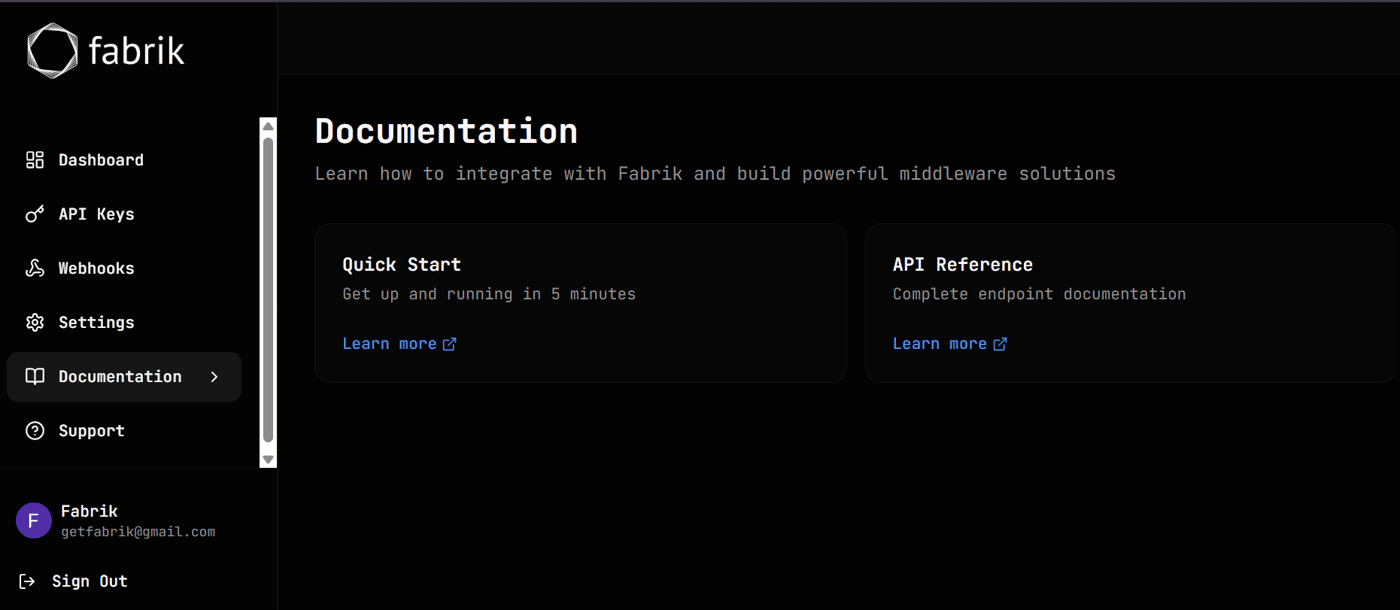
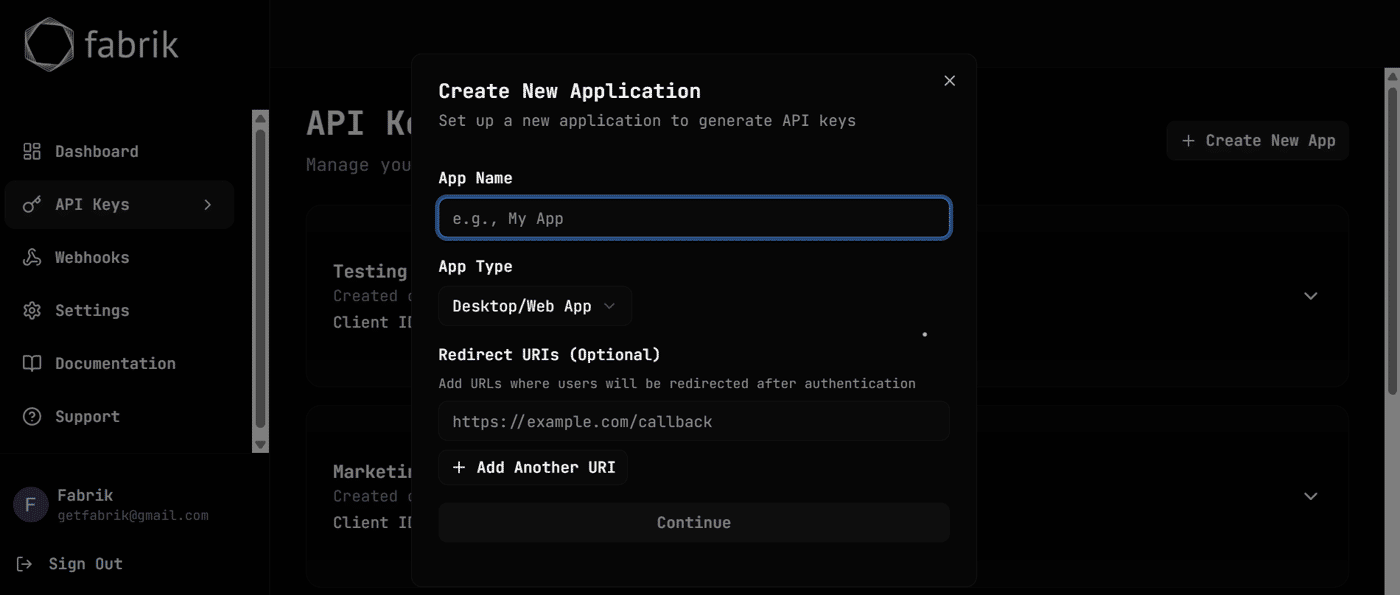
Fabrik is the intelligence layer that brings context, memory, and awareness to every part of your product.
With Fabrik, you can build:
AI Agents that understand and act intelligently
Chatbots & Voice Assistants for seamless user interaction
Productivity Tools that supercharge efficiency
Consumer Hardware powered by smart AI
Start Building : https://developers.getfabrik.ai/login
-
1
Saw you’re using a contact form for messages, I’m building a small floating feedback widget called GetSig that keeps users on the page and makes feedback feel more conversational. Happy to set you up with free early access if you’d like to try it 🙂
-
1
The infrastructure layer decision is one of the hardest parts of building AI apps. Do you build your own memory system? Use vector DBs? Which embedding provider? How to handle context windows? I've seen teams spend weeks evaluating options (Pinecone vs Weaviate vs Qdrant, different chunking strategies, RAG vs fine-tuning) when they just want to ship their AI product. The research phase on AI infrastructure can easily take as long as building the core feature.


Fabrik is the intelligence layer that powers context, memory, and awareness across your entire product.
Instead of treating each interaction as isolated, Fabrik enables your AI to operate as a continuous system—one that understands users, remembers history, and adapts over time.
With Fabrik, you can build AI that:
maintains long-term and short-term memory across sessions
unifies context from users, tools, workflows, and events
understands intent beyond single prompts
anticipates next actions with continuity
personalizes responses based on historical behavior
connects signals across teams, products, or environments
supports multi-agent and collaborative AI workflows
scales intelligence without rebuilding infrastructure
Whether you’re building:
AI copilots
productivity and workflow tools
knowledge and research assistants
internal AI systems
customer-facing AI apps
multi-agent or autonomous systems
Fabrik handles memory, context, and intelligence orchestration—so you can focus on building product, not infrastructure.
Start integrating Fabrik into your AI app.
Explore the API
Build AI that understands, remembers, and adapts.
Start Building : https://developers.getfabrik.ai/login
learn more - https://getfabrik.ai/
Building an AI Productivity app?
Here is what Fabrik can do as a superintelligence layer for your AI productivity app
Unifies context so your AI sees the full picture instead of fragments.
Gives your app awareness — anticipation, insight, and continuity.
Handles memory and context so your app remembers past interactions naturally.
Lets developers focus on building instead of redoing infrastructure.
Fabrik is designed for builders who want smarter AI without rebuilding memory or context systems from scratch.
Sign up or log in to start integrating Fabrik into your AI app.
Explore the API / SDK so your AI can access context, memory, and signals.
Start building smarter AI today.
CTA: https://developers.getfabrik.ai/login
learn more - https://getfabrik.ai/
-
1
Absolutely going to try this out. Agentic coders on their own can maintain a memory but you have to keep constant documentation, constant white papers have it reread them.
-
1
I look forward to your feedback Randy P
-
-
1
This framing makes a lot of sense. Most AI apps don’t struggle with models — they struggle with context and memory.
Abstracting that into an infrastructure layer lets builders focus on real product value instead of re-implementing the same state + context logic over and over. Curious to see how developers decide what context is worth keeping vs discarding over time.
-
1
this is the exact problem i hit while building.
initially tried to keep everything. then everything became noise. the real breakthrough was learning: context isn't about keeping more - it's about keeping what actually predicts the next thing.
we ended up using signal decay (temporal relevance) + usage patterns (what gets accessed together). but honestly, still learning what works. every use case is different.
the hardest part? users don't know what context they need until they need it. so you can't just ask. you have to observe and adapt.
-
1
That’s a great way to put it — “predicts the next thing” is the key.
While building small tools, I noticed most context people think they need is rarely reused. The useful context is usually tied to the immediate task, not long history. Curious how you balance short-term task context vs long-term memory in practice.
-
-


Building an AI Productivity app?
Here is what Fabrik can do as a superintelligence layer for your AI productivity app
Unifies context so your AI sees the full picture instead of fragments.
Gives your app awareness — anticipation, insight, and continuity.
Handles memory and context so your app remembers past interactions naturally.
Lets developers focus on building instead of redoing infrastructure.
Fabrik is designed for builders who want smarter AI without rebuilding memory or context systems from scratch.
Sign up or log in to start integrating Fabrik into your AI app.
Explore the API / SDK so your AI can access context, memory, and signals.
Start building smarter AI today.
When you first started building your AI app, it was exciting. Your idea came to life, and you could see the possibilities. But somewhere along the way, things changed.
Your AI reacts to input — but it doesn’t truly understand the context. Important signals are scattered across email, calendars, and docs, and your app only sees fragments. The result? Your AI feels shallow, forgetful, and limited.
You try to patch it together. You build memory systems, bolt on new tools, and tweak the stack endlessly — but it slows you down. The time you spend “building” far outweighs the time you spend innovating.
That’s why we built Fabrik. Fabrik gives your AI real awareness and memory without reinventing the wheel.
Here’s what it does:
Unifies context so your AI sees the full picture instead of fragments.
Gives your app awareness — anticipation, insight, and continuity.
Handles memory and context so your app remembers past interactions naturally.
Lets developers focus on building instead of redoing infrastructure.
Fabrik is designed for builders who want smarter AI without rebuilding memory or context systems from scratch.
Sign up or log in to start integrating Fabrik into your AI app.
Explore the API / SDK so your AI can access context, memory, and signals.
Start building smarter AI today.
You started building your AI app to bring your idea to life.
But lately, it feels different.
Your AI just reacts — it waits for input and responds, but never really knows what’s going on.
Important signals are scattered across email, Slack, calendars, and docs — and your app only sees fragments.
So the AI feels shallow, unmemorable, and limited.
Before you know it, building takes more time than innovating. You’re constantly bolting on tools or building memory and context systems yourself just to make the experience feel… intelligent.
If this sounds familiar, you’re not alone.
We built Fabrik to take that weight off.
With Fabrik, you can :
Unifies real context so your AI sees the full picture instead of fragmented signals.
Gives your app real awareness — not just fast responses, but anticipation and insight.
Lets developers build with proactive intelligence without reinventing the stack.
Handles memory and context so your app remembers past interactions and adds continuity.
Makes AI genuinely helpful — reminding, anticipating, and acting with context that matters.
Start building now. 🚀getfabrik.ai
Why we built fabrik personal Superintelligence for AI Apps
Most AI apps today wait for users to ask.
But real life doesn’t work that way.
Fabrik changes that.
It gives AI applications real awareness—securely pulling context from emails, calendars, messages, and more, then turning it into intelligence agents that can act on in real time.
Privacy isn’t an afterthought. Fabrik is zero-knowledge by design. Data stays encrypted. Keys stay with users. We can’t see it.
The result?
AI that anticipates, not reacts.
Personalized from day one. Built in just a few lines of code.
Start building now. 🚀getfabrik.ai
-
1
This is an interesting shift from prompt-driven AI to context-aware systems by proactively using user signals, Fabrik targets a real gap in current AI apps. The zero-knowledge, encrypted-by-design approach is especially compelling, since anticipation only works if users can trust that privacy and control aren’t being sacrificed for intelligence.
-
1
Fabrik seems like a game-changer for AI development! The ability to give AI apps persistent memory and real-world context is exactly what's needed to move from reactive chatbots to truly intelligent assistants. The fact that it unifies signals from email, Slack, calendars, and other sources—while keeping data encrypted and user-controlled—makes it both powerful and trustworthy. This could dramatically reduce the time developers spend building custom memory systems and let them focus on actual innovation. Looking forward to seeing how this shapes the next generation of AI applications! 🚀
-
1
That’s an interesting angle — curious whether your early users came from direct outreach or content. I’ve found the first 10 users often teach you more than the next 100.
-
1
building a different product (Nucleus OS - MCP server for persistent AI memory) but this resonates deeply.
still in that 0→10 phase honestly. haven't cracked it yet. tried content (writing about context/memory problems), tried direct outreach to devs using Claude/Cursor. both got interest but not conversion.
the lesson so far: people agree it's a problem but won't act until the pain becomes urgent. so i'm spending more time in spaces where the pain is already screaming (like this thread).
your point about first 10 teaching more than next 100? spot on. every early conversation completely rewrites your positioning.
-


Today, your intelligence is fragmented:
Email knows one thing
Calendar knows another
Notes know something else
Tasks live somewhere else
AI knows nothing unless you explain it again
You are the integration layer.
That’s the problem.
Fabrik is the layer that:
Knows what you’re working on
Understands what matters
Keeps context across time, tools, and goals
Fabrik is a context layer for personal intelligence.
Personal intelligence only works if trust is absolute.
Fabrik is built with:
Zero-knowledge architecture — Fabrik cannot read user data
User-owned data — control stays with the user, not the platform
Context without surveillance — awareness without monitoring or profiling
Without Fabrik:
Context is fragmented
Intelligence is reactive
Developers rebuild state repeatedly
With Fabrik:
Context is continuous
Intelligence is anticipatory
AI systems behave like they understand the user
Start building with 👉 getfabrik.ai
-
1
Fascinating concept! How did you get your initial users for Fabrik — through content marketing, integrations, or another channel?
-
1
Fascinating concept! How did you get your initial users for Fabrik — through content marketing, integrations, or another channel?
-
1
Give a try to my Reddit Extension. It's a Chrome extension called Pulse of Reddit that basically acts like my own alert system for Reddit.
Anytime someone posts something with keywords I care about like 'looking for a designer' or 'best SEO tool' it pings me right away. It’s saved me so much time and helped me hop into threads while they’re still fresh.
If you’re tired of manual digging and want to catch those conversations early, I’d really recommend giving it a look.
It’s free to start and super simple to set up.
Website:


4 Comments
This hits so hard.
The context switching problem is everywhere.
I was building an app last week and realized I was doing the same thing: rebuilding context every time I switched from Figma to VS Code to browser. Each tool had no idea what I was trying to accomplish in the others.
Your brain becomes the "persistent intelligence layer" between disconnected tools. Exhausting.
AI agents having amnesia is just the digital version of what we deal with as humans every day 😅
Loved the amnesia metaphor. Most agentic systems waste 80% of their cycles reconstructing context that should've been resolved once and cached.
Persistent memory layers aren't a nice-to-have, they're the only way agents actually feel continuous instead of constantly rebooting
the amnesia metaphor is spot on. building with agents solo, this is exactly where most of my time goes - not the actual reasoning, but the setup/context dance before every task.
curious about the privacy angle mentioned. the gmail access killing conversion makes sense, but how do users feel about having a persistent layer that knows everything? seems like theres a trust tradeoff either way.
been hacking together my own context management but its brittle. interesting to see someone productizing this layer.
this is exactly it. spent months on context plumbing when i just wanted to build the actual product.
re: privacy - yeah that tradeoff is real. we went zero-knowledge architecture (data encrypted, keys stay with users, we literally can't see it). but the real insight was: users don't trust promises, they trust architecture. had to make privacy technically impossible to break, not just policy.
the brittle context management you're building? been there. every solo builder hits this wall. you either rebuild the wheel badly or use something built for it.
curious what your agent does - always interested in what other builders are working on.