
https://techwavespr.com/
Web3,AI & fintech companies

If you're a freelancer, proving income for rentals, leases, and loans isn't as simple as providing a traditional pay slip from HR. You need a portfolio of documents that clearly reflects a healthy, secure, and stable earning capacity for applications.
Your financial picture should meet or exceed these applications' terms. For instance, if you're trying to rent an apartment, your accounts must prove you have two to three times the monthly rent. From there, you can build a portfolio that proves your financial security and reliability.
Learn more about building a verifiable financial profile through income requirements, tax forms, self-employed pay stubs, bank statements, invoices, contracts, digital payments, cash flow statements, and P&Ls.
Why Income Verification Matters
So, why does a landlord want you to prove you have more than the monthly rental listing?
Simply put, it's about risk. If you're seen as a low financial risk, landlords will assume you can pay your monthly rent and commit to a lease. On the flip side, if your financial picture appears unstable, they're likely to assume that you'll miss rent payments and break your lease.
Since you're self-employed, your financial profile may show fluctuating income trends. Therefore, the burden of proof is higher.
Similarly, car leasing companies and car loan servicers want to see stable, documented income. Low-risk applicants are less likely to default on monthly payments. Credit card issuers also use reported income to assess risk and determine credit limits.
If you're applying for a mortgage or want to refinance your home, a lender will also need to see a robust financial portfolio that includes one to two years of tax returns.
Tax Forms
Mortgage lenders are specifically looking for the 1040 Schedule C tax form to assess long-term income viability. It's also a government-verified document.
However, a previous year's tax document may not accurately reflect your current financial strength, especially if your self-employed income has risen significantly within the last few months.
Self-Employed Pay Stubs
While you don't have an HR department to issue you bi-weekly pay stubs, you can still create a professional pay stub as a self-employed individual.
Pay stub generators produce professional documents that show gross pay, estimated taxes, and net pay for a given period or project. Landlords and lenders will accept these pay stubs like any other pay stub.
Bank Statements and Invoices
Bank statements provide the most current, up-to-date evidence of your cash flow. However, they also show every transaction and deposit, forcing servicers and landlords to sift through the numbers. Color-coding deposit lines can help clarify your cash flow picture.
Similarly, when providing invoices, you also need documents that prove these invoices were indeed paid.
Contracts
Contracts reflect the potential of your business and future earnings. When supplying contracts, provide supplemental proof that these projects were completed. Include all active contracts, as well.
Digital Payment Documents
Do you use multiple payment processors such as PayPal, Stripe, and Venmo?
Digital payment gateways also provide convenient transaction summaries in-app. These reports are an excellent supplement to traditional bank statements.
Cash Flow Statements
Next, turn your documents into a comprehensive cash flow statement or spreadsheet. This will give landlords and servicers a clear "snapshot" of your financial health.
Your cash flow sheet should cover the last 6 to 12 months of your self-employed career. Create columns for the following variables:
Payment date
Client name
Invoice number
Exact amount received
Cash flow statements prove that every bank deposit has a legitimate business source.
Profit and Loss (P&L) Statement
A profit and Loss statement (P&L) will offer a clearer snapshot of your net income, which is your total self-employed income minus business expenses.
This document also shows mortgage lenders that you understand the business end of freelance work. A lender can look at your P&L to see how much profit you have to cover housing and debt costs.
Financial Best Practices to Remember
As you can see, you have quite a few financial documents to manage. An efficient organization system ensures you're never caught off guard by a document request.
First and foremost, always separate your business and personal finances. Open up a dedicated business account. Generate pay stubs for every transfer you make to your personal account.
Use accounting software to produce a timestamped record of your business activities, including P&L statements, cash flow sheets, and income reports. Utilizing this software also reflects a level of professional oversight.
Cross-reference documents whenever you can. For instance, you could bundle invoices with matching bank deposit records to eliminate any doubt that you were paid.
Build Your Financial Snapshot
Now is the perfect time to organize your documents into a clear financial snapshot.
Gather tax forms, generate pay stubs, print bank statements and digital payment summaries, supply contracts, and prepare cash flow statements and P&Ls. Cross-reference transactions and separate your business and personal finances.
These financial tools are part of a complete freelancer's toolset. Follow our blog for the latest insights into growth hacking, startups, and more.

For years, marketing strategies for brands were built around campaigns. Each campaign had a clear beginning, end, target audience, and marketing message. It used a small set of channels, and metrics were measured in terms of clicks or opens. This model worked when customer behavior was simple, and channel choices were limited. Today, customers move across websites, apps, emails, stores, and social platforms. They do not follow a fixed path. The campaign model struggles to keep up with this shift. Customer journey orchestration offers a better approach. It follows real customer behavior instead of fixed timelines.
The gap between customer expectations and brand delivery has grown. Customers do not think in campaigns. They focus on their overall experience. They want the brand to remember their previous interactions across all channels and expect relevant communication at each stage. But many brands fail to provide that. Customer journey orchestration is the solution. It brings structure and continuity to every interaction with the customer.
Understanding Customer Journey Orchestration Is and How It Differs From Campaigns
Customer Journey Orchestration is the practice of interacting with customers across channels based on their actual behavior and context in real-time. Instead of sending a message to a specific audience at a specific time, Customer Journey Orchestration reacts to what the customer is actually doing. It listens, interprets, and responds with the next best action based on where the customer is in their journey at that specific time.
The major difference between campaign-based marketing and Orchestration is in its structure. Campaigns are brand-driven. They are planned weeks in advance and delivered on a schedule that the brand controls. Customer journey orchestration is customer-driven. It activates based on the customer's actions, not the brand's calendar. For instance, a customer who browses a product page, reads two reviews, and then visits a pricing page is showing clear intent. Customer journey orchestration software will recognize that pattern and respond with a relevant message in the right channel at the right moment. The shift from campaigns to orchestration is a shift from broadcasting to responding, and that distinction changes the entire nature of customer engagement.
Why Brands Are Making the Strategic Shift Toward Customer Journey Orchestration
Today, modern businesses are under increasing pressure to improve their engagement with customers. This is driven by the evolving expectations of customers, as well as the complexity of digital businesses. Customer journey orchestration is an approach that helps businesses address these challenges by creating connected experiences.
Customers No Longer Follow Linear Paths
The customer journey has never been more unpredictable. A single purchase decision can have a dozen or more touchpoints across multiple devices and channels, spread out over several days. The customer could see a social ad, visit a website, ask a question via chatbot, and then make a purchase via email. Campaign tools were built for linear funnels. They put customers on a stage and move them forward on a fixed schedule. Customer journey orchestration software maps to the actual non-linear path a customer takes. It responds to real signals rather than assumed stages, making engagement far more relevant and timely.
Siloed Channels Produce Disconnected Experiences
Most brands run their email, SMS, paid media, and web personalization through separate tools managed by separate teams. Each team optimizes for its own channel metrics. The result is a customer who receives conflicting messages across channels on the same day. One channel offers a discount while another sends a re-engagement message as if the customer has gone cold. Customer journey orchestration software connects those channels through a unified decision layer. Every channel operates from the same customer profile and the same logic. The experience the customer receives feels connected because it actually is.
Real-Time Data Makes Smarter Engagement Possible
Brands now have access to more real-time behavioral data than ever before. Website events, app interactions, transaction records, and support history all generate signals that reveal customer intent. Acting on that data in real time requires more than a data warehouse. It requires customer journey orchestration software that can evaluate the customer in real-time and provide the next best action in response to that customer in mere seconds. A customer who completes a purchase should not receive a promotional offer for the same product an hour later. Real-time orchestration helps eliminate these types of errors and replace them with the right next steps.
Retention Has Become as Important as Acquisition
The cost of gaining new customers is much higher than retaining old ones. Marketers have realized that post-purchase engagement is as important as pre-purchase marketing. Customer journey orchestration continues engagement even beyond sales. It supports onboarding, usage, renewal, and loyalty programs, all driven by actual user behavior. This method creates relationships that extend the value of the customer rather than ending the relationship at the sale.
Personalization at Scale Requires Orchestration Logic
Personalization has moved from a differentiator to a baseline expectation. Customers notice when a message is irrelevant, and they disengage. Delivering relevant personalization to thousands of customers across multiple channels simultaneously is not possible through manual campaign management. Customer journey orchestration applies decision logic at scale. It assesses the profile, behavior, and context of each customer in real-time and selects the most relevant action for each customer as an individual. This approach moves beyond segment-based communication. It delivers consistent, individual-focused communication across every channel.
Conclusion
The transition from campaign-based marketing to experience-driven engagement reflects a deeper shift in how brands understand and serve their customers. Campaigns will always have a role, but they cannot carry the full weight of modern customer relationships. Customer journey orchestration software gives brands the infrastructure to respond to real behavior, coordinate across channels, and deliver experiences that match where each customer actually is. As customer expectations continue to evolve, the organizations that build orchestration into their core strategy will be far better positioned to build lasting, meaningful relationships with the people they serve.
I was sitting in a coffee shop when my friend from Bangkok called me in a panic. She'd decided to study at a university in China on a government scholarship, but she had no idea how to prepare for the entrance exam. "Everyone just keeps saying 'good luck,'" she told me. "Can you help?"
I Googled "CSCA exam" and spent two hours drowning in Chinese-language university websites, random forum posts from 2018, and outdated agency articles that made no sense in English. The information was scattered, the translations were terrible, and even scholarship councils' official pages assumed you already knew what you were doing.
That conversation became the seed for csca.app — a platform I built to help international students navigate China's standardized university entrance exam. Three years later, it's serving 46,000+ students from 35+ countries, with zero ad spend and entirely organic growth.
This is how I got here.
The Problem: A Fragmented, Inaccessible Exam
The CSCA (Academic Proficiency Test for International Students, officially 来华留学本科入学学业水平测试) is administered by China's Scholarship Council. Every year, roughly 500,000 international students apply to Chinese universities, and most of them need to sit this exam.
Here's the thing: there's almost no good English-language resource for it.
The exam itself is straightforward: three core subjects (Math, Physics, Chemistry) with 48 multiple-choice questions each, plus a specialized Chinese section with 80 questions. Students have 60 minutes per core subject and 90 minutes for Chinese. The exam runs five times a year, online, from home. Scores range 0-100 per subject, and universities set their own cutoffs.
But the information ecosystem around it is broken. Official details hide in Chinese-language PDFs. Coaching agencies charge thousands. Forums are full of outdated advice. And if you're from Thailand or Vietnam or Indonesia, the English information barely exists — you're stuck reading machine-translated Chinese websites.
I saw an opportunity: what if I built the single comprehensive resource that didn't exist? A platform where a student from any country could understand the exam, access practice materials, explore universities, and track their progress — all in their own language.
Building the First Version
I started small. The MVP didn't need to be perfect; it needed to be useful.
My tech stack was born from pragmatism, not prestige:
Next.js 14 because SEO was going to be critical for organic growth. A static-first framework meant I could rank in Google's eyes from day one.
TypeScript because I didn't want to debug type errors at 2 AM when a student was prepping for the exam.
Tailwind CSS for fast, consistent styling without the framework bloat.
Supabase for the backend and database. I didn't want to manage servers. Supabase gives me PostgreSQL, real-time subscriptions, and easy scaling without the DevOps headache.
Clerk for authentication. I wasn't about to build login from scratch — Clerk handles social sign-in, email verification, and password resets reliably.
Vercel for deployment. Push code, and it's live in seconds. Zero infrastructure to think about.
KaTeX for rendering math formulas. Rendering math correctly across different fonts, languages, and browsers is surprisingly hard. KaTeX handles it beautifully.
Three.js for interactive 3D visualizations of spatial concepts — geometry that students struggle to visualize on paper suddenly clicks in 3D.
I took about four months from concept to launch. I focused on math first since every student needs it. Launched with roughly 200 practice questions and a basic university directory of about 100 institutions.
The technical execution was solid, but the real work was content.
Content as the Product
I learned early: content isn't a feature on this platform. Content is the product.
I built 1,600+ practice questions with detailed step-by-step solutions. Created 150+ glossary terms per subject (Math, Physics, Chemistry) with translations in nine languages. That's 450+ glossary entries across three subjects, each one translated and verified across English, Simplified Chinese, Thai, Vietnamese, Korean, French, German, Indonesian, and Russian.
Here's what made this harder than it sounds: technical translation isn't simple string replacement.
The Thai education system teaches math with different notation conventions than the Korean system. A "derivative" means different symbolic representations depending on where you learned it. I couldn't just dump text into Google Translate and call it done. I built a custom glossary system where each term had canonical definitions, example problems, and a translation matrix — each language version reviewed by native speakers familiar with that country's educational system.
If I'd tried to hire translators for everything, the cost would've been prohibitive. Instead, I built tooling to make the translation process scalable. Upload a glossary term once, translate it across nine languages, and the system keeps everything consistent.
By launch, I had coverage for all core subjects. By month six, I'd expanded to 306 universities in the database with scholarship information, acceptance rates, and program details — parsed from university websites and verified by hand.
The practice questions kept growing. By year one, I'd accumulated over 1,600 unique questions.
The SEO Growth Machine
I didn't spend a dollar on advertising. Not one.
My entire growth strategy was SEO, and it worked because I was targeting underserved markets.
English-language CSCA resources have some competition. But Thai-language resources? Vietnamese? Indonesian? The market was practically empty. I realized that international students search in their native language first. If I could rank for "สอบ CSCA" (CSCA exam in Thai) or "kỳ thi CSCA" (in Vietnamese) or "ujian CSCA" (in Indonesian), I'd own those search results.
I implemented proper hreflang tags to signal to Google which language version each page was written for. I created content answering the exact questions students typed into search engines. I built internal linking so related subjects connected logically. I tracked which keywords were driving traffic and which weren't.
The math worked out. Top traffic sources are now Thailand, Vietnam, Indonesia, South Korea, and Russia — the markets where information asymmetry is highest. English traffic exists but is a smaller portion.
One key insight: by serving underserved languages, I avoided the brutal competition of English-language ed-tech platforms like Chegg or Khan Academy. Instead, I became the default resource for students searching in Thai, Vietnamese, and Indonesian.
Within a year, I'd hit 10,000 users. By year two, 25,000. Now, 46,000+ active users, with growth accelerating organically.
The Validation Moment
The real turning point came when I compared the platform's mock exam to the actual March 2026 CSCA exam.
I had students take my practice math exam. Then, when the real March 2026 exam came out, I analyzed the questions. Thirty-five out of 48 questions matched the difficulty level, topic distribution, and problem structure of what I'd included in my practice set.
That's a 73% accuracy rate.
This wasn't luck. It meant the question patterns were genuinely representative of the real exam. Student trust skyrocketed after this validation. When they saw the correlation between practice problems and real questions, they knew the platform actually worked.
Monetization: Keeping It Affordable
I've kept monetization intentionally simple and focused on students from developing economies.
Practice papers and past exams on Gumroad for $4.99–$29.99. These are premium study materials — actual past exam papers, curated question sets by difficulty level, annotated solutions.
Google AdSense for passive revenue. It's modest but real.
Gumroad was the right choice because it handles multi-currency payments natively: USD, THB, VND, MYR, JPY, EUR. I didn't have to build custom payment processing or deal with currency conversion fees on my end.
The philosophy is simple: core content is free. If you're a Thai student from a working-class family, you shouldn't have to pay to understand what the CSCA exam is. But if you want past exam papers or specialized problem sets, those cost money. Most users come from countries with lower purchasing power — the pricing reflects that.
Revenue covers servers and my time. It's not venture-scale, but it doesn't need to be.
The Challenges I Didn't Expect
Building a truly multilingual platform running at scale teaches you things you can't anticipate.
Localization is brutal. Nine languages × 450 glossary terms = 4,050 individual translation-and-review cycles. And I didn't use just any translator. Each term needed verification by someone who understood the educational context of that country. The Thai translation of "probability" is different from the Vietnamese understanding of the same concept because they teach it differently. Getting this right consumed more time than building the platform's core features.
Multi-currency payments create a lot of small headaches. Some countries prefer bank transfers over credit cards. Payment success rates vary wildly by region. Gumroad handles the technical side, but I still need to monitor chargeback rates, failed transactions, and currency-conversion timing. A student in Russia using a Visa sees different pricing than a student in Indonesia using a local payment method.
Time zones are everywhere. When I release a new exam-strategy guide, it's morning in some markets and midnight in others. Support requests come 24/7. Exam sessions are staggered across time zones, so content relevance shifts throughout the day. I can't just "push an update" — I have to think about when different user cohorts are active.
What's Happening Next
I'm in the middle of building AI-powered study recommendations. The idea is simple: based on a student's weak areas from practice exams, the system suggests targeted content. If you're struggling with trigonometric identities, it serves you the glossary, example problems, and video explanations for that topic.
I'm also exploring university partnerships — helping schools directly admit qualified international students through the platform, skipping some of the exam bureaucracy.
The long-term vision is bigger: become the platform for international student mobility. Today it's the CSCA exam. Tomorrow it could be prep materials for any high-stakes exam international students face.
What I'd Tell Another Builder
If you're thinking about building in education or for underserved international markets, here's what worked:
Multilingual SEO is an underrated growth channel. Everyone focuses on English. The markets where you face zero competition are usually in other languages. Build for Thai first, English second.
Build for the underserved, not the oversaturated. I didn't try to out-Khan Academy Khan Academy or out-Chegg Chegg. I built for students in 35 countries who had nowhere else to look. That focus created defensibility that money can't buy.
Content quality compounds. Every question I add makes the platform more valuable. Every glossary term translated into nine languages makes it stickier. This isn't a software-as-a-service feature matrix — it's accumulated substance. Keep going.
You don't need venture funding to reach 46,000 users. I bootstrapped this. Organic growth is slower but more sustainable. Users who find you through Google are users who actually need you.
If you're curious to see how this actually plays out, you can check out the platform at csca.app [https://csca.app/en]. It's live, it's serving real students, and every week I'm getting messages from people saying it helped them understand the exam for the first time.
Building something that matters to people in 35 different countries has been the most rewarding part of my journey as a maker. The metrics are nice. But watching a student from Vietnam finally understand the physics problem they'd been stuck on for weeks? That's the real validation.
---
Want to build a global education platform? Start small. Pick an underserved language and an underserved exam. Create content that actually helps people. Let Google bring the users. The rest follows.

A house is easy to get out of control, particularly when trying to organize winter clothes, additional bedding, or even a seasonal wardrobe. Closets are crowded, boxes are stacked, and it is a time-consuming task to find something. This is where the problem of space-saving solutions like vacuum seal bags for clothes comes in.
These storage tools are not only meant to make your belongings organized, but also to change the way you store them. Vacuum seal bags are more effective, efficient, and convenient to store as soft items can be compressed and therefore not harmed by external factors.
Nevertheless, similar to any storing approach, they have advantages and disadvantages. Their operation, and the way to make the most of them, without ruining your clothes, can be understood.
Understanding How Vacuum Seal Bags Work
On a simple level, clothing vacuum seal bags are specially designed plastic storage bags whose primary purpose is to remove air from the bag, compressing the items.
Here’s how the process works:
Add clothes or soft materials to the bag.
Seal the opening tightly.
Eliminate the air with a pump or rolling (depending on the type)
Take away the air and see the bag shrink.
When it is sealed, the bag becomes tight and airtight, which greatly decreases the size of voluminous clothes such as jackets, blankets, and sweaters.
These are constructed of much sturdier and heavier materials compared to the regular plastic bags and are able to withstand pressure without tearing.
Why Vacuum Seal Bags for Clothes Are So Popular
The increased demand of using vacuum seal bags of clothes is attributed to the fact that the bags address various issues of garment storage simultaneously.
1. Major Space Savings
Quilts, pillows and winter coats are bulky and may occupy much space. Vacuum sealing makes them tiny and thus they can be stored in very small roomy places such as underneath the beds or in the closets.
2. Cover against Extrinsic Hazards.
These bags provide an air tight seal which shields clothes against:
Dust
Moisture
Insects
Unpleasant odors
This renders them particularly handy in long term or seasonal storage.
3. The ideal Seasonal Organization.
You can seasonally rotate your clothes rather than stuffing yourself with too many clothes in your wardrobe. Keep the winter clothes away in summer and the summer clothes away in the winter and only keep the things that you require with you.
4. Useful for Travel and Moving
Vacuum bags enable you to fit more on the small space in the luggage. They are also used to keep personal belongings structured and secure in the times of moving.
Can Vacuum Seal Bags for Clothes Damage Fabrics?
This is among the most frequent concerns- and the answer is: yes, but only when it is used incorrectly.
Let’s deconstruct the possible problems.
Fabric Compression and Wrinkles
Clothes are tightly packed away when there is no air. This can lead to:
Deep wrinkles
Flattened fibers
Distortion of original shape in certain fabric.
Example
A wool coat that has been kept in a compressed form over a few months can lose natural form and softness.
How to Reduce This Risk
A vacuum bag should be used primarily on durable clothes such as cotton or polyester.
Delicate garments should not be stored long term.
1- Fold or roll clothes and then close.
Moisture and Mold Concerns
Protecting clothes against moisture can be viewed as one of the significant benefits of vacuum seal bags, although it is only possible when objects are thoroughly dry before being sealed.
Provided that the smallest amount of moisture is locked inside:
Mold can develop
There can be a musty smell of clothes.
The damage to fabrics may happen with time.
Best Practices
Store clothes after they are dry.
Store bags in cool, dry places
Insert moisture absorbents such as silica gel where necessary.
Loss of Shape in Bulky or Fluffy Items
Items like:
Puffer jackets
Comforters
Sleeping bags
be dependent on the entrapment of air to shape and insulate. This air can be sucked out by vacuum sealing, and this can influence their fluffiness.
Tip
Do not keep such things in compressed bags for a long time. They should be given time to recover their shape when they are removed.
Choosing the Right Clothes for Vacuum Storage
Fabrics do not react to compression in the same manner. There is a big difference between what to store and what to avoid.
Suitable Items
Cotton clothing
Polyester garments
Denim
Towels
Fleece blankets
Items to Avoid
Silk
Leather
Cashmere
Formal wear
Garments heavily embroidered.
Proper use of vacuum seal bags in clothes means that your clothes are not damaged unnecessarily.
Smart Packing Techniques for Better Results
Using vacuum bags effectively is not just about sealing them—it’s about how you prepare your items.
First, clean and dry
To avoid bacterial growth and odors, always wash and dry clothing before storing.
Don’t Overfill
Overpacking puts pressure on seams and reduces sealing effectiveness.
How Long Should Clothes Be Stored?
Up to six months is the ideal duration.
Ideal duration: up to 6 months
Maximum: around 12 months
For longer storage: open bags periodically and air out contents
This keeps clothing fresh and avoids long-term fabric stress.
Keep Your Vacuum-Sealed Bags For Clothes
Best conditions:
Cool and dry spaces
Away from direct sunlight
shielded from jagged objects
Why Quality Bags Make a Difference
The quality of vacuum seal bags when it comes to clothes largely relies on the quality of the bags. Good materials, good seals, and good air removal systems enhance the overall performance.
Vacbird storage solutions, such as, pay attention to:
Durable, reusable materials
Secure airtight sealing
Effective pumping out of air.
Constant compression and not overly pressurized.
These characteristics contribute to the minimization of typical problems such as leakage, tearing, or androgen compression.
FAQs:
1. Do garment vacuum seal bags damage textiles?
They are safe with permanent materials when well utilized; however, long-term storage, or fragile clothing, can get a crease or change of shape.
2. What is the time of storage of clothes in vacuum-sealed bags?
Clothing intended for long-term storage should ideally be taken out occasionally.
3. Are vacuum-sealed bags lighter when it comes to luggage?
No, they only lighten the quantity of clothes, but not the weight.
Final Thoughts
Vacuum seal bags for clothes are among the smartest items to use in order to save up on storage space and, at the same time, to protect your possessions when used properly. They make the organization of seasons easier, less cluttered, and they save fabrics from environmental pollution.
But it is equally important to know their weaknesses. Do not use them on delicate or fluffy things, and make sure that the clothes are absolutely dry and also do not leave items to be kept very long without airing them.
Vacuum storage is not only convenient, it is also a long-term organization strategy, as long as it is done right and with the best solutions available such as Vacbird.
Modern brand authority is no longer built on visibility alone. It is shaped by consistency, measurable outcomes, and the ability to respond intelligently to audience behavior across platforms. As digital ecosystems mature, brands that rely purely on creative reach often struggle to sustain relevance without performance validation.
Today’s competitive markets reward organizations that align strategy with data, creativity with analytics, and messaging with intent. This shift has elevated performance-focused marketing from a tactical function to a foundational growth discipline, especially when guided by a Digital Marketing Agency in Dubai toward the end of a structured introductory phase.
The Shift From Exposure Metrics to Performance Accountability
Performance-focused marketing prioritizes outcomes that reflect real business value rather than surface-level engagement. Metrics such as conversion quality, acquisition efficiency, and lifetime value now define success more accurately than impressions or reach alone. This shift has reshaped how brands evaluate campaign effectiveness.
As platforms evolve, algorithms increasingly favor relevance and interaction depth. Brands that optimize for performance naturally align with these systems, achieving sustainable visibility. Authority, in this context, becomes a byproduct of consistency and relevance rather than repetition.
This approach also demands cross-functional collaboration. Marketing, analytics, and creative teams operate with shared benchmarks, reducing silos. The result is a unified brand presence backed by measurable trust signals.
Data as the Backbone of Brand Credibility
Data-driven decision-making has become central to modern brand positioning. Performance-focused marketing uses analytics not just to track results but to inform strategic direction. Audience behavior, channel responsiveness, and content impact are continuously assessed.
This ongoing feedback loop allows brands to adapt in near real time. Instead of relying on assumptions, marketers validate ideas through performance signals. Over time, this builds credibility with audiences who experience consistent relevance.
Data also supports long-term authority by identifying what sustains engagement rather than what spikes it temporarily. Brands that invest in this discipline develop a clearer understanding of their market dynamics.
Audience Segmentation and Intent Mapping
Understanding audience intent is essential for performance optimization. Segmentation based on behavior, demographics, and interaction patterns enables more precise targeting. This ensures that messaging resonates with specific needs rather than broad assumptions.
Intent mapping further refines this approach by aligning content with user readiness. Informational, evaluative, and transactional stages require different messaging strategies. Brands that respect this progression appear more trustworthy and authoritative.
Over time, consistent intent-based communication strengthens brand perception and improves engagement efficiency.
Content Alignment With Performance Goals
Performance-focused content is designed with outcomes in mind. Each asset serves a defined purpose, whether driving awareness, consideration, or conversion. This clarity improves both creative focus and measurement accuracy.
Rather than producing content for volume, brands prioritize relevance and depth. This approach reduces noise and increases perceived expertise. Authority grows when audiences consistently find value in brand communications.
Content alignment also simplifies optimization. Performance data highlights what resonates, enabling continuous refinement.
Cross-Channel Performance Integration
Modern audiences interact across multiple platforms. Performance-focused marketing integrates data across channels to create a cohesive experience. This ensures that messaging remains consistent while adapting to platform-specific behaviors.
Cross-channel insights reveal how touchpoints influence one another. Brands can allocate resources more effectively when they understand these relationships. Authority emerges from a seamless journey rather than isolated interactions. This integration also improves attribution accuracy, supporting smarter investment decisions.
The Role of Optimization in Sustained Authority
Optimization is not a one-time activity but an ongoing process. Performance-focused marketing emphasizes continuous testing, learning, and refinement. Campaigns evolve based on evidence rather than static plans.
This adaptability is crucial in fast-moving digital environments. Brands that optimize regularly stay aligned with audience expectations and platform changes. Authority is reinforced through responsiveness and relevance.
Optimization also reduces waste. Resources are directed toward strategies that deliver measurable impact, strengthening long-term brand equity.
Building Trust Through Consistent Performance Signals
Trust is built when brands deliver on their promises consistently. Performance-focused marketing ensures that messaging aligns with user experience and outcomes. Discrepancies between expectation and delivery are quickly identified and corrected.
Consistent performance signals reinforce credibility. Audiences recognize brands that meet their needs reliably. Over time, this recognition translates into authority and preference.
Trust-driven authority also supports organic advocacy. Satisfied users become brand amplifiers, extending reach authentically.
Measurement Frameworks That Support Transparency
Clear measurement frameworks enable transparency and accountability. Performance-focused brands define success metrics upfront and track them rigorously. This clarity supports internal alignment and external credibility.
Transparent reporting also builds stakeholder confidence. Decision-makers can assess impact objectively, reinforcing trust in marketing initiatives. Authority extends beyond audiences to partners and investors. Measurement frameworks evolve as goals shift, ensuring continued relevance.
Performance Benchmarks and Market Positioning
Benchmarks provide context for performance results. Comparing outcomes against industry standards helps brands understand their competitive position. This insight informs strategic adjustments.
Performance benchmarks also support realistic goal-setting. Brands avoid overextension by grounding ambition in data. Authority is reinforced through disciplined growth rather than inflated claims. Market-aware performance positioning strengthens long-term credibility.
Feedback Loops and Continuous Improvement
Feedback loops connect performance data to strategic decisions. Insights from campaigns inform future planning, creating a cycle of improvement. This responsiveness signals maturity and expertise.
Continuous improvement reduces stagnation. Brands remain dynamic, adapting to changing conditions. Authority is maintained through relevance rather than legacy. Feedback-driven cultures also foster innovation grounded in evidence.
Integrating Social Performance Into Brand Strategy
Social platforms play a critical role in shaping brand perception. Performance-focused marketing integrates social data into a broader brand strategy. Engagement quality, audience growth, and interaction patterns inform content planning.
Rather than chasing virality, brands prioritize meaningful engagement. This approach builds deeper connections and reinforces authority. Social performance becomes a reflection of brand relevance. Strategic social integration also supports consistency across channels.
Final Thoughts on Performance-Led Brand Growth
Performance-focused marketing has redefined how brand authority is built and sustained. By aligning strategy with data, optimizing continuously, and prioritizing trust, brands create lasting impact in competitive digital environments. Social platforms, when guided by a structured social media optimization agency, further strengthen this performance-led approach.
In this evolving landscape, organizations benefit from partners that understand analytics, optimization, and integrated digital execution. eSEO Solutions operates across these domains, supporting performance-driven strategies aligned with measurable growth, market relevance, and long-term brand authority.
Get insights into 2025’s top circular economy trends transforming the global chemical sector, including waste reduction and the sourcing of sustainable materials. We also covered B2B platform recommendations for sourcing such materials.
Introduction:
As global warming and its effects become a reality, this is adding pressure to the global chemical industry and all its players. Governments and their people both demand real steps to address the sustainability challenges humanity faces today and how quickly they can bring the transition towards circular economy principles
As the chemical industry of today represents a significant contributor to industrial greenhouse gas emissions, it receives most of the attention for this transformation. But there are challenges to this as well; businesses face high upfront investments in such recycling for a business, and closed-loop infrastructure is not that quick to implement. Nevertheless, the pressure is mounting on the global chemical industry, and it is already delivering results.
Circular Economy in 2026
The green chemistry market, driven by these pressures, is expected to reach USD 150 billion by 2030, with an annual growth rate of 10%. This burgeoning industry integrates circular economy principles, and it is expected that nearly 90 percent of this industry will adopt sustainable production practices, following current trends.
1. Waste-to-Chemicals
Businesses are already adopting waste-to-chemicals technologies. This technology works on the principle of chemical recycling, which converts waste materials such as biomass, plastic, and other similar materials back into reusable chemical feedstocks.
This differs from mechanical recycling, as it requires more energy. Second, it utilizes chemical processes such as depolymerization, pyrolysis, gasification, and hydrolysis, producing high-purity monomers or intermediates. This is observed during chemical depolymerization methods, which chemically break down polymers, such as PET and nylon, into their original monomers. Other technologies being used include enzyme immobilization, which also enables repeated use of biocatalysts.
2. Circular Procurement
Due to such technologies, circular procurement has exploded, which is essentially a procurement practice involving sourcing inputs that can be later reused, remanufactured, or even recycled. This enables businesses to engage in literal reverse logistics and capture materials at the end of their life, essentially implementing a closed-loop manufacturing practice.
Businesses are opting for such procurement not as a pure management decision but also due to pressure from brand owners and consumers. Positive results are also seen in cost savings, as businesses use post-consumer or post-industrial recycled feedstocks instead of virgin materials, enabled by reverse logistics providers. Such operations can also involve the procurement of refurbished or remanufactured chemical equipment.
3. Reverse Supply Chains
The global chemical industry is now normalizing reverse supply chains, which work by recycling chemicals and solvents to reduce waste. These supply chains implement the careful refurbishment, or remanufacturing, of materials from used or end-of-life products and then reintegrate them into production. Such a practice minimizes raw material extraction and also decreases carbon footprint.
This practice is most commonly implemented for plastics, where chemical agents are used to chemically recycle them into pure monomers using solvents, and then the resulting monomers are purified and sold back to other manufacturers. A common example of this practice can be observed in the EV market, where minerals such as lithium, nickel, and cobalt are recovered from used batteries and then chemically recycled, ultimately returning to EV manufacturers.
4. Sustainable Material Sourcing
Along with recycling, sourcing of sustainable materials remains a common concern. Companies struggle to manage the complexity of their supply chains in the current dynamic and ever-changing geopolitical landscape. Additionally, factors such as regional availability and the need for verified sustainability must be considered.
This is why the demand for reliable suppliers who practice sustainable practices is higher than ever before. But adapting to this shift merely as a compliance burden can easily put businesses at a strategic disadvantage. In 2026, companies are partnering with reliable suppliers who work as a team and are prepared for a circular, regenerative, and restorative business model.
B2B platform for Circular Economy:
As the entire industry undergoes a major shift, ECHEMI positions itself as a time-tested platform to connect buyers with a global network of chemical suppliers. These vetted suppliers have already implemented circular economy principles and developed sustainable supply chains featuring bio-based alternatives, sustainably sourced specialty chemicals, and recycled-content polymers, all of which form the backbone of the circular economy.
The platform features a streamlined sourcing and inquiry process within a centralized system, allowing representatives from businesses to request quotes, verify recycled product certificates (including mass balance, bio-based content certifications, etc.), and easily connect through a transparent procurement system. These suppliers offer a wide range of bio-based alternatives, sustainably sourced specialty chemicals, and polymers with recycled content.
Wrapping Up:
Due to the rising pressure on the chemical industry, the adoption rate of using recycled materials and reverse cycle supply chains is increasing. ECHEMI helps global chemical companies to connect with suppliers who have already implemented circular economy principles and enables them to build resilient and sustainable supply chains by 2026.

In a time when digital access shapes everything from work to learning to everyday communication, the idea of receiving a no-cost tablet can sound almost too good to be true.
Many people have learned to approach these offers with caution. After all, “free” in the tech world has often come with small print, unclear commitments, or disappointing results.
But as federal connectivity programs evolve, so do the providers that participate in them. TAG Mobile is part of this new wave, aiming to make device access simpler, clearer, and far more practical for households trying to stay connected without straining their budgets.
What Usually Makes Free Tablet Programs Feel Complicated
The idea of a “free tablet” has circulated in retail and wireless promotions for years, yet many people still approach these offers with caution. Much of that hesitation comes from the fine print.
Many promotions rely on vague or optimistic language. Phrases like qualifying trade-in, bundle pricing, or bill credits sound appealing until the details reveal something far less straightforward. Shoppers are left trying to decode what actually qualifies, or whether the offer truly leads to a device that costs nothing out of pocket.
Device expectations add another layer of uncertainty. Retail ads often highlight a tablet without clearly explaining what model is included, whether it’s new or refurbished, or if its features are suited to everyday use. A “free” device can turn out to be an older model with limited storage or short battery life.
Service commitments can be equally confusing. Many free-tablet promotions require multi-year contracts, expensive data add-ons, or activation fees that only appear after checkout.
Others offer the device at no up-front cost but recover the value through monthly plan charges. What begins as an attractive offer quickly becomes another bill that stretches a household’s budget.
How TAG Mobile Simplifies the Experience?
TAG Mobile approaches things differently. As a certified Lifeline provider, the company operates within a federal framework designed to support low-income households with affordable wireless access.
What sets TAG Mobile apart is how it translates that framework into a user experience that feels refreshingly straightforward. Rather than burying details in technical language, the company explains eligibility and benefits in plain terms.
If a household qualifies for Lifeline through income limits or through participation in major assistance programs, they’re likely eligible for a tablet and wireless service when they enroll through a licensed provider.
Instead of requiring consumers to decode policy language, TAG Mobile opens the door with clarity.
The offering itself is equally direct:
A free or low-cost device like a tablet
Free monthly data
Unlimited talk and text
And the essentials - like a SIM kit or eSIM - needed to use the device right away.
The goal is not only to provide hardware but to ensure it comes with the connectivity required to make it truly functional. Users receive a device they can depend on, paired with a service plan that works whether they’re at home on Wi-Fi or out running daily errands.
Simplicity also extends to setup. New users often find that activating their tablet takes only a short time, with minimal technical steps. There’s no pressure to upgrade, no long-term contract locking them into future costs, and no sense that the offer is designed to lead them toward more expensive services.
In an industry where “free” has often meant something else entirely, TAG Mobile’s approach stands out for its transparency and reliability. No confusion, no credit check, no hidden catches, and no complicated fine print.
How Simple Is It to Get a Free Tablet with TAG Mobile?
The application process follows the same philosophy: clear, manageable, and designed to take the uncertainty out of federal program enrollment.
Because the company operates through Lifeline, applicants qualify either through income or through participation in programs like SNAP, Medicaid, SSI, or federal housing assistance. Once those criteria are met, the rest of the journey becomes far easier to navigate.
From there, users head to the TAG Mobile website to get started. Entering a ZIP code confirms coverage in their area and shows which plans are available, since options can vary by state.
After selecting a Lifeline plan, they can check which devices are currently available. Options may range from smartphones to tablets, depending on inventory, location, and timing.
Verification follows.
Applicants submit their basic information and may also upload documents such as program proof or income records. The system is built to keep this step simple.
Once everything is confirmed, TAG Mobile ships the tablet directly and sends updates along the way.
A Quick Look at Tablets Available Through TAG Mobile
Free government tablet options at TAG Mobile vary, but the lineup often includes models from familiar brands such as Apple, Samsung, TCL, and Sky Devices. These tablets are chosen for practical, everyday use. They offer enough screen space for reading, video calls, schoolwork, and online banking, yet remain light enough to carry throughout the day.
Most options fall within the basic to mid-tier range. This gives users devices that handle essential tasks without unnecessary extras that raise the price. In some cases, a small one-time co-pay may be required, depending on the model offered.
Note that availability shifts frequently. The exact tablet someone receives depends on their state, current promotions, inventory levels, and when they apply.
While the selection changes, the goal remains steady: provide a reliable device that genuinely supports work, learning, and staying connected.
The Bottom Line
As digital access becomes an essential part of modern life, programs that offer no-cost or low-cost tablets are no longer fringe solutions. They’re becoming a practical, reliable path for millions of households.
TAG Mobile stands out because it removes the confusion that usually surrounds free tablet offers. Instead of complicated terms or hidden conditions, the company focuses on clarity and straightforward steps. The result is an experience that feels respectful of users’ time and easy to follow.
For those seeking an easier way to stay connected, the TAG Mobile model demonstrates just how accessible and user-friendly federal assistance can be when paired with the right provider.
The word “funding” typically invokes a familiar scene: a slick boardroom, a hefty pitch desk, and your ownership slowly fading as investors close in.
We’ve all heard that to grow, you need to hand over large portions of your company to VCs who care more about chasing 100x returns than building something strong and profitable.
But things are different now. That old decision – either bootstrap endlessly or surrender to venture capital – is no longer the only option. You can actually get the money you need to grow without losing control or splitting up your company.
If you’re already generating revenue and want to scale, here are the best ways to fund your growth and keep all your equity.
Community Loans
There’s a growing movement toward community loans – essentially crowdfunded debt. Instead of big banks or lenders, you raise money directly from your users, fans, or fellow founders.
Sites like Wefunder (using revenue-shared notes) or Honeycomb Credit let your community invest in your business. They don’t get equity; you simply pay them back from your revenue or with a fixed interest rate.
It’s a win-win. You get the capital you need, and your customers become literally invested in your success. They aren’t trying to replace you as CEO or rush you to sell; they just want to support something they believe in and earn a better return than a savings account.
Revenue-Based Financing (RBF)
For SaaS founders with consistent monthly income, revenue-based financing just makes sense. Instead of risking your house or signing a personal guarantee like with a bank loan, RBF lets you borrow based on your business’s future.
You repay a small portion of your monthly revenue – usually 5 to 10% - until you reach a set cap, typically 1.1x to 1.3x what you borrowed.
Why is this so useful? Zero dilution. You keep full ownership. Repayments adjust to your revenue. Have a slow month? Your payment drops.
Also, you get cash quickly. There are platforms that can fund you in as little as 48 hours just by checking your Stripe account.
Check out the video below to learn more about RBF.

Strategic Credit
Many founders shy away from business credit cards or credit lines because “debt” sounds risky. But if you use them wisely, they’re often the cheapest funding available.
Suppose every dollar you put into Meta ads brings in three dollars in lifetime value, and you can use a 0% APR card for a year to cover that ad spend. You’re almost printing money.
The key is to be sure of your numbers – only use credit to scale what’s proven to work, not to experiment or hunt for product-market fit.
Pre-Sales and Lifetime Deals (LTDs)
Launching a lifetime deal can be risky, but it’s a powerful move, especially in the early days. It’s almost like borrowing from your future customers.
The catch? You have to support those users forever, even though they only paid once. But if your cost to serve each new user is minimal (which is common in software), a strong LTD campaign can put $50k to $100k in your account.
That’s enough to hire or accelerate development – all without giving up any equity or dealing with investors.
Non-Dilutive Government Grants
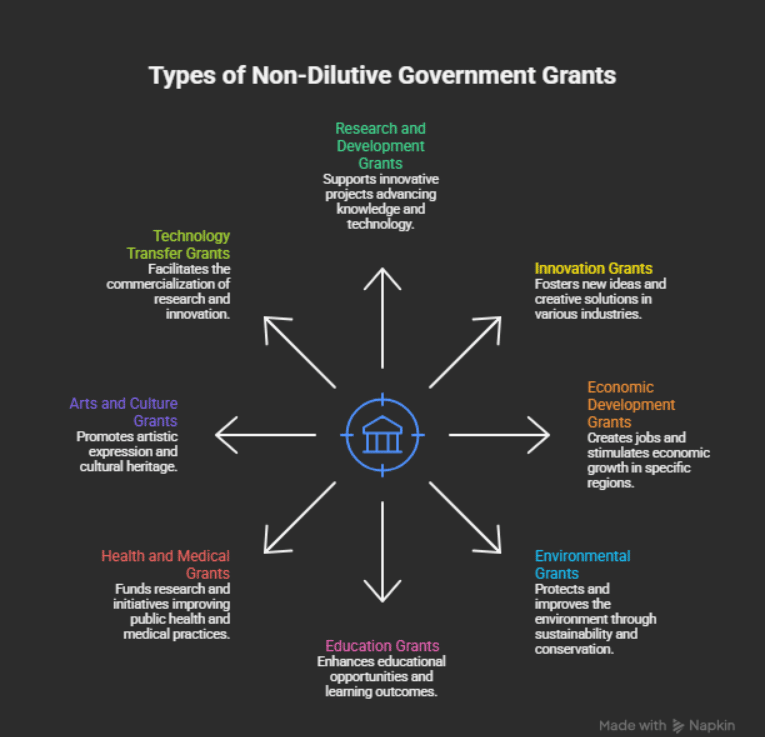
Depending on your location and the type of technology you’re developing – whether it’s AI, green tech, or advanced R&D – government grants can seem like free money.
In the US, programs like SBIR and STTR award billions to small businesses every year. In Europe and Canada, innovation grants and tax credits (like SR&ED) can cover up to 70% of your payroll costs. That’s a significant portion.
But let’s be honest: the paperwork is brutal. You might spend months preparing for your application, then wait even longer for a response.
So, think of grants as a helpful bonus, not your primary growth strategy.
How to Choose Your Path
Before you pursue any funding take a close look at your cost of capital.
Equity is costly. If you give up 10% of your business – and eventually sell for $10 million – you've essentially paid $1 million for that funding.
Revenue-based financing sits somewhere in between. Borrow $100k, and you’ll repay around $120k.
Community loans? They’re typically cheaper, and those who lend often become fans of your brand.
Bootstrapping with our own profits is always the least expensive but much slower.
The Independence Mind Shift
You don’t need a boss to grow. People often say that taking outside money means answering to the board. That’s only the case if you give up equity.
If you use debt, revenue share, or community-backed loans, your lender mainly cares about getting repaid. They don’t care about your diversity stats, whether you want to pivot, or how soon you plan to sell – unless it affects their repayment.
With non-dilutive funding, you stay in control. You manage things your way, decide your own salary, and choose when or if you want to exit.
So, stop pitching. Start crunching the numbers on debt. That’s how you scale while staying independent.
-
1
This is an important topic because founders often assume the only way to accelerate growth is through equity financing.
In reality, businesses with strong cash flow, predictable revenue, or efficient acquisition channels may have access to multiple growth funding options while preserving ownership and strategic flexibility.
-
1
Jumping in on this older post because I’m curious how folks here are funding early growth lately. I’ve been leaning on revenue-based financing and small customer prepayments, which has worked better than I expected. Has anyone tried mixing stuff like RBF with productized consulting to keep cash flowing without giving up shares?


Creating slides should be fast, clear, and stress-free. Dokie AI promises to do exactly that by acting like a real presentation helper, not just a tool. This review explains how it works.
What Is Dokie AI?
Dokie AI is an AI PPT Agent that helps you plan, write, design, and polish presentations from start to finish. Instead of only turning text into slides, it works more like an assistant who understands your goal and builds the whole deck with you.
Many tools call themselves an AI Slides Generator, but Dokie AI goes further. You can tell it what your presentation is about, who it is for, and how long it should be. It then creates a clear outline, writes slide content, designs the layout, and even helps you edit later.
This is why Dokie AI is often described as an AI presentation agent, not just an AI PPT tool.
How Dokie AI Works
Using Dokie AI is simple, even if you have never made slides before.
First, you enter a short prompt. For example, you can say you need a sales pitch, a school report, or a startup demo. You can also set the tone, like formal, friendly, or simple.
Next, Dokie AI builds an outline. This step is important because it shows the flow of your ideas before making slides. You can edit this outline or let the AI improve it.
Then, Dokie AI creates the slides. It writes short, clear text for each slide and picks a clean design. Charts, bullet points, and titles are added in the right places.
Finally, you can edit everything. You can ask the AI to rewrite a slide, shorten text, change the style, or add more detail. This back-and-forth makes Dokie AI feel like a real helper.
Why Dokie AI Is Called the AI Presentation Agent
Most AI PPT tools focus on one task, like design or text. Dokie AI focuses on the full process.
Here is what makes it different:
It understands your goal, not just your text
It plans the structure before making slides
It helps you revise slides after they are made
It keeps the story clear from start to end
This “agent” idea means Dokie AI does not just generate slides once and stop. It stays useful during the whole presentation process.
Dokie AI vs Traditional AI PPT Makers
Traditional AI PPT Maker tools usually work like this: you paste text, click generate, and get slides. If the result is not good, you start over.
Dokie AI works in steps. You can adjust the outline, the tone, and the details as you go. This saves time and gives better results.
Another big difference is clarity. Dokie AI writes in short, simple sentences. This makes slides easy to read and easy to present, which is perfect for school, work, or public talks.
Dokie AI vs Gamma APP
Many people compare Dokie AI with Gamma APP, since Gamma is also popular in the AI PPT space.
Gamma APP is strong in design and layout. It creates modern slides quickly and looks great for visual stories. However, Gamma often focuses more on design than on deep content planning.
Dokie AI focuses more on thinking and structure. It helps you decide what to say before deciding how it looks. For users who struggle with content, this is a big win.
In short:
Gamma APP is great for fast, design-first slides
Dokie AI is better for content-first, goal-driven presentations
Some users even try both, but if you want an AI that feels like a guide, Dokie AI stands out.
Design Quality and Templates
Dokie AI uses clean and modern slide designs. The templates are simple, not flashy. This helps your message stay clear.
The layouts are well balanced, with good spacing and readable fonts. Colors are calm and professional, which works well for business and school use.
While it may not have as many bold styles as some tools, Dokie AI focuses on making slides that are easy to understand and easy to present.
Editing and AI Rewriting Features
One of Dokie AI’s best features is AI editing.
You can:
Ask it to shorten a slide
Rewrite text in simpler words
Change the tone to more friendly or more serious
Add examples or remove extra details
This is very helpful when you are not sure how to say something clearly. The AI helps you improve without starting over.
Who Should Use Dokie AI?
Dokie AI is useful for many types of users.
Students can use it for class reports, group projects, and school presentations. The simple language helps make slides clear.
Teachers can use it to create lesson slides or explain topics step by step.
Startup founders can use it for pitch decks and product demos.
Marketing and sales teams can use it to create clear AI PPT decks for clients.
If you often struggle with structure or wording, Dokie AI is especially helpful.
Use Cases for Dokie AI
Dokie AI works well in many real situations.
For school, it can turn a topic into a clean AI PPT with a strong flow.
For work, it can build reports, plans, and strategy slides that look professional.
For training, it can create step-by-step slides that are easy to follow.
For personal use, it can help you prepare talks, workshops, or even event plans.
This wide range of use cases makes it more than just an AI Slides Generator
Ease of Use
Dokie AI has a clean and simple interface. You do not need design skills or tech knowledge.
Most actions are done by typing natural language, like talking to a helper. This makes it friendly for beginners.
Export and Sharing Options
Dokie AI lets you export slides so you can use them in real presentations.
You can download your AI PPT and edit it later if needed. This makes it easy to fit Dokie AI into your normal workflow.
Sharing and editing options are designed to save time, not add extra steps.
SEO and Content Consistency
Because Dokie AI focuses on clear structure, it also helps keep ideas consistent. Each slide connects to the next, which makes presentations easier to follow.
This is important for business and education, where clarity matters more than fancy effects.
Pros and Cons of Dokie AI
Pros
Acts like a real AI presentation agent
Strong content structure and flow
Simple language that is easy to read
Great editing and rewriting features
Works well for many use cases
Cons
Designs are more simple than flashy
Fewer style options than some design-heavy tools
FAQs
1. Is Dokie AI free to use?
Dokie AI usually offers a free plan or trial so users can test the AI PPT Maker. Paid plans unlock more features and exports.
2. Is Dokie AI better than Gamma APP?
It depends on your needs. Gamma APP is strong in design, while Dokie AI is better for content planning and structured AI PPT creation.
3. Can beginners use Dokie AI?
Yes. Dokie AI is made for beginners. You only need to describe your idea, and the AI Slides Generator does the rest.
4. What makes Dokie AI different from other AI PPT tools?
Dokie AI works like an agent. It helps plan, write, design, and edit presentations, not just generate slides once.
Conclusion
Dokie AI is more than an AI PPT Maker. It feels like a smart partner that helps you think, write, and present better. If you want clear, structured slides without stress, it is a strong choice.
Digital health is no longer just a buzzword — it’s a cornerstone of modern healthcare delivery. As the global healthcare ecosystem accelerates toward innovation, startups are leading the charge in reshaping how care is delivered, managed, and financed. In 2026, digital health continues its upward trajectory, driven by advanced technologies, shifting patient expectations, and a growing emphasis on personalized, value‑based care.
This article explores the top digital health startups to watch in 2026, highlights key trends and opportunities, and explains how emerging technologies like Ai Medical Billing and tailored Electronic Medical Records (EMR) systems are transforming healthcare.
Why Digital Health Matters Now
Healthcare systems worldwide face mounting pressures — rising costs, clinician burnout, fragmented care delivery, and significant unmet patient needs. Digital health startups address these challenges by providing scalable, tech‑driven solutions that improve care quality, patient experience, and operational efficiency.
In 2026, the intersection of digital technology and healthcare is stronger than ever. Startups that effectively combine innovation with clinical insight are poised to disrupt traditional care models. Whether it’s automating revenue cycles or deploying artificial intelligence in diagnostics, these companies are redefining industry standards.
Trends Shaping Digital Health in 2026
Before we dive into the standout startups of 2026, let’s explore the macro trends driving investment and adoption across the sector.
1. Artificial Intelligence and Machine Learning
AI continues to be the most powerful catalyst for healthcare transformation. From predictive analytics to natural language processing (NLP) for medical records, AI is being integrated across the healthcare value chain.
One emerging area is Ai Medical Billing, where artificial intelligence accelerates billing cycles, reduces errors, and optimizes reimbursement outcomes. Startups specializing in AI‑powered billing are quickly gaining traction among providers frustrated with manual claim workflows and revenue leakage.
2. Clinician‑Centric Tools
Digital health tools must support clinicians rather than burden them. Solutions like voice‑activated documentation, workflow automation, and intuitive dashboards are reducing burnout and improving clinician satisfaction.
EMRs — traditionally criticized for usability problems — are now being reimagined. A key focus for 2026 is identifying the Best EMR For Small Practice, providing affordable, efficient, and clinician‑friendly solutions tailored to smaller provider groups that lack enterprise resources.
3. Value‑Based and Preventive Care
Healthcare systems are shifting from fee‑for‑service models to value‑based care, where outcomes and patient satisfaction are rewarded.
Startups enabling population health management, risk stratification, and chronic disease monitoring are playing a pivotal role in this shift. Digital tools that keep patients healthier and reduce hospital readmissions will remain high priorities.
4. Interoperability and Data Portability
Interoperability — the ability for different health systems and applications to communicate seamlessly — is essential to breaking down data silos. In 2026, more startups are developing standards‑based platforms that integrate disparate data sources and deliver unified patient insights.
5. Consumer‑Driven Healthcare
Patients are demanding convenience, transparency, and personalized experiences. Digital front doors, mobile health apps, remote monitoring, and telehealth platforms are now mainstream. Startups that prioritize patient engagement and experience are gaining rapid adoption.
Digital Health Startups to Watch in 2026
Here are the most promising digital health startups that are reshaping healthcare delivery, operations, and patient outcomes. These companies are notable for their innovation, traction, and potential to scale in 2026 and beyond.
1. NovaHealth: AI‑Powered Clinical Decision Support
Focus: AI‑driven diagnostics and clinical support
NovaHealth is at the forefront of applying machine learning to clinical diagnostics. The startup’s platform analyzes patient data in real‑time and generates actionable clinical insights that support early detection and risk stratification.
In 2026, NovaHealth is expanding partnerships with health systems to integrate its solution into routine care workflows, helping clinicians identify care gaps and make data‑informed decisions.
Key Innovation:
Predictive models that identify high‑risk patients for chronic disease complications.
Integration with hospital EMRs and remote monitoring data.
Natural language processing to interpret clinical notes.
2. HealTrack: Next‑Gen Remote Patient Monitoring
Focus: Chronic disease management via connected devices
HealTrack delivers a powerful ecosystem for remote patient monitoring, enabling continuous tracking of vital signs, medication adherence, and lifestyle data. Its real‑time analytics help clinicians intervene sooner and improve long‑term health outcomes.
As healthcare shifts toward preventive care, HealTrack’s platform is an essential tool for providers managing conditions like diabetes, heart disease, and respiratory illness.
Why It Matters:
Real‑time alerts for patient deterioration.
Patient engagement via mobile app and personalized insights.
Integration with telehealth platforms.
3. FlowHealth: The Best EMR For Small Practice
Focus: Electronic Medical Record system tailored for smaller clinics
FlowHealth is rapidly being recognized as one of the Best EMR For Small Practice environments. Designed with usability and simplicity in mind, FlowHealth combines core clinical workflows with advanced features usually available only in enterprise systems.
Small practices benefit from reduced administrative overhead, optimized documentation, and improved patient communication — all at a cost structure aligned with smaller budgets.
Standout Features:
Intuitive interface built for primary care and specialty clinics.
Customizable templates and automated documentation tools.
Seamless telehealth and patient portal integration.
FlowHealth’s focus on small providers has made it particularly relevant in rural and underserved markets, which historically have had limited access to effective digital solutions.
4. MedLedger: Interoperability and Data Exchange
Focus: Secure data sharing and interoperability
MedLedger is tackling one of healthcare’s greatest challenges: seamless interoperability. Its platform uses standardized APIs and secure data exchange protocols to connect disparate systems, including EMRs, labs, pharmacies, and patient apps.
In 2026, MedLedger’s solutions are facilitating cross‑institutional care coordination and enabling clinicians to access comprehensive patient histories without data fragmentation.
Key Differentiators:
Support for national data standards (FHIR, HL7).
Role‑based access and strong security compliance.
Real‑time integration with third‑party applications.
5. CureMD AI: Revolutionizing Ai Medical Billing
Focus: Automated revenue cycle optimization
CureMD AI is a standout in the billing and payments space, driving innovation in Ai Medical Billing solutions. Traditional billing workflows are labor‑intensive, error‑prone, and slow — often leading to significant revenue leakage for providers.
CureMD uses advanced AI to automate claim coding, denial management, and payer communication. The result is faster reimbursement cycles, fewer errors, and a significant reduction in administrative workload for billing teams.
Why It’s Worth Watching:
Predictive analytics to reduce denials before submission.
Automated claim correction and resubmission workflows.
Seamless integration with practice management systems.
6. RevCare Connect: A Leader Among Medical Billing Companies
Focus: End‑to‑end medical billing and revenue cycle services
In the crowded space of revenue cycle management, RevCare Connect is emerging as a standout among Medical Billing Companies by combining technology automation with expert human support. Instead of just processing claims, RevCare provides deep insights into revenue performance, payer behavior, and financial operations.
Its hybrid model — where AI workflows are complemented by specialist oversight — has delivered measurable improvements in reimbursement rates and financial transparency for provider clients.
Highlights:
Dedicated account teams paired with intelligent automation.
Detailed reporting dashboards for revenue insights.
Continuous payer performance benchmarking.
7. TeleMentis: Personalized Telehealth and Mental Wellness
Focus: Comprehensive virtual care for mental health
TeleMentis addresses the growing demand for accessible and personalized mental health services. With rising awareness and demand for mental wellness support, TeleMentis offers virtual therapy, coaching programs, and digital cognitive behavior tools integrated into a single platform.
Its success in 2026 is rooted in a compelling combination of clinical quality, patient‑centric design, and data‑driven outcome tracking.
Innovative Elements:
Multi‑modal virtual care (video, text, and self‑guided modules).
Anonymous and secure user profiles.
Progress tracking and clinician dashboards.
8. Genomic Insights: Precision Medicine for Everyday Care
Focus: Genomic‑driven diagnostics and personalized treatment plans
Genomic Insights brings precision medicine to the mainstream by using genomic data to tailor patient care plans. While genomic solutions have typically been expensive and limited to research settings, this startup is democratizing access with cost‑efficient tools that integrate into routine clinical workflows.
Its services include risk prediction, drug response profiling, and personalized prevention strategies.
Why It’s Disruptive:
Affordable genomic analysis for primary care settings.
Actionable insights that guide therapeutic decisions.
Partnerships with labs and healthcare institutions for seamless data integration.
Key Opportunities in Digital Health for 2026
As we look ahead, the growth trajectory of digital health suggests long‑term opportunities for innovators, investors, and healthcare leaders.
1. Precision Automation Across the Revenue Cycle
Areas like Ai Medical Billing are no longer optional — they’re essential. Providers are actively seeking solutions that automate the full revenue cycle, from patient registration and coding to claims processing and denial management. Startups that help clinics maximize reimbursement while minimizing administrative costs will continue to win contracts and scale rapidly.
2. Increasing Demand for Small Practice Solutions
Small and mid‑sized practices represent a massive and underserved market. Many traditional EMRs are built for large health systems, leaving solo and small group practices with clunky or cost‑prohibitive tools. Companies focused on delivering the Best EMR For Small Practice environments — with intuitive design, cost‑effective pricing, and built‑in compliance — are positioned for rapid adoption.
3. AI‑Driven Clinical Decision Support
AI models that improve patient outcomes and reduce clinician burden are in high demand. From diagnostic augmentation to personalized treatment pathways, startups leveraging robust machine learning with clinical validation will attract strategic partnerships and payer interest.
4. Interoperable and Person‑Centered Health Records
True interoperability — where patients and providers can access complete health information regardless of where care was delivered — is becoming a priority. Platforms that facilitate standardized data exchange will be key to realizing coordinated, whole‑person care.
5. Patient‑First Digital Experiences
Healthcare consumers now expect the same seamless digital experiences found in other industries. Startups that prioritize UX design, accessibility, and convenience — whether through mobile apps, telehealth platforms, or integrated care experiences — will differentiate themselves from legacy offerings.
Challenges to Navigate
While opportunities abound, digital health startups must navigate several challenges:
Regulatory Compliance: Ensuring HIPAA, GDPR, and other data privacy standards are met can be complex and costly.
Clinical Integration: New technologies must align with existing workflows without creating additional burden.
Adoption Barriers: Resistance from providers and patients may slow uptake unless solutions clearly demonstrate value and usability.
Scalability: Success in pilot phases must translate into scalable deployment without performance degradation.
Recognizing these challenges early and building solutions that are flexible, compliant, and user‑centric will define the most successful digital health ventures in 2026.
Conclusion
The digital health landscape in 2026 is rich with innovation, driven by AI, greater interoperability, and tools that deliver measurable value to providers and patients alike. Startups such as FlowHealth, CareSync AI, HealTrack, and RevCare Connect represent a new wave of companies transforming clinical workflows, financial operations, and patient care experiences.
From redefining EMR systems for small practices to automating complex billing cycles through Ai Medical Billing, the future of healthcare is increasingly digital, personalized, and efficient.
For clinicians, healthcare leaders, and investors, the key question isn’t whether digital health is important — it’s which innovations will define the next decade of care delivery. By watching these startups and understanding emerging trends, stakeholders can make informed decisions that improve outcomes, reduce costs, and enhance the overall experience of healthcare for everyone.
Author Bio:
Nathan Bradshaw is a healthcare IT and digital health strategist with over a decade of experience in EHR, medical billing, and practice management. He helps physicians, clinics, and healthtech innovators optimize operations, revenue, and patient care through technology-driven solutions. Nathan shares insights on healthcare innovation, AI in medicine, and practice growth to educate and inspire professionals across the industry.
-
1
Great overview of the digital health space. I especially found the focus on mental health and patient-centered digital experiences interesting. Technology can make access to care easier, but building trust, protecting privacy, and keeping the patient experience simple are equally important. It will be interesting to see how these areas evolve throughout 2026.

Comment