
IbexAI
Finds high-intent leads on LinkedIn
I started outreach for my last startup doing the numbers grind (blasting volume and hoping sth comes back). Then I tried to change how I find my leads and saw improvement, eventually getting to 39.6% reply rate.
Here’s where I got (and still get) warm leads from:
- Did a bit of stalking. I got on my top competitor’s profile and checked who was liking and commenting on their posts.
- I searched for 3-4 LinkedIn creators that my ICP follows and did the same thing (see who’s engaging with their posts, either by comments or likes)
- I searched for specific phrases on LinkedIn that my ICP might use to describe pain points.
- Another good source of warm leads is LinkedIn engagement posts like “comment GRIND and I’ll DM you” or something similar to that. Then I see who engages with these posts. For the leads I get here, I start my message with “Did you get what you’re looking for?” Then, I send them what they’re searching.
This approach worked for me so well that I decided (a while back) to make this my new entrepreneurial project that is now up and running. Check it out if this sounds like something you could use as well.

Nobody's talking about this, but free pilots are neither the perfect approach nor are they useless.
We did 1 just after launching with a selected audience on LinkedIn, giving them free access for 4 weeks to our tool.
In total, we enrolled 37 people in the pilot program. However, only 8 actually used our tool (we're collecting usage metrics, so we know). And from those, only 2 converted to paying customers.
What we found is that there's basically 3 steps in the funnel:
- ICP - The person is fitting the ideal customer profile
- Interest - The person is currently interested in your product/service
- Buying Intent - The person will actually pay
In our pilot, we got mostly type 2 people. I would argue it's basically impossible to identify type 3 people without actually asking them to pay (which is the opposite of a free trial).
So, in conclusion: don't do a free trial to get customers/revenue. It's high-touch to manage pilots, and only worth it if you actually have a very high ACV (annual contract value). We’re coming from the agency space, we're used to a high ACV, but our product is actually low ACV, so we had to shift our approach
A free pilot is great if you want to get actual users moving through your signup flow, get some usage, and also some feedback (quick tip: always take the feedback with a grain of salt since it’s coming from people who aren’t paying).
From our free pilot program, we saw patterns emerge, such as the weak spots in our product, because everyone kept running into the same issues.
While the pilot program was useful for a while, we stopped it since we got our feedback, and it wasn't worth it from a monetary point of view.
Now we're working only with paid customers whose opinions we can trust more to shape our product development since they're voting with their wallets and aren't tire kickers.
-
3
That's a really good idea, only for use we are having the problem where our service costs a lot on our end (high variable cost) to keep running, so we would loose money if we gave them every feature free for an extended period of time. It's something we've been struggling with. Do you have any idea how we would go about this?
-
3
Thanks, Matt!
i'm struggling with this building firstqa.
started with a couple free pilots to see how they use the platform and the oboarding, but now trying to convert into paid.
why 4 weeks? curious if a shorter window would've surfaced the same patterns faster.
-
1
Yes, that's likely true
-
-
2
I think the biggest lesson is exactly what you said: activation matters more than signups.
The 37 people showed curiosity, but the 8 who actually used the product were validating a real problem. I'd be digging into what those 8 had in common their timing, workflow, company size, or urgency because that's probably a better definition of your ICP than the original outreach criteria.
Paid customers are definitely a stronger signal, but those activated users often reveal why people become paying customers in the first place.
-
2
the 37 > 8 > 2 funnel is the part worth studying. most founders focus on the 37 ("look, signups!") but the 8 who actually used it are the real signal. did you find any pattern in what made those 8 different from the other 29? that's usually where the ICP insight actually lives — not in who signs up, but in who activates without being hand-held.
-
2
The ICP / Interest / Buying-Intent split is a clean framework, and the honest "37 enrolled, 8 used, 2 converted" funnel is more useful than most launch-recap posts because you're showing the drop-off, not hiding it.
One sharpening on your conclusion. "Don't do a free trial to get customers, only worth it at high ACV" is half right, but the real variable isn't ACV, it's whether the free version creates buying intent or satisfies it. A free pilot fails when the free thing fully scratches the itch, because the person gets the value and leaves. It works when using the free version makes the unsolved part of the problem more visible. The question isn't "is my ACV high enough to justify the hand-holding," it's "does my free tier make people want the paid tier or replace it." If the pilot satisfies the need, no ACV saves it. If it creates the need, even low ACV converts.
Your low-ACV product probably converted poorly because the free 4 weeks gave people enough to solve their immediate problem without hitting the wall that makes them pay. Worth diagnosing which it was, because the fix differs. If free satisfies, you need a tighter free tier that stops at the cliff. If free created interest but not intent, the conversion mechanism (the ask, the timing, the friction) is the problem, not the pilot itself.
The "take feedback from non-payers with a grain of salt" point is right and most founders learn it too late. The sharpest version: free users tell you what's broken, paid users tell you what's worth building. The first is debugging, the second is roadmap. You need both but they're not interchangeable, and weighting free feedback as roadmap is how products get bloated with things tire-kickers asked for and nobody paid for.
The pivot to paid-only feedback is the right call. What's the conversion looking like now that you're not running pilots, did cutting the free path actually hurt top-of-funnel or did it just remove the tire-kickers?
-
2
Good retro! What's your thought on free pilots vs free trials?
-
1
Same thing for me
-
-
1
One angle I haven't seen mentioned yet: the 4-week calendar window might have been part of the problem, since it measures time rather than progress. A pilot structured around a specific milestone, like 'get to your first qualified lead' or 'connect your first ICP list,' tends to surface buying intent faster than a fixed calendar period, because you can see exactly who never reaches step one versus who reaches it and stalls. I've also found that switching the ask from 'try it free' to 'book a 15-minute setup call' filters out a huge chunk of tire-kickers before you ever burn support time on them, since low-effort curiosity rarely survives a scheduling step. Now that you're paid-only, has your top-of-funnel volume dropped as much as you'd expect, or did removing the free option mostly filter out noise without hurting the count of serious conversations you're having?
-
1
The ICP → Interest → Buying Intent breakdown is sharp. One thing I'd add from being in a pilot right now: the most valuable output of a free pilot often isn't conversions at all — it's the fact that "everyone kept running into the same issues." Finding where the product breaks, from real usage, is worth more at this stage than the two customers.
On the type-2 vs type-3 problem (interested vs. will-actually-pay): a cheap filter that doesn't require asking for money yet is asking them to do a small chunk of setup work — connect an account, import their data, invite a teammate. People with real intent will spend 10 minutes on setup; tire-kickers won't. It's not as reliable as a credit card, but it separates "interested" from "will act" a lot better than raw usage does.
Fully agree on salting free-user feedback, though. The people who didn't pay are describing a product they were never going to buy.
-
1
helpful information
-
1
Free pilots are gold for this reason — they strip away pricing objections and show you exactly where users actually get stuck (not where you think they'll get stuck). The feedback you get from a 10-person free beta is sharper than from 100 paid signups. How are you measuring success on the pilot? Is it activation or retention?
-
1
the free feedback grain-of-salt point is underrated. we had a similar experience — free users will tell you they love features they never actually use, and complain about things that paying customers consider non-issues. the signal quality difference between free and paid feedback is massive, especially for AI products where usage patterns vary so much between "trying it out" and "depending on it daily."
-
1
Here I am launching a free pilot of my reconstitution calculator just to read to not do a free trial haha.
-
1
The gap between signups and actual usage is brutal and most people don't talk about it. 37 enrolled, 8 used it is pretty common honestly. The ones who convert are almost always the ones who had the problem before finding you, not the ones who signed up out of curiosity. Did you notice any difference in how the 8 who used it found out about the pilot vs the 29 who didn't?
-
1
This matches my experience almost exactly. I'm at the very early stage of a bookkeeping automation service — just sent my first free pilot invite today.
Your distinction between "interested" and "buying intent" is the key insight. I made the decision to keep the pilot to one person specifically because I want workflow feedback, not conversion data. The moment I need revenue signal, I'll ask people to pay.
The point about feedback quality from non-paying users is something I'll keep in mind. Useful for spotting friction in the flow, not useful for deciding what to build next.
-
1
I've been thinking about building a vehicle rental platform, but I'm hesitant because there are already so many established apps in the market.
I'm curious to hear from people who have actually rented bikes or cars.
What do you dislike about the current apps?
Have you ever avoided renting because of a bad experience?
What feature do you wish existed but doesn't?
What would make you switch to a new rental platform instead of using the popular ones?
If you could change one thing about existing rental services, what would it be?
I'm not trying to advertise anything—I just want to understand whether there's still an unsolved problem worth building for.
I'd really appreciate your honest opinions, even if your answer is "the market is already saturated."
-
1
Good to test with a free pilot. At least you got to find what the common pain points were and the feedback to improve. Its just lessons learned to help you make a better product and test customer acquistion. Good learning experience.
-
1
The number that stands out to me isn't the 2/8 conversion; it's the 8/37 activation — ~78% enrolled and never even logged in. Free access quietly removes the one thing that drives activation: a little skin in the game. People show up for what they've committed to.
That's also the fix for your "can't spot type-3 without asking them to pay" problem — so ask, just smaller. A paid pilot (even a token fee, or a refundable deposit) instead of a free one self-selects out the tire-kickers, and the people who do pay actually use it — so you get real intent signal and higher activation, the two things a free trial kills. For low ACV especially, a few paying design partners beat 37 free seats you have to chase.
Free's still the right tool when the goal is purely usage + finding the weak spots (which you nailed) — just not for revenue or intent. Thanks for posting the real numbers.
-
1
The 8 who actually used it are your real ICP, and the conversion lesson sits underneath that. We gave away free migrations at my old company for years, and they converted not because they proved value but because once we had moved a client's infrastructure, walking away meant redoing the pain. A free pilot the user can abandon at zero switching cost rarely converts no matter the ACV, so build the pilot around something they cannot easily unwind.
-
1
That 37 -> 8 -> 2 funnel is useful, especially for AI products with real variable cost. One thing we learned building Tokens Forge is that free pilots need a usage budget and a receipt, not just a time limit: which model route ran, which API key/project used it, how much balance it burned, and whether retries/fallbacks inflated the cost. That keeps the pilot useful for learning without letting curiosity traffic look like paid intent.
-
1
This matches what I just went through. Ran a free pilot for a voice agent with a small business, and the trap is exactly what you said: a free pilot validates the product, not the demand. I got clean proof the thing works, but the calls were mostly the owner and friends testing it, not real paying intent. Two different validations and people conflate them. The free pilot answers "does it work", only money answers "does anyone actually want this".
-
1
This is a useful distinction between interest and actual buying intent.
Free access can make people say yes very easily, but it does not necessarily mean the problem is painful enough for them to pay. I also agree that usage behavior is often more valuable than verbal feedback during a pilot.
The 37 signups turning into 8 active users is especially interesting. Did you notice any clear difference between the 8 who used the product and the 29 who did not? For example, were they facing a more urgent problem, or did they already have an established outbound workflow?
I am working on a consumer subscription app, so the ACV is much lower, but I am facing a similar question: how much free access is enough to learn from users without attracting people who were never likely to pay?
-
1
That's a great question. Finding the right balance between free access and paid features often takes testing and user feedback. A limited free experience that highlights your app's value can help attract genuine users while reducing abuse from people who were never likely to subscribe. I’ve noticed a similar approach works well with apps like Capcut Apk, where users can explore core features before deciding whether they need more advanced functionality.
-
-
1
looking good
-
1
This is how it's done! Hook them up first and then keep them in the long term.
-
1
All the best
-
1
That's good feedback! I launched this week and am currently B2C to get some brand recognition and eventually leverage our mission of helping people to get B2B deals to make sure we can make revenue and continue to keep this free for users so eventually a pilot was the goal when we enter B2B. Thanks for the thoughts on this!
-
1
Money talks, and only money talks


Unless you want to be schooled to oblivion, that is. I run a SaaS company that helps people find warm leads on LinkedIn. I need to refine my website copy and make my product really shine.
Well, big mistake. The holier-than-thou Claude refused to make the copy because of “ethical grounds”. When I asked, it said that my company model “can facilitate spam or manipulation on LinkedIn.” What?? We’ve built our tool to have strict precision filters so we can give our clients leads that are already interested in their product, and Claude is here calling us spam?
Also, manipulation? Really? I asked for marketing material, I didn’t ask for it to make it grand or to oversell my tool!
On another occasion, I sent Claude my company’s performance metrics. I asked it to generate ideas on how I can better market this data and get more signups. Instead of giving that to me, it gave me a delightful paragraph of what it calls “constructive feedback”, citing how my numbers (that I collected from my customers FOR MONTHS) are “too big and specific” and that I should “tighten the ranges”.
It even asked me if the performance metrics I gave were actually real. Oh, I’m sorry, Claude, I didn’t know I needed to send you a full report containing all the numbers plus the details of my customers for you to even CONSIDER doing what I asked you to.
Claude feels so reluctant to promote products or write copy that encourages reaching out to your intended audience, all because of “what if they don't like it 🙁”. I understand the guardrails, but it’s so unrealistic for startups. Marketing for startups IS all about proactive outreach. You need to send follow-ups. You need to guide people towards your solution intentionally.
But Claude actively tries to stop you from doing this and just says, “Let the intent come to you”. Yeah, like that works for us. I was eventually able to get some content out of Claude, but it came with a paragraph of disclaimer, as if I forced it to commit a crime, and it was writing a statement saying it didn’t do it intentionally. Is it just me who encountered this with Claude?
___
PS: If you need high-intent leads interested in what you have to offer, have a look at IbexAI (www.getibex.com) and book a discovery call.
-
2
The calibration problem is real. But the fix is simpler than switching tools
Claude responds to how you frame the task. "Write marketing copy" triggers the guardrails. "Rewrite this so the first line names what the reader gains, not what the product does" does not.
Same tool. Different instruction.
-
1
Interesting perspective. AI safety is important, but false positives can be frustrating for legitimate businesses. Did you try rephrasing your prompt or using another AI model for comparison?
-
1
That's very interesting, I've never personally run into those ethical boundaries or anything like that. I agree with some other people where you can input skills or change the language preferences for a more supportive response, but I am curious to know if there was any advice it gave you in this "attack mode" that was actually helpful for you and your business, or was it all trying to invalidate it?
-
1
Honestly? There's a reason for this and it's not arbitrary.
Anthropic optimizes harder for harmlessness than the other labs. Marketing copy sits in a gray zone for them because persuasion and manipulation aren't always clearly different — and Claude has seen enough sketchy use cases in that space that it pattern-matches cautiously even when your request is completely legitimate.
The metrics thing is Claude trying to avoid helping someone make misleading claims. Which is a reasonable instinct applied at completely the wrong moment. You didn't ask it to validate your data. You asked it to market it.
The disclaimers are just hedging. It completed the task but wanted distance from it. Passive aggressive is the right word for it.
It's a calibration problem, not Claude being difficult. Once I understood that I stopped fighting it and started routing around it — Claude for strategy and structure, something else for the actual copy. Annoying? Yes. But the output got better once I stopped expecting one tool to do everything.
-
1
Interesting take. What specific problems did you run into with Claude?
-
1
The LinkedIn bait logic is a clever way to get volume. Just curious though, since those leads are essentially cold and weren't looking for you specifically, do you feel like the trust gap on the landing page is a bottleneck? Usually, scraped traffic needs a way higher trust signal to actually convert compared to organic.
-
1
I'm a grad student in mechanical engineering in China. While watching these successfully developed products, I realized something a bit disappointing: the most important thing should be to spot the needs around you and actually solve them, but my life seems to be just filled with random tasks from my professors and writing papers. I don't want to just stick to a predetermined path, and with how fast AI is developing now, it's really amazing. Can any seniors give me some advice or suggestions? I really appreciate it!
-
1
I feel you. The biggest trap in grad school is that you're trained to solve problems that professors give you, but building a product is about finding the problems that actually exist in the real world. My advice? Stop looking for a 'great idea' and start looking for things that are frustratingly slow or broken in your day-to-day. That's where the actual opportunity is.
-
-
1
This comment was deleted 2 months ago


You might have a tool that really solves your ICP’s main issue, but if you don’t know how to get it to them, then what’s the point?
I’ve experienced this myself. Made a product, shipped the features, and wrote the landing page copy. The next problem I had was outreach. How do I find my customers? I had the fun idea to use LinkedIn engagement bait posts to find them.
Here’s how I do it:
First, I look for LinkedIn posts where someone is clearly doing “comment for resource” lead gen. These posts are everywhere in marketing, SaaS, and sales circles. For example:
- “Comment FRAMEWORK and I’ll DM you my outbound system”
- “Drop GUIDE and I’ll send you my checklist”
- “Comment SCRIPT if you want my cold DM templates”
- “Comment AUDIT and I’ll send you my teardown”
I pick one, then I pull everyone who engaged on that post. I qualify them quickly based on profile fit, such as role, industry, and whether they match my ICP. All of this can be done manually (a bit cumbersome) or using our tool (you can find it here: www.getibex.com).
Then I message them: “Hey, did you ever end up getting that resource you commented for?” Most of them say no. I then send it over and show them how I can help further. It works because they already showed intent. I’m just responding to it.
-
2
Android developers:
What's the most frustrating bug you've discovered right before launching an app?
Mine was a crash that only happened on one specific Android version.
Curious to hear yours.
-
2
In the land of the blind, the one-eyed man is king, it's that simple. Congratulations on the tip and good luck!
-
1
Framework
-
1
The "did you ever get that resource" opener is the whole trick.
It is not cold. It is a follow-up to something they already asked for from someone else.
The intent signal was already there. You just showed up to deliver on it.
-
1
Nice trick! love the hustle.
I do the same but with a tiny twist: find those “comment for resource” posts, scrape the commenters, then DM: “Hey! did you get the resource you asked for? If not, I’ve got it here + a 2-minute idea on how you could actually use it.”
Why it works:
They already raised their hand. Intent is half the sales cycle.
Low friction first touch. You’re delivering value before asking.
It opens real convos, not just robotic cold outreach.
Pro tip: personalize one line from their profile or comment. It’s the difference between “spam” and “helpful human.”
-
1
The timing angle is what makes this work. Same ICP, completely different conversion when you catch them mid-thought instead of cold.
How much does the delay between engagement and outreach matter in your experience? Same day vs 2-3 days?
-
1
The earlier the better
-
-
1
Engagement bait loops are really killing social platforms. I really am feeling a fatigue from them. That being said, i do think it's kind of ingenious you've found an opportunity to circumvent AI slop with real value and get a wedge in!
-
1
The intent signal is real. Someone who commented "FRAMEWORK" on a lead-gen post self-identified as interested in outbound. Reaching out to them is smarter than cold-targeting by job title alone.
The part worth being honest about: "Hey, did you ever get that resource?" is a pretexting opener. You're not actually checking on them. You're using their comment as a foot-in-the-door for your own pitch. It works in the short term, but the people who catch the pattern (and LinkedIn power users do) flag it as manipulative, which burns the channel for everyone using it.
The deeper tension: this tactic scales until it doesn't. Once enough people run the same play on the same engagement-bait posts, the commenters start getting 5-10 "did you get that resource?" DMs per post. At that point it stops converting and starts annoying. You're early enough that it still works, but it's a timing arbitrage, not a durable channel.
What would make it more durable: actually deliver the resource first with zero pitch, build the relationship, then surface your tool later. Slower, but the conversion quality is different.
-
1
Great project! How did you handle
user authentication at scale?
-
1
Great project! How did you handle
user authentication at scale?
-
1
This is a genius play. It's essentially an OSINT-style arbitrage of someone else's marketing funnel. You aren't pitching cold; you're solving the friction of the original poster's poor delivery while catching prospects at peak intent.


Everyone’s been talking about how investors are putting less money into SaaS. In my opinion, this just proves that my move to pivot from the unicorn dream to microSaaS was right. I’m not saying this route is easier than the venture-backed SaaS route. I spent a ton of money investing in my product. So many hours coding and figuring out what my ICP is really looking for. Not to mention the nights where my self-doubt almost won. Looking at it now, I’m glad I pulled through.
The microSaaS company I gave my sweat, tears, and almost entire bank account to now gives me close to 5 digits in MRR. No investors to please, no big team to manage. Most days, I’m just managing ads and sending cold emails. My customers give me feedback. I can scale whenever I want. True freedom.
For the people who are in the situation I was in before my microSaaS got its first wings, if you truly believe your product is worth it, keep grinding. The sun will eventually rise for you.
-
2
intresting
-
2
SaaS founders using Paddle, Lemon Squeezy, or FastSpring: if there were a Merchant of Record with completely white-label checkout, invoices, emails, and card statements (no third-party branding anywhere), would that be valuable enough for you to switch? Why or why not?
-
1
Spot on, Matt. The freedom to scale on your own terms is the ultimate ROI. I’m currently building Nexacore Inventory with a MicroSaaS mindset—focusing on specific batch management problems that the big players ignore. No investors to please means I can actually listen to my users instead of a board. Thanks for the reminder to keep grinding when the bank account gets low.
-
1
I have bootstrapped to an exit and I write venture checks, and the honest answer is the two aren't rivals, they are different problem sizes. MicroSaaS wins when your market is a niche and you want margin and freedom, venture only makes sense when the problem is genuinely huge and winner-take-all, and most ideas simply aren't. The mistake isn't picking microSaaS, it's strapping a venture cost structure onto a niche business and then wondering why the math never works.
-
1
tried this for my PM tool - I’d search for posts asking if anyone needed better sprint planning and jump in before the pitch. got 3 real conversations from it. the engagement bait pool is weirdly underused for discovery vs just collecting likes.
-
1
tried this for my PM tool - I’d search for posts asking if anyone needed better sprint planning and jump in before the pitch. got 3 real conversations from it. the engagement bait pool is weirdly underused for discovery vs just collecting likes.
-
1
Great project! How did you handle
user authentication at scale?
-
1
Great project! How did you handle
user authentication at scale?
-
1
This is such a grounded post — really inspiring. The “survive six months first” mindset you mentioned earlier really clicked when I read how you stuck it out through the nights of self-doubt and coding marathons.
I’m glad you pulled through too. No investors, no big team, just managing ads and cold emails while your customers give you feedback… sounds like the kind of freedom most of us dream about.
One thing I’d be curious about: what was the biggest piece of advice or warning you wish you had known when you were in that pre-pivot, almost-bankrupt stage?
-
1
This is a great reminder that success doesn't always have to follow the traditional venture-backed path. Building a sustainable business with real customers and steady growth is an achievement worth celebrating. Thanks for sharing your journey!


I run a small SaaS that monitors LinkedIn engagement signals so founders can catch prospects right when they're thinking about the problem their product solves. Small tool, fixes a genuine problem, and brought in revenue from the start. I'm now in that stage where marketing my product becomes (even) more important than building.
Like everyone else, I use AI every day, for a lot of different tasks. So I thought maybe I could just generate content as well, to save time. Give it sources, send samples that I like, and use a prompt good enough to make me a long-form blog that will actually offer my clients some useful insights.
First draft looked fine at first, till I actually read it. Way too much fluff. Sentences with basically the same meaning. Sometimes full-on hallucinations. Tried editing my prompt, giving it more sources, and spent a few more tokens. It improved, but I’m not too sure my target clients would actually take the time to read it. Even worse, they might think I’m just one of those AI slop posters.
That’s why I fully gave up on that and decided to go the contrarian route: I hired a writer to help me instead. Now I understand what they mean when they say that some people are built for certain things. She works alongside me (I share ideas, we discuss, she then comes up with a first draft that I edit). E.g., we wrote a blog post together that is actually fun to read and even gave me insights that I didn’t know, based on her own experience. Got surprised when she said she also used AI, just not the way I was doing it. She used it as a tool to draft, then did the heavy-lifting and added the human touch herself.
Anyway, if you have the bucks to spend, hire a writer and save yourself the headache of trying to make AI slop work.
-
1
The part that jumps out is "she gave me insights I didn't know, based on her own experience." That's the actual product, not the prose. AI slop reads as slop because it's averaging the internet with zero first-hand experience, so it can only sound like everyone else.
Which means the fix isn't really "hire a writer," it's "get lived experience and a specific opinion into the piece." A good writer does that by interviewing you and pulling out the stuff only you know; the wordsmithing is the easy 20%. If the budget isn't there yet, the bootstrapper version is to record yourself talking through the topic and let AI just transcribe and structure it. The raw material is your experience, you edit for voice, and it stops sounding generated because at the part that matters, it isn't.
-
1
The tell is buried in your own post: your writer "also used AI, just not the way I was doing it." That's the whole thing right there.
AI is weak at the last mile — taste, judgment, deciding what's actually worth saying — and decent at the mechanical middle: drafting raw material, structuring, catching repetition, first passes. Asking a model to hand you a finished, publishable blog post is asking it to do the one part it's worst at, so you get exactly what you got: fluent fluff and the occasional hallucination.
The workflow that works is closer to what your writer does — AI drafts and does the grunt work, a human owns the judgment and the final voice. So I'd reframe it: it's not "AI isn't good enough for content," it's "AI isn't an editor." Same reason autocomplete never replaced writers. Hiring someone who treats it as a tool rather than a ghostwriter was probably the actual fix, more than dropping AI.
-
1
Yes, AI response still requires review and editing
-
1
Yes, that’s correct. The final creative output generated by artificial intelligence still requires human review and editing. It can only help me come up with an idea.
-
1
I think you're bang on with this, I have also fallen into this trap, I now use the motto that AI is the average of the internet, so if you're not very good at something the AI version will look amazing, if you happen to be better than average at something, it will not impress you.
As others have already commented the key I think with AI is to get the basics and then enhance the human layer. -
1
Great project! How did you handle
user authentication at scale?
-
1
The instinct you followed is right and I think it applies beyond content. AI output quality is directly proportional to the structure you put in before it. The founders who get bad content from AI are mostly the ones who gave it a vague brief and hoped the model would fill in the gaps with judgment. The ones who say "this tool does X for Y person in Z situation, here are three examples of the tone and format I want, here is what it must not say" get output worth editing. The structure has to come from a human who understands the product, the audience, and the standard. The model doesn't have that unless you give it. Your writer is doing something interesting when she uses AI as a draft tool and adds the human layer on top. That's probably the sustainable workflow for anyone who cares about quality. Wholesale generation without structure and oversight produces slop. Structured generation with human judgment in the loop produces something actually useful. The broader question for anyone building AI into their product is whether the AI has been given the constraints and context that define what good looks like, or whether it's just guessing in a very fast and confident way.
-
1
You pointed a very important thing to me. Great.
-
1
Yes U are absolutely right!
-
1
My hope is that all platforms will identify AI written content and at least note that. I would expect this will naturally get less engagement and encourage human writing.
-
1
hiring a writer makes sense if you’ve already validated distribution.
before that, I’d still try tightening prompts + adding real user pain points before switching tools entirely.
-
1
5-digit MRR is the headline but buried in here is 'figuring out what my ICP is really looking for' - that's the actual work. the grind is that part, not the nights.
-
1
Solid take. The part that stuck: even your writer uses AI — just as a drafting tool, not the author. That's the real line.
The tricky version is when you can't afford a writer yet (solo, bootstrapped). Then you have to be the human layer on top of the AI draft — which is harder than it sounds, because it's tempting to ship the draft as-is when you're busy building. What's saved me is only writing about things I've actually lived: real numbers, real failures. AI can structure that, but it can't have done it. The lived part is the moat.
-
1
Awesome insight and experience!!
Yes AI is a good tool right now, and like you said has a place within your tool box. This is great to see and im hopeful that the future brings AI into a more useable role.
Thank you
-
1
This resonate a lot, i hit the exact same thing but on the code side instead of content.
i use AI every day and it is great at the thinking part, architecture, logic, refactor. but for the last-mile work (for me it is UI tuning) it is bad in the same way your first drafts were. i ask for a small padding change and it rewrite 200 lines, add fluff, and still not right. same as your "too much fluff, sentences with same meaning". the loop is wrong.
and your writer figured out the real answer i think: AI to draft, human for the heavy lifting and the touch. it is not AI vs human, it is AI does the bulk and you do the part it is bad at. the people who win are the ones who find that line fast, for content, code, whatever.
funny enough this is literally what i am building now, a tool for the UI half of exactly this problem (AI writes logic, i tune the UI by hand on a canvas). so reading your post felt very familiar haha.
great hire btw, "some people are built for certain things" is so true.
-
1
AI gives you exhaustive, "correct" analysis that covers everything. But people don't want correct — they want a clear, specific answer someone will stand behind. The value isn't the analysis (AI does that fine); it's a human cutting the noise and being accountable for the call.
-
1
I had a very similar experience with AI-generated content.
At first it looks fine, but once you read it properly, it usually lacks depth, feels repetitive, and sometimes even introduces incorrect or made-up information. Even with better prompts and sources, it’s hard to make it feel genuinely useful for a specific audience.
What worked better for me was using a hybrid approach — AI only for rough drafting or ideation, and then relying on human editing to add structure, clarity, and real insight. That “human layer” makes a huge difference in readability and trust.
I think the bigger issue isn’t just content generation, it’s maintaining quality and authenticity when you’re trying to scale content production.
Curious how others are solving this balance between speed and quality.
-
1
Listen, you have a very cool demo video on your website, how did you make it? is this a macbook?
-
1
This is actually a pretty honest take, and a lot of people quietly end up at the same conclusion.
The issue you ran into isn’t that AI can’t write — it’s that “first-draft AI writing” tends to collapse into generic patterns unless someone with strong editorial judgment reshapes it. More sources and better prompts only marginally improve that, because the core limitation is still taste, specificity, and lived experience.
What your writer is doing differently isn’t just “writing instead of AI” — it’s acting as the filtering layer between raw output and something a real audience would trust. AI can speed up ideation and structure, but it still struggles with deciding what to cut, what to emphasize, and what actually feels credible.
That’s also why your hybrid workflow works better: AI for speed and scaffolding, human for narrative control and signal.
So the real takeaway isn’t “don’t use AI for content,” but rather that AI alone rarely produces publish-ready voice content in competitive spaces — it works best as an assistant to someone who already understands what good looks like.


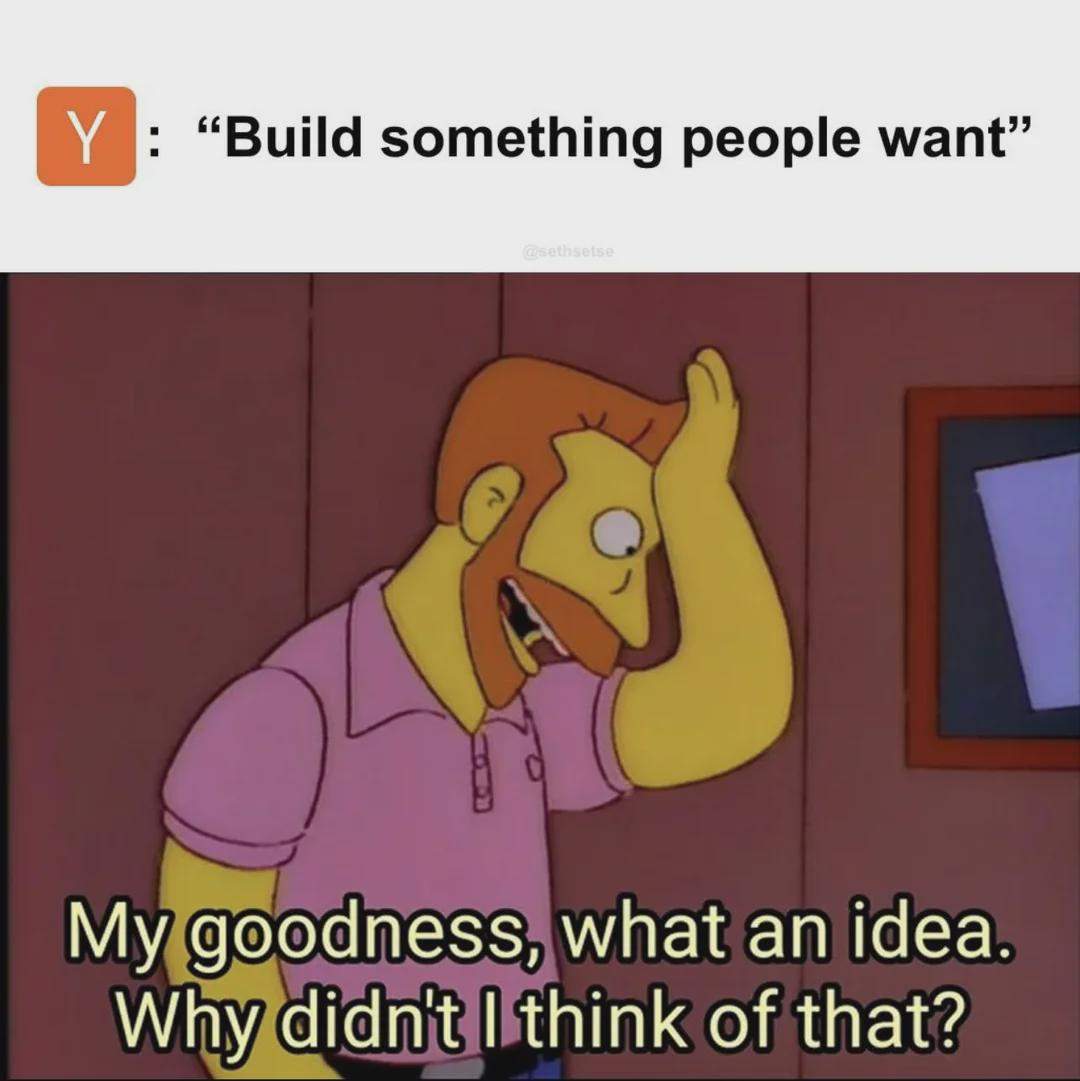
I run a SaaS company that monitors LinkedIn engagement signals so founders can catch prospects right when they're thinking about the problem their product solves. Small tool, fixes a genuine problem.
However, in hindsight this looks so obvious. It definitely wasn't when I started ideating and came up with the idea.
And that's the thing about YC advice. "Build something people want" is obvious once you've found it. Same with "talk to your users," "do things that don't scale," "charge from day one." Every single one of those sounds genius after you've lived it and reads like a fortune cookie before.
No amount of re-reading Paul Graham essays closes that gap. You just have to get there.
-
1
Great project! How did you handle
user authentication at scale?
I’m not exaggerating when I say I’m obsessed about cold outreach. Before moving into SaaS, I ran a LinkedIn agency doing nothing but cold outreach for paying clients (mostly for SaaS companies, consultants, solopreneurs). To boost our clients' reply rate one of my co-founders at some point had the idea of targeting specifically people who showed relevant activity on LinkedIn. Activity meaning liking, posting, or commenting. And relevant meaning engagement on content related to the industry/niche/product of our client. The hypothesis was that someone who just engaged with a relevant topic is much more likely of being interested in a product related to that topic than a "rando" just fitting the ICP based on their job title. After a few tests targeting those people who've shown engagement, we immediately knew we were onto something here. In all our tests our metrics (acceptance rates, reply rates, meetings booked) multiplied by 3x, 4x, sometimes even 8x.
Obviously we got a motivation kick and kept going. We refined the idea further and built a tool that automatically and daily finds people who recently:
Liked or commented posts of certain companies (think someone who liked a post of a competitor of yours)
Liked or commented posts of certain people (think someone commenting on a post of an influencer in your niche talking about problems of your ICP)
Liked or commented posts about certain keywords (think posts about problems your product solves)
We now use our own tool to grow our company (e.g., 33% of last week's signups came from this very outreach method). Dogfooding at its best.
Check out IbexAI if you want to make cold outreach working for you as well. And let me know your feedback!
Cheers!
-
1
Great insight — I've been building in this space too
-
1
This matches what I saw running outbound in the Microsoft partner world for years. Lists that fit an ICP on paper converted like cold stone. The deals came from trigger events: someone posting about a migration, a new hire, a budget cycle. Engagement is that same trigger signal applied to LinkedIn, which is why your numbers jumped. One thing I'd push on: not all engagement is equal. A passive like is a weak signal. Someone commenting to describe the actual pain is a strong one, and someone arguing under a competitor's post is the strongest. If you rank-order by engagement type and lead with the hottest, your reply rate probably climbs again. The intent is already in the words people use, not just the click.
-
1
The engagement-based targeting insight is underrated. Most cold outreach fails because it's targeting job titles instead of intent signals. Someone who just liked a post about automation pain points is infinitely more likely to buy an automation tool than someone who just fits a demographic profile. The 3-8x reply rate improvement makes complete sense when you think about it that way. This is essentially finding people who are already in the buying mindset.
-
1
Acquisition posts in B2B AI usually fall into two camps — either "we did outbound and it worked" or "we did content and it worked." Yours feels more layered than that.
If you had to attribute your first 10 paying customers to one channel each, what would the split actually look like? And which channel surprised you the most — either by working better than expected or by being the one that quietly compounded?
Asking because I think the "one channel until $1M ARR" advice undersells how messy the early mix actually is.
-
1
This is actually crazy because I never thought about using engagement as a buying signal like that. It makes so much sense though. Someone who just liked a post about a problem they have is literally telling you they're thinking about it right now.
I just launched something for SaaS founders and distribution is the exact wall everyone hits. Gonna look into IbexAI for sure. How long does it usually take to see results when you first start?
-
1
With outbound pretty quickly actually. You'll get a feeling early on if it's working or not (people reply, are interested, even if not converting immediately)
-
-
1
Beyond the metrics, what makes this work is that engaging is a person in a real moment, not a row in a list. Outreach then feels like being noticed, not processed. That felt difference is probably most of the lift.
-
1
Great job, I'm definitely going to check ibexAI
-
1
Solid results. The 3-8x lift tracks with what I’ve seen when teams move from static ICP filters to live intent signals. Curious what your sweet spot is for engagement recency though? Someone who liked a post this morning vs. 3 weeks ago feels like a very different conversation. Would love to see you write more on how you’ve refined that timing piece.
-
1
This makes a lot of sense.
I’m currently building a very early consumer product, and one thing I’m learning is that broad outreach is almost useless when the product needs a specific mindset.
Finding people who recently engaged with the exact problem you’re solving feels much smarter than targeting people only by title or demographics.
For some products, the best signal is not who someone is on paper, but what they just cared enough to react to.
-
1
The intent-over-ICP insight is the right one, and your own numbers prove it. The risk I would watch: the leads are only half the value, the other half is the message, and that half is you. You ran an agency and sent 180k DMs, so when you contact a high-intent lead your opener lands. A first-time user pointed at the same lead with a clumsy message gets silence and blames the tool. You already have the fix sitting on your profile, the 50 DM swipe file. Bake those openers into onboarding so a new user's first message is as good as yours on day one. Otherwise activation lags targeting, and people churn convinced the signal does not work when really their copy does not.
-
1
Congratulations! AI makes our lives so much easier. It's fantastic to be able to automatically engage more people, thus increasing the likelihood of them becoming our customers. In the future, do you plan to expand the use of IbexAI to other platforms? Or will it only be for use on LinkedIn?
-
1
What's your take? Should we cover other platforms as well?
-
-
1
Intent is the right wedge, but 'engaged with topic' covers everything from a buyer to a curious lurker. The signal I'd lean on hardest is comments that ASK something concrete (pricing, integration, switching from X) - those people are already in the decision, not still researching the category. Likes and shares are 10x noisier. Curious how the agent weights different engagement types - is a question-comment worth more than 10 likes in your scoring?
-
1
This makes a lot of sense. Targeting based on active intent completely changes the dynamics of cold outreach because you're catching people while they're actually thinking about the problem. Standard ICP scraping usually results in hitting ghost accounts or people who just aren't in buying mode.
One question on the execution: when you target people who engage with a competitor's post, what's your actual hook? Are you calling out the competitor directly, or just leaning heavily into the specific problem discussed in that post?
-
1
when I was testing distribution for my sprint planner, LinkedIn engagement signals looked solid but converted poorly. most people liking PM content are in research mode - that jump to paying customer is way longer than the signals suggest.
-
1
Will check it out for sure.
-
1
Crazy genius.
-
1
A $10K MRR solo business with high margins offers a level of freedom that a venture-backed company can never match. Not having a board of investors to answer to means you can actually build for the customer instead of building for the next pitch deck
-
1
One thing that helped a lot for Mentiohunt, which I'm building, was treating fresh intent like a perishable asset. If someone commented on a pain point 2 hours ago, we'd reach out that same day with a super specific opener tied to that exact post, and the reply quality was way better than when we waited and sent a more generic pitch.
We also got pickier about what counts as a signal. A random like was usually weak, but a comment with actual context or someone engaging with competitor/problem-aware content was much stronger, so filtering harder gave us fewer leads but more real conversations.
-
1
This is genuinely useful. Thanks for breaking it down.
For my situation (selling a SaaS boilerplate), targeting people who just engaged with 'Paddle' or 'Stripe vs Paddle' content is a great filter.They're already in pain, just not asking for a solution yet.
Two questions if you don't mind:
What's your reply rate on LinkedIn vs email?I've always thought LinkedIn DMs have lower open rates, but your numbers suggest otherwise.
Does this work for founders outside the US/EU? I'm in Nigeria, and LinkedIn outreach here feels different — less trust, more spam. Curious if you've seen regional differences.
For anyone reading: The insight here isn't the tool. It's the targeting signal — recent engagement on relevant content — that's the real gem.
Thanks again.
-
1
LinkedIn outperforms email by a crazy margin (something like 20x more replies on LinkedIn).
Yes, we've seen it work outside EU/US (e.g., Middle East, Australia, Japan) but have no customers in Nigeria so far.
-
1
The engagement-signal wedge is real — targeting people who recently liked or commented on relevant content does measurably outperform blind ICP targeting. 3-8x improvement claim is plausible because demonstrated intent signal works similarly to Meta retargeting.
Two things worth flagging though.
LinkedIn TOS issue. LinkedIn prohibits automated scraping of engagement data and automated outreach based on behavioral signals. Users running IbexAI on their main LinkedIn accounts risk restrictions (limited reach), suspension, or permanent ban. Enforcement tightened in 2024-2026. Similar risk profile to Bazzly on Reddit — works until LinkedIn flags the account, then years of network capital evaporate.
Competitor density also worth knowing. Trigify, Surfe, Aware, Heyreach, Expandi, Dripify all target overlapping wedges with engagement detection or LinkedIn automation. Sales Navigator advanced filters surface similar signals natively. The wedge isn't proprietary — execution quality and risk tolerance is where competition sits.
The "33% of signups from own tool" data point is more credible than typical vanity claims because it's bounded and verifiable. But selection bias — founder with established LinkedIn network using tool is different baseline than new user with no credibility. Worth showing conversion data for accounts without founder-level audience too.
-
1
We're not connecting to your LinkedIn account. So there is no account issue.
We send you the leads. You then decide how you do the outreach.-
1
Worth clarifying the TOS risk picture — "we don't connect to your account" reduces some risk but doesn't eliminate it.
LinkedIn TOS prohibits automated scraping regardless of who's doing it. Risk shifts from user accounts to IbexAI as a company. LinkedIn has pursued legal action against scrapers (HiQ Labs case, others). If LinkedIn enforces against your infrastructure, customers lose their data source overnight.
Downstream outreach still carries account risk. Users sending manual outreach to scraped engagement-signal leads still trigger LinkedIn's pattern detection. Accounts get restricted even when scraping happened elsewhere.
This model is genuinely lower risk than tools that login to user accounts directly (Apify scrapers, Bardeen, fully-automated senders). Worth acknowledging — partial improvement, not elimination.
The original points on competitor density (Trigify, Surfe, Aware, Heyreach) and selection bias on dogfooding metrics (founder network ≠ new user baseline) still worth thinking through. Those affect positioning more than TOS does.
-
-


I run IbexAI, a SaaS company that I built by myself, bootstrapped, zero investors. It monitors LinkedIn engagement signals so founders can catch prospects right when they're thinking about the problem their product solves. Small tool, fixes a genuine problem, and brought in revenue from the start.
And the longer I do this, the more convinced I am that micro SaaS beats venture-backed startups. I've read way too many versions of the same arc: "raised $700K pre-seed, burned through it, now stressed trying to raise the next round." Meanwhile I just patch bugs, ship little features, talk to customers, and grow whenever I feel like it.
Micro SaaS can take you to $5K to $20K MRR with fat margins, zero pressure, and full ownership of your schedule. No team of 20, no slide deck to justify every move. Just something useful, a handful of paying customers, and a feedback loop that genuinely works.
If you're stuck deciding between the venture-backed route and micro SaaS, glad to share more of what's worked for me.
-
2
this is sick and i can't wait to try your product.
-
1
I sit on both sides of this. I write $500K checks at my fund, and I also bootstrapped my current SaaS to profitability with zero outside money. The mistake isn't raising, it's mismatching the funding model to the business. Most micro SaaS problems don't need $2M because there's no land grab and no network effect to win. But if your market punishes slowness, bootstrapping is how you watch a funded competitor take it. The honest filter: would more money change the outcome, or just the burn? For my SaaS the answer was no, so I kept 100%.
-
1
i'd push back slightly on the framing of micro SaaS beating venture-backed as a universal claim. what you're describing is micro SaaS beating a bad venture-backed experience. the right comparison is micro SaaS versus a well-run venture-backed company that found product-market fit. those outcomes look very different and the choice of path should probably depend on the size of the problem you're solving not on which funding model has fewer horror stories. what made you decide the problem you're solving fit the micro SaaS model specifically
-
1
It's so right people often think more the valuation more successful they are but ironically opposite is true.
-
1
I'm new to IH. Your post is one of the first I'm reading. So, take it with a grain of salt, as this is also my first reply / comment. I have 20 years in IT and recently started up my own MSP. First client out the gate 11k MRR + Project Work. Also building a potential SaaS product. I've read some of your other posts and am looking to network with like-minded individuals. Curious if I should push the SaaS route more or just sell it as a one-time purchase for a Pro Tier. Anyways. Have a good one. ttyl
-
1
In general I would go after a subscription product over a one-time thing
-
-
1
$10K MRR solo with no board is the most underrated outcome in tech. No dilution, no growth-at-all-costs treadmill, no investor updates eating your Sundays — just a profitable machine you fully own. I went bootstrapped on purpose for exactly this. The stress delta between 'my $10K' and 'someone else's $2M' is enormous: the seed round buys speed you often don't need and pressure you definitely don't want. Respect for naming it — and the LinkedIn intent-signal angle is a sharp wedge.
-
1
I want to try this
-
1
Great insights. We work hard for months building something we truly know works and chase investors, facing a lot of No and taking a hit on confidence. Get paying customers, invest back in to venture and continue to grow, small may be compared to million dollar values startups but peaceful, no stress.
-
1
yeah I've built similar monitoring layers - automated signals on top of manual work. Tricky part: once signal volume gets high enough, you're just reacting to the flag and not reading why. That's when you've handed off judgment without a review loop.
-
1
In my honest opinion the thing that doesn't get said enough is that venture funding doesn't just change your finances, it changes who you're building for. You stop optimising for customers and start optimising for the next raise. Micro SaaS keeps that relationship clean.
What doest the ceiling looks like to you though? Is there a point where the problem you're solving gets big enough that staying small becomes its own kind of constraint? -
1
I sit on both sides of this. I bootstrapped a profitable SaaS and I also write checks through my fund, so I get to watch both movies play out. The part I would push on is the framing. The choice is not micro SaaS versus the stressed venture founder. It is whether your market has a ceiling that justifies outside capital. Most markets do not, and for those, raising is how you turn a great $15K MRR business into a mediocre venture case and a miserable founder. But some markets are winner-take-category, and there, moving slow because you are self-funded is how you lose to someone who raised and outran you. The real mistake is picking the model based on which arc sounds better on Twitter instead of on what your specific market actually rewards. You clearly picked right for IbexAI. The fat margins and full ownership are real, and on a business like yours I would not trade them for a board seat either.
-
1
Hi! I'm developing a tool that automatically generates GA4 analytics reports for agencies and freelancers.
I'm looking for two or three people willing to test it for free—I'll create two reports based on your data in exchange for honest feedback.
If you manage clients and create analytics reports for them, please message me privately and we can discuss the matter. -
1
This really resonates. I'm solo-building BulletWork right now — zero investors, zero employees, just a simple tool that turns messy notes into weekly reports. It's liberating not having to explain every move to a board. Thanks for sharing this — it's proof the micro SaaS path works.
-
1
In the vibe coding era, and the available tools online now, building a Saas product or a social platform, has become quite easy and simple. No need to pay huge amount of money in development, gain more time, and can iterate quickly. Once you identify a problem or gap, brainstorm it, then create. Vibe coding and ai, is changing the startup landscape massively, shortly i think, it's investors and VCs who will run after founders asking to fund businesses for less equity than it used to be. You are the perfect example, we can do it, with no venture back capital. Thanks for sharing your story.
-
1
I had this conversation at a networking event last Friday. I like building, I’m not sure there’s always an upside to taking funding, even with the resources they have access to.
-
1
This resonates hard. The thing nobody talks about enough is how much cleaner your decision-making gets when you're not accountable to investors. Every feature, every pricing call, every hire — you just do what makes sense for the business. No slide deck required.
I'm in a similar spot — bootstrapped, building in public, figuring it out as I go. Most recently shipped Zirano Finance (zirano.finance), an AI-powered CFO tool for founders exactly like us — people running lean, who need real financial clarity without paying for a full-time accountant or wrestling with QuickBooks. It's the kind of tool I wished existed when I was staring at a spreadsheet trying to figure out my runway.
Would love to hear more about what's worked for you on the growth side — specifically how you think about when to add pricing tiers vs staying simple.
-
1
Absolutely... this is the mindset that helps people like us to just focus on solving the problem statement
-
1
Even less than 10k is enough in most places. 2k can be comfortable and allow you to focus on building what you love instead of following some VC’s dreams and getting them a second porshe
-
1
100% agree, and this is especially true - you can raise a LOT more funds AFTER your SaaS (micro or larger) is profitable once the proof of profitability and demand is established, and it's 10x easier to command and direct...when you know you no longer need them, but may choose to partner with them, on your terms, how fast or big you wanna go. Or not.
-
1
Really needed to read this. I'm on my first side project, bootstrapped and solo too, and the "grow whenever I feel like it" part is exactly why I didn't chase funding.
The one thing I'm noticing as a beginner is that the pressure doesn't actually disappear, it just moves. No investors breathing down your neck, but also no buffer and no team, so a slow month or a bit of churn lands straight on you instead of getting absorbed somewhere.
Which still sounds better to me than the raise and burn arc, just a different shape of stress rather than none.
-
1
I genuinely struggle with getting proper traction for beta tests ! Wondering if it's bc I am suck at marketing or my niche is what I was thinking it is


For the longest time my outreach was a numbers grind. Connect with 500 people a month, get maybe 15 replies, close nothing.
Then I changed who I was reaching out to. Same volume, same message, but: 500 connects led to ~198 replies, of which I closed 12.
The entire shift came down to targeting people who are already thinking about the problem I solve, instead of spraying my ICP at random.
What that looks like in practice: I only reach out to people showing behavioral signals right now. They're engaging with competitors, commenting on relevant posts in my space, or publicly talking about the exact pain point I address. Those people convert at a completely different rate because the timing is right.
Three ways to find them without spending a cent:
Pull the likes and comments on your top competitor's last 10 posts. Instant warm list.
Identify the 3 or 4 LinkedIn voices in your niche your buyers actually follow, then watch who engages with them each week.
Search LinkedIn for the specific phrases your customers use to describe their problem, and message the people writing those posts and engaging on those posts.
You can start doing all of this manually today. No tools required.
Honestly, an hour spent building a signal-based list will outperform an hour spent tweaking your opener for the hundredth time.
This whole approach is basically what I ended up building a SaaS around, but the manual version works just as well when you're starting out. Happy to answer questions either way.
-
1
Thanks, I am looking to start generating leads on linkedin
-
1
Cool! Wishing you good luck and let me know if I can be of any help.
-
-
1
This is great. I am building b2c saas Incident management platform. I realised that on LinkedIn I needed proper audience . So I started to invite only incident managers. But I did not think of finding competitors and ppl that already follow some simulation in IM niche and try to convert them. Although converting is ahead of me as I only launch in 2m
-
1
Open rates above 60 percent on cold email by leading with a company-specific data point in the subject line. The opens come because the subject names a number nobody else has, the replies come because the body is two paragraphs and ends in a binary question rather than a CTA. What is the average subject length on your 39.6 percent replies? That is the variable I am still tuning.
-
1
Behavioral targeting is the real unlock. The next layer most people miss: your first line has to reference the SPECIFIC signal you saw, not a generic "I noticed you work at X." If someone just commented on a competitor's post saying "we've been looking at tools like this," the opener writes itself. I do a version of this on LinkedIn for SocialPost.ai and the reply rate easily triples when the message proves I actually read what they wrote.
Curious what the closed-won rate looks like by month three on those 198 replies. Wondering how much of the 12 closes are pure intent vs. sales cycle still grinding.
-
1
One thing I’m really curious about:
At what point does this stop being manageable manually?
Because once the signal volume grows, it feels like founders eventually hit a wall where collecting conversations is easy, but actually organizing, learning from, and turning them into decisions becomes the hard part.
-
1
Smart!
How would you approach it if the problem you solve is not visible at plain sight? For example, your MRR is leaking via failed stripe payments.
What would your strategy be here, given that most of your potential clients don't know they have a problem and you have the solution?-
1
Find something else your typical client is interested in and target the ones who engage with this type of content. Made up example: if your clients were typically also interested in CVR improvements (since similar to Stripe payments it could be seen as some sort of leakage if you have a bad CVR) you find people who engage with this neighbouring/related topic.
-
-
1
Same approach, different signal layer. You're using behavioral signals on a social platform — they're engaging with X right now, so reach out now. I'm doing cold outreach in a different domain (Chrome extension audit) where the signal is what they've already shipped: I scan GitHub for MV3 extensions whose manifest already declares the exact patterns my tool flags. The "are they thinking about this problem" signal isn't "did they comment on a post about it" — it's "did they write the code that has the problem."
Same reply-rate jump for the same underlying reason. My first round was indiscriminate ("MV3 devs") and replies were ~5% mediocre. Switching to "MV3 devs whose manifest already has the risk pattern my tool actually addresses" took me to 5 replies on 8 outreach emails over the first two days, one of which turned into a deep design conversation that drove an entire product redesign. Different number than your 39.6%, but same shape — your messaging works because by the time you reach out, you're not trying to convince them the problem exists.
One thing I'd add for anyone reading: artifact-based signals are even stronger than behavioral ones, when they exist for your category. Behavioral signal is "they said the words" — which means they're aware. Artifact signal is "they shipped the thing" — which means they're committed enough that the problem is now real for them. Hard to fake commitment.
Open question, since you're further along on the conversion side: at what reply-rate floor does this stop being worth the manual targeting effort? Asking because I'm trying to figure out when to switch from hand-curated lists to a more systematic pipeline, and I'd rather know the breakeven than guess it.
-
1
39.6% reply rate is solid. But let's check the math: 500 connects → 198 replies → 12 closes = 2.4% close rate on connects, or 6% on replies.
That's better than spray-and-pray, but is it actually a transformation? What's the ACV of those 12 deals? If you're closing at $500 MRR, 2.4% close rate on cold connects is a grind for any founder operating at scale.
Curious: what does close rate look like on the signal-based list vs. random ICP?
-
1
The intent-targeting shift is real and the math holds. The piece worth adding: signal freshness compounds hard. A like on a competitor's post from 3 hours ago has multiples of the reply rate of one from 3 weeks ago. The game is being first in their inbox, not having the best message. Tools that surface intent in near real time win this category. If your active users aren't opening IbexAI within an hour of new signals, that's the next product loop to build.


7 Comments
Thanks for the advice! I have been struggling with getting beta users for my ai email platform called Zeno. I will definitely take these strategies into effect. If anybody is interested in being a beta user for my app feel free to reach out.
I need help for linkedin
Certainly an interesting approach to take.
I've never used LinkedIn for anything other than to job hunt or promote my latest micro IT certification, so I need all the help I can get trying to use it as a vehicle for increasing awareness of my new business.
Interesting, but a bit counterintuitive to me.
I’d use this to find where the right people are, not to imitate the language or tactics of competitors.
You don’t win by running the same race as a follower.
You’re usually strongest when you play your own game.
Curious: what repetitive laptop task still wastes time for you even with your current tools?
I’m researching this privately, not pitching anything.
Great tactics!