
Intent Lens
We believe every piece of content should serve a purpose
Building a product without a roadmap? Crazy. But how many of us do the same with content?
For ages, I just made stuff. Blog posts, social updates, hoping something stuck. The thing nobody tells you? It’s like building a house without a blueprint. Your content efforts become fragmented, unpredictable, pure resource drain.
Here’s what I learned the hard way: a strategic content plan isn't optional anymore. It's the bedrock. You need to connect, educate, solve problems to build trust. My first two non-negotiable steps: 1. Know Your Audience Inside Out. 2. Define Your Goals.
When I started applying this, my traction improved. So much less wasted time and energy. It's not about volume, it's about direction.
Here's the full post with a step-by-step guide to implementing a content marketing strategy: http://www.intentlens.app/s/lrS3uO
Anyone else notice this pattern? What was your turning point for content strategy?

I’ve been speaking to a lot of early-stage founders lately, and I keep hearing the same thing:
“I’ve built something great — but no one’s finding it.”
Sound familiar?
SEO is one of those topics everyone knows matters — but as a small team (or solo founder), it’s a grind.
No domain authority.
No backlinks.
No audience yet.
Meanwhile, the big players dominate page one.
So I’m curious…
👉 What’s been your biggest SEO challenge as a founder or small SaaS?
Is it:
Getting quality backlinks?
Finding content ideas that actually rank?
Building authority with zero socials or network?
Or just keeping track of what’s actually working?
At Intent Lens, we think backlinks are one of THE hardest piece of the puzzle — especially when you’re starting from scratch.

So we’re building something new: the Backlink Partner Program
https://intentlens.app/features/backlink-partner-program
Its not about Intent Lens 'back-linking' with you, its about you joining a community of matched website that can help you grow your message... A simple, opt-in network where founders, SaaS teams, and creators can connect and trade backlinks automatically.
The platform automatically matches you with relevant brands and suggests partnerships like:
“Hey, we think [StartupX] could be a great backlink partner for your brand — want to connect?”
You grow together. Everyone wins. 🚀

Want in early?
We’ve just opened the program — and the first wave of users will sit at the top of the tree for visibility when new partners join.
Be among the first to jump in for free and grab your spot while it’s still early, we have limited spaces for early users too.
👉 https://intentlens.app/features/backlink-partner-program
What’s your biggest SEO or visibility pain point right now?
Backlinks? Content? Something else entirely?
Let’s be honest about what’s actually holding us back — I’ll happily trade insights, backlinks, or early access to the program if it helps you grow too.
-
1
For me, backlinks are the bottleneck.
Even great content goes nowhere without them — and manual outreach is such a time sink.
That’s why I’m building the Partner Program: to make collaboration easier for everyone starting out.
Keen to hear what others are struggling with too — maybe we can all help each other grow.
It might not be your writing — it might be your intent alignment.
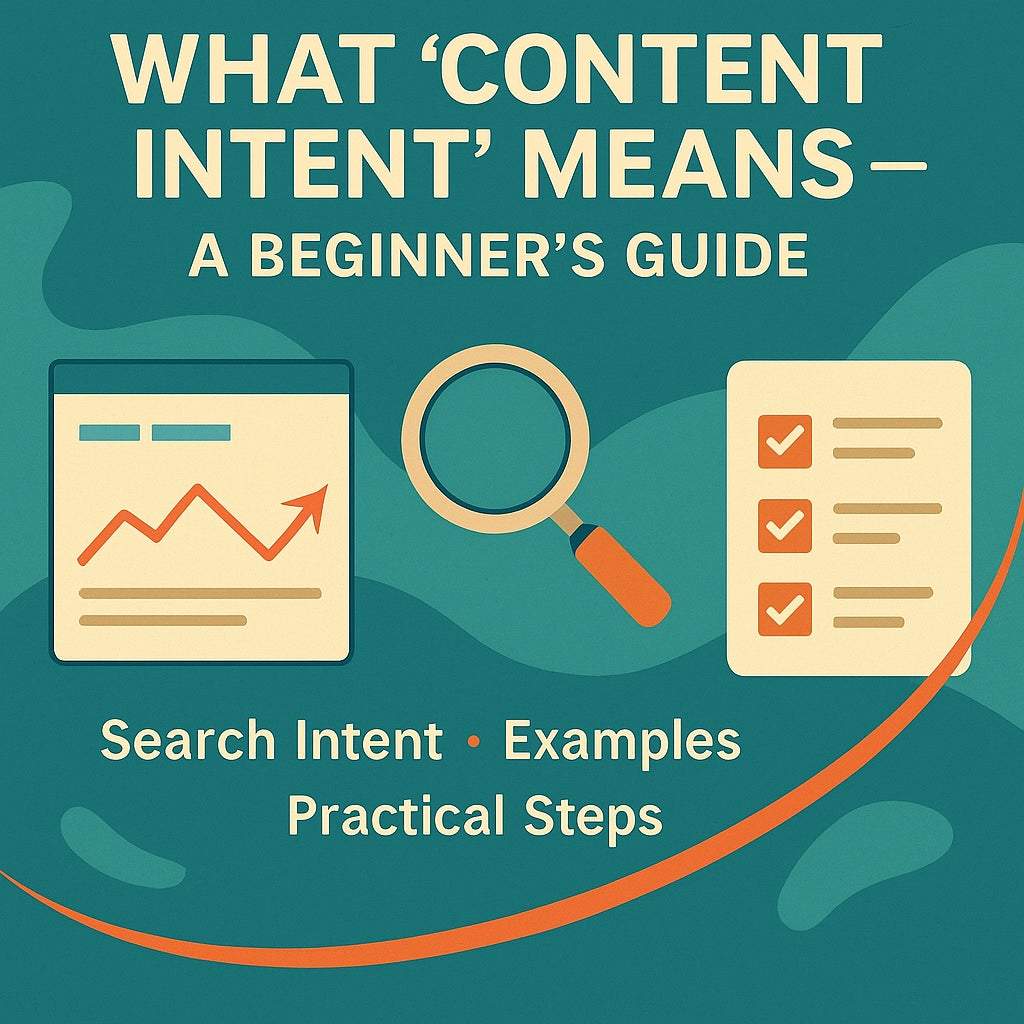
I just wrote a guide explaining what “content intent” really means, with practical examples for founders, makers, and marketers.
It shows how to tell if your blog, product page, or newsletter is matching why users are reading in the first place.
Here’s a quick Content Intent Cheat Sheet 👇
1️⃣ Informational intent – the reader wants to learn something.
Think: explainers, beginner guides, “how-to” articles.
2️⃣ Comparative intent – they’re deciding between options.
Think: product comparisons, pros & cons lists, feature breakdowns.
3️⃣ Transactional intent – they’re ready to take action or buy.
Think: landing pages, demos, pricing content, case studies.
4️⃣ Navigational intent – they’re looking for a specific brand or page.
Think: branded searches, homepage optimisation, key resource hubs.
Pro tip: Match your tone and structure to the intent, not just the keyword. That’s how you turn “traffic” into trust.
Question for you:
How do you figure out what your audience’s real intent is — data, intuition, or feedback loops?
👉 Read here: intentlens.app/s/cM6hga
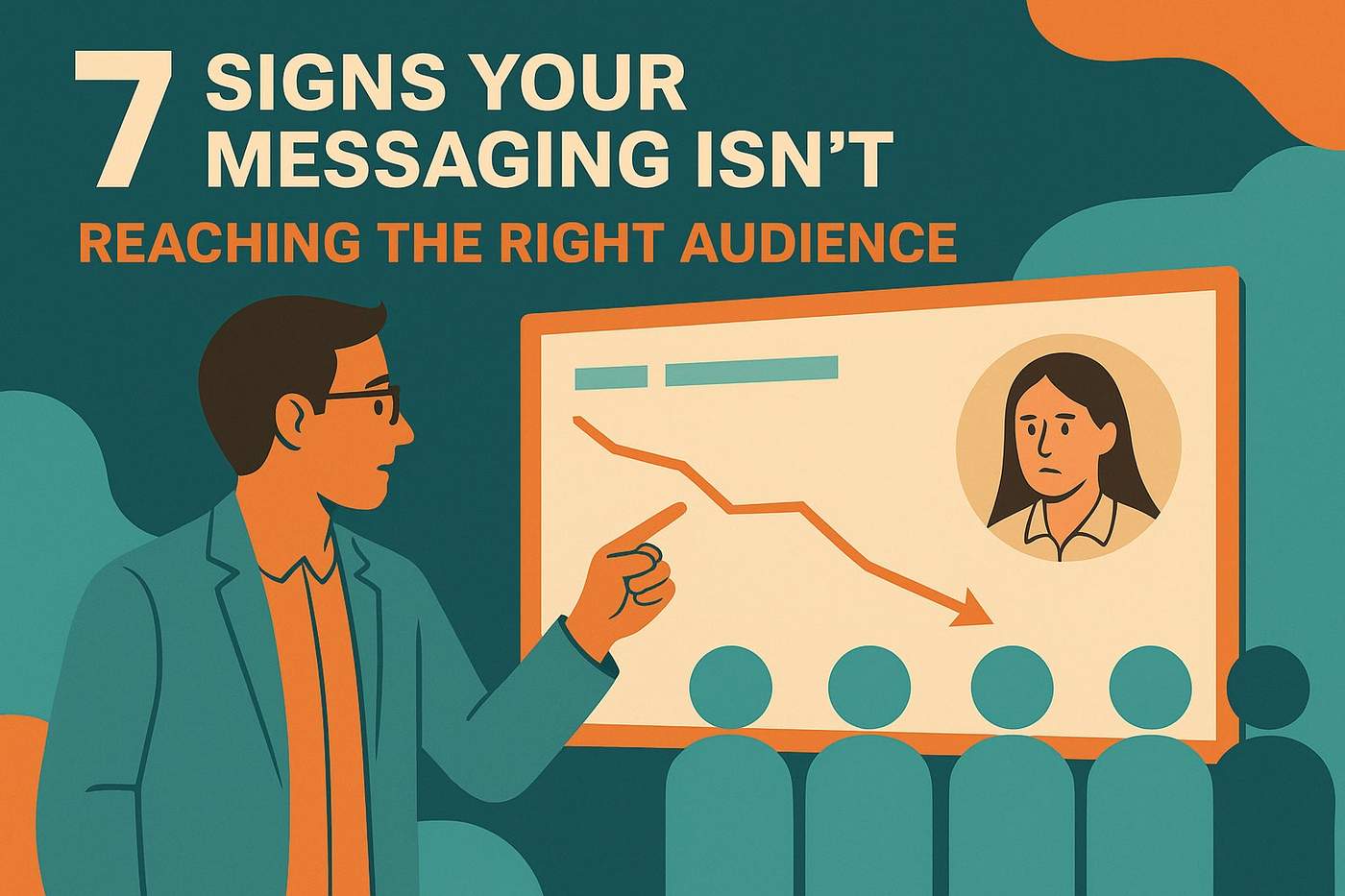
Have you ever launched something that felt solid — good copy, strong visuals, everything lined up — but somehow it just didn’t connect?
It happens more often than we admit. The message sounds right to us, but the people reading it aren’t quite who we thought they were.
I’ve been digging into this in a new post: 7 Signs Your Messaging Isn’t Reaching the Right Audience. It explores how to recognise when your content’s off-track, what kind of feedback to look for, and how tools like Intent Lens can help uncover what your audience actually sees in your message.
👉 intentlens.app/blog/7-signs-your-messaging-isnt-reaching-the-right-audience
I’m genuinely curious — when did you last realise your message wasn’t landing, and what helped you spot it?
We all have a mental picture of what our brand looks like online — clean, modern, consistent, professional. But when you actually analyse it, the story can be a little different.
That’s what led us to create the Brand Analysis feature inside Intent Lens. It runs a full, visual audit of your website and tells you how your brand is actually being perceived — not how you hope it comes across.
Here’s what it looks at 👇
Brand Overview – A clear summary of your brand’s visual strengths and weaknesses, with practical areas for improvement.
Overall Brand Score – Your quick snapshot rating of how well your brand communicates quality and trust.
Professional Appearance Score – Does your design feel polished, balanced, and credible?
Modern Relevance Score – Checks whether your brand feels current or stuck a few design trends behind.
Accessibility Score – Analyses readability, colour contrast, and inclusivity in your visual presentation.
Brand Consistency Score – Measures how cohesive your design, typography, and tone feel across pages.
Detected Industry & Industry Alignment – Sees how your visuals and layout align with the expectations of your market sector.
Visual Analysis & Alignment – Breaks down your imagery, colour, and structure to identify weak or mismatched design choices.
Competitor Visual & Differentiation Opportunities – Highlights how your brand stacks up visually against others in your space.
Competitive Analysis – Helps you spot where your design is blending in — and where you could stand out.
No guesswork. Just a structured overview of how your brand appears to users (and, interestingly, to AI systems too).
What’s surprised me most is how often the gut feel and the analysis don’t match.
Brands that seem modern on the surface often score lower on consistency or accessibility — small details that make a big difference in trust and conversion.
If you’ve never run a visual brand audit before, it’s worth a look.
👉 intentlens.app/features/brand-analysis
How confident are you that your website actually looks as professional and consistent as you think it does?
We’re all optimising for Google, but now there’s a new player in town: AI Search Results.
Tools like ChatGPT, Perplexity, and Google’s AI Overviews pull structured data straight into their answers. If your site doesn’t have the right signals, you’ll be invisible.
That’s where Schema Markup comes in. Think of it as a “dictionary” that explains your website to AI. Done right, Schema massively improves your chances of being included in AI-powered summaries.
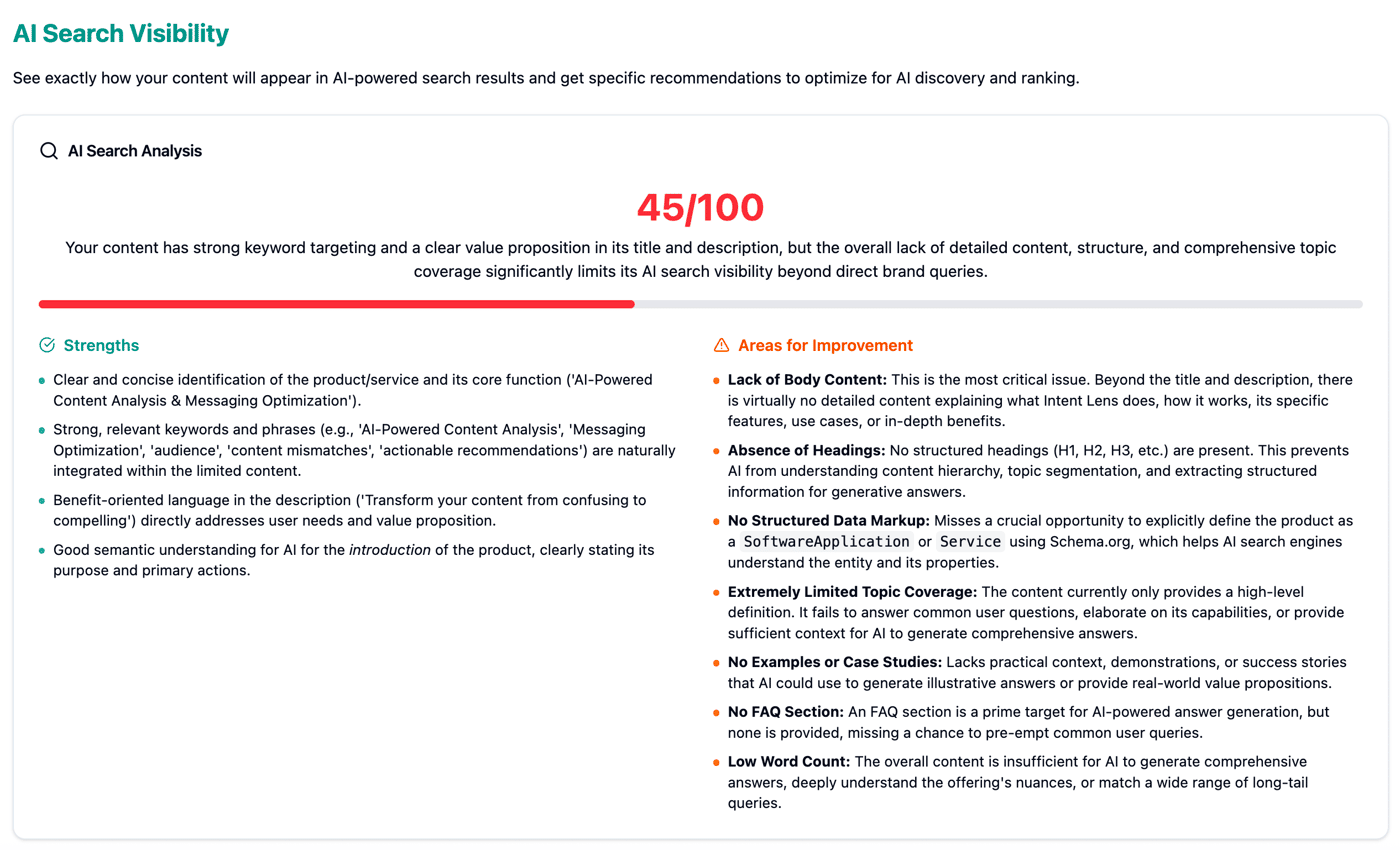
I’ve been working on this with the Intent Lens App and here’s a simple checklist every page needs to stand a chance:
Clear product/service definition – AI needs to know what you are. Use
@typelikeSoftwareApplication,Product, orService.Concise description – One or two sentences with benefits, not fluff.
Strong keyword signals – Natural placement of relevant terms your audience is searching for.
Headings (H1, H2, H3) – Structure helps AI break content into sections and extract answers.
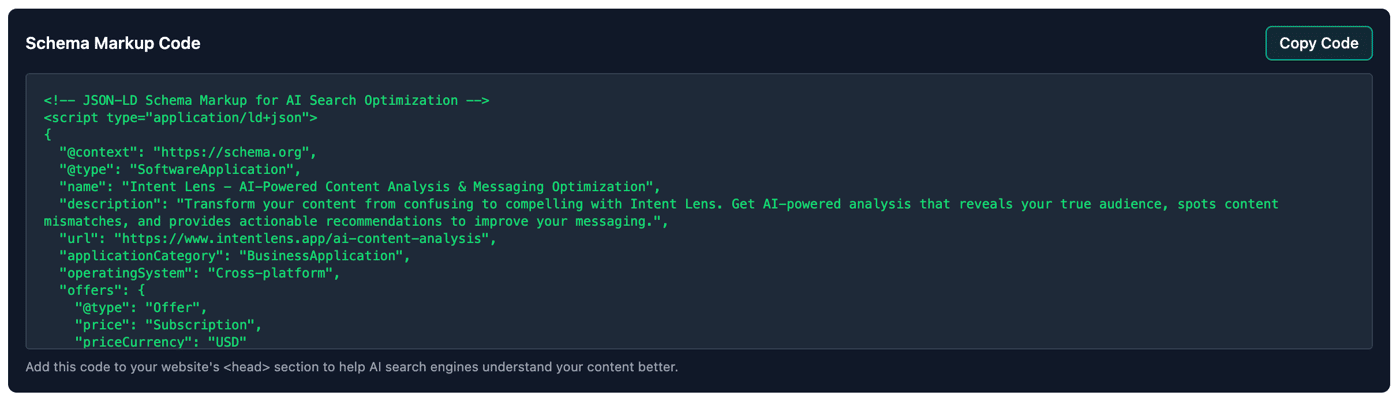
Schema markup – JSON-LD code that defines your product/service, price, category, and actions.
Case studies / examples – Real-world context helps AI provide illustrative answers.
FAQ section – Perfect for training AI to pre-answer common queries.
Structured data for offers – Pricing, subscription, free trial, etc.
Enough word count – A one-liner isn’t enough. AI needs depth to generate useful answers.
Here’s the good news
The Intent Lens AI Search Visibility Tool will:
Score your page (like in the screenshot below) so you know exactly where you stand.
Suggest improvements – from headings to FAQs.
Generate Schema Markup for you. Literally copy–paste into your
<head>and you’re good to go.
👉 Try it here: intentlens.app
If you’re shipping a SaaS or running a content site, this might be the simplest way to make sure AI actually sees (and shows) your product.
Thanks for reading Rob
I used to wonder why my blog posts, landing pages, and even case studies often got zero traction. The reason? They weren’t matching audience intent.
So I built a set of AI prompts that force ChatGPT/Claude/Gemini to write the right type of content for the right stage of intent.
Here are 3 free prompts from the pack:
Awareness (educate & inspire):
“Write a blog outline for beginners about [topic]. Focus on explaining the problem clearly, why it matters, and simple first steps.”
Consideration (help them compare):
“Generate a comparison article between [solution A] and [solution B]. Highlight strengths, weaknesses, and best-fit scenarios.”
Decision (build trust & drive action):
“Create a persuasive landing page outline for [product/solution]. Include trust signals, testimonials, and a strong CTA.”
Using just these, my drafts stopped sounding like filler content and started hitting closer to what readers actually needed at that moment.
If you want the full AI Prompt Pack (basic → advanced for every stage of the funnel), I bundled them into a free eBook here:
Download The Intent-Driven Content Writing Blueprint
-
1
The intent mapping is smart. Most people use the same prompt shape for every piece of content and wonder why it all sounds the same. Matching the prompt to the reader's stage forces the model to shift tone and depth automatically.
One thing I noticed when building prompts like these: a single sentence instruction still leaves a lot for the model to guess. "Generate a comparison article" could go in ten directions. When you split the prompt into labeled pieces, like audience (mid-funnel evaluators), constraints (neutral tone, no hard sell), output format (pros/cons table then narrative), the model locks in way tighter.
Your 3 prompts are basically 3 different objective blocks with the audience implied. If you made the audience and constraints explicit as separate sections, each one would get even more consistent.
I built an open source visual tool for this called flompt (https://github.com/Nyrok/flompt). You drag typed blocks onto a canvas, role, audience, objective, constraints, output format, and it compiles to structured XML. Could be useful for turning these 3 templates into reusable prompt configs you tweak per campaign.
-
1
Love the intent mapping. Which KPI moved most after using these prompts—CTR, time-on-page, or signups? (ref: rankiwiki com)
-
1
Heres a Bonus Prompt (Consideration Stage):
“Write a checklist for evaluating [product/service category]. Include at least 8 criteria buyers should consider and explain why each is important.”Curious, do others here use prompts like these to structure their drafts, or do you prefer starting completely from scratch?
-
1
This comment was deleted a year ago


It’s taken a few days and some serious late-night coding, but we’ve just shipped some major changes to the Intent Lens App. Here’s what’s new:
1️⃣ Faster reports → We refactored the URL analysis flow and now run multiple AI tasks in parallel. The result? Reports are 50–60% faster (no more waiting around while APIs crawl).
2️⃣ Process queue + email alerts → You can now keep working while your report runs in the background. When it’s ready, we’ll send you an email. Huge UX win.
3️⃣ New downloadable reports → Cleaner layout, more useful data. And for agencies? White-label reports you can hand straight to clients.
These aren’t flashy “headline” features, but they massively improve how the app works day to day.
If you haven’t tried Intent Lens yet, you can grab a free report here → intentlens.app
Ever poured hours into writing a blog post… only to get very little conversions and left wondering why? Yeah, me too...
The truth is, most content fails — not because it’s badly written, but because it’s written for the wrong intent.
If your audience is looking for a comparison but you give them a “what is…” explainer, they’ll bounce.
If they’re ready to buy but you serve up a how-to guide, you’ve just lost them.
That’s why I built Intent Lens — and why I’ve just released a free eBook that walks you through the exact framework:
The Intent-Driven Content Writing Blueprint.
Here's what you can learn:
The 3 Levels of Audience Intent and how to spot them instantly
Which content types actually convert at each stage
A simple Blueprint Framework to structure posts that resonate
Practical checklists + headline formulas
An AI prompt pack (from beginner-friendly to advanced)
5 quick wins you can apply today — even if you don’t touch anything else
I originally created this for myself while testing Intent Lens on real businesses (even a local gym!) — and the results were eye-opening.
If you’ve ever wondered why your content isn’t converting, this blueprint will show you where the gaps are — and how to fix them.
Grab your free copy here: https://www.intentlens.app/free-ebook
Would love to hear your thoughts — and if you try one of the quick wins, let me know how it goes.
-
1
Really resonates. Most “failures” I’ve seen weren’t about quality, but misaligned intent or invisible friction in the workflow. The audience (or team) expects one thing, and the system delivers another → that gap kills momentum. Thanks for sharing the blueprint, super valuable.
-
1
Well said and no problem, hope the free eBook helps.
-
-
1
Cool idea. I tried the report and it got stuck at the optimisation step - i waited for several minutes without the result :(
-
1
OK, thats interesting and confirms an issue I am currently working on, these can take a little while to show as the report is quite comprehensive, so I am implementing a new queue system to speed up the process further. If you go back to the reports section your report should be there. Let me know at hello@intentlens.app and I will assist further if needs be.
-
-
1
Hey, I tried to get the free report and at least in the mobile version, the Step 1 of the wizard is broken, I can't type the URL. Let me know when it's fixed do I can try it. I'm using the latest Chrome running Android. Thanks!
-
1
Hey Fabrico, apologies for that, small screen issue but all fixed now. You can run it on your mobile device but in all honesty its a better UX on a desktop with more screen real estate.
-
-
1
Just downloaded the e-book. Looking forward to learning.
-
1
Thats great, I really hope it helps you out, would love to hear your feedback too.
-


Hey IH,
I’ve just launched Intent Lens — a tool that analyses your website and gives you a free report on:
Who your content is really speaking to (vs. who you think it’s speaking to)
Keywords and gaps you might be missing
What competitors in your space are doing differently
Practical marketing opportunities you can act on right away
Check Your AI Search visibility
Understand Your Target Audience
Understand Your Brand Visualisation
ALL FOR FREE!
I built it because I was frustrated with SEO tools that just throw numbers at you but don’t explain why your message isn’t landing. Intent Lens focuses on the audience intent behind the content, not just rankings.
Right now, you can grab a 100% free report for your site (no credit card, no trial wall).
I’d love feedback from fellow makers — what’s most useful in the report, what feels missing, and whether this could slot into your own growth toolkit.
Learn More Here: https://www.youtube.com/@intentlensapp
Thanks for giving it a look,
Rob
Comment