
Lynen
Dress for every occasion

I built the process to monetize. I'm missing the brands to fill it.
The idea on how to monetize was simple: AI recommends an outfit, surfaces real products from real brands, user buys something, I earn a commission. Clean and aligned with what the user is already doing in the app.
So I built it.
Then I tried to join the affiliate programs of known brands.
90% rejected me.
Not enough traffic. Not enough users. Not an interesting partner yet.
So here's the loop I'm stuck in: I need users to get brands. I need brands to monetize. I need to monetize to keep growing. The snake eating its own tail.
Beyond the partnerships, the product itself is harder than it looks:
AI recommends an outfit
AI maps it to product categories
Query searches the catalog.
In theory, clean. In practice, the products that surface are sometimes nothing like what was recommended. Matching intent to inventory is its own unsolved problem.
I also tried letting users scan a real outfit to detect garments and find similar products. The AI detects the pieces fine. Then it fails to match them to anything relevant in the catalog.
And even when a user does want to buy something, each product redirects to a different vendor page. There's no unified cart. No "buy this look" flow. Just five tabs opening in a browser. Not exactly a frictionless purchase experience.
If you've navigated affiliate programs as an early-stage app:
How did you get your first real brand partnerships?
How do you improve garment matching?
And if you've solved the "multiple tabs" friction problem, I'd love to know how you did it.


Shakespeare had no idea he was writing about paid acquisition.
But here we are, 400 years later, and the question still stands. To be present. Or not to be. Obviously the answer is yes, but the real question is where, how much, and how do you know if it's actually working?
I'm Eduardo. Solo founder of Lynen, an AI styling app for men. So far I've been growing organically. But now I'm facing the decision I've been avoiding: where do I actually put money?
Every channel seems to be the most important one. The one that's going to make the difference.
Instagram. TikTok. Google UAC. Apple Search Ads. Reddit. ASO. Influencers.
You can't be everywhere. But you also can't afford to bet wrong and find out three months later.
And it's not only money, it's also time. Paid ads need budget. Content needs time. Communities need consistency. As a solo founder working a 9-to-5, I only have so much of each. Every channel I add isn't just a line item. It's a decision about what I won't be doing instead.
So the question nobody seems to answer clearly: what's the actual ROI? Not the success story. Not the "I spent €50 and got 500 users" tweet. The real number. The channel that actually works first. How to reach new users without needing a content agency, a paid ads specialist, and three more things I can't afford yet.
I genuinely don't know. That's why I'm asking.
If you've run paid acquisition for a consumer mobile app — what moved the needle? What burned your budget with nothing to show for it?
-
1looked at your current US listing. outfit ratings and packing for a trip are pretty different search intents. which one actually brings people back? i'd use that to pick the first keyword set before spending on either ads or ASO. i'm building Spek for this workflow, happy to look at one country if organic search is still on your list
-
2
You are asking the right question but most people answer it the wrong way.
There is no best channel There’s only a first channel that fits your product behavior.
For something like an AI styling app for men, I had think in terms of intent vs discovery:
High intent (works faster, easier to validate):
Apple Search Ads, Google (people already searching for style, outfits, etc.)Low intent (slower, but can scale):
TikTok, Instagram, influencers
If you’re solo + limited time, I’d avoid starting with low-intent channels. They look sexy but eat time and money.
-
1
Intent vs discovery is a cleaner way to think about it than channel vs channel.
Apple Search Ads makes sense as a starting point. The people searching "outfit ideas for men" or "how to dress better" already have the problem I'm solving, I just need to show up at the right moment.
My hesitation has been that high-intent channels feel more expensive per click, and with a free app the conversion math gets weird fast.
Have you found a minimum viable daily budget to actually get signal from Apple Search Ads before it becomes a guessing game?
-
1
I’d separate “can this channel get installs?” from “can this channel get paid users?” For a consumer app, I’d start with the smallest high-intent test you can measure end to end: Apple Search Ads on exact-match keywords, capped tightly, with subscription/trial events wired into App Store Connect or your analytics.
I’m testing this with MetricSync now and the useful signal is not CPI. It’s: search term → install → trial start → day 3 conversion. If you only optimize to installs, broad keywords can look fine while teaching you nothing.
My bias: skip influencers until you know the exact user intent that converts. Then use creators to amplify that angle instead of asking them to discover it for you.
-
1
That Shakespeare hook is gold, Eduardo! Paid ads often feel like a casino where the house always wins, especially for B2C mobile apps. Most solo devs I know burn cash on Meta but find high-intent users with Apple Search Ads (ASA) on a small budget. Don't spread yourself thin just pick one single channel to test first to protect your sanity and your wallet!
-
1
Nice progress 👏 One thing — you can get more users without ads by improving your organic visibility. Right now you might be missing free traffic.
-
1
This is the exact trap. It’s not about picking the right channel — it’s about defining what success looks like before you spend. Otherwise every channel ‘kind of works’ and you only realize 3 months later that nothing actually did.


I work a 9-to-5. I'm building Lynen on the side — an AI styling app for men who want to dress better but don’t know where to start.
During the week, progress is fragmented.
30 minutes before work. A quick session at lunch. An hour at night when I’m already tired.
You fix small things. You lose context. You move slowly.
The weekend is different.
Saturday morning. Friends are making plans. The group chat is active.
I put my phone down and open my laptop.
Not because I have to but because it’s the only time I get real depth.
That’s what’s actually hard about building on the side.
It’s not the work. It’s wanting to do both, go out and keep building, at the same time.
Some weekends I fix bugs. Some I analyze why users drop off. Some I tweak prompts until the output actually feels like a real stylist.
By Sunday night, something exists that didn’t exist on Friday.
If you’re building in 30-minute blocks, you’re shipping fragments.
Weekends are where you build something real.

I've been building Lynen, an AI personal styling app for men, for months. The product works. It's live on the App Store and Play Store. I'm proud of it.
But when it came time to actually show it to the world through social media, I froze.
I'm a solo founder. I built the whole thing myself. I can debug a Supabase Edge Function at 1am without breaking a sweat. But standing in front of a camera? Posting something that people would actually see me in? That felt different. That felt exposed.
Recording took way longer than I want to admit. I did it too many times. I hated how I looked, how I sounded, how unnatural the whole thing felt. I almost didn't post it.
Then I uploaded it. And I sat there staring at my phone waiting for... I don't know. Silence? Mockery?
What I got was support. Real, genuine support from people who know me (and even a few who don't).
It wasn't perfect. But it was out there, and that matters more than I expected.
The lesson I keep coming back to: the thing you're avoiding is never as bad as the version of it living rent-free in your head. The gap between "what I imagined would happen" and "what actually happened" was enormous, and entirely in my favor.
If you're a founder sitting on content you haven't posted because it doesn't feel ready, or you're scared of how it'll land: just post it. The people who care about you will show up. And the ones who don't? They weren't your audience anyway.
Now I just have to do it again next week. 🙃
-
1
I’m right there with you. Our stories are almost identical, except for one thing: the support system. While you have people in your corner, I feel like I’m the only one who believes in what I’m building.
To be honest, I’ve received more support here than from my entire circle of friends and family combined. The constant cycle of creating, editing, and posting is exhausting—it’s much harder than people realize! On top of that, I recently got banned from a X and I’m still not even sure what I did wrong.
Despite the setbacks, we’re going to keep creating and believing in our product. Our time will come.


Yes, you read correctly, I'm tired of asking my mom if my outfit is good enough for a date I might be having, or to hang out with friends, etc.
Until now, I always played it safe with boring basics, looking the same every single day. Every fashion app I tried was built for women. Men who want to dress better but don't know how are completely ignored.
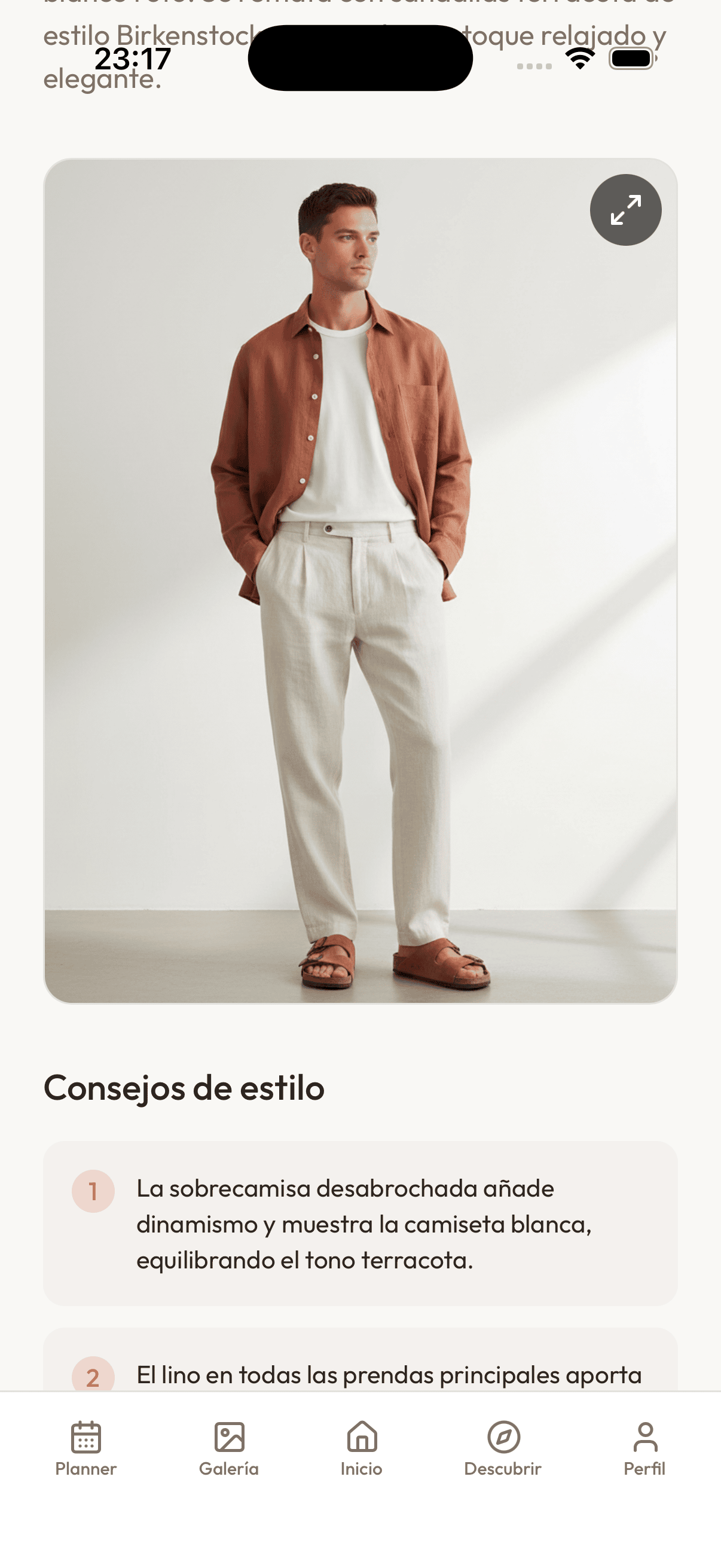
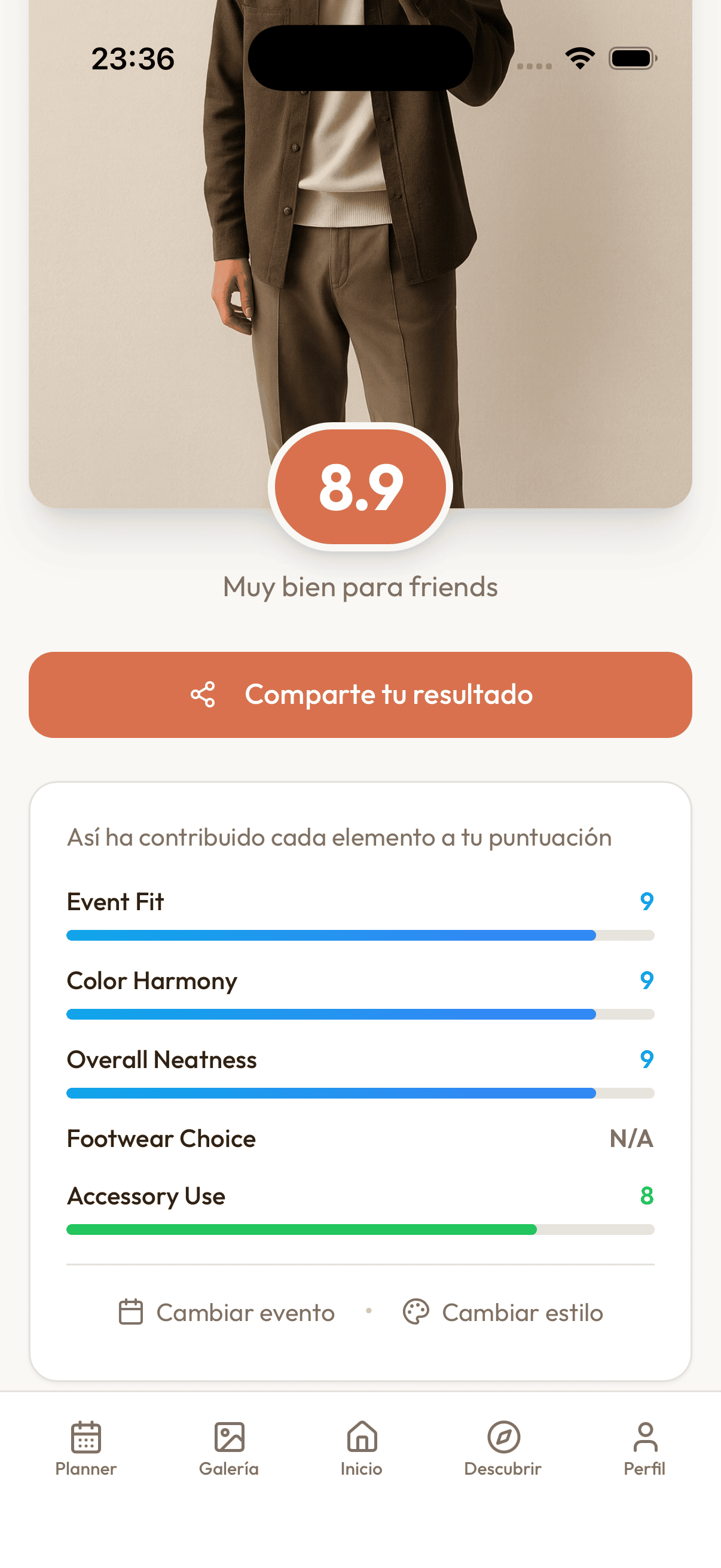
And that's why I built Lynen, so I can become a functioning adult that knows how to dress properly for every occasion (without asking his mom as much). The app tells you if your outfit works and it can also give you inspiration when you're stuck. Built specifically for men.
Where I am today:
Live on the App Store (Play Store coming soon)
50-200 early users, all organic, zero paid acquisition
Hired a friend to help with social media (hardest part until now is creating content with my face in it - and I'm still not there)
What I'm figuring out now:
How to grow without a budget
Whether to focus on content, ASO, or communities first
Happy to share what's working and what isn't as I go. And if you've got any tips for a solo founder with zero experience building apps (and how to grow them) I'd love to hear it.
Download Lynen on the App Store → App Store Link
-
1
Most men’s fashion tools are too high-end so focusing on the 'functional adult' vibe is a smart move. If you’re looking for zero-budget growth jumping into subreddits where guys are already asking for outfit feedback is probably your best bet for high-intent users. Does the app suggest specific pieces to buy if an outfit isn't working or just give general advice?
-
1
Thanks! I've started to post on subreddits to generate engagement and you are right, high-intent users are already there, I just have to be able to post consistently.
On your question: today Lynen focuses on feedback and inspiration, no shopping suggestions yet. It's actually on the roadmap, the idea is to eventually recommend real pieces that complete or fix an outfit. The blocker right now is that affiliate programs require a minimum user base to get accepted, so I'm focused on growing first. Bit of a chicken-and-egg problem honestly.
-
1
That chicken-and-egg struggle is real! Honestly if the goal is to hit that user threshold for affiliate programs quickly a solid Digital PR push or some high-authority media placements (MSN, AP News etc) could be the shortcut you need to build that trust. I actually handle media placements for startups so if you ever want to bridge that gap and get some massive visibility let me know. Would love to help you scale this!
-
-

1 Comment
It might be worth reaching out to some independent/boutique brands and getting them onboarded even without an affiliate system in place, just to get the ball rolling. Once you've got traffic and you can prove you're making sales, the big affiliate programs will be much more welcoming and you can even get back in touch with those early adopters and say "Hi, we've been pushing $x of sales to you every month for free. Would you like to sign up for $y a month to keep your products listed on the app?"