Microsoft Solutions
Empowering Innovation. Anywhere
With businesses still navigating the challenges of remote working, digitalized collaboration, and cybersecurity in 2025, the Microsoft 365 Business Standard remains a favored solution among small and medium-sized companies. However, as more productivity tools enter the market, the question raised by many business owners is: Is it worth it to invest in Microsoft 365 Business Standard in 2025?
In order to respond to that, we should look at Microsoft 365 Business Standard price, compare its cost with the features offered, and discuss how M365 Business Standard license will serve the needs of an expanding business.
Key Microsoft 365 Business Standard Features
These are some of the excellent Microsoft 365 Business Standard features that have kept it as a powerful option even in 2025:
Mobile Office Applications and Desktop Applications
The users can avail the latest versions of Word, Excel, PowerPoint, Outlook, and OneNote on Windows, macOS, and mobile.
1 TB OneDrive Cloud Storage
All the users are provided with 1 TB of encrypted cloud storage, so the sharing of files and remote collaboration are quite simple and secure.
The Integration of Microsoft Teams
Teams has emerged as a key portal of communications and project management, and it is all incorporated in the Business Standard plan.
Outlook and Exchange with Professional Email
Outlook also supports sending and receiving email loads in a custom domain with powerful Exchange backend services.
Digital Toolkits
SharePoint and Teams allow businesses to create intranet websites, documents to share in security, and tasks to be better handled.
Tools on Security and Compliance
Business Standard has multi-factor authentication tools, data loss prevention, and compliance management tools, which are most needed today when security is on the mind of every organization.
Licensing and Scalability
The Microsoft 365 Business Standard license is scalable and flexible. It is particularly suitable for startups and other companies looking to expand because its businesses can begin with only a single license. One user license can be used with five devices (PCs, Macs, tablets, and phones), which makes it a good choice per user.
Moreover, the IT burden is lightened off by centralized admin controls and automatic updates, which saves businesses that lack tech-specific employees a lot of resources, especially time.
So, Is It Worth the Investment?
ROI is the most important point to consider before deciding on the purchase of Microsoft 365 Business Standard. This is why it is still a good investment:
Powerful Suite: Includes all the tools a modern team may require to work with one another.
Economy: Eliminates the need to have several subscriptions (such as individual video conferencing, storage, and email services).
Time-Saving Integration: Connections between apps eliminate the friction in the workflow.
Security Assurance: Microsoft-specific security is embedded in this product without an extra price.
If your business depends on effective cooperation of workers, secure data management as well as stability in communicating with others, the Microsoft 365 Business Standard license is of great value in 2025.
Conclusion
It is not a question of whether you should buy Microsoft 365 Business Standard but whether you can afford not to. In 2025, more and more workforces are going to be distributed; cyber threats are up, and having a sure-fire all-in-one productivity suite has never been more required. This plan is cost-efficient to invest in and based on its scaling licenses and great features, it is an excellent spend for growing businesses.
If you are willing to improve your processes and make your teams work more productively, then this may be the best time to purchase Microsoft 365 Business Standard and ensure the future of your business.

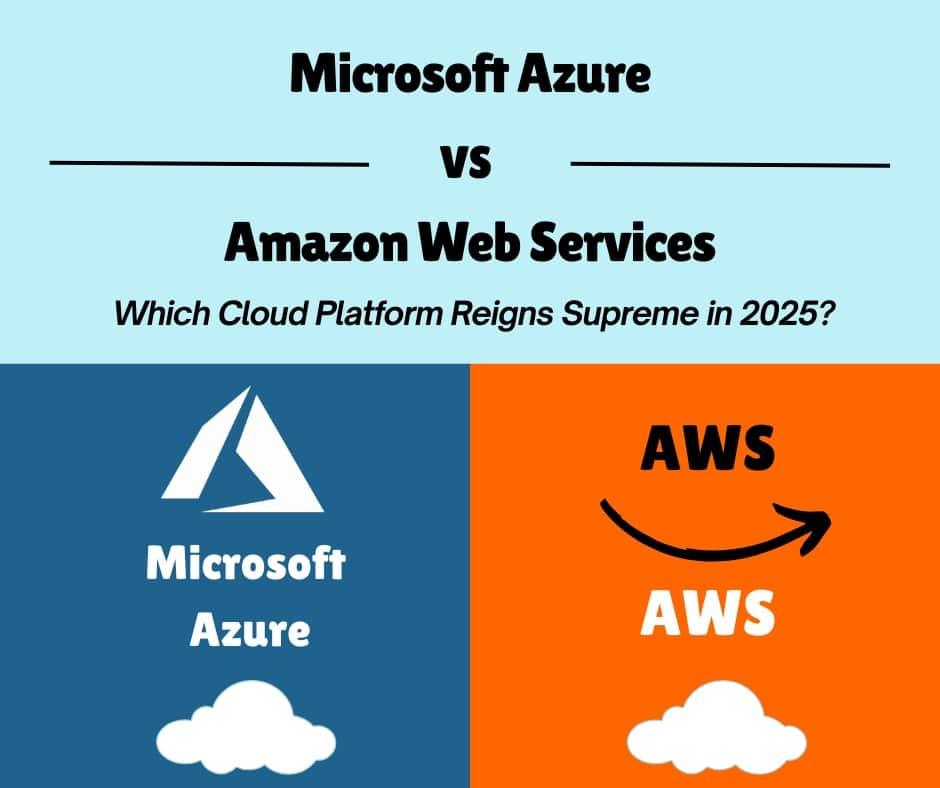
In today’s hyper connected and highly competitive digital space, enterprise innovation continues to depend on cloud computing as the central technology. However, Microsoft Azure, along with Amazon Web Services (AWS), have maintained their position as the market leader in cloud services in 2025 by providing advanced solutions suitable for various enterprise needs. The platforms demonstrate considerable growth, but their separate capabilities attract customers from distinct market sections.
What is Microsoft Azure?
Azure is a cloud-based computing platform built by Microsoft that offers a variety of services that mix analytics and storage with network and computer capabilities. It provides automatic integration with Microsoft products, including Active Directory and Windows Server, as well as Office 365, which attracts enterprises that are heavily invested in Microsoft solutions. Azure is still accelerating its rapid growth rate in 2025, driven by its hybrid cloud capabilities, enterprise security features, and expanding support for AI, machine learning, and DevOps tools.
What is Amazon Web Services (AWS)?
Amazon Web Services, launched in 2006, became the first company to deliver cloud computing solutions to the market. AWS provides its customers with a wide choice of infrastructure-as-a-service (IaaS), platform-as-a-service (PaaS), and software-as-a-service (SaaS) solutions. It has become a widely accepted solution that delivers scalability, a vast service catalog, and an innovation pace, which attracts startups, large enterprises, and government agencies alike. AWS has maintained its top market position in 2025 by investing strongly in AI/ML technology alongside edge and quantum computing.
Choosing the Right Platform in 2025: What Matters Most?
1. Business Needs Over Brand
The choice of a better cloud platform depends on how well it meets your business objectives instead of which one is superior. A business that depends on Microsoft technology solutions should choose Azure since it proves both more cost-effective and efficient. Business operations that require quick service expansion along with diverse options tend to choose AWS instead of alternative cloud solutions.
2. Hybrid and Multicloud Are the Norms
There has been a substantial move toward hybrid and multicloud strategies throughout 2025. While both AWS and Azure support these deployments, hybrid solutions benefit from Azure more due to its early development of Azure Arc and Stack. Even so, many groups choose to combine both platforms when they want to maximize advantages by leveraging their respective strengths.
3. AI and Data Innovation
The two platforms excel in developing their AI capabilities along with their data services. The collaboration between Azure and OpenAI created a strong enterprise AI presence, but the deep-learning capabilities of AWS remain dominant in the market of cloud-native AI tools. The Azure platform delivers AI solutions within comprehensive business operations through its Power Platform and Dynamics 365 platforms. AWS provides unmatched options for customized, scalable AI model development services, which attract data scientists strongly.
4. Partner Ecosystem and Support
From ISVs to managed service providers, both platforms have rich ecosystems. The regulated industry, together with the public sector, mostly selects Azure as their solution, yet AWS attracts fast-growing technology firms and emerging startups. Azure succeeds in securing long-term contracts with enterprises mainly through its business connections to healthcare organizations and financial institutions. Developers are attracted to AWS because of its quick service deployment and excellent open-source technology integration.
Conclusion: A Cloud Choice, not a Competition
Both Microsoft Azure and AWS share equal status as winners in 2025 since their selection depends solely on how they suit particular organizational needs and digital strategies. The dual-cloud or multicloud approach proves to be a suitable solution because enterprises can benefit from both platforms effectively. Your ability to help customers navigate their cloud transformation purposes stays strong because you provide both AWS and Azure products as a cloud solutions provider.
-
1
i like how you framed the long game here, because the trick is usually less about raw features and more about picking what fits your stack and your team’s skills. I’ve found resources like topdynamicspartners.com handy for checking how partner ecosystems shape real-world project timelines and support quality, which can matter as much as the cloud vendor itself once you’re deep into ops
-
1
I usually pick based on pricing clarity and how easy the tools feel day to day. I’ve seen teams move faster just by choosing the platform their developers already know best


Comment