
Stof
Unified open-source data interchange format
Merging Code with Communication—A Winning Combo
Imagine blending the precision of technical expertise with the creativity of marketing strategy. In today’s tech landscape, involving your technical leaders in marketing isn’t just beneficial—it’s essential for crafting a message that resonates authentically with the developer audience.
The Overlooked Value of Technical Insights
Technical leaders understand the intricate details and potential of your product better than anyone else. Their insights ensure that marketing narratives are accurate, highlighting real strengths and capabilities. This technical authenticity builds credibility and helps demystify complex features for a broader audience, who often don't appreciate buzzwords or non-specific writing. Get to the meat and potatoes as soon as possible.
Bridging the Gap Between Tech and Marketing
When technical and marketing teams collaborate, the result is a cohesive story that speaks to blends the business and technical advantages for customers.. This partnership helps:
Clarify Complex Concepts: Technical input transforms jargon into clear, compelling language.
Boost Credibility: Authentic details grounded in technical reality build trust among discerning audiences.
Align Vision and Execution: A unified approach ensures that your marketing message mirrors the product’s true value.
Building a Cohesive Brand Message
By integrating the tech team's perspective, companies ensure that every campaign, blog post, or social update is rooted in genuine expertise, creating a narrative that is both engaging and reliable. This is especially important in the dev tool space, where you want to communicate the business advantage for non-technical audiences who will likely be signing the check, while speaking directly to engineers who will be using the product day-to-day.
I’d love to hear your stories about bridging the gap between code and communication. Share your experiences in the comments.

As founders, we often highlight wins—but those wins usually come after hundreds of “failures” (or shots on goal if you prefer a sports analogy). One of our biggest lessons? Finding the right channels for customer discovery.
Early on, I relied heavily on LinkedIn for outreach. While it got us hundreds of calls, I wish I had explored other platforms sooner to widen our reach. Now, after launching our open-source project, I’m building community where devs actually spend their time—AB testing messaging, engaging in discussions, and refining our approach - and I'm already seeing it pay off.
Key takeaways:
1. Don’t blindly follow outdated or general advice. Go deeper. If you're in devtools, go beyond LinkedIn, Reddit, and Twitter (X). Platforms like Mastodon servers, Bluesky, Dev.to, IndieHackers, dev forums, AlternativeTo, Podcasts, events, and product launch sites (MicroLaunch, DevHunt, ProductHunt, etc.) offer powerful ways to connect.
2: Own at least one content channel. In startup life you need to be scrappy and you may not want to spend the time now building your own blog page, but owning that channel is crucial to growth. You want to shorten the path to users discovering your website/landing page. If they have to visit your medium article, then your linkedin profile, then your website, you may lose them. Pay yourself first by posting on your own channel and directing users directly to your website.
3: The best people to talk to (at least in the dev space) are often the hardest to reach—but if you show up in the right places and add value, you'll earn their attention.
Where have you found the best engagement for your audience? How many iterations did it take you?
#startups #customerdiscovery #devtools #opensource #growth
In today's complex digital landscape, seamless data exchange between systems is critical. Data interfaces serve as the backbone of this exchange, enabling applications, services, and devices to communicate effectively. In this post, we'll explore what a data interface is, why it’s important, how it ties into the innovative approach of Stof, and why you should join our community.
What Is a Data Interface?
A data interface acts as a conduit for information between different systems, applications, or devices. Think of it as a communication layer that translates data formats and protocols so that each system can understand and use the information correctly. Traditionally, setting up these interfaces required custom APIs, SDKs, and parsers—each designed to handle the intricacies of data parsing, structuring, and transformation. This complexity often leads to increased development time and potential integration challenges.
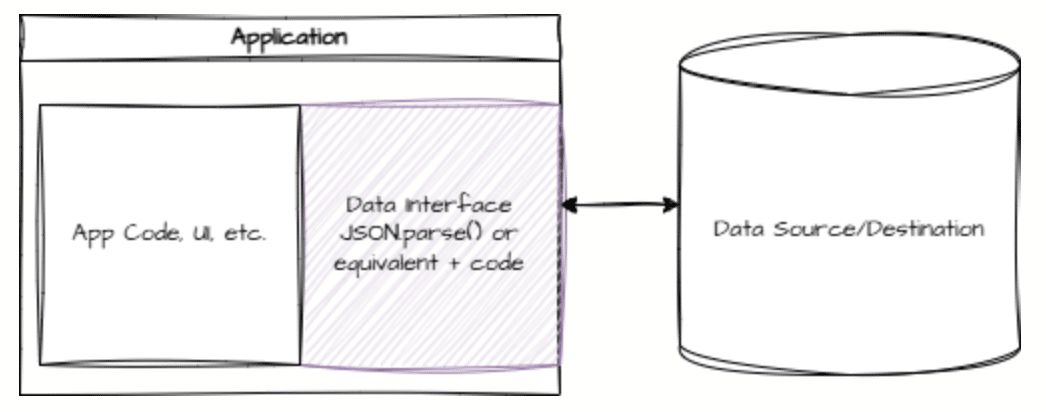
Why Is a Data Interface Important?
Data interfaces are crucial for several reasons:
Streamlined Communication: They ensure that disparate systems can exchange information smoothly without getting bogged down by incompatible data formats.
Reduced Complexity: By managing the translation of data formats centrally, data interfaces reduce the need for extensive, application-specific code.
Enhanced Maintainability: A unified approach to data exchange leads to systems that are easier to scale, update, and maintain over time.
Error Minimization: Centralizing the logic in the data layer helps avoid common pitfalls associated with manual data handling, thus reducing errors.
In essence, a robust data interface simplifies the architectural framework, enabling developers to focus on building innovative solutions rather than wrestling with data compatibility issues.
How Does Stof Transform Data Interfaces?
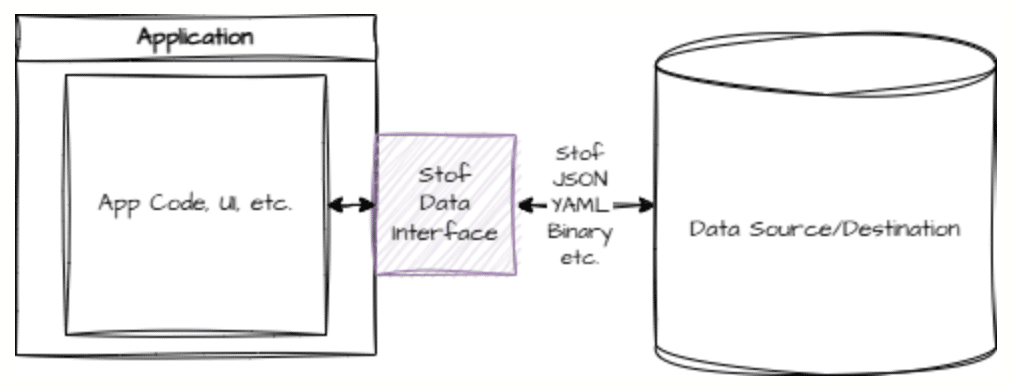
Stof reimagines the concept of a data interface by consolidating its elements into a single, cohesive format. Here’s how Stof makes a difference:
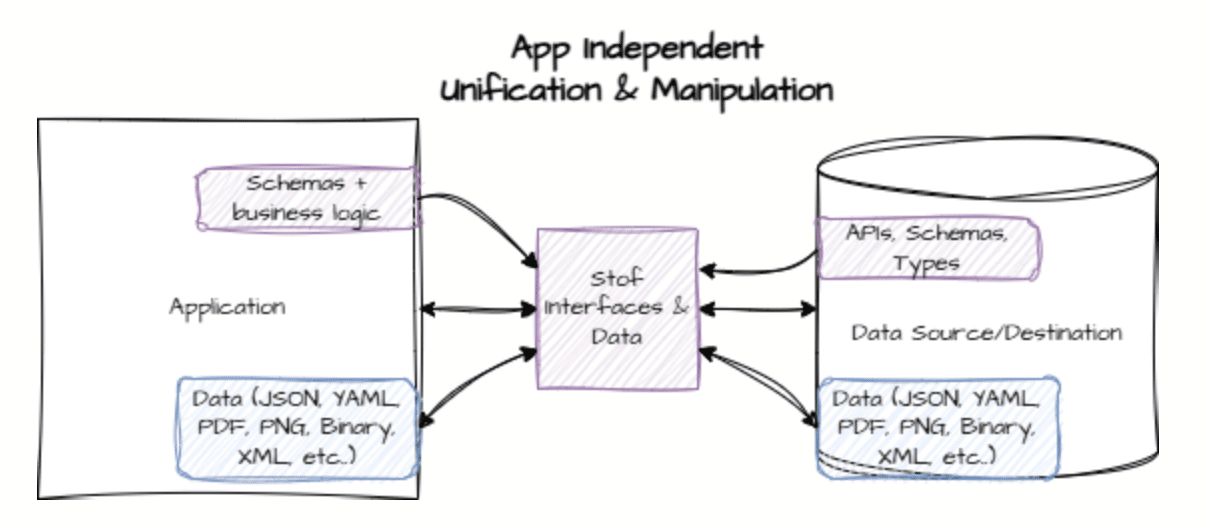
Enriched Data Documents: Stof allows developers to embed additional types, functions, and schemas directly within a single document. This enriched interface means that multiple applications can leverage the same structured data without needing extra layers of custom code.
Logic in the Data Layer: By shifting the heavy lifting into the data layer, Stof reduces the need for external parsers and APIs. This approach not only simplifies implementation but also enhances portability across different systems.
Streamlined Integration: With a unified format, Stof minimizes the challenges associated with traditional data interface integration. Developers can achieve more robust and scalable applications with fewer hurdles to overcome.
By addressing the common challenges of traditional data interfaces, Stof paves the way for more efficient, maintainable, and innovative system architectures.
Join the Stof Community
Are you ready to revolutionize the way your applications handle data exchange? We invite you to join the Stof community and be a part of this exciting journey to enhance the way we work with data. Connect with us on GitHub to explore the code, contribute to discussions, and stay updated on the latest developments. Also, follow us on Linkedin and join our Discord to engage with a community that’s passionate about shaping the future of data interfaces.
Embrace the power of simplified data exchange with Stof, and transform the way your systems communicate. Join us today and help drive innovation for our community!
Hey Indie Hackers! 👋
We’re Amelia and CJ from Formata, and we just launched Stof, an open-source project designed to make data handling easier, safer, and more efficient for developers and data engineers.
Our Story
We have been working on this project for about 6 months, and both left our jobs to be full-time. We started this because we realized that the way we work with data hasn't fundamentally changed in about 20 years and we felt that needed to change with the increased use of AI. This project was made out of necessity, because while working at a previous company we had to make it easier to work with many different types of graphics formats. We realized that this could also be done with different types of data more widely being used with AI today.
What is Stof?
Stof provides a unified data interface that simplifies validation, transformation, orchestration, structuring, and access control—turning data into a sandboxed runtime that can perform logic anywhere. Our goal is to eliminate the pain of managing messy data pipelines, making development more productive and scalable. Think of Stof as a more dynamic JSON document :)
Why Open Source?
We believe that the best developer tools are built with community collaboration. By open-sourcing Stof, we want to create something that grows with input from developers, data engineers, and builders like you.
What we've learned
Finding the first users and right use cases is hard, but we're hopeful that the Indie Hacker community can help us find the right people who are psyched about our project
Gaining developer's trust is hard, that's why we're working diligently offer helpful and comprehensive docs to make using Stof easy - and thats why we'd love your feedback! :)
Messaging for something new that isnt widely understood is very difficult - thats why we'd really appreciate your feedback on our website so that we don't over complicate it
How You Can Help:
✅ Star us on GitHub
✅ Give feedback or contribute: We’re actively looking for contributors—check out our docs to get started!
✅ Contact us with of any problems you are currently facing when trying to manage, classify, and structure data to work more efficiently with your AI
✅ Give us feedback on our docs, if there is anything you'd like to see that we don't already have, if you would like more examples for specific use cases.
✅ Roast our website! We'd love to know how we can improve our messaging!
We're just getting started, and we'd love your thoughts! What challenges do you face when working with data? How can Stof help? Drop a comment below
Looking forward to hearing from you all! 🚀
Comment