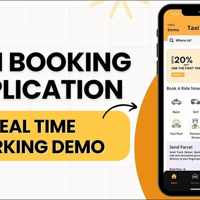
Uber Clone
Taxi Booking App Development
The ride-hailing industry continues to evolve rapidly, creating opportunities for entrepreneurs to launch digital transportation businesses. With growing smartphone usage, GPS technology, digital payments, and on-demand services, a well-designed ride hailing app can help businesses connect passengers with drivers efficiently.
If you are planning to launch a ride-hailing business in 2026, you need more than just an app. A successful platform requires the right business model, essential features, reliable technology, driver acquisition strategy, and a clear monetization plan.
This guide explains the key steps involved in launching a ride-hailing app in 2026.
What Is a Ride Hailing App?
A ride-hailing app is an online platform that allows passengers to request rides through a smartphone application. Drivers can accept nearby ride requests, navigate to pickup locations, complete trips, and receive payments through the platform.
Popular ride-hailing platforms have demonstrated how technology can simplify transportation by connecting riders and drivers in real time.
A typical ride-hailing ecosystem includes:
Passenger app
Driver app
Admin panel
Real-time GPS tracking
Online payment system
Ride booking and management
Driver and passenger profiles
Ratings and reviews
Notifications
Earnings and transaction management
Why Launch a Ride Hailing App in 2026?
Transportation is increasingly becoming app-based. Customers expect convenient booking, transparent pricing, real-time tracking, and cashless payments.
Launching a ride-hailing platform can offer several advantages:
1. Growing Demand for On-Demand Transportation
Customers prefer booking rides from their smartphones rather than searching for transportation manually. An app can make the entire process faster and more convenient.
2. Multiple Revenue Opportunities
A ride-hailing business can generate revenue through commissions, booking fees, surge pricing, subscriptions, corporate accounts, advertising, and other services.
3. Scalable Business Model
A digital platform can expand from one city to multiple locations once the operational model is established.
4. Better Customer Experience
Features such as live tracking, estimated fares, driver information, digital payments, and ride history can improve the overall user experience.
Step-by-Step Guide to Launch a Ride Hailing App
Step 1: Choose Your Target Market
Before developing your application, determine where you want to operate.
Research:
Target city or country
Transportation demand
Competitors
Local regulations
Driver availability
Customer preferences
Average ride prices
Popular vehicle categories
You can begin with one specific market and expand after establishing a stable customer and driver base.
Step 2: Select Your Ride Hailing Business Model
Your business model determines how your platform will generate revenue.
Common options include:
Commission Model:
Charge drivers or fleet operators a percentage of every completed ride.
Booking Fee Model:
Add a fixed service or booking fee to each ride.
Subscription Model:
Offer drivers or customers monthly subscription plans with additional benefits.
Corporate Transportation:
Provide transportation solutions for companies and their employees.
Advertising Model:
Allow relevant businesses to promote products or services through your platform.
You can combine multiple revenue streams to create a stronger business model.
Step 3: Decide Which Services to Offer
A ride-hailing platform doesn't have to focus exclusively on standard car rides.
Depending on your target market, you could offer:
Taxi booking
Economy rides
Premium rides
Bike taxi
Auto-rickshaw booking
Van or minibus booking
Airport transfers
Outstation rides
Corporate transportation
Rental services
Scheduled rides
Shared rides
Offering multiple vehicle categories can help address different customer needs.
Step 4: Develop the Passenger App
The passenger application should make booking a ride simple and fast.
Important features include:
User Registration
Allow customers to register using email, phone number, or supported social login options.
Location Detection
The app should identify the passenger's current location and allow them to enter or select a destination.
Ride Booking
Customers should be able to choose a vehicle category, view estimated fares, and request a ride.
Real-Time Tracking
Passengers should be able to track the driver's location after a booking is confirmed.
Fare Estimation
Display an estimated fare before the customer confirms the ride.
Multiple Payment Methods
Depending on the market, support options such as:
Credit/debit cards
Digital wallets
Online banking
Cash
Other local payment methods
Ratings and Reviews
Allow passengers to rate drivers and provide feedback after completing a trip.
Step 5: Build the Driver App
The driver application is equally important because drivers are responsible for fulfilling ride requests.
Essential features include:
Driver registration
Document upload
Profile management
Online/offline status
Ride request notifications
Accept/reject ride requests
GPS navigation
Passenger information
Trip management
Earnings dashboard
Ride history
Ratings
Wallet management
The driver app should provide a simple interface so drivers can manage rides without unnecessary complexity.
Step 6: Create a Powerful Admin Panel
The admin panel acts as the control center for your ride-hailing business.
Administrators can use it to manage:
Customers
Drivers
Vehicles
Ride requests
Payments
Commissions
Promotions
Locations
Driver documents
Complaints
Ratings and reviews
Reports
Notifications
A comprehensive dashboard can also provide insights into bookings, revenue, active drivers, cancellations, and customer activity.
Step 7: Integrate Essential APIs
Third-party APIs can provide important functionality without requiring every technology component to be developed from scratch.
Depending on your requirements, you may need:
Maps and geolocation APIs
Payment gateway APIs
SMS APIs
Email services
Push notification services
Analytics tools
Identity verification services
Make sure the selected APIs are reliable and available in your target market.
Step 8: Focus on Safety and Security
Trust is essential in transportation businesses.
Consider implementing:
Driver verification
Vehicle verification
Secure payment processing
Emergency/SOS functionality
Ride-sharing information
Trip tracking
Customer support
Data encryption
Privacy controls
Fraud monitoring
Local transportation and data-protection requirements should also be reviewed before launching.
Step 9: Test the Application
Before going live, conduct comprehensive testing.
Test areas should include:
Registration
Login
Ride booking
Driver matching
GPS tracking
Fare calculation
Payments
Notifications
Cancellations
Refunds
Ratings
Admin functions
App performance
Security
Testing with real-world scenarios can help identify issues that may not appear during basic testing.
Step 10: Launch in a Limited Area
Instead of immediately launching nationwide, consider starting in one city or selected service zones.
A limited launch allows you to:
Test your business model
Monitor customer behavior
Improve the application
Recruit drivers
Measure ride demand
Identify operational problems
Collect customer feedback
Once the platform performs consistently, you can expand into additional locations.
How to Attract Drivers
A ride-hailing platform needs enough drivers to provide reliable service.
Some driver acquisition strategies include:
Competitive commission rates
Driver referral programs
Registration incentives
Flexible working hours
Fast payment settlements
Driver loyalty programs
Promotional campaigns
Partnerships with vehicle owners and fleets
The objective should be to maintain enough driver supply to minimize customer waiting times.
How to Attract Customers
Customer acquisition can include:
Launch promotions
Referral programs
Discount codes
Social media marketing
Search engine optimization
Local advertising
Corporate partnerships
Loyalty programs
Airport and hotel partnerships
Providing reliable service is equally important. Discounts may attract the first booking, but service quality encourages repeat usage.
How Does a Ride Hailing App Make Money?
A ride-hailing app can use several monetization strategies.
Revenue Stream How It Works Driver Commission Platform takes a percentage from each ride Booking Fee Customer pays an additional service fee Surge Pricing Higher fares during high-demand periods Subscription Users or drivers pay recurring fees Corporate Accounts Businesses pay for employee transportation Advertising Businesses promote products or services Premium Services Higher-priced premium rides generate additional revenue
Choosing the right combination depends on your target market and customer expectations.
Technology Stack for a Ride Hailing App
A modern ride-hailing platform may require technologies for:
Mobile app development
Backend development
Database management
Cloud hosting
GPS and mapping
Payment processing
Push notifications
Analytics
Security
You can either build the entire platform from scratch or start with a ready-made ride-hailing solution and customize it according to your business requirements.
Build From Scratch vs. Ready-Made Solution
Developing a ride-hailing application from scratch provides extensive customization but generally requires more development time, resources, testing, and ongoing maintenance.
A ready-made solution can help entrepreneurs launch faster because core functionality is already available.
A ready-made solution may include:
Passenger app
Driver app
Admin panel
Booking management
GPS tracking
Payment integration
Fare management
Notifications
Reports
The best approach depends on your budget, timeline, technical requirements, and long-term business strategy.
How Much Does It Cost to Launch a Ride Hailing App?
The cost depends on the complexity of the platform.
Factors affecting development cost include:
Number of applications
Features
UI/UX requirements
Platform selection
API integrations
Payment gateways
Backend infrastructure
Admin functionality
Security requirements
Customization
Development team location
Ongoing maintenance
A basic solution will generally require fewer resources than a large multi-city platform with advanced features.
Instead of focusing only on the initial development price, calculate the total cost of ownership, including hosting, maintenance, API fees, marketing, customer support, and driver acquisition.
Key Features to Consider in 2026
To remain competitive, entrepreneurs can consider adding modern capabilities such as:
AI-powered customer support
Smart driver matching
Predictive demand analysis
Automated pricing recommendations
Voice-based booking
Advanced analytics
EV ride categories
Scheduled rides
Corporate transportation
Multiple payment options
Real-time trip monitoring
However, features should be selected based on actual customer and operational requirements rather than adding technology simply for its own sake.
Final Thoughts
Launching a ride hailing app in 2026 can be a promising business opportunity when supported by the right market strategy and technology. Start by identifying your target market, understanding competitors, selecting a suitable revenue model, and defining the services you want to provide.
Then develop the passenger and driver applications, build a reliable admin panel, integrate essential APIs, prioritize safety, test the platform thoroughly, and launch in a focused market.
A scalable technology platform combined with strong driver acquisition, customer service, and marketing can help transform a ride-hailing app idea into a sustainable transportation business.

Comment